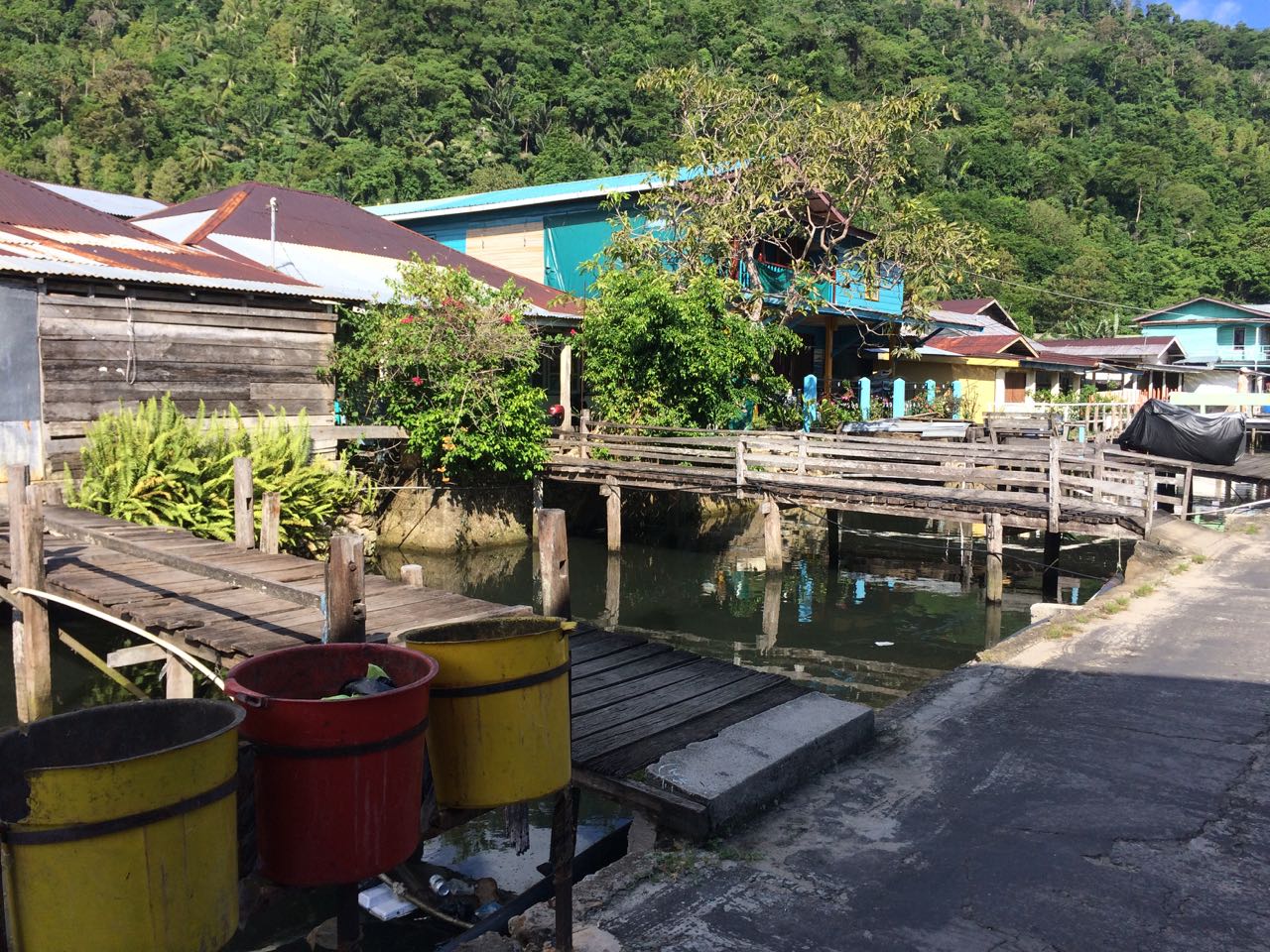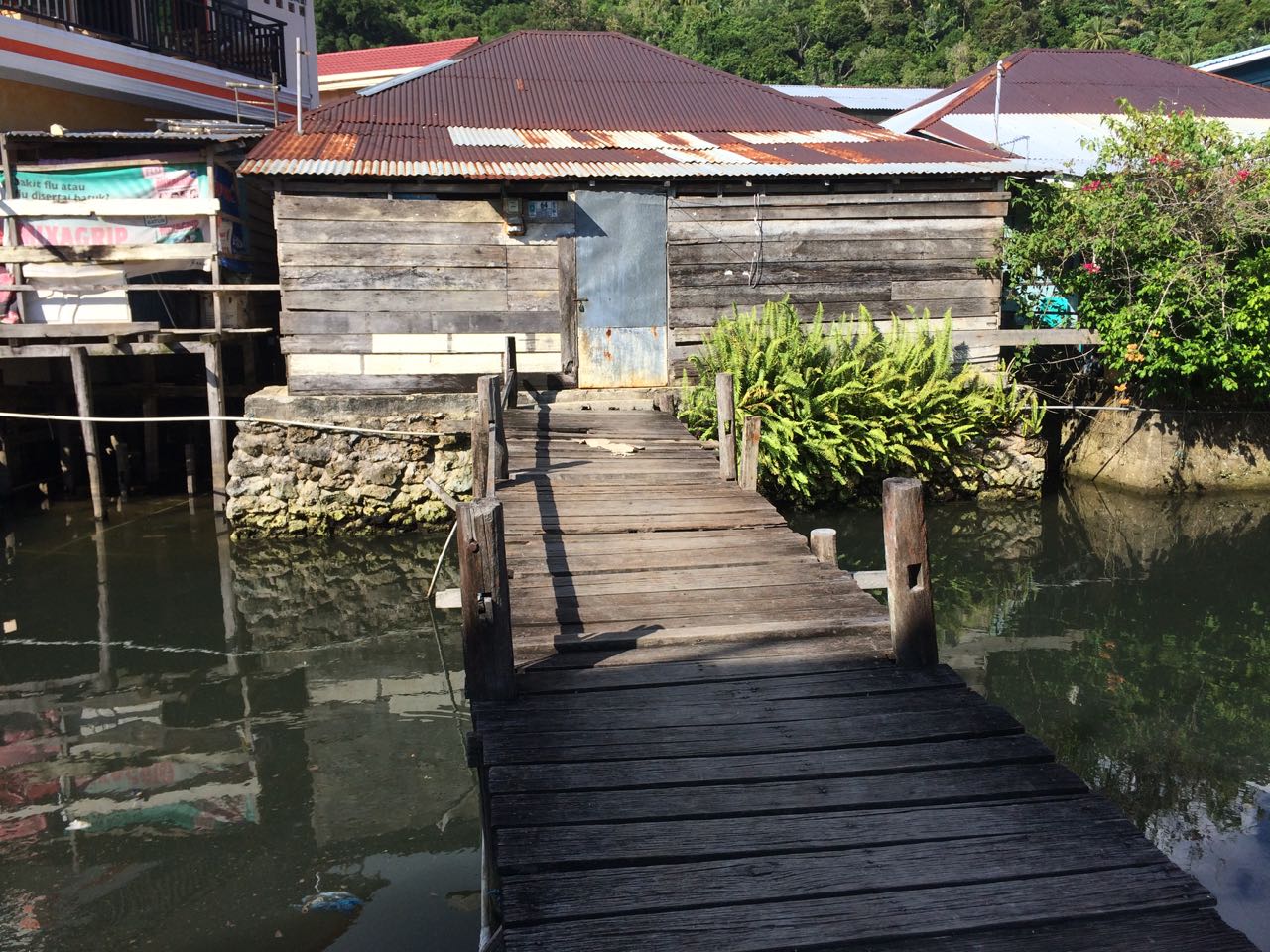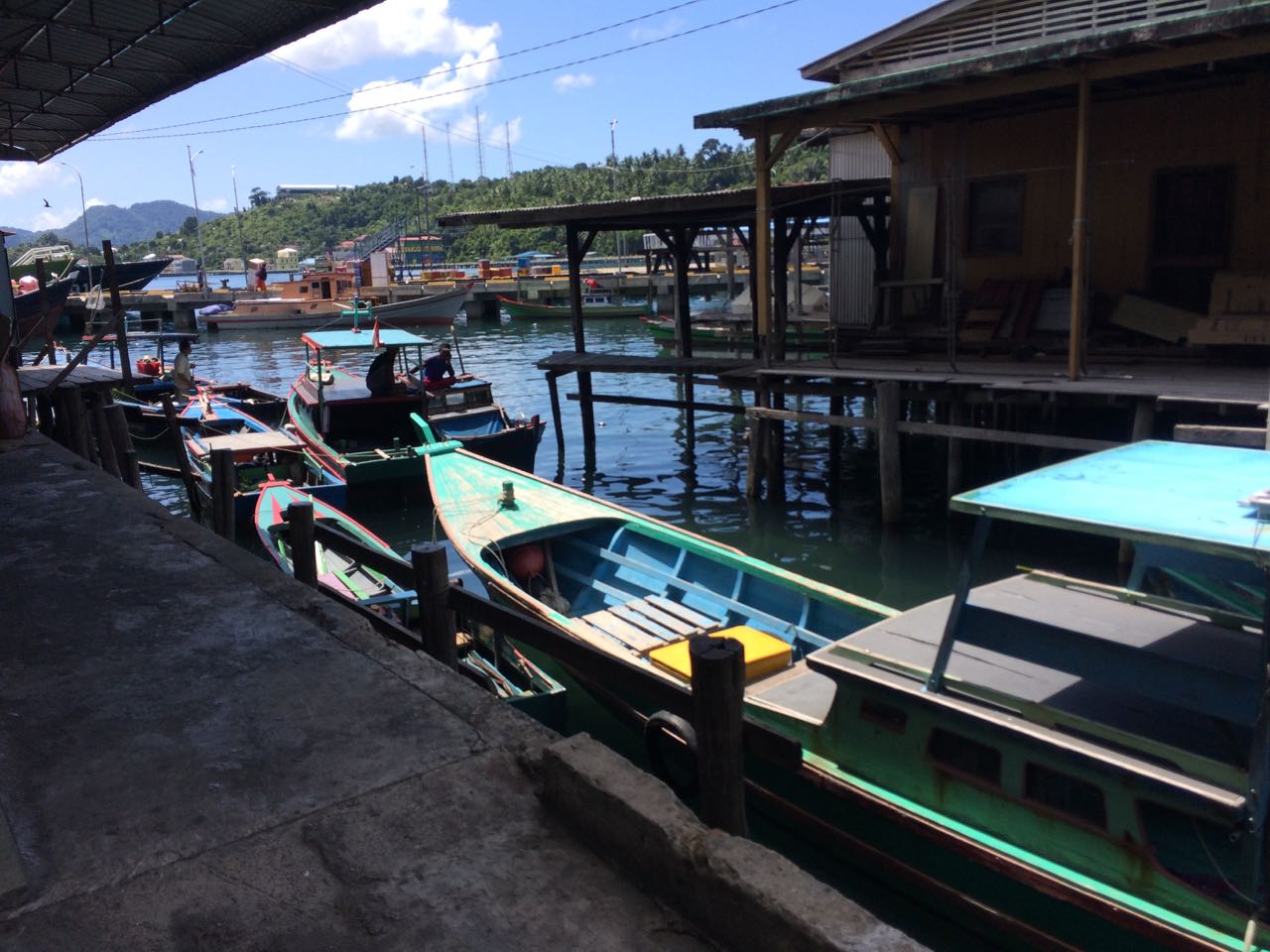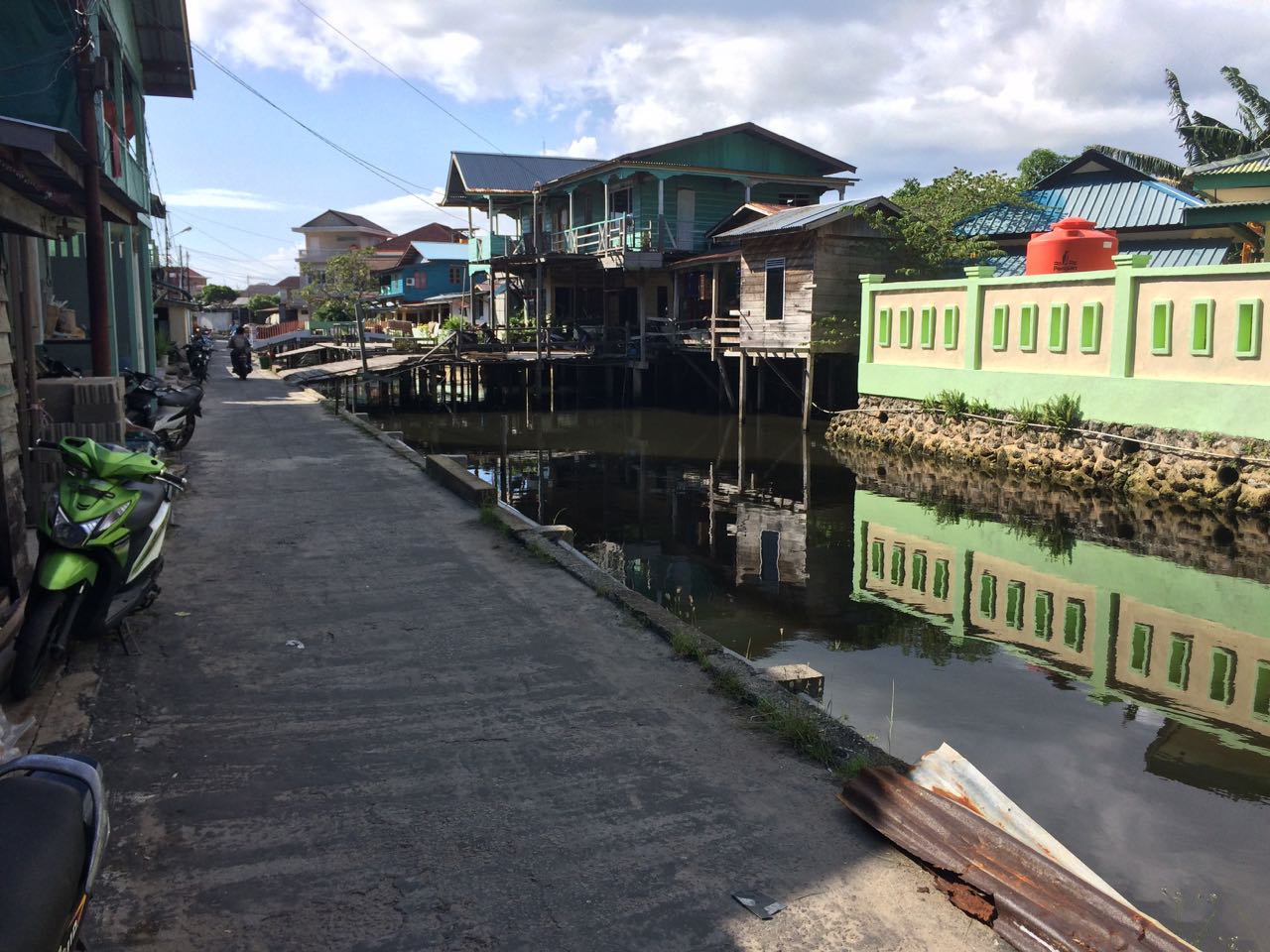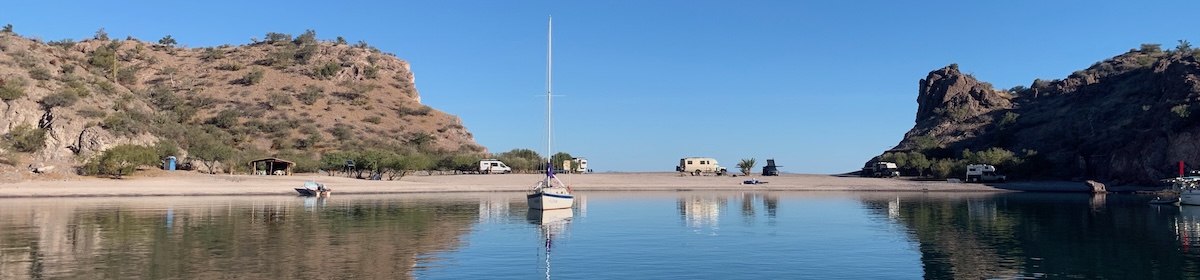
We left Pulau Patok, into a heavy tide and swell which slowed us down to a couple of knots. The forecast was hopeless, possibly a little wind but from the wrong direction, also there wasn’t anywhere obvious to take shelter from the swell on the next 220 miles of coast, other than a commercial harbour, which looked a bit grim. so I decided, perhaps rashly, to go direct to Miri, which is 180 NM as the crow flies, and would take about 36 hours if we could average 5 knots. As it turned out we didn’t, and took 44 hours. Just before we arrived, we got a weather forecast over the NavText that the severe thunderstorms to the north of us would continue until yesterday. I have no idea what the point of such a forecast is, in fact I shouldn’t call it a forecast at all, perhaps a hindsightcast would be more appropriate. However that did explain why we had light winds, but huge swells.
We sailed offshore, which gave us a more direct route, but also kept us away from the inshore fishermen in their small unlit boats. We would have two nights at sea, and it was only when I got the correct charts up on my plotter that I realised just how many oil and gas platforms there are here. 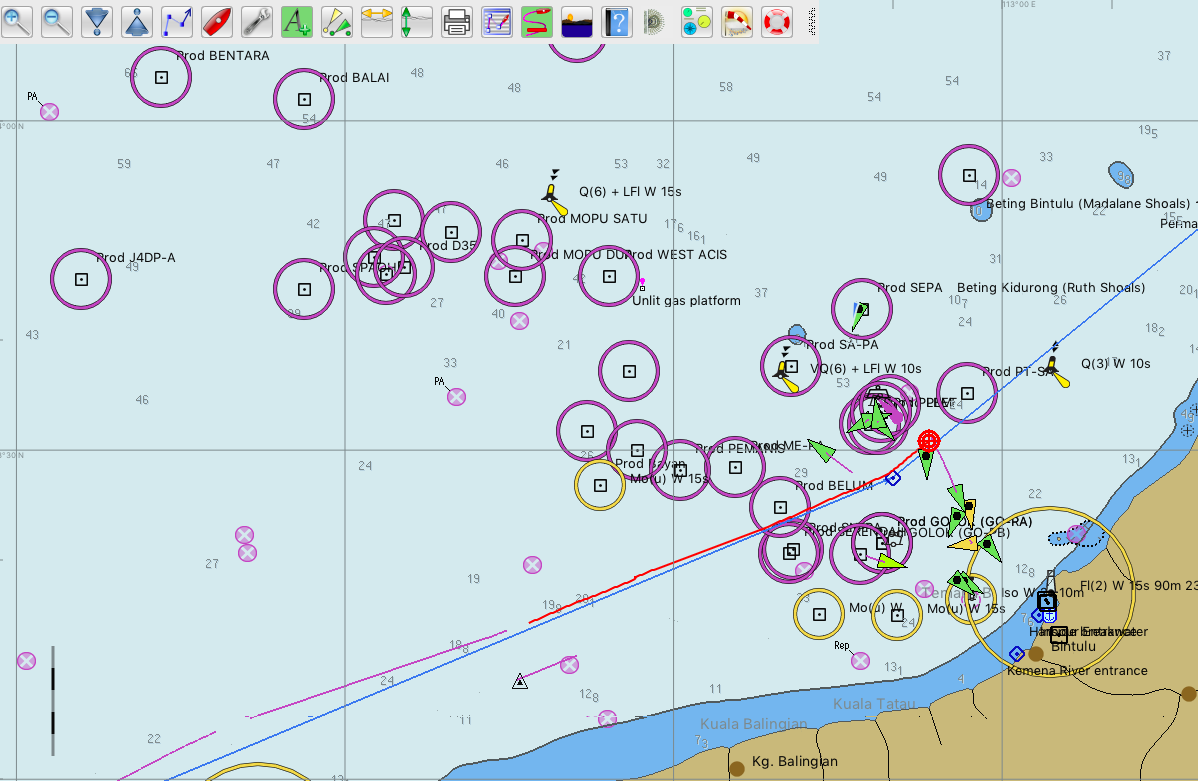 I was fortunate that we would reach the first major block of them just as dawn arrived, it was the second night that was going to be a problem. We were low on fuel, so I took every opportunity to sail, even in such light winds. In fact I was really pleased at how well the boat sailed in just 5-10 knots of wind, I used the time to play with the sails and the rig to get the best performance. Slowly it’s all coming together.
There were lots of ships around, and a lot of them not lit correctly. The ones I hate the most are the tugs, sometimes they just have a small flashing light on the tow and the tug itself has a single white light.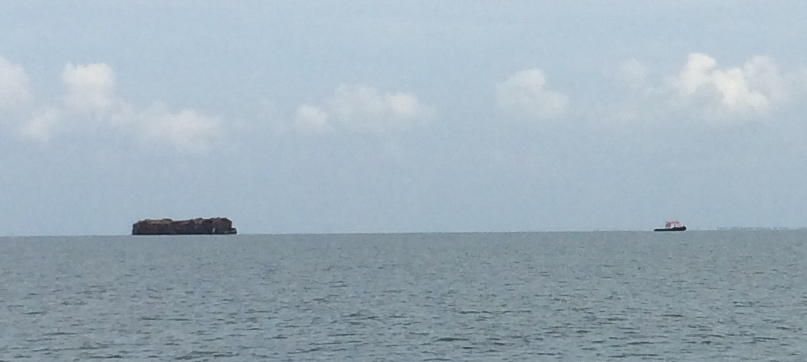
Sometimes the tugs have AIS and so you know it’s a tug, other times you can just make out some lights and a shape on the radar. If you get in between the tow, you’re in big trouble, I hate to think what a mess it would make of our boat. The other thing is the tow, in this case above, a huge load of logs, is usually trying to go in a different direction to the tug, and the tug might be pointing in quite a different direction to what it is travelling, very confusing. At one point a fishing boat appeared behind me, this was my fault for not looking astern enough, but he would have been within 50ft, I shone a torch at him, and he turned on all his deck lights, killed the engine, then drifted, before quickly going around my stern and away. I’m not sure who was shocked the most!
I had a lot of notes about this area, and I re-read them again, and also found the admiralty guide had a section on this area, which cautioned against travelling here at night, unless you had a good clear full moon. I was expecting the moon to rise about 3AM, half moon, and hidden behind clouds. The main problem is well heads, underwater structures where oil is or had been extracted. There are a lot of disused well heads which apparently can come close to the surface and are not lit. A catamaran on the Sail Malaysia Rally hit one last year, fortunately no serious damage occurred. After a while I decided that most of the well heads would be within the designated fields, and I should be fine away from them. I was also worried that back home I got chased away from the Douglas Gas platform in the Irish sea as you are not allowed within 3nm of the rig, yet here the rigs were often only 4-5 nm apart, making that difficult. I later found out that 500m is the distance you have to keep away. As it turned out it all went quite smoothly, I dropped the mainsail about 6AM knowing sadly I wont be using that again for a few months. A squall came through just before dawn, and as the skies lightened, we approached Miri, where we planned to anchor at 7AM and contact the Marina for guidance in, and to wait for high water at 08:30. however the swell was so bad I decided I would prefer to motor round for an hour rather than anchor and be kicked around by the waves. Kathy and I had been doing 4 hour on /off watches, but not doing it properly and we were both tired now. Looking at the tide tables, I realised that as we only have one tide a day, the twelfths rule doesn’t apply, this rule is a way of working out how fast the tide comes in, and the upshot was we would have enough water to get in now, also big ships were ploughing into and out of the marina. So after a gap in the big ships, we shot in and grabbed a berth. It felt odd, I tried the bow thruster before we came in, but it was running for a second, then making a weird noise, I had worried that the fouling from Santubong may have affected it, but on closer inspection, i.e. me hanging over the bow while Kathy powered it up, made me realise that the swell was lifting the bow thruster clear of the water, and it was whizzing around in the air, not good for it. Once in the marina we moored up, it went remarkably well, Kathy jumped ashore with a line, I stopped the boat and passed her the other lines and that was the end of a ten week trip from our last Marina in Johor Baru.
Now we have to get used to having an electric kettle, a toaster that doesn’t burn the toast, and all the water we want from the tap.
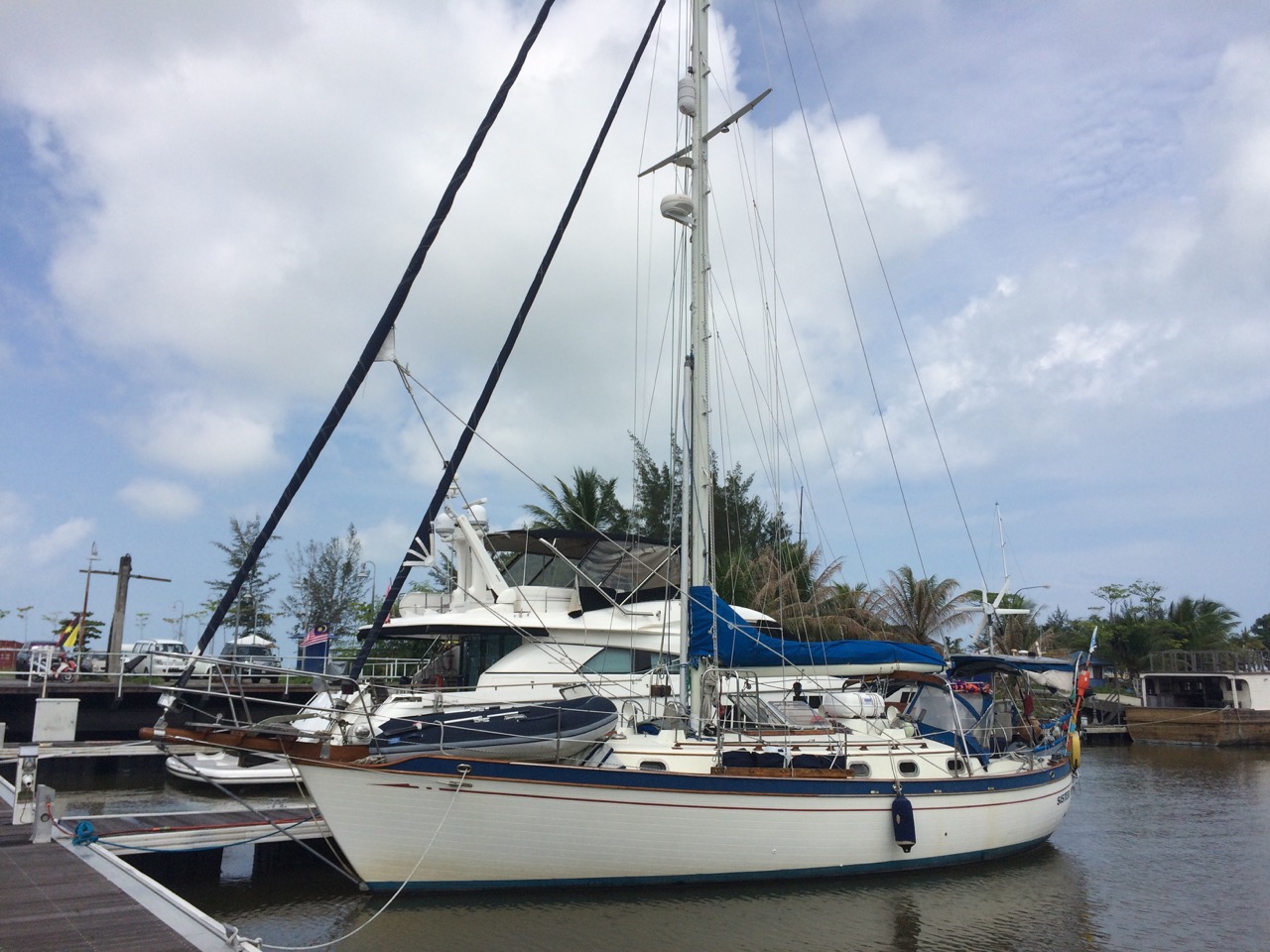
That’s us above in Miri, now we have ten days to do a lot of cleaning up and putting away before we come home. but for now we are off to explore the area a little before a long deep sleep.
Paul Collister
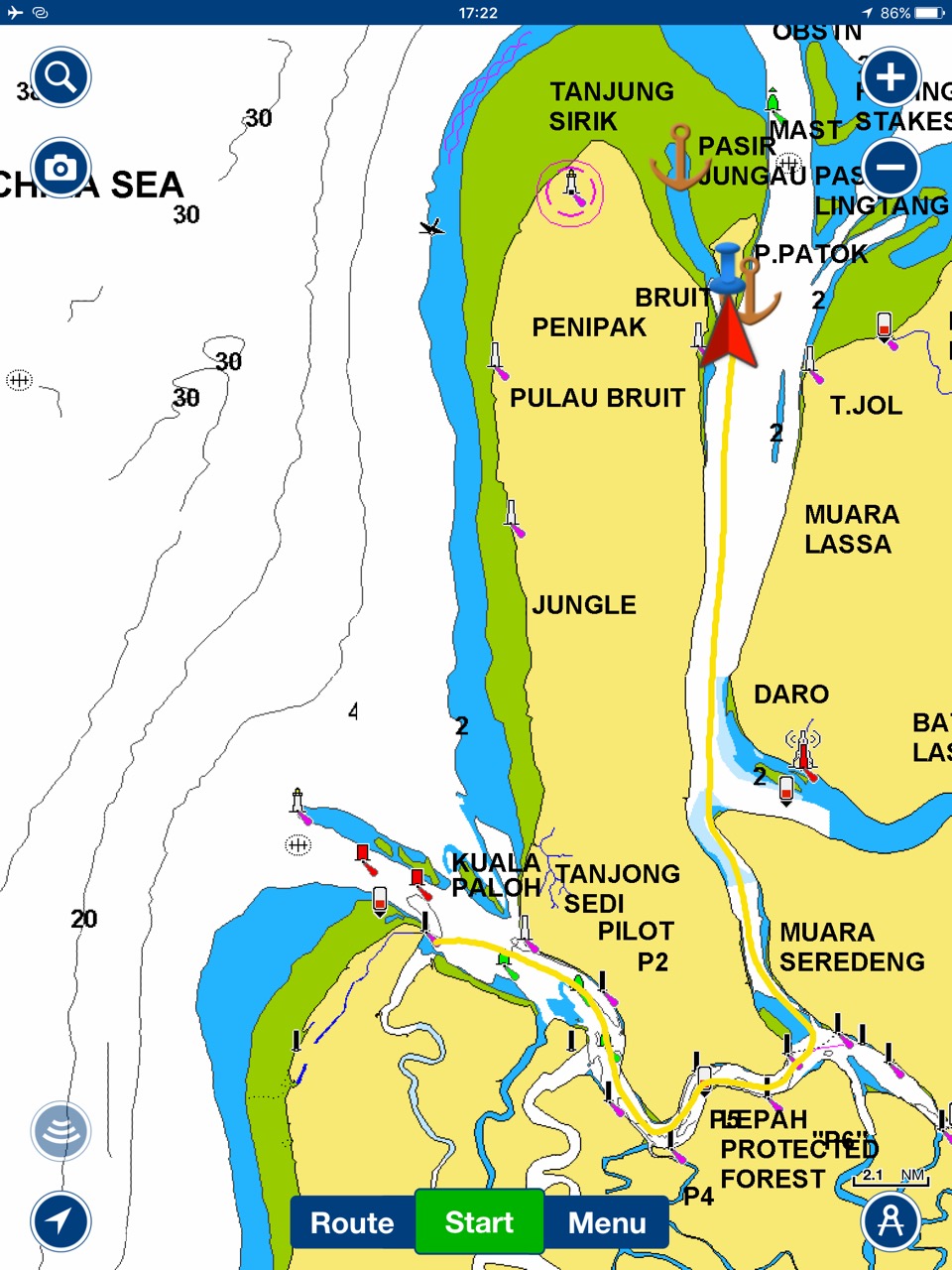
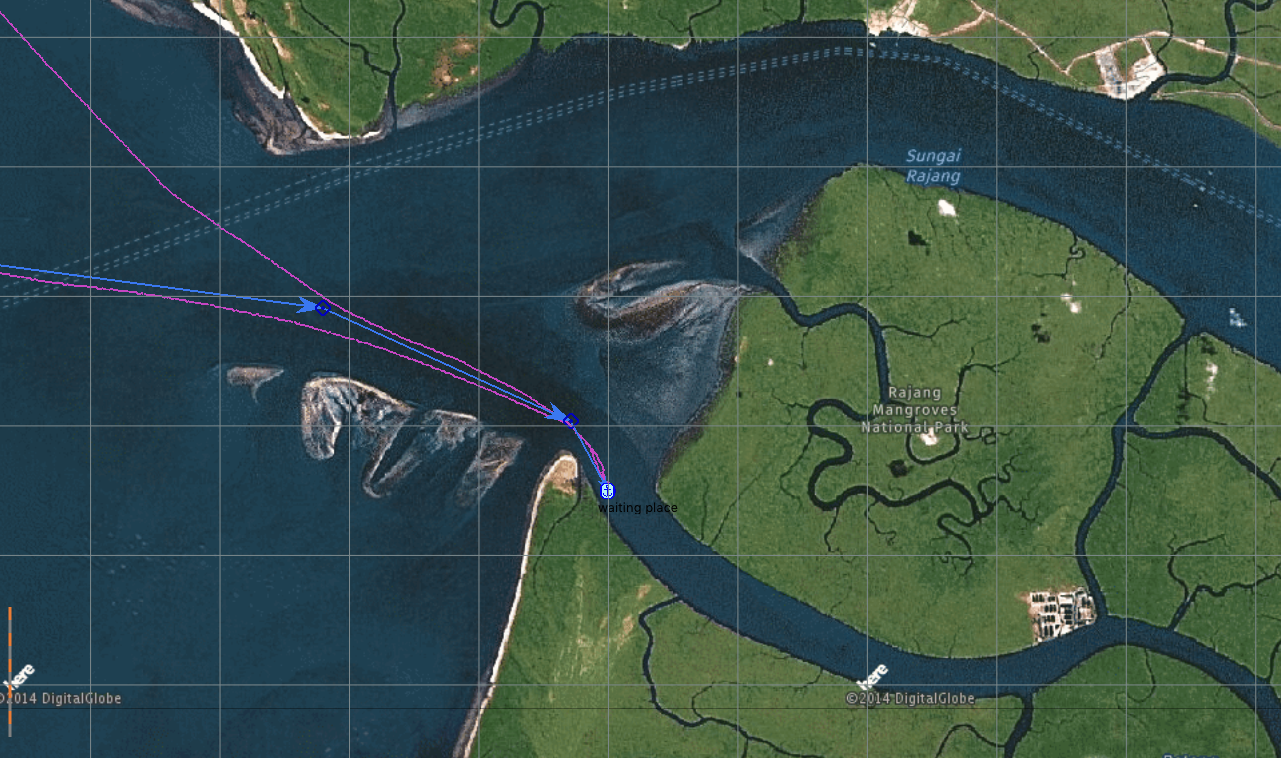
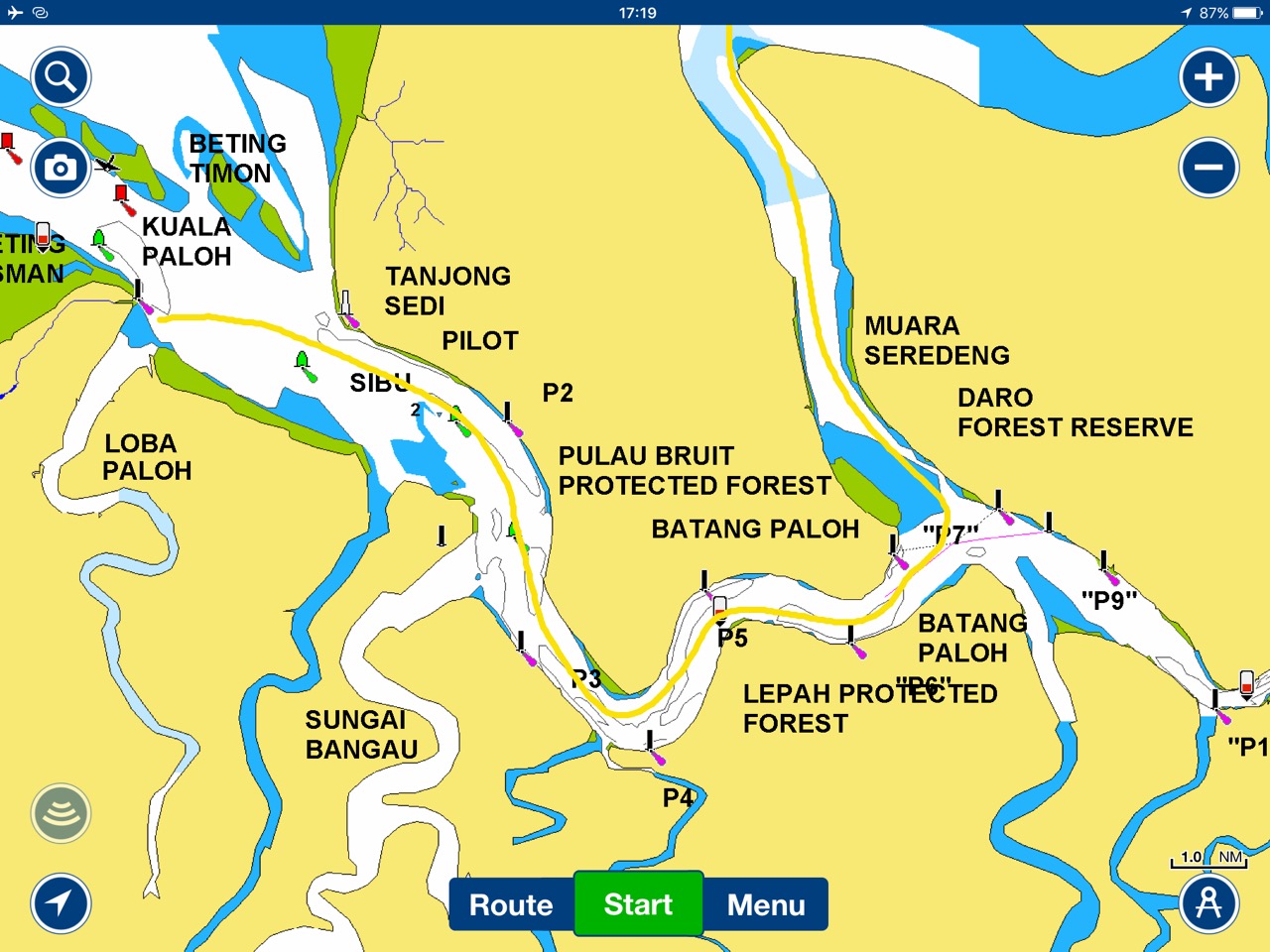 Now this kind of sailing boat isn’t really meant to be going down rivers, for one, the rivers are usually very shallow in places restricting the boats movement, and makes sailing quite difficult if not impossible. The boat also has a deep keel, as deep as some quite big ships. But as the forecast was for no wind I thought it might be more interesting than following the coast. I checked the chart a lot, I didn’t like the navigation guidance in the admiralty publication, it stated that details wouldn’t be given as it should not be attempted without a pilot on board. However these guidelines are intended for bigger boats than me, I studied several charts and came to the conclusion that the one shallow bit at 1.5 metres would be ok if we hit it near high water which was 4.5 metres at 10:50 AM, Low water was only 1.5 mtrs so even at low water we should be ok. I also realised the currents in the river would be strong and had to factor that in, however as its neap tides right now, the tides would be at their weakest and so there wouldn’t be a better time to try. So off we went an hour late, and where straight into a 2-3 knot flood current racing us along at 7.5 knots, unfortunately, our little paddle wheel under the hull which tells me the boat speed through water, as apposed to the GPS which gives us boat speed relative to land, was all fouled up from Santubong and didn’t work.
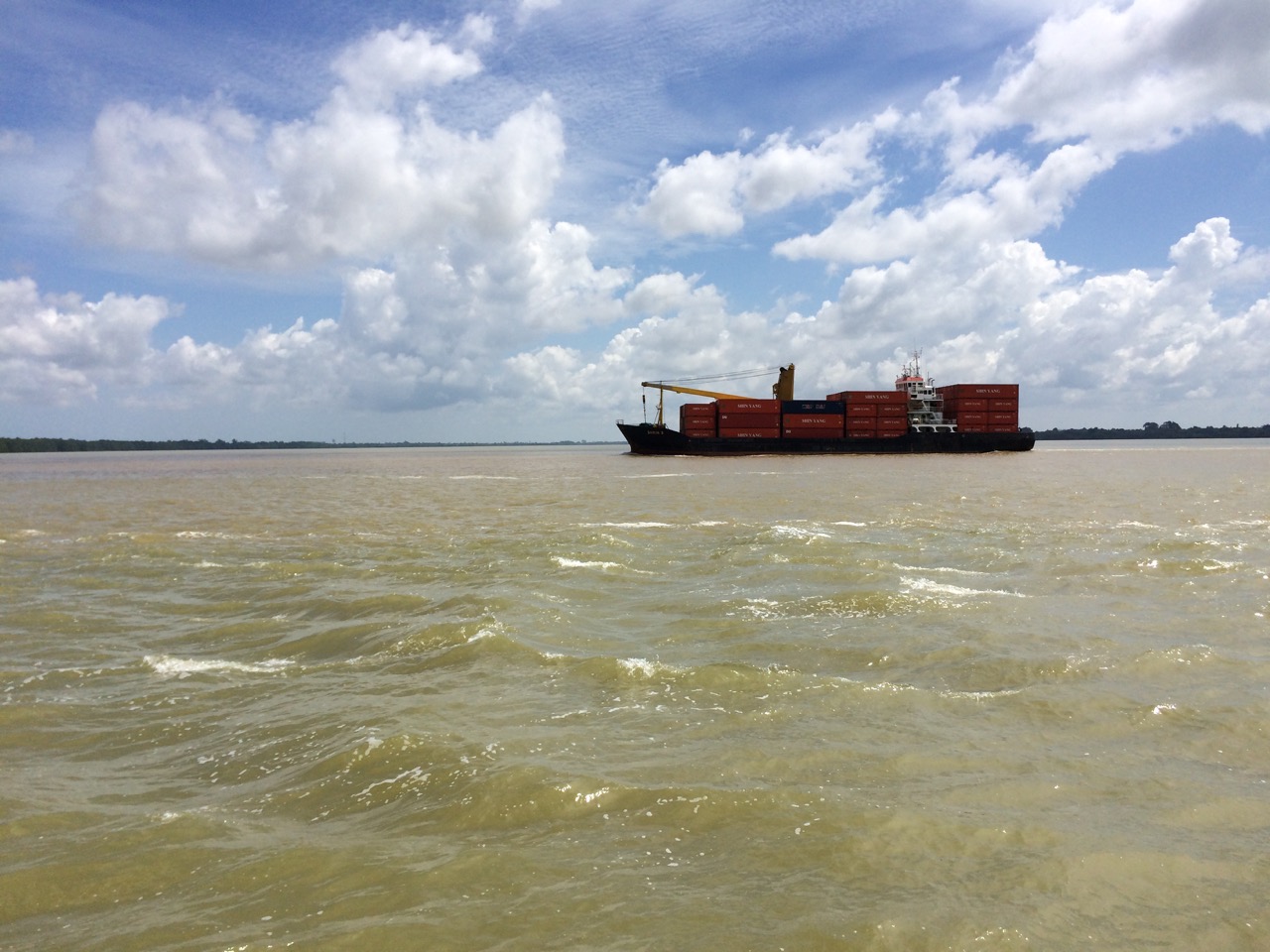 I wondered if the pilot on board was looking at us and tut tutting, I still didn’t know if the northbound passage was navigable at this point as it’s not a main shipping route, and had some seriously shallow bits on the chart.
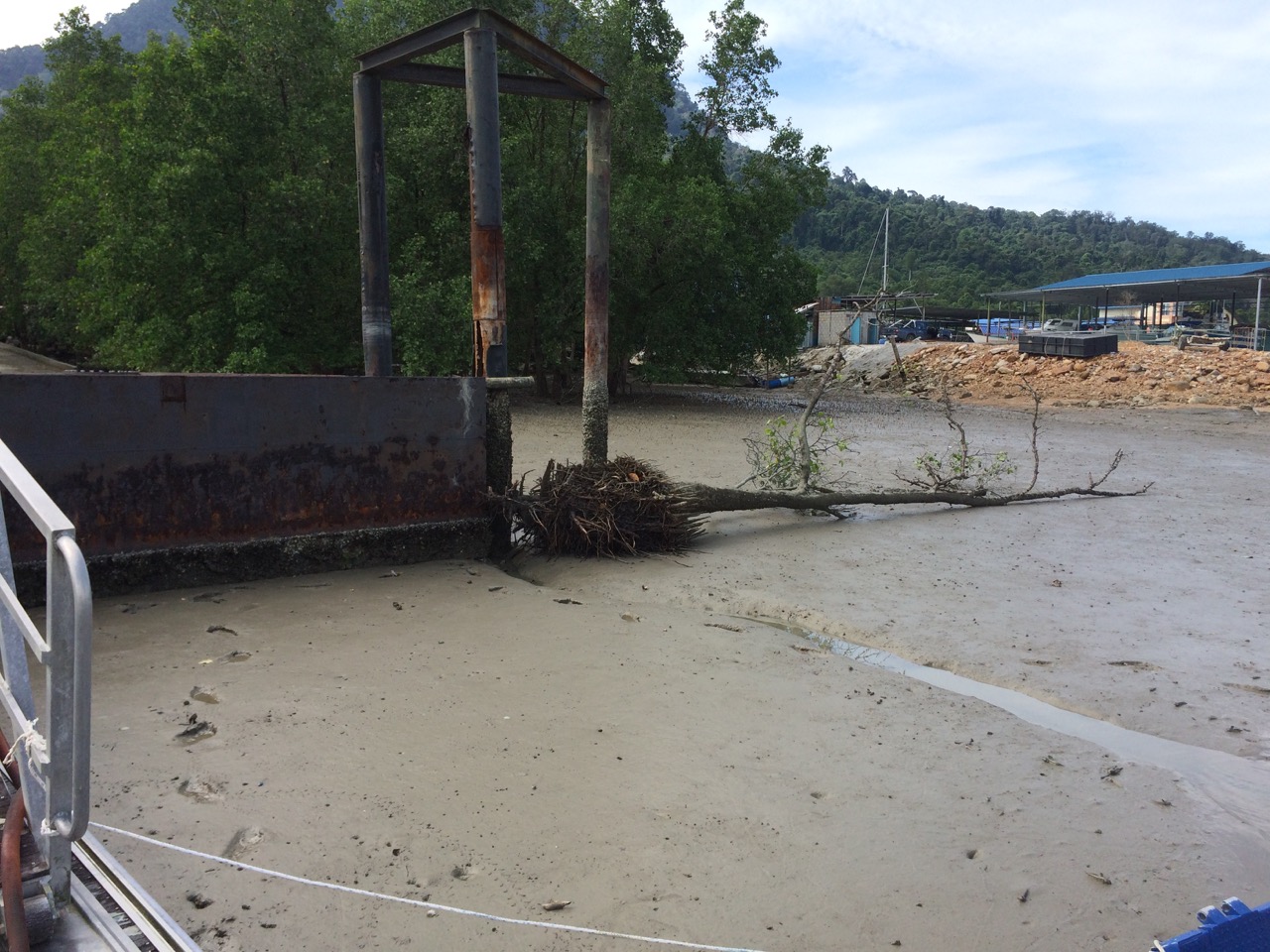
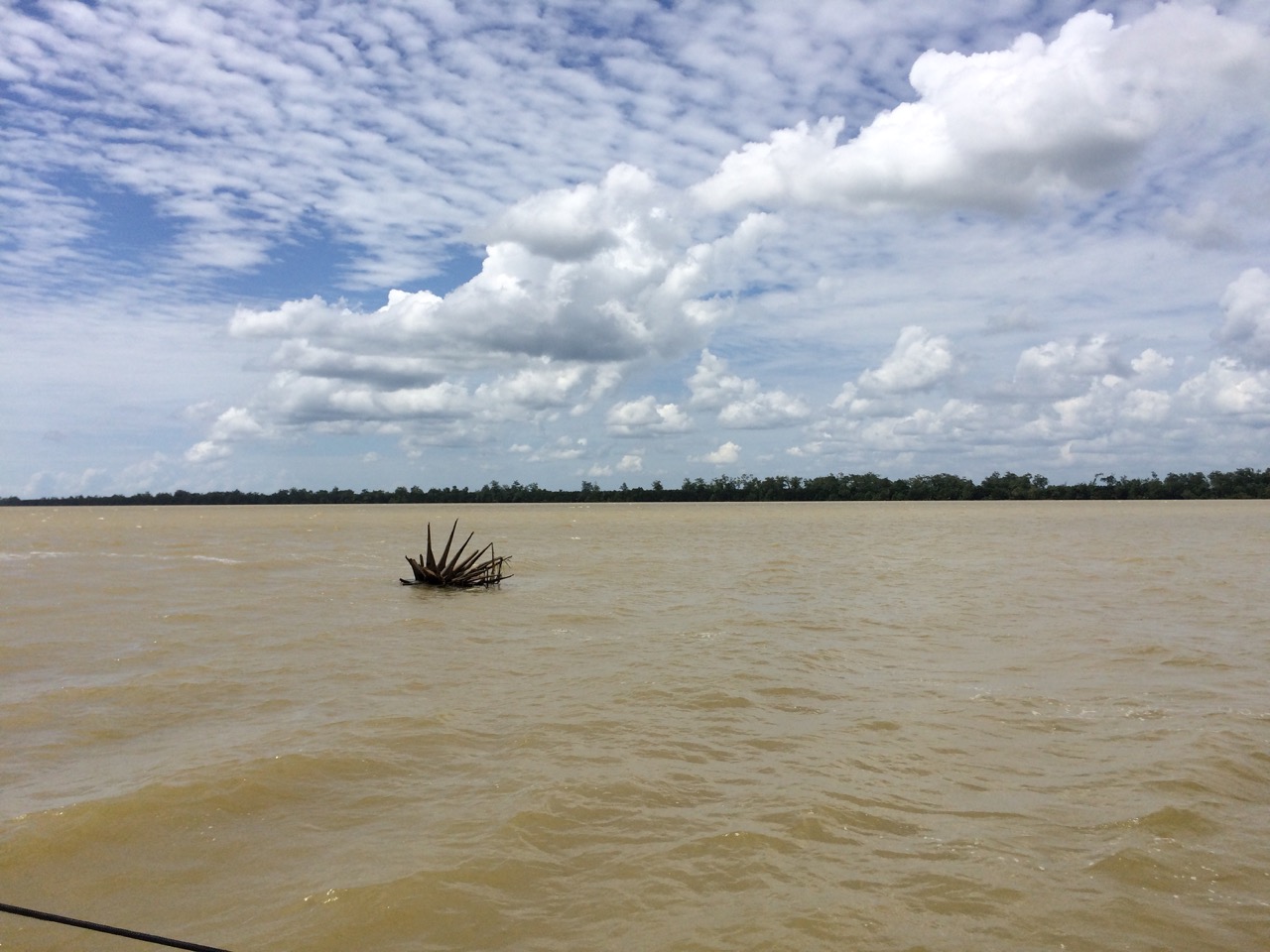 We had to keep a good lookout for these logs, this one reminded us f the ‘Statue of Liberty’, possible planet of the apes style. At our anchorage I can see where some of the tress come from, using my impromptu telephoto lens (binoculars) I took this picture
 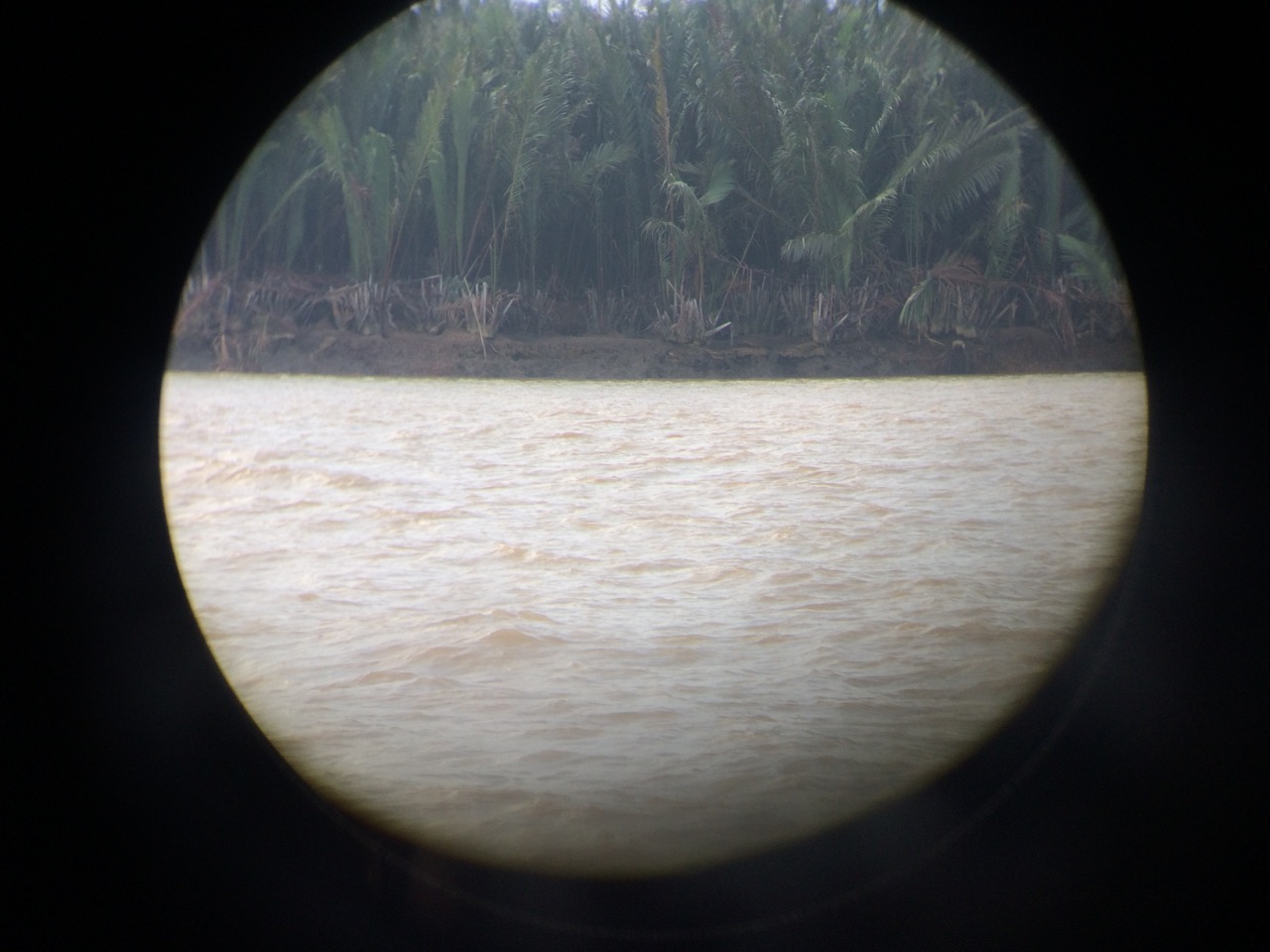 You can see the roots completely exposed at low water, soon these trees will topple over, lets hope not tonight.
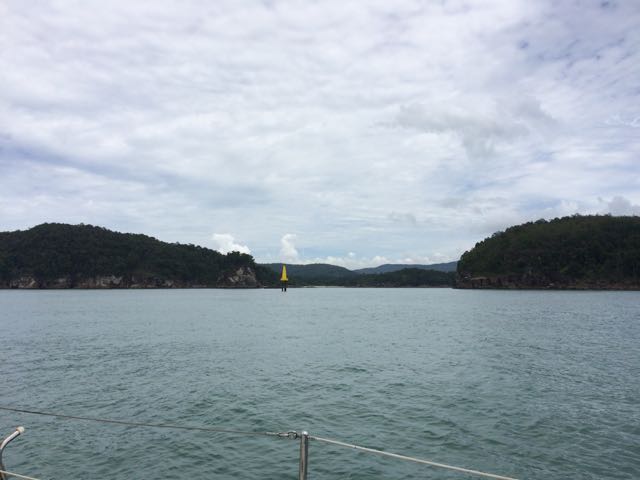
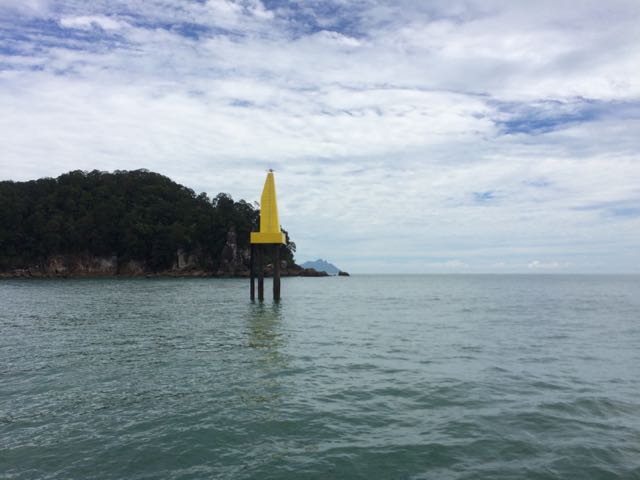
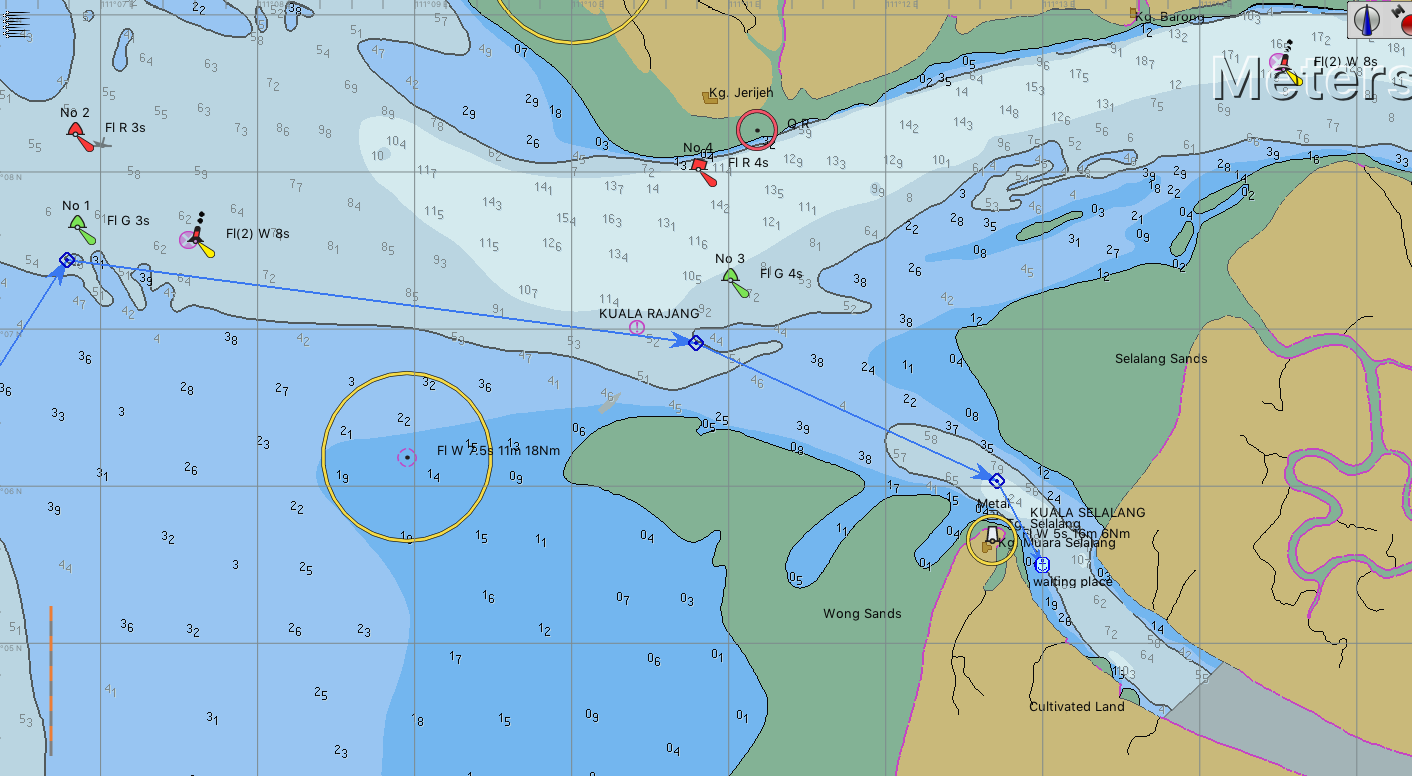 There are several buoys to guide us into the deeper water path, but half of these were missing, in one case literally half the buoy was missing, just the base in the water was left.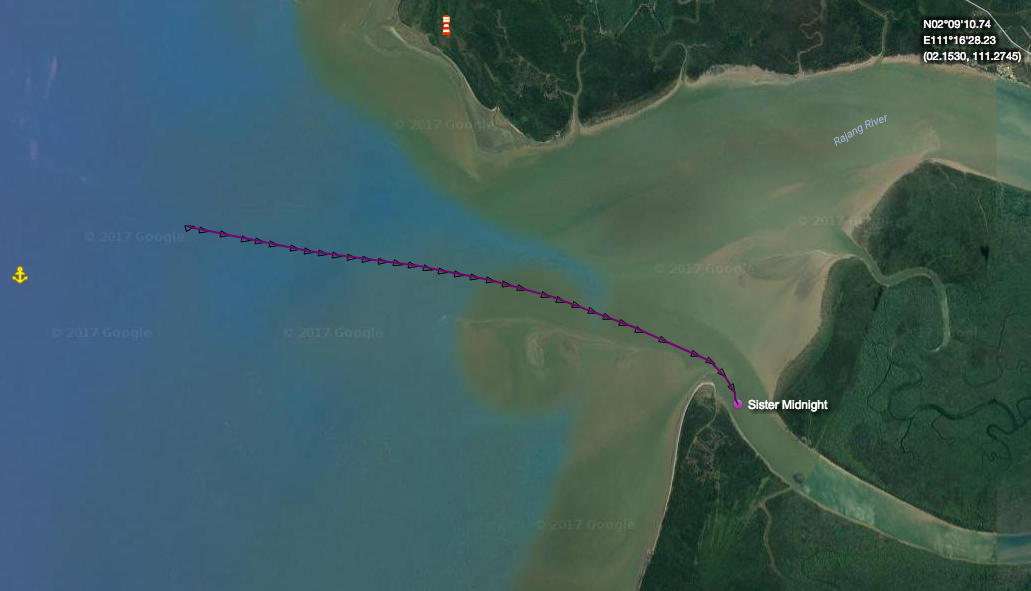
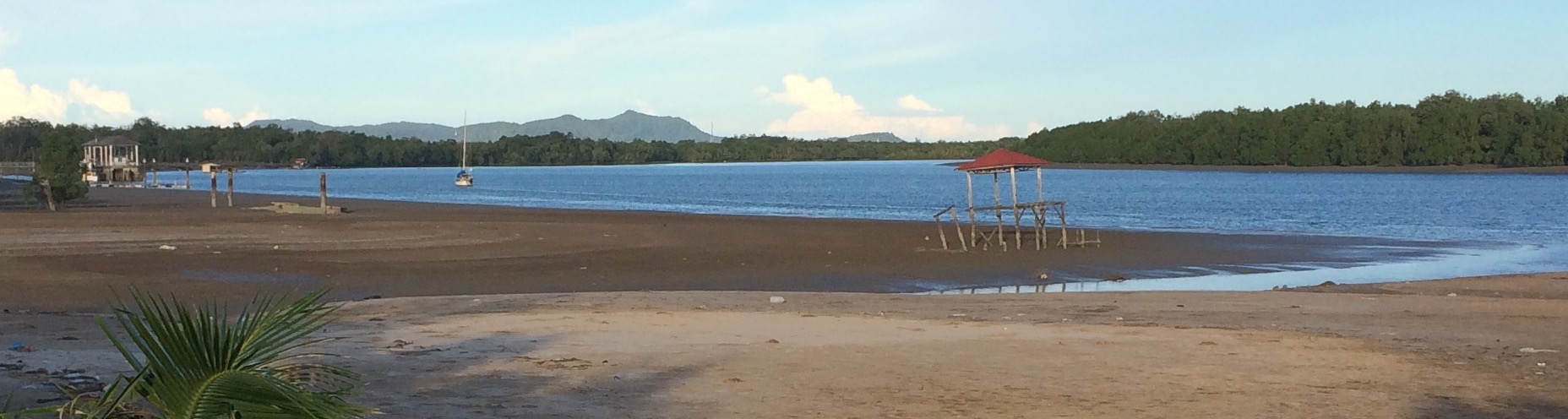
 And this is what it looks like from the anchorage, looking west back to the tip we hid behind to protect us fro the westerlies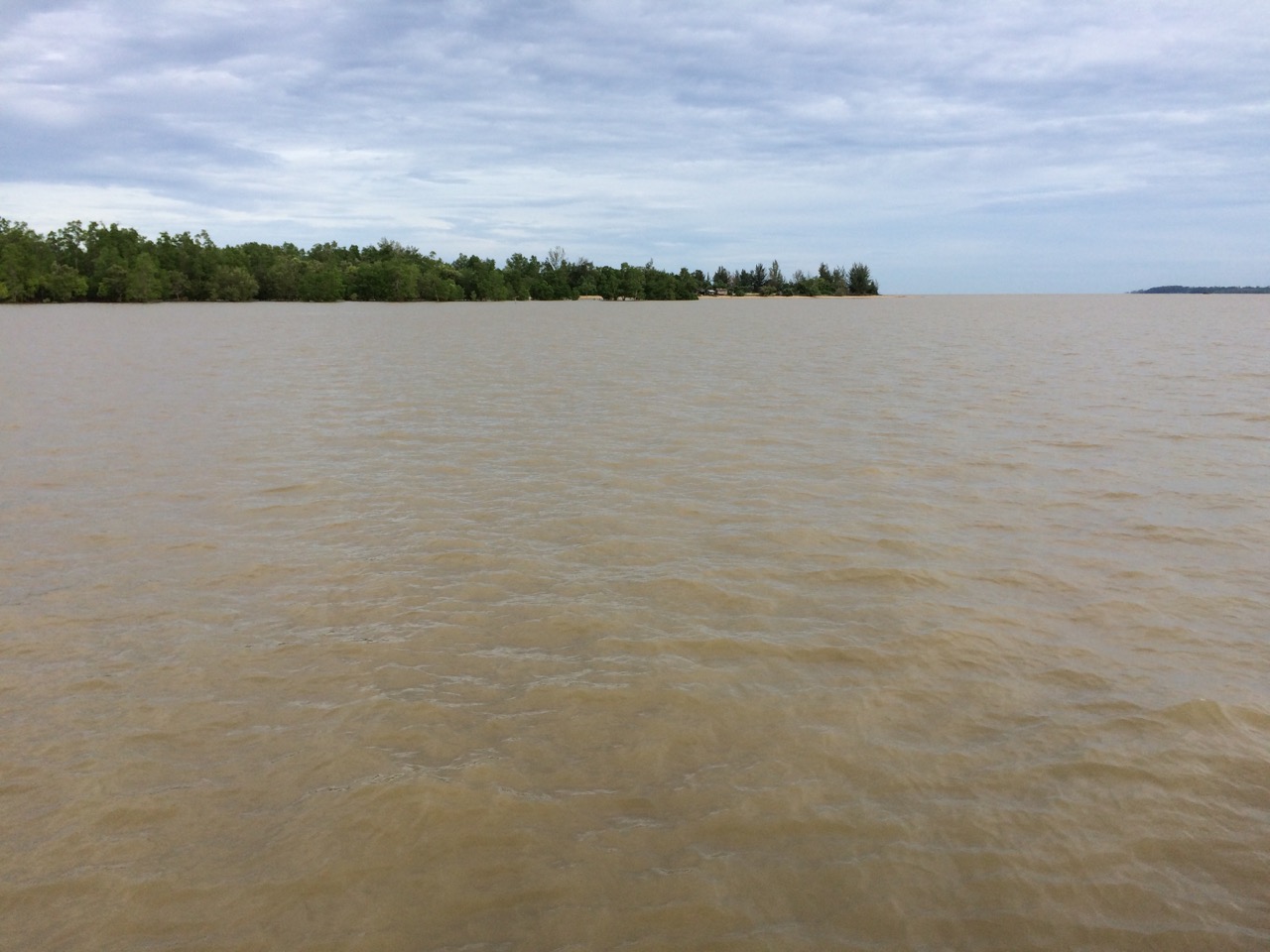
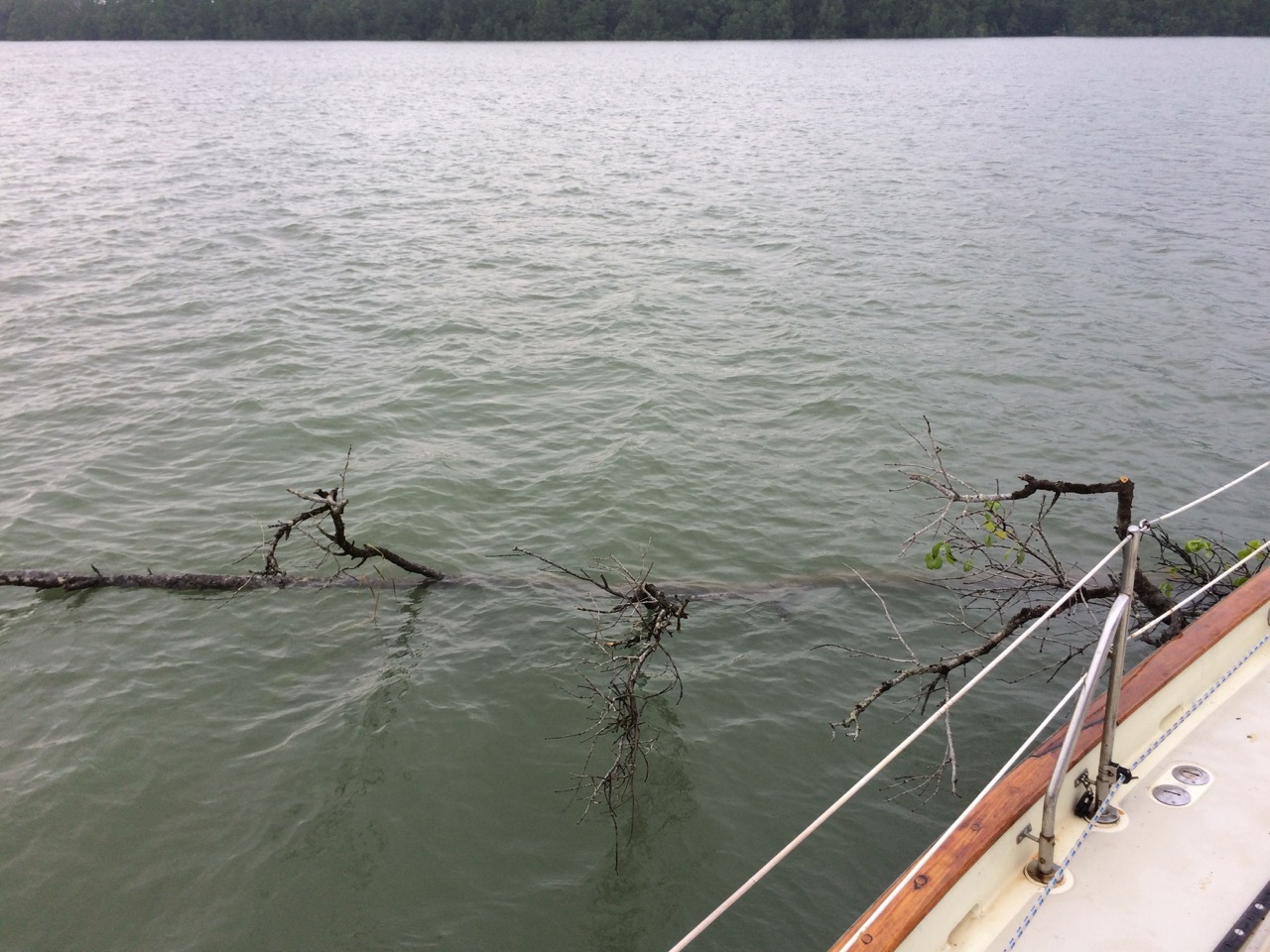
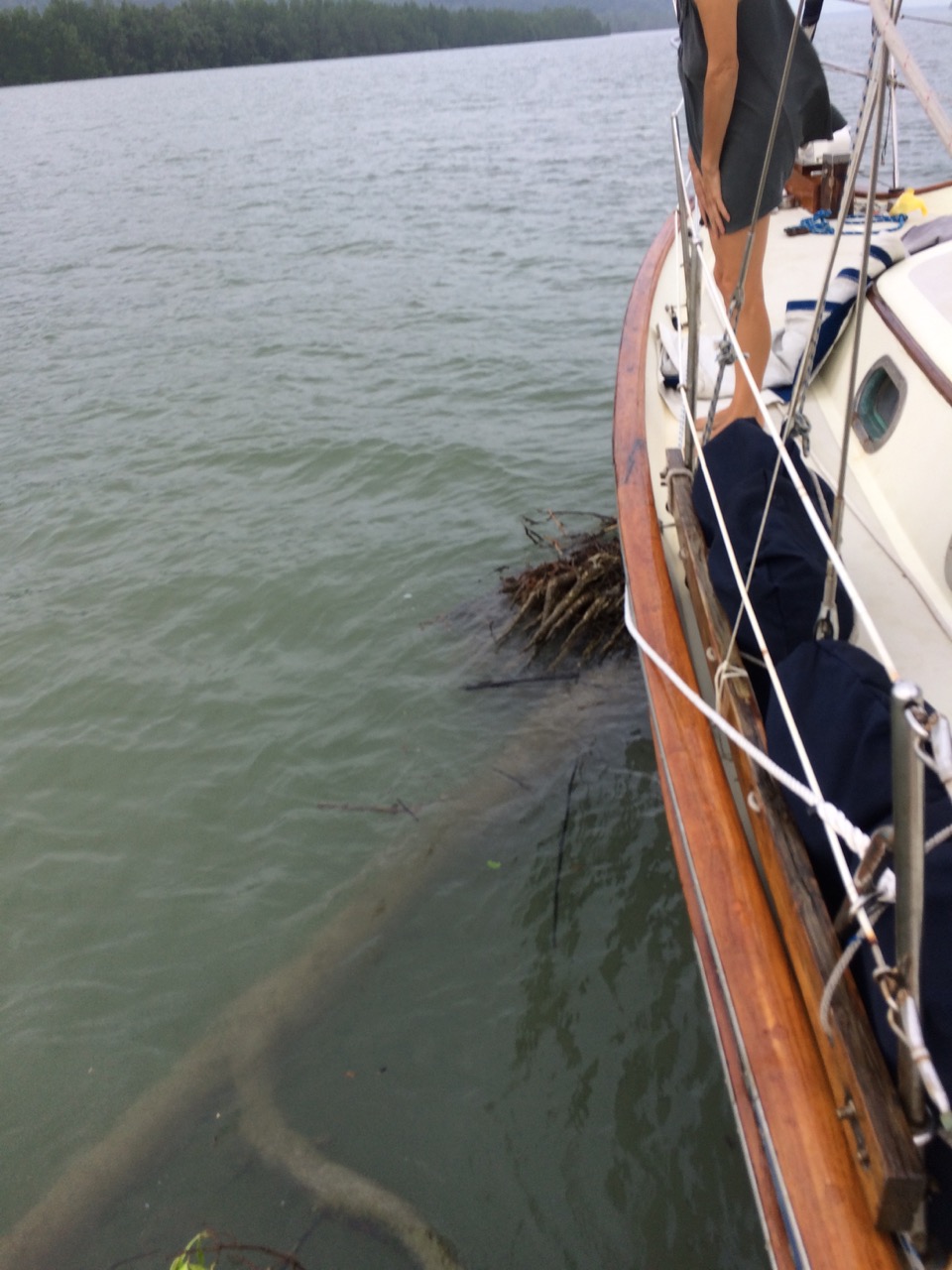
 I had heard about this happening to other boats, and wondered why I never saw any trees even get close to us. I think this is what they call getting experience. I expect there to be a bit more touching up to the hull to be done now, what with the ferry imprint and the gouges from when I had the pre-purchase haul-out.
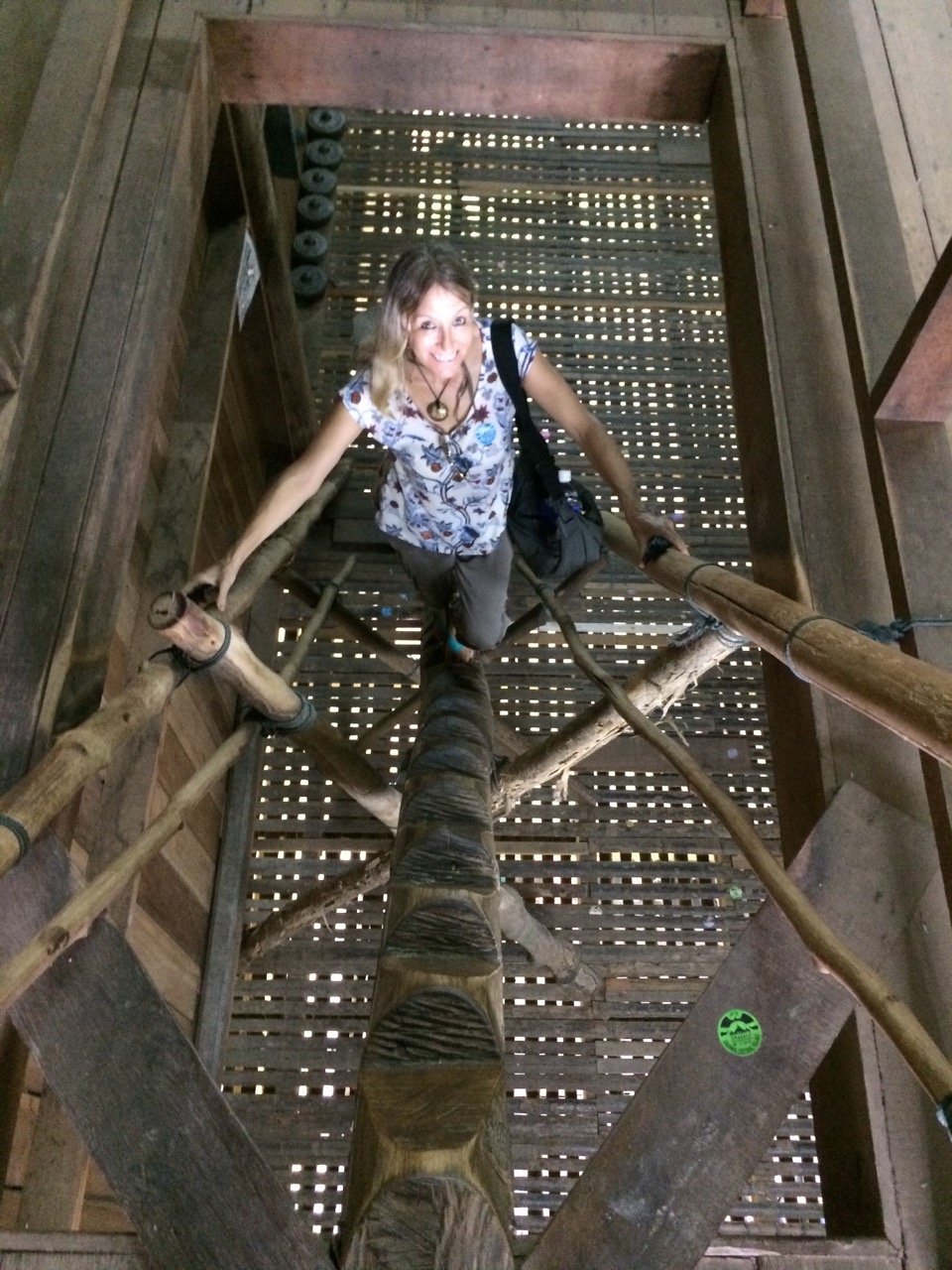
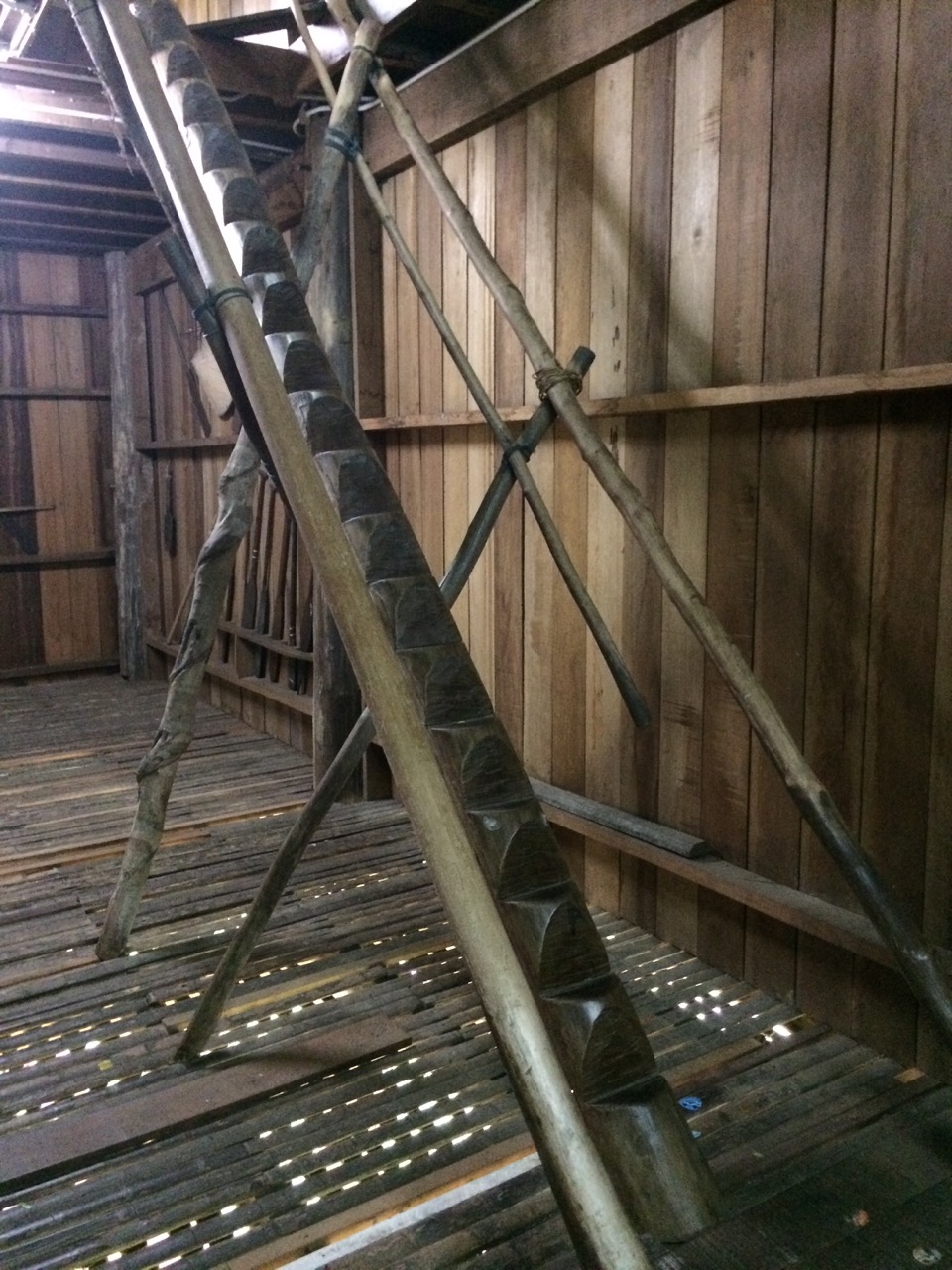
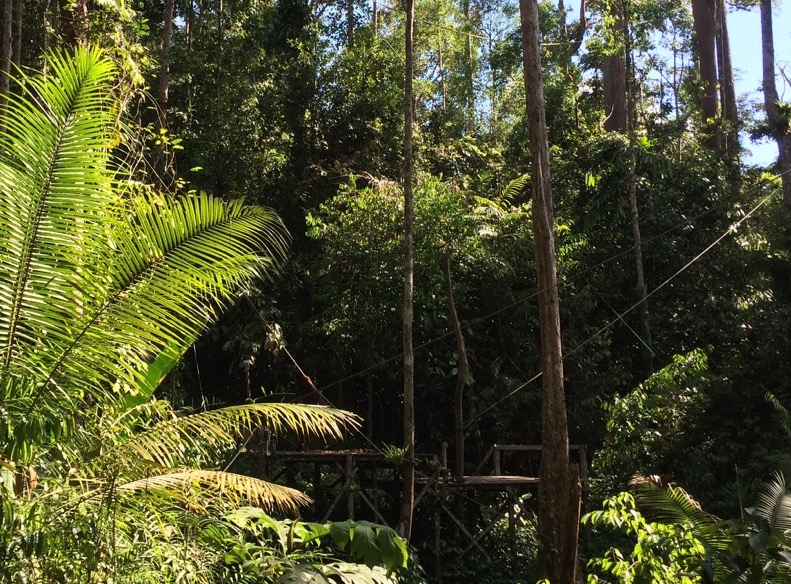
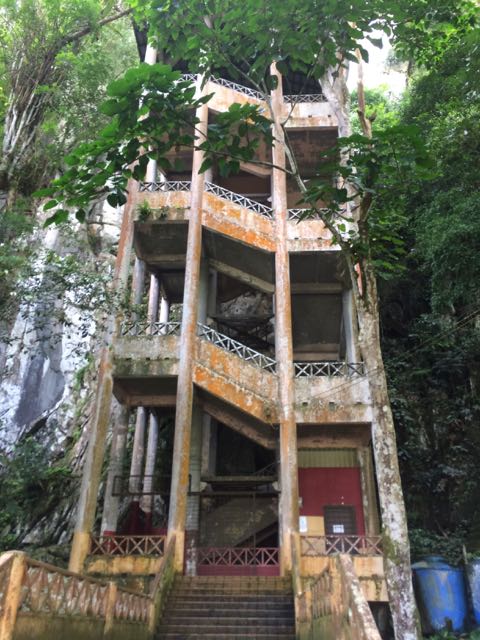
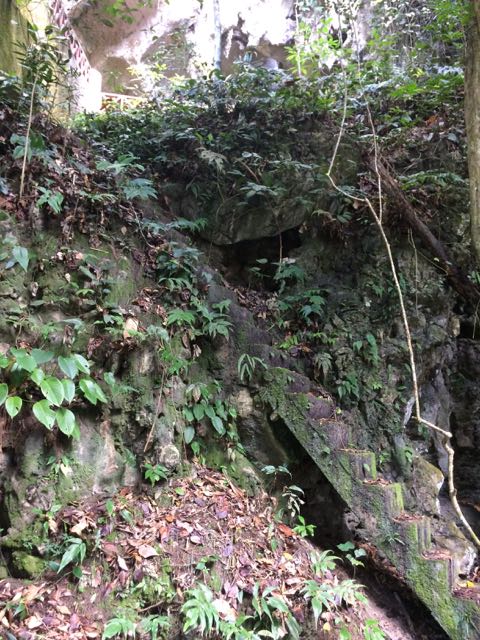
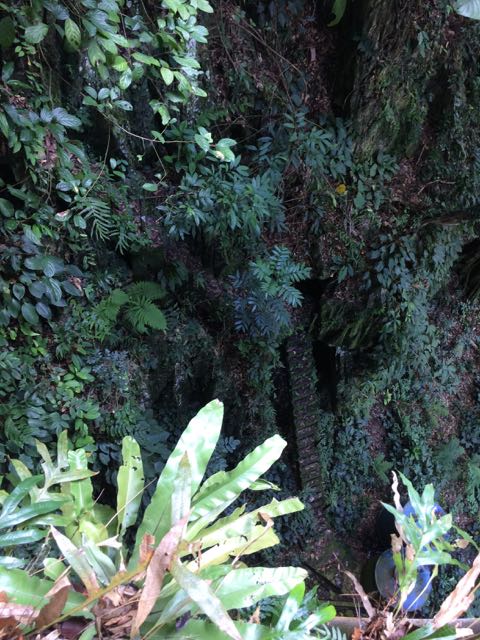 Above you can see the start of the original steps to the caves, that cling to the rock face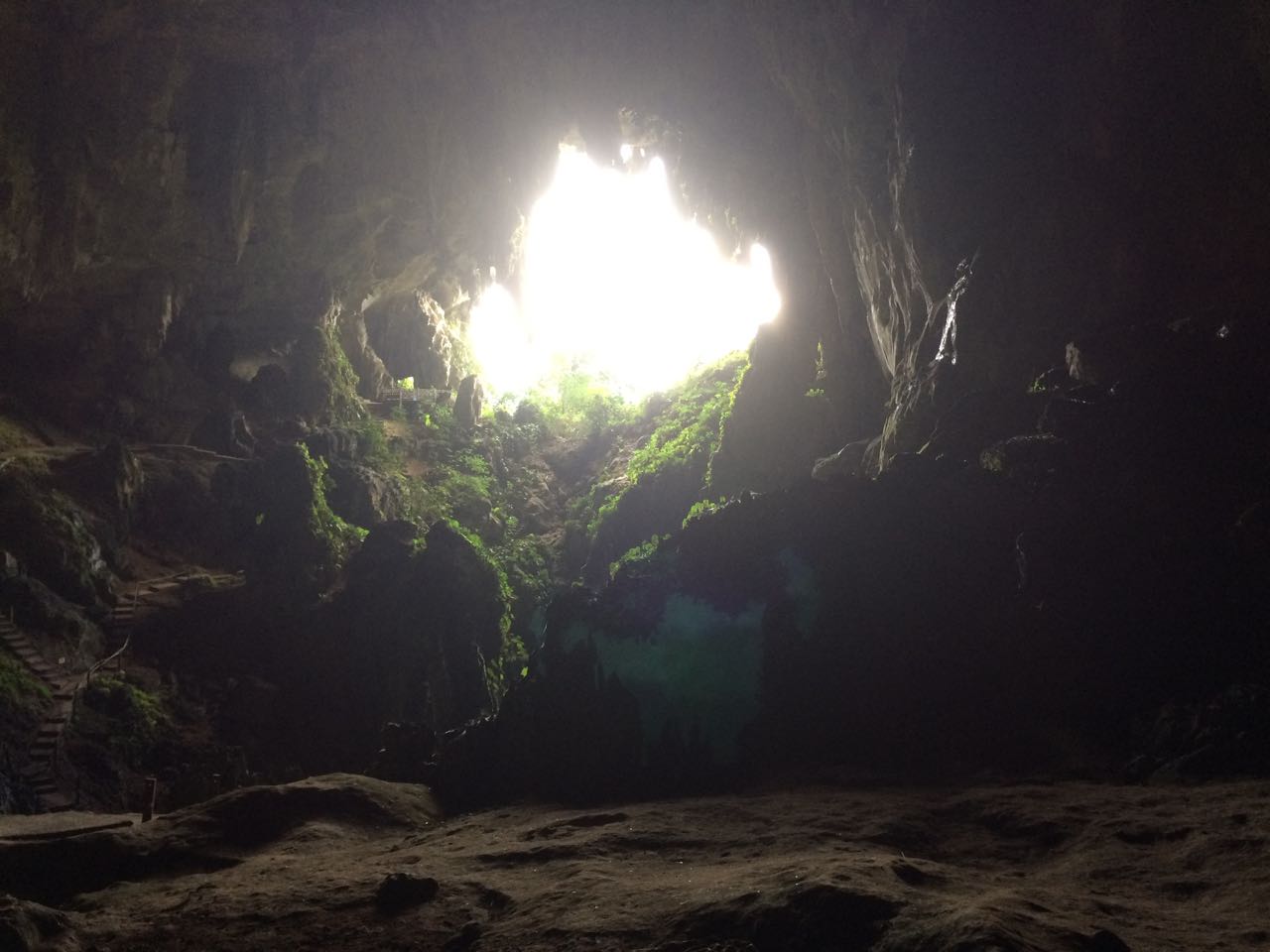
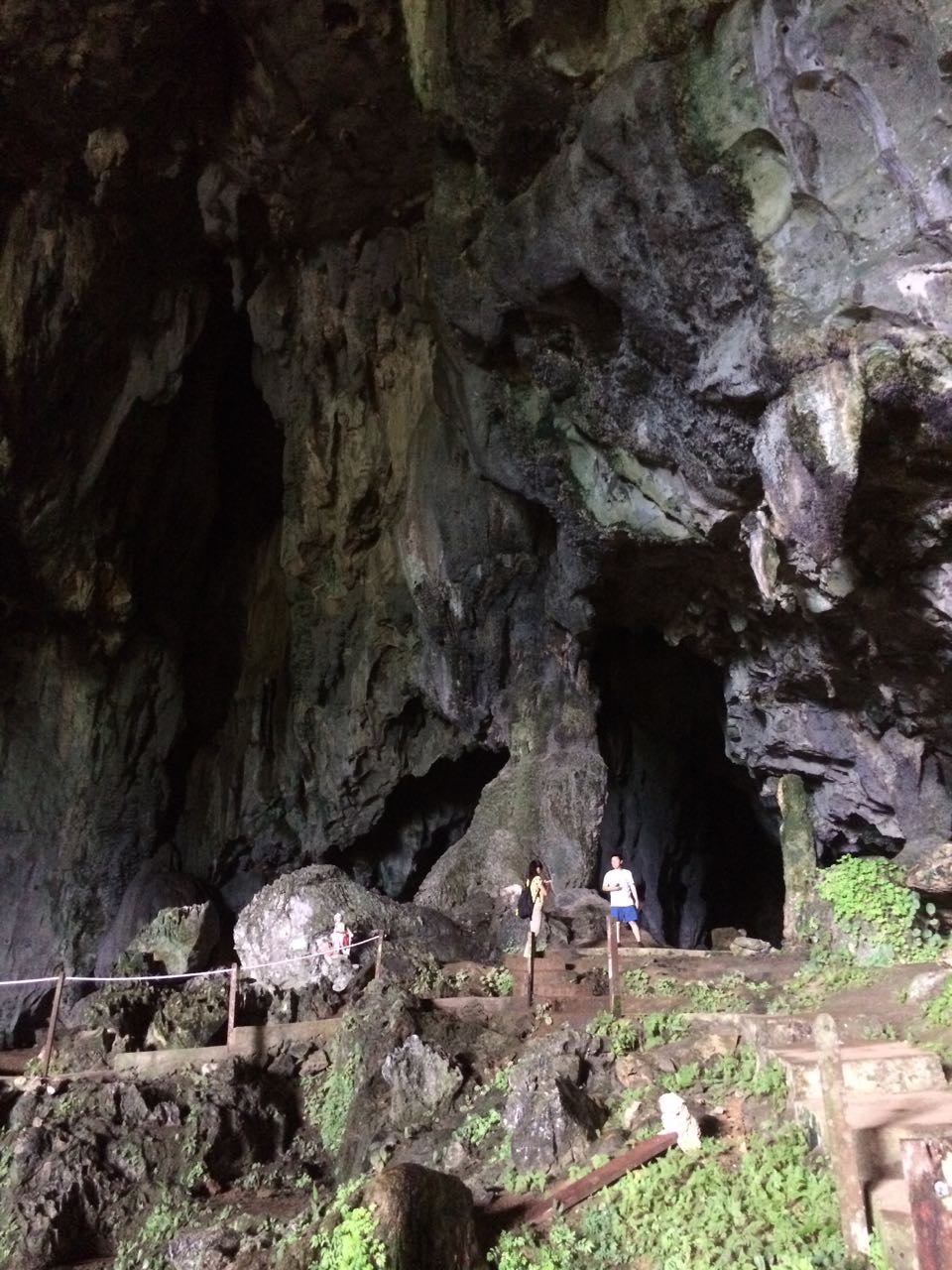
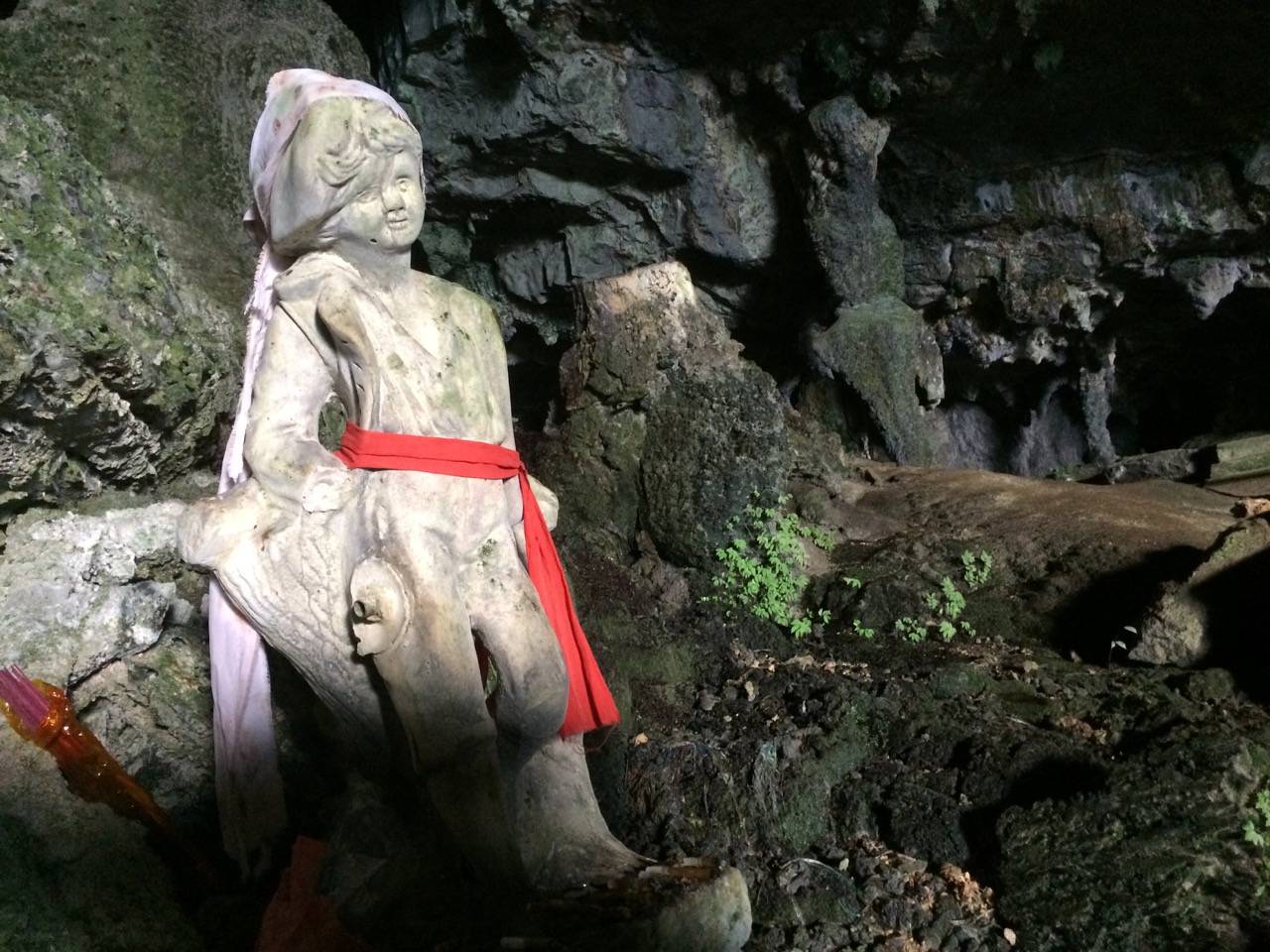
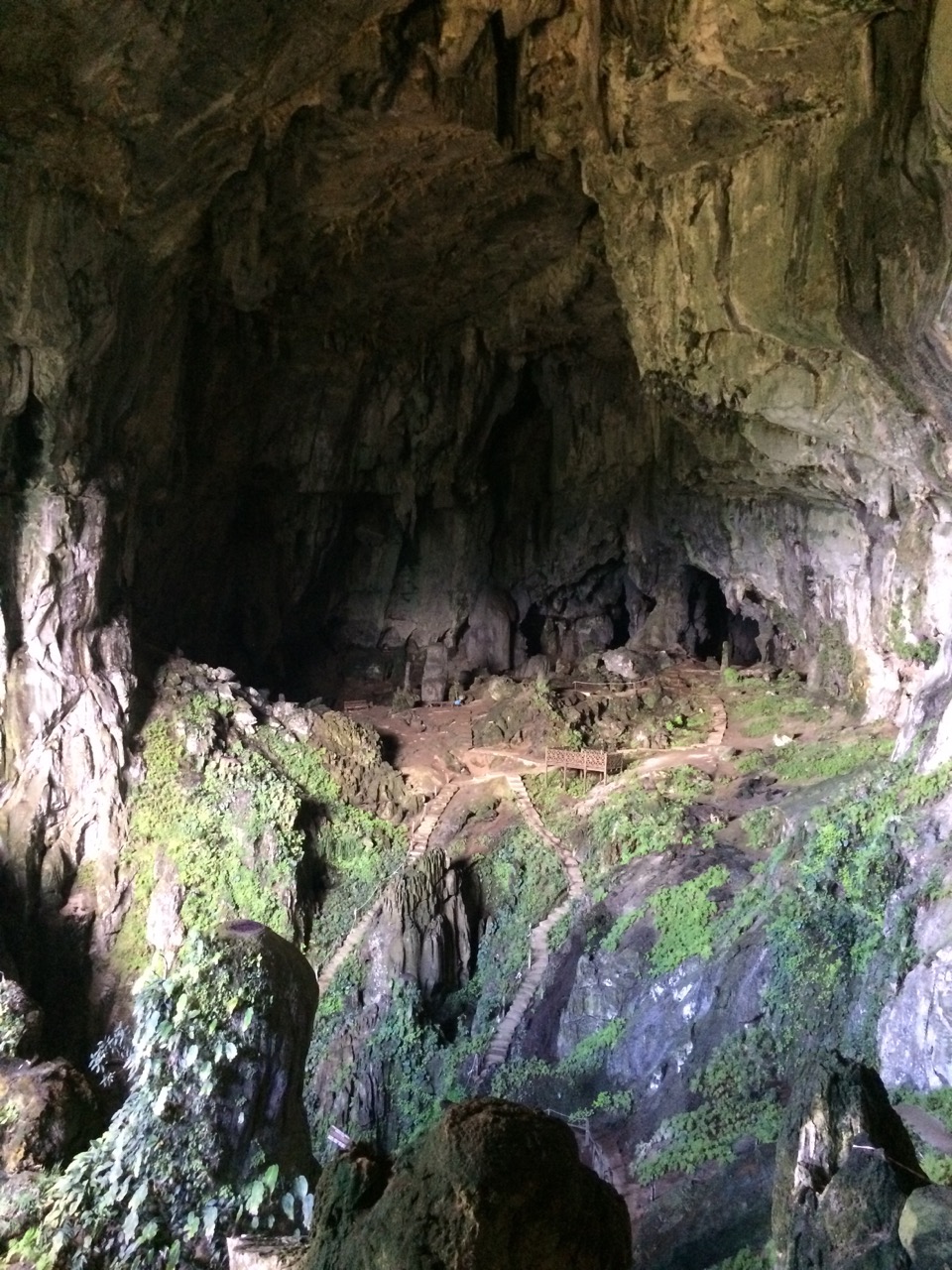
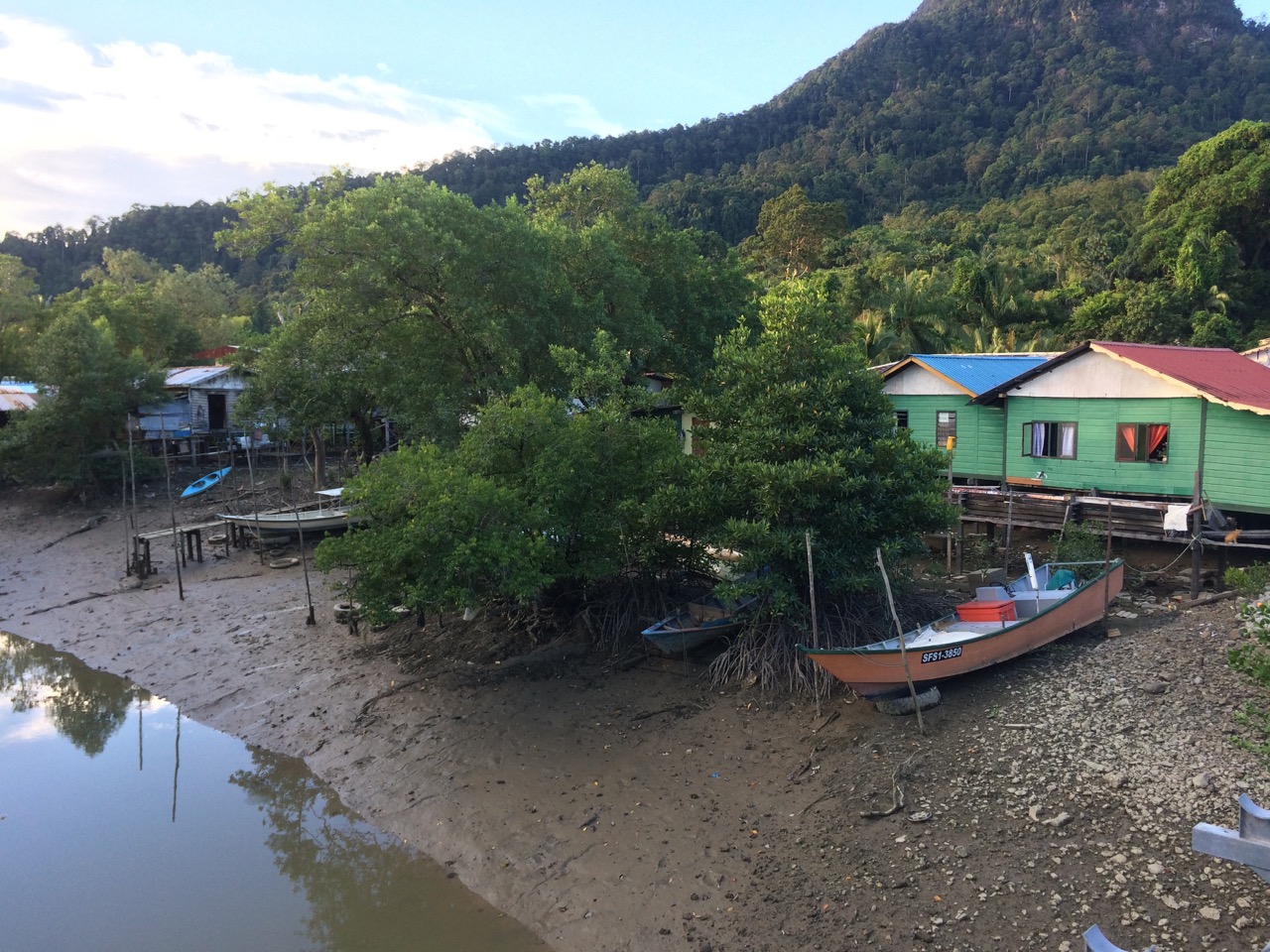
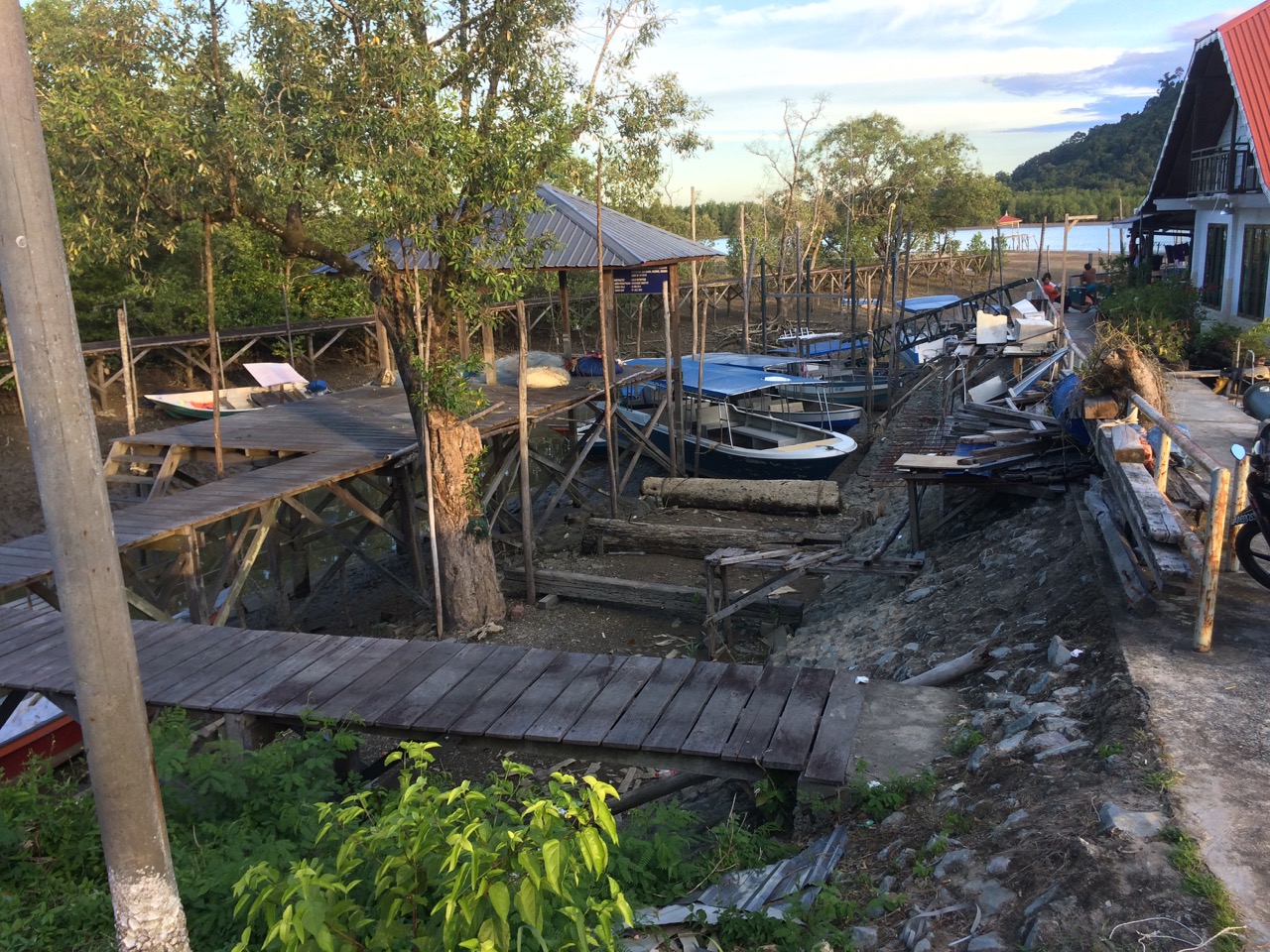
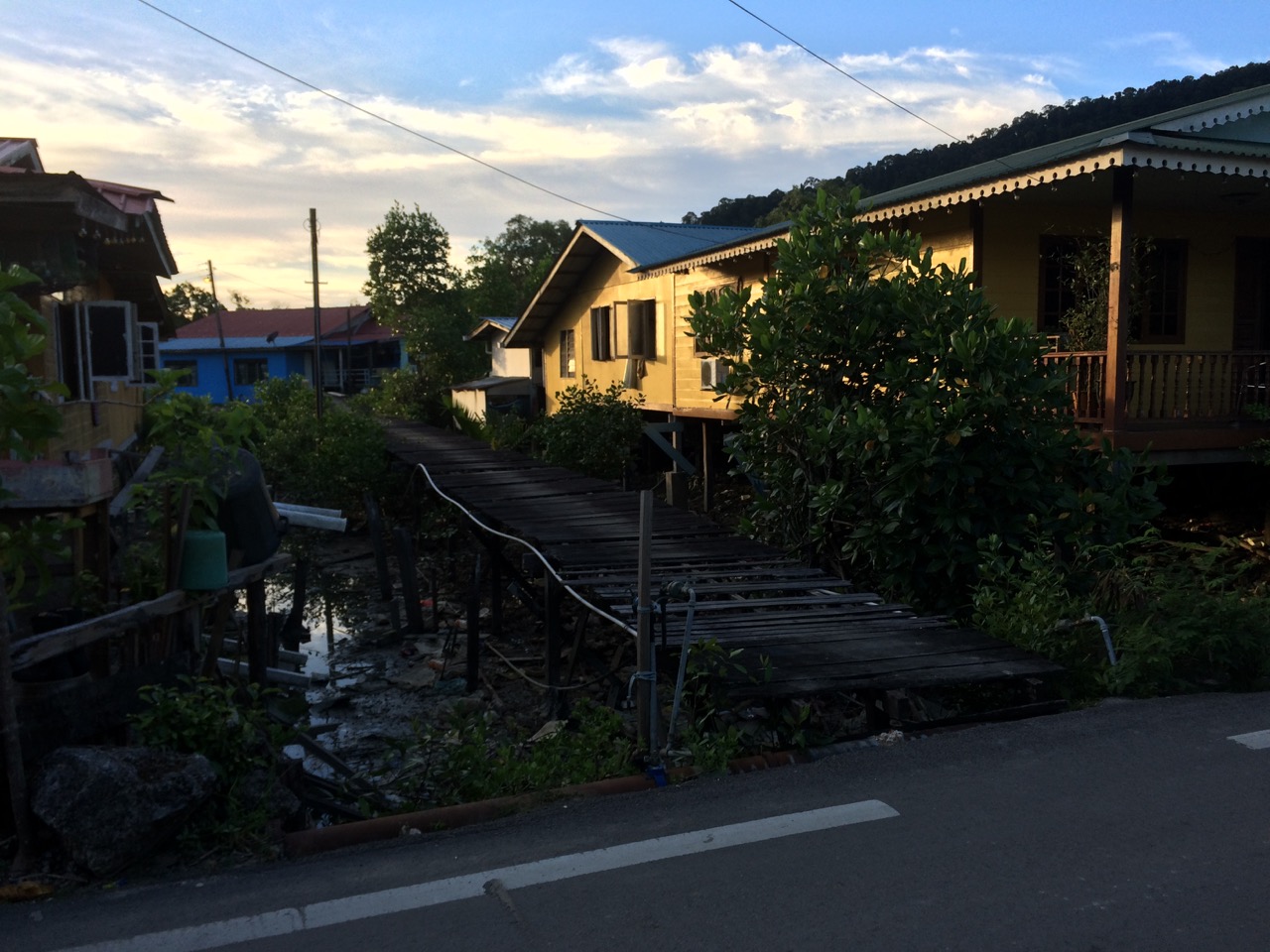
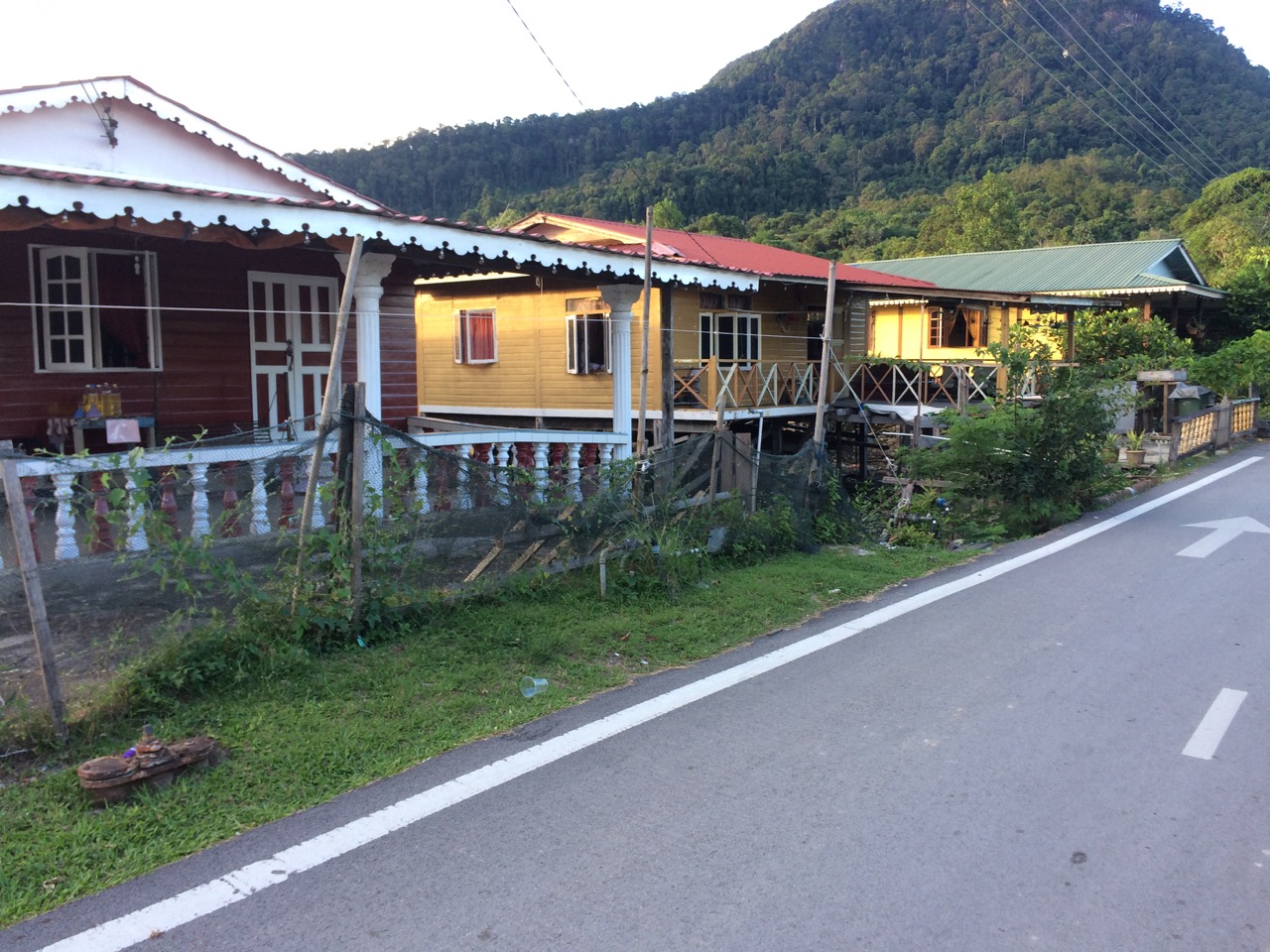
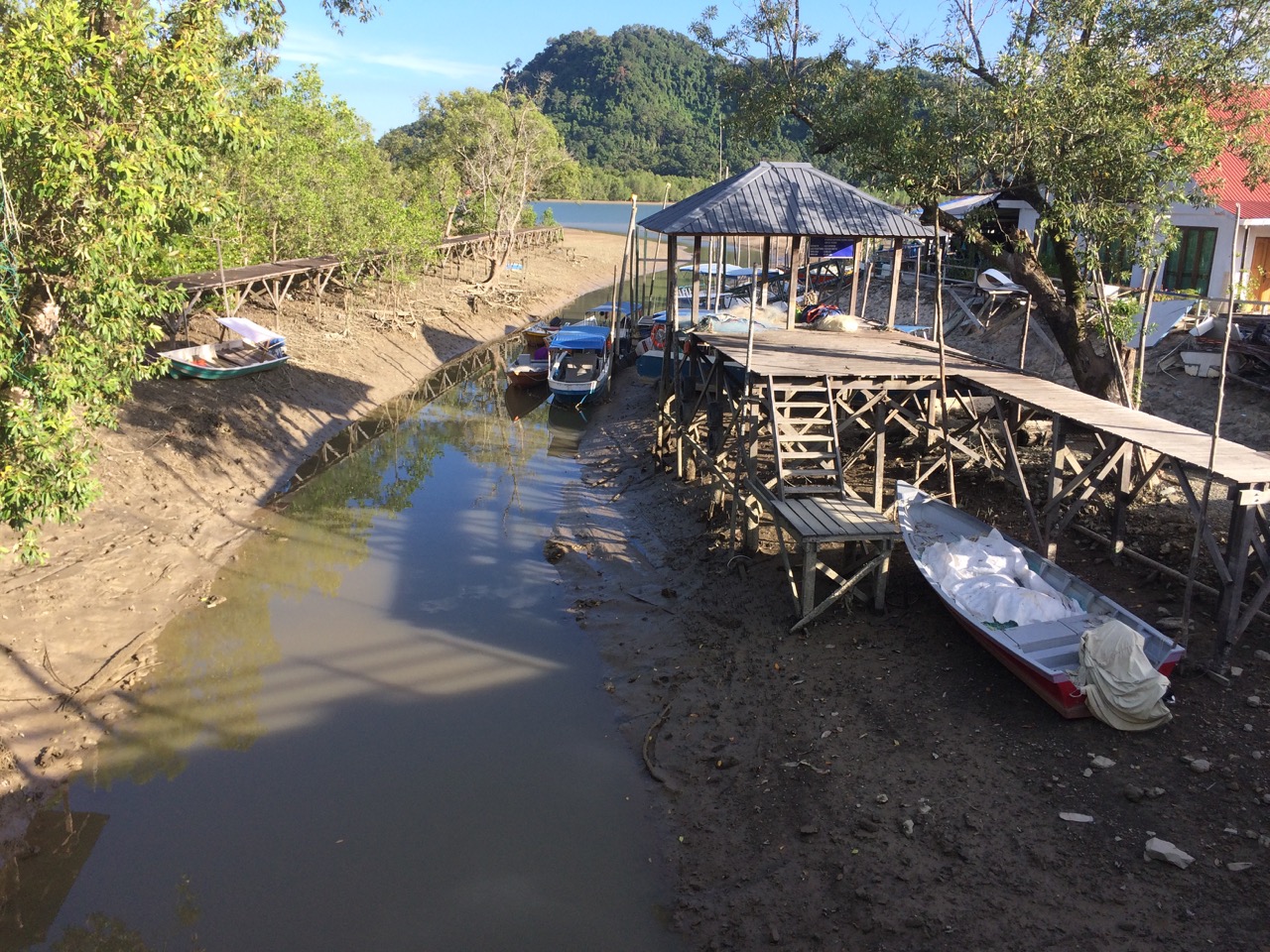
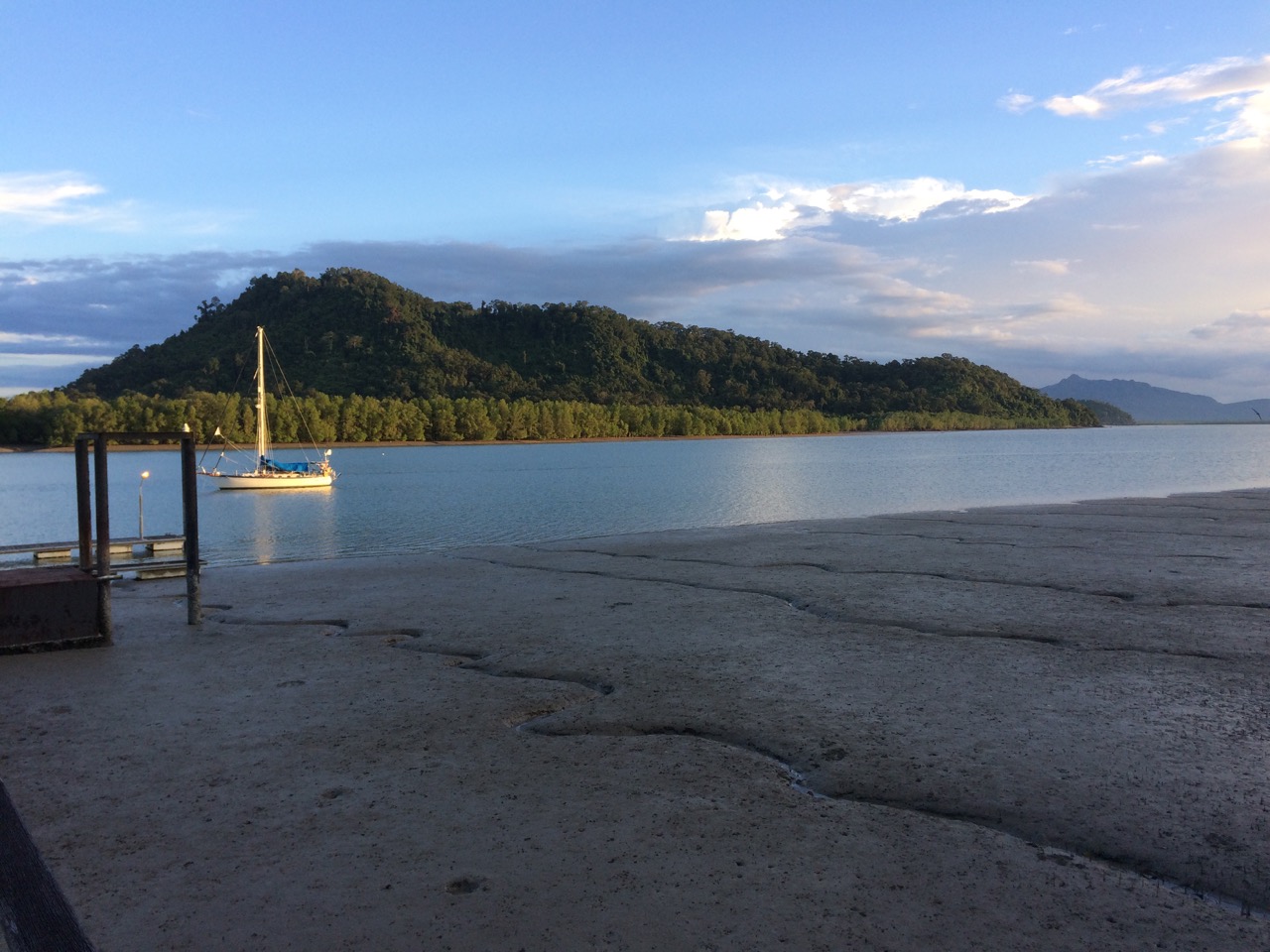
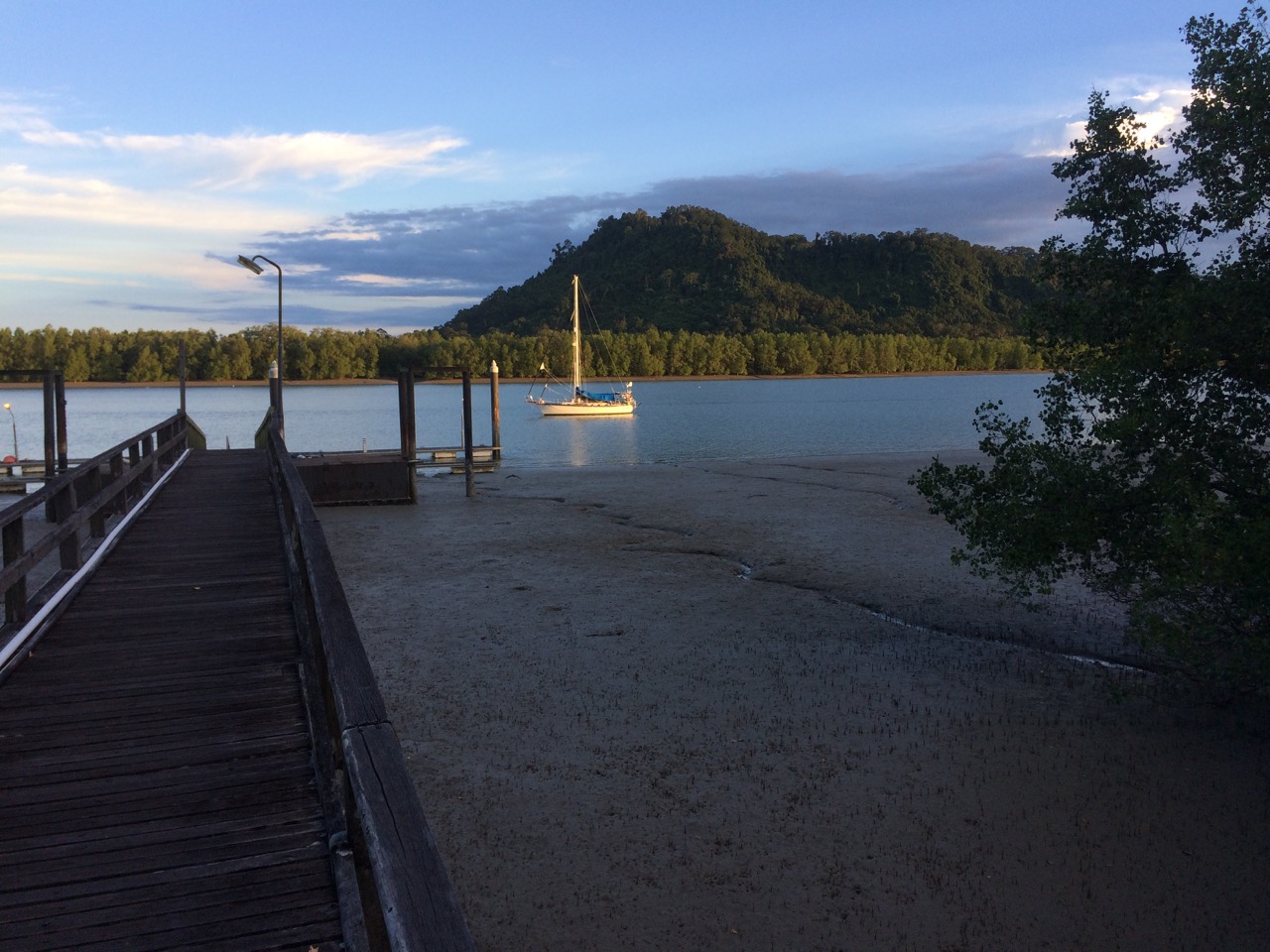
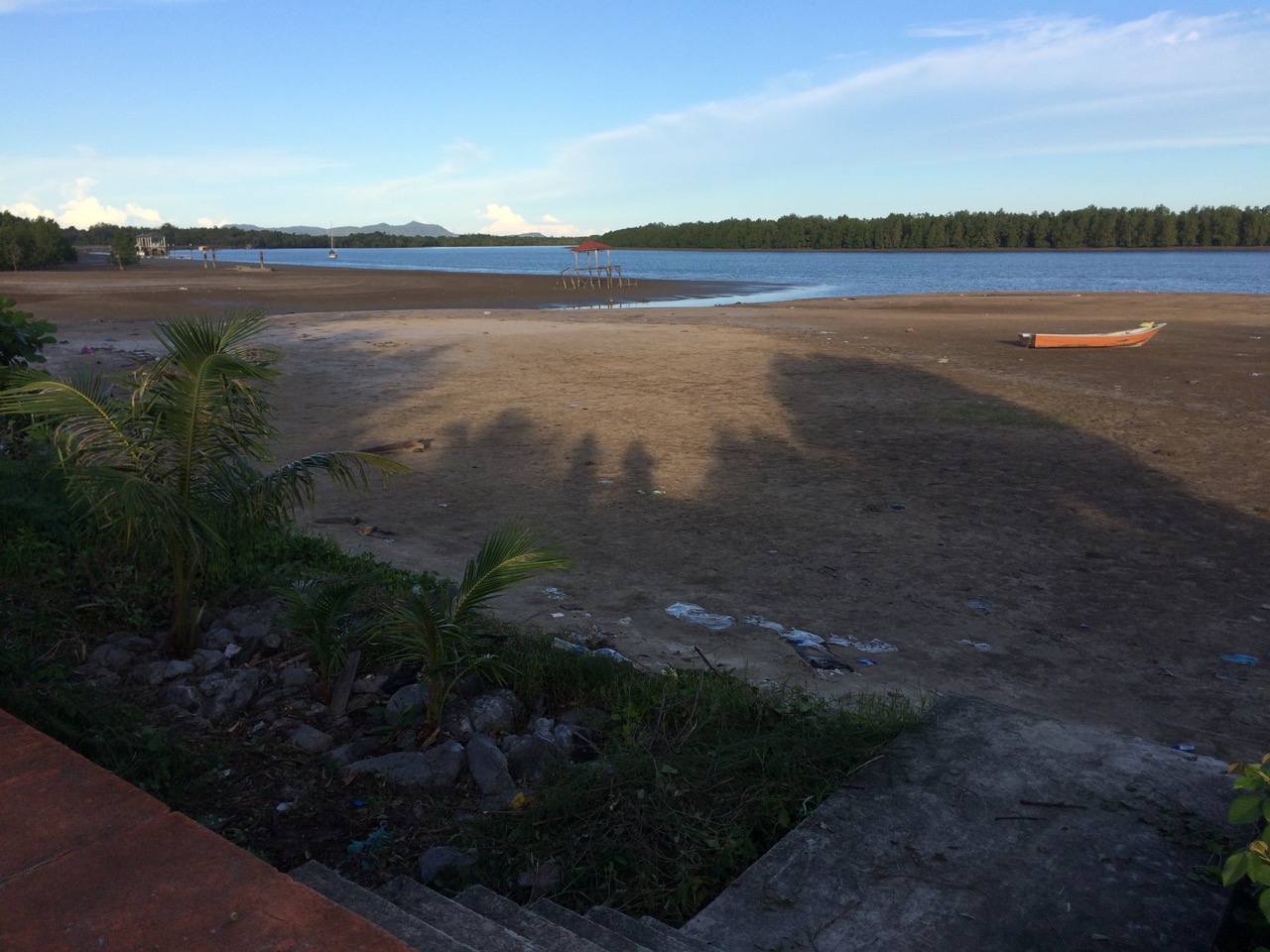
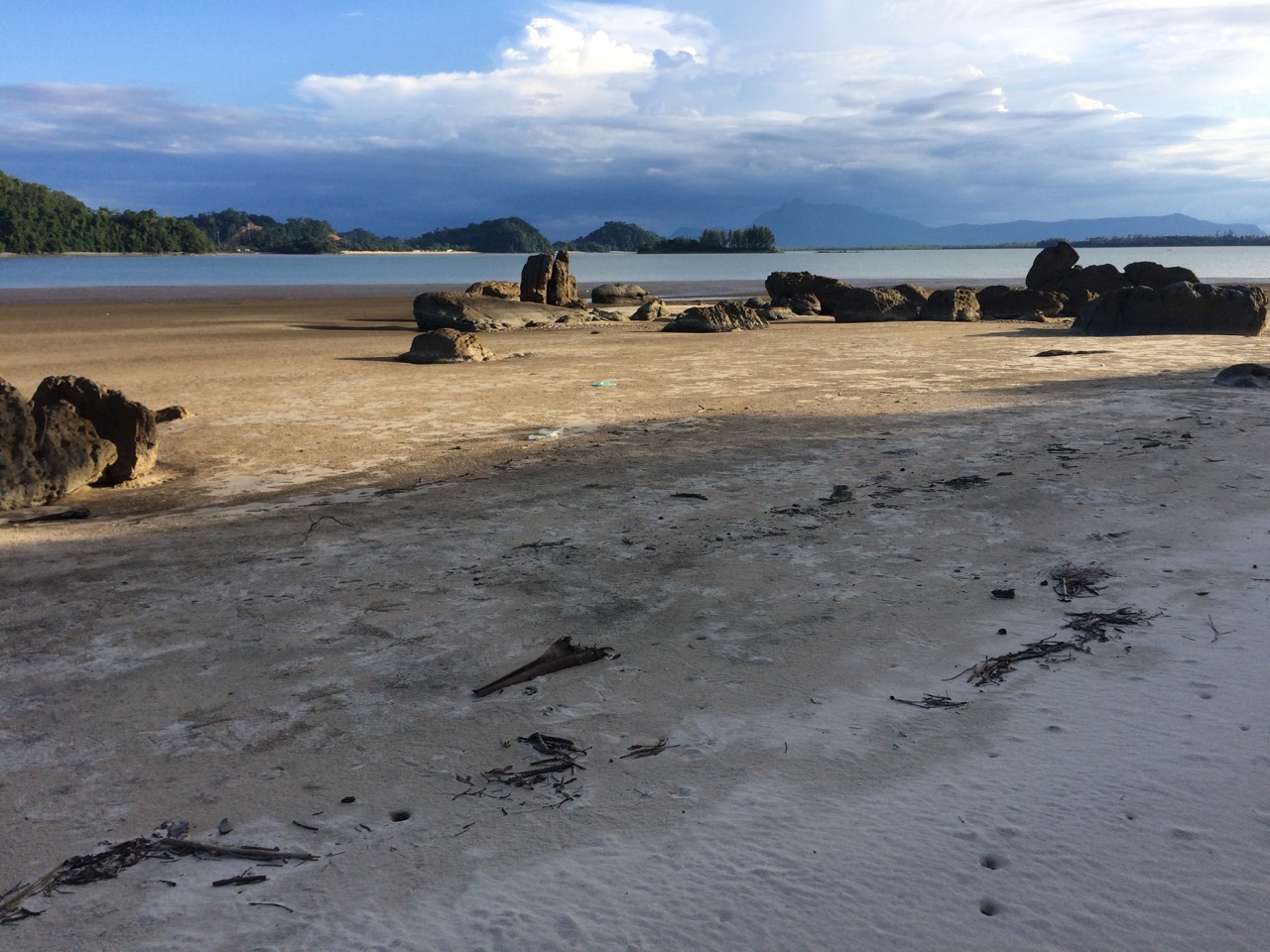
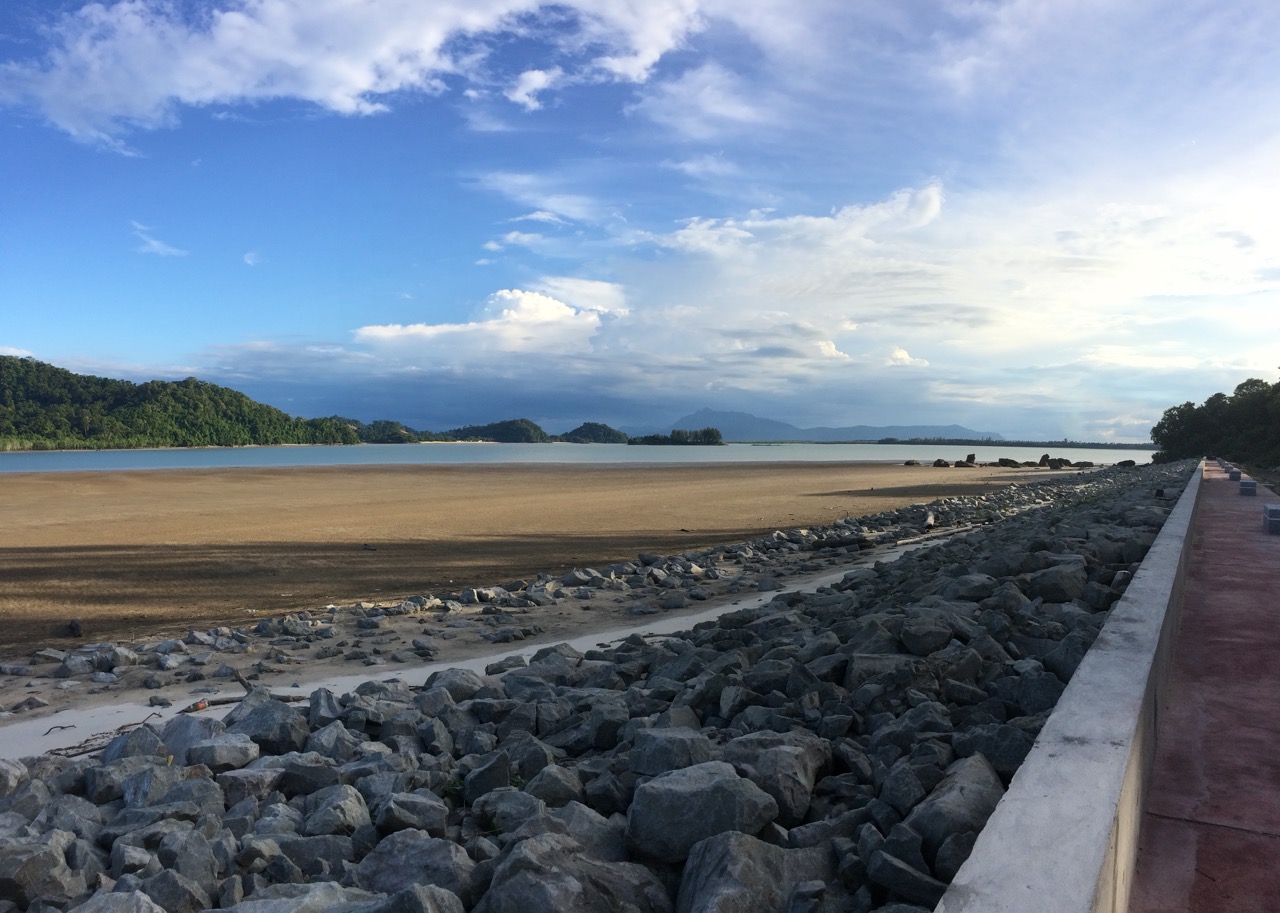
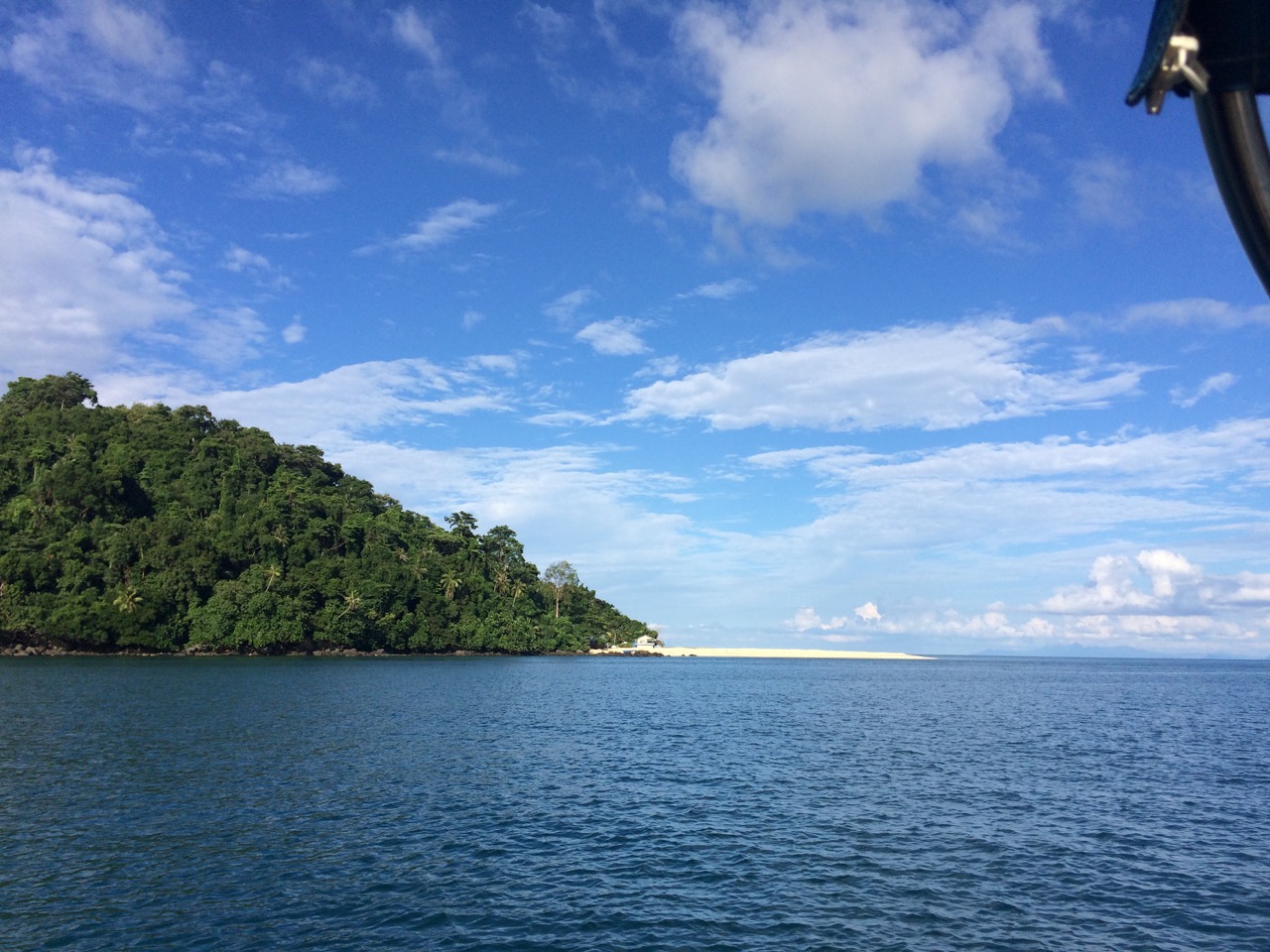
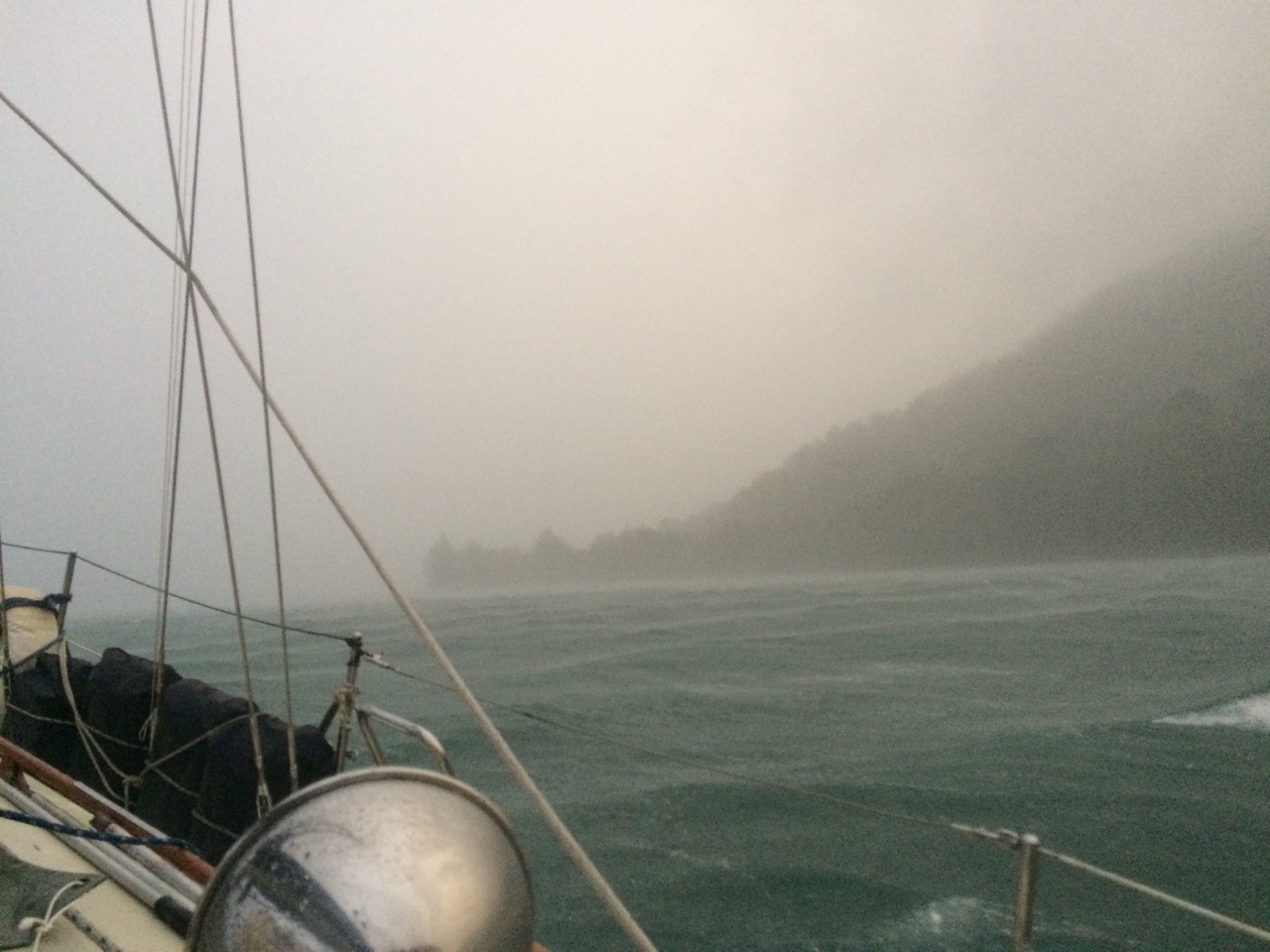
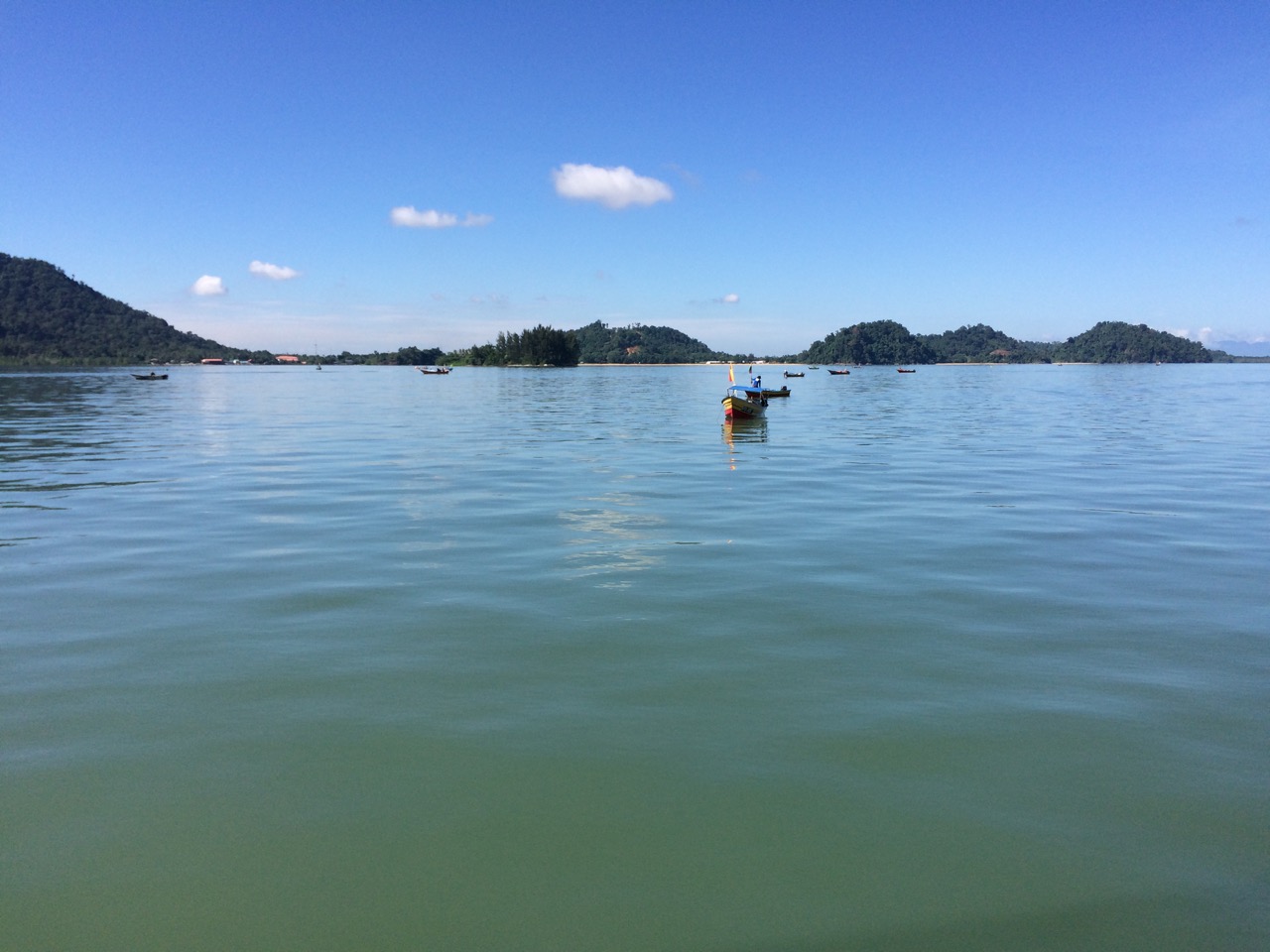
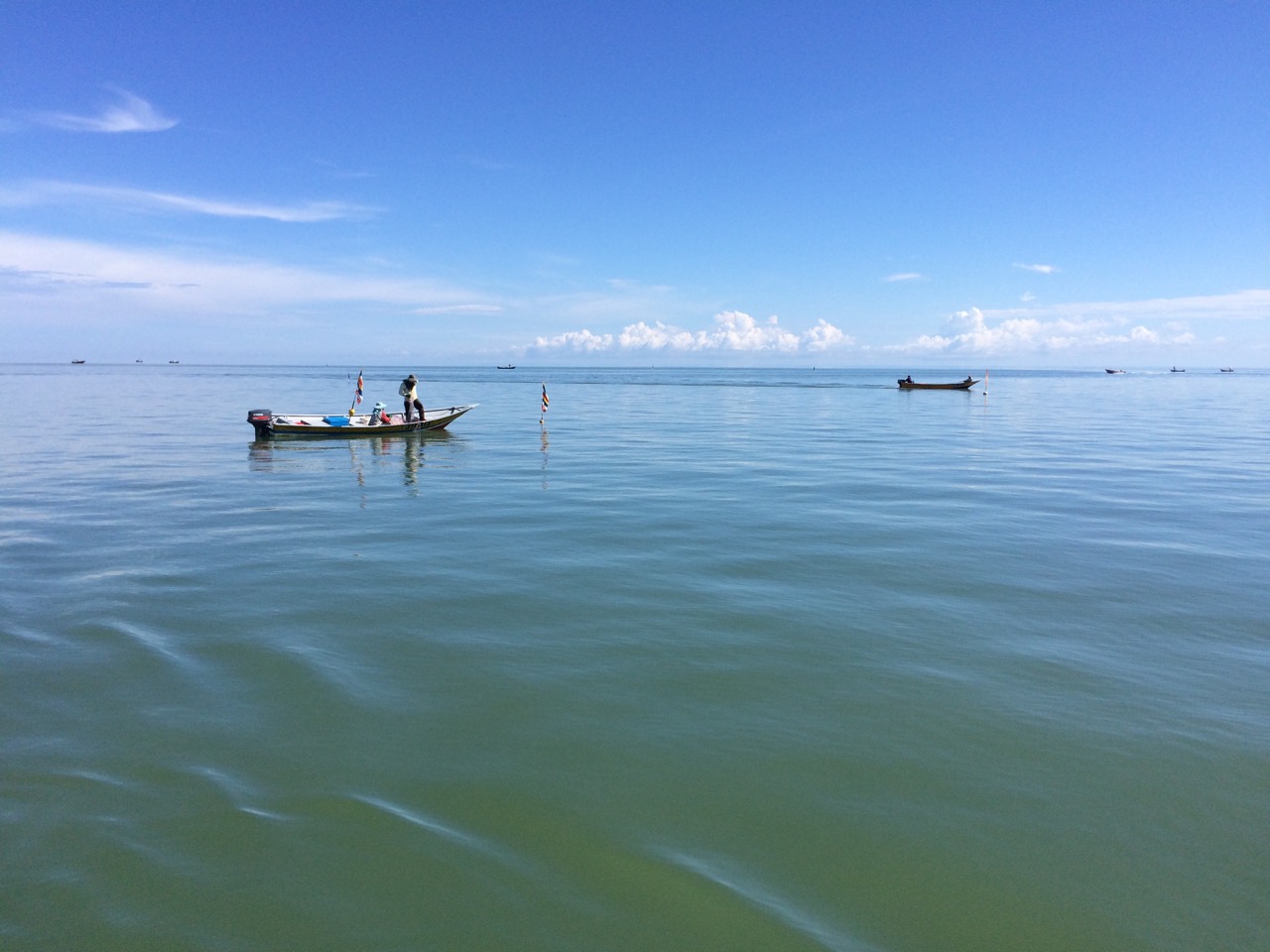
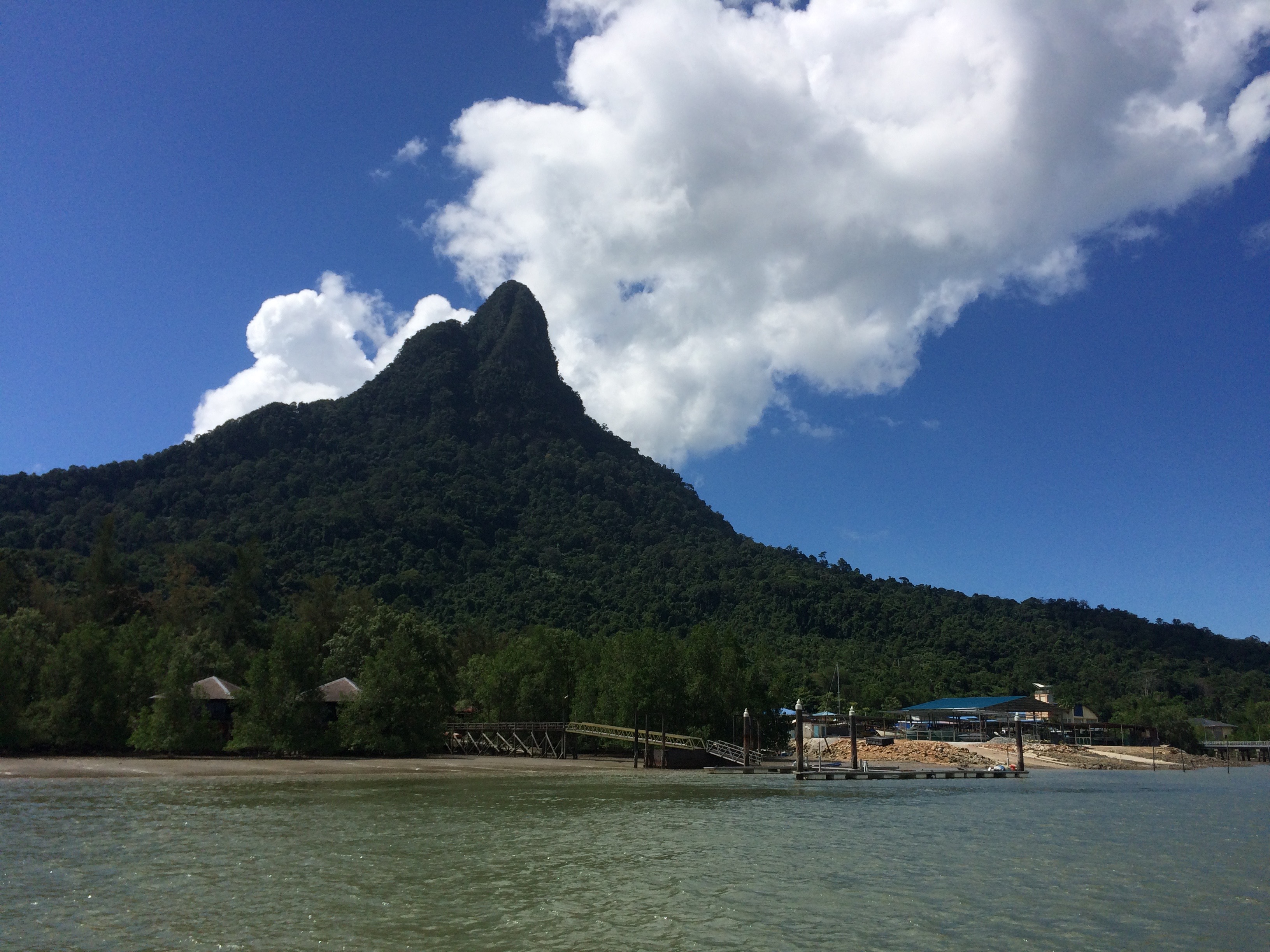
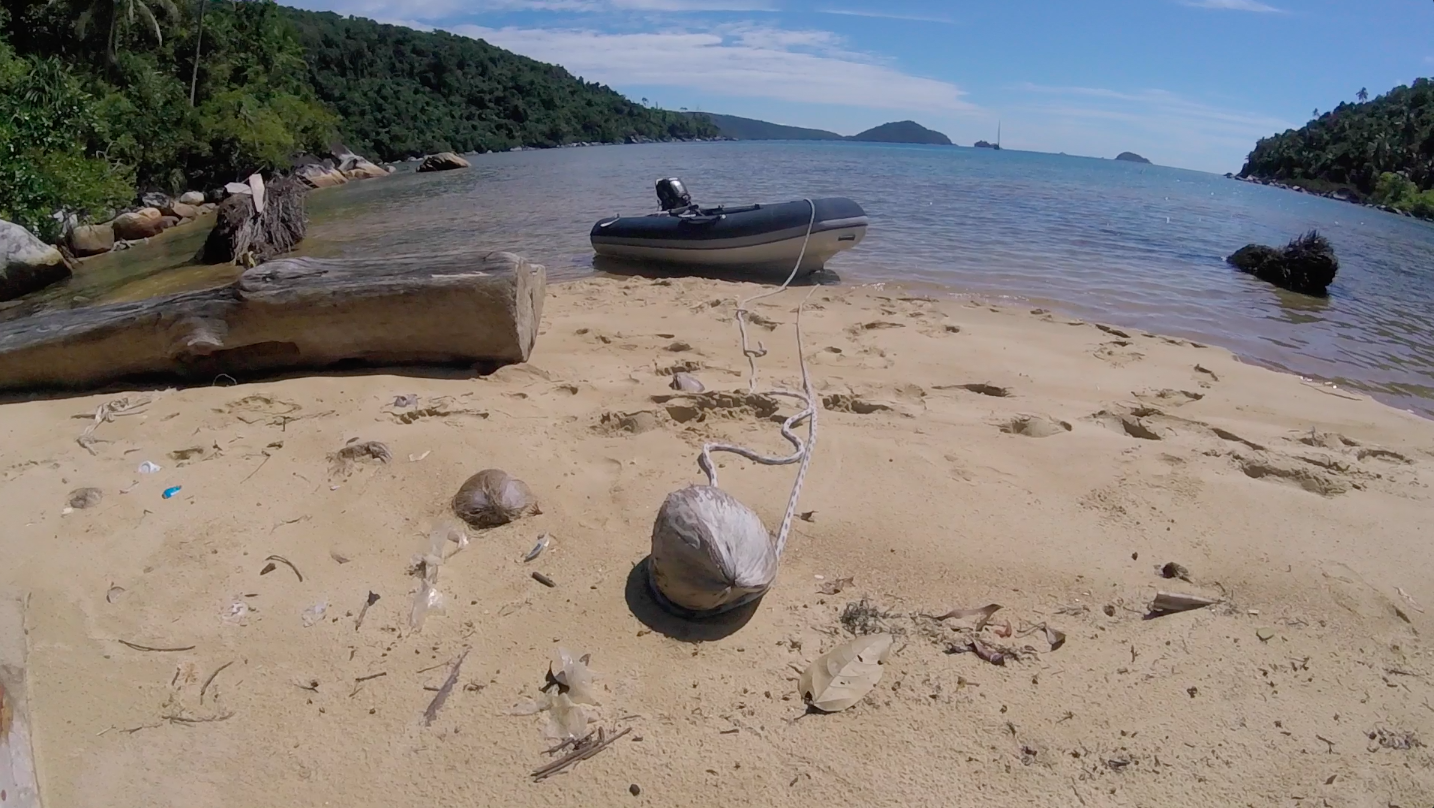
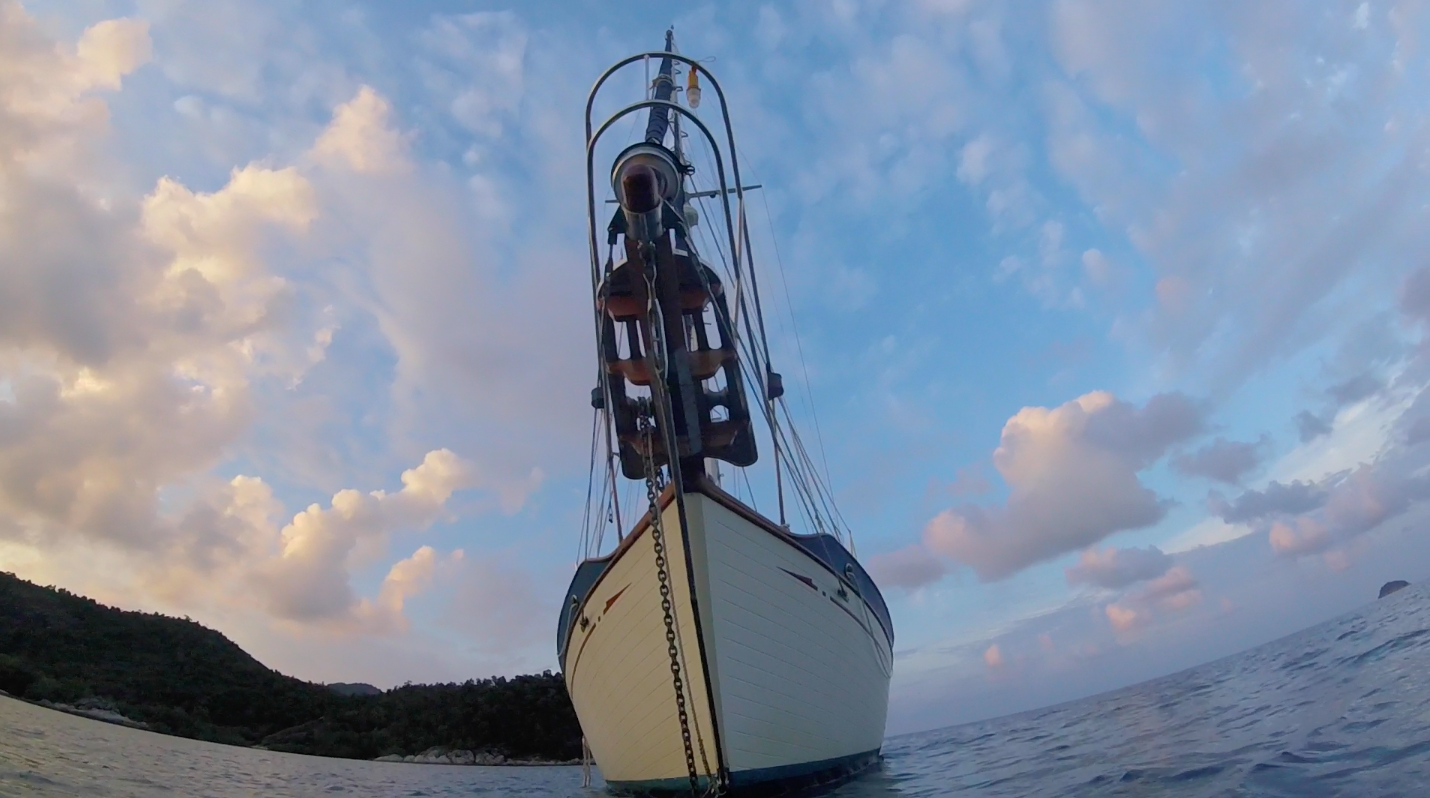
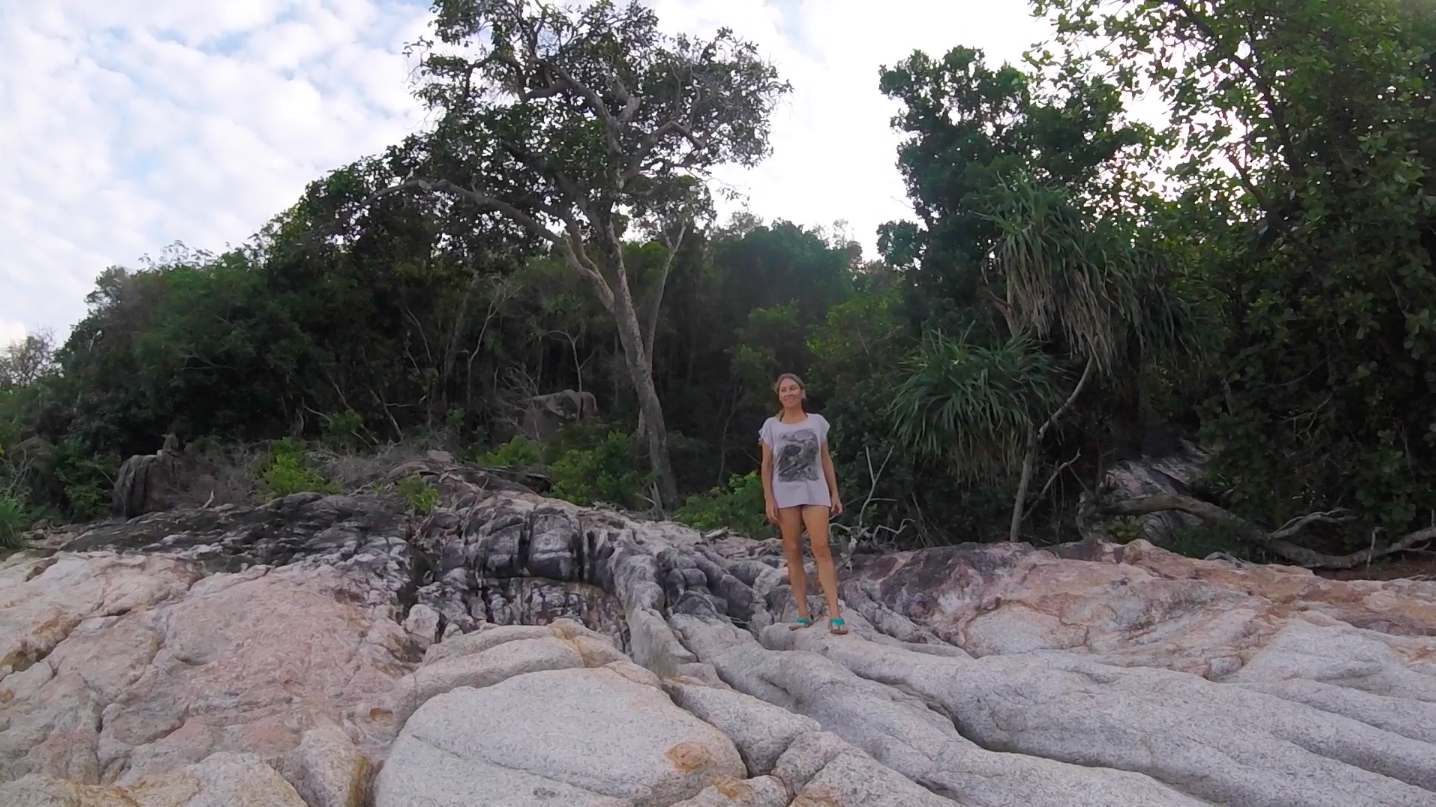
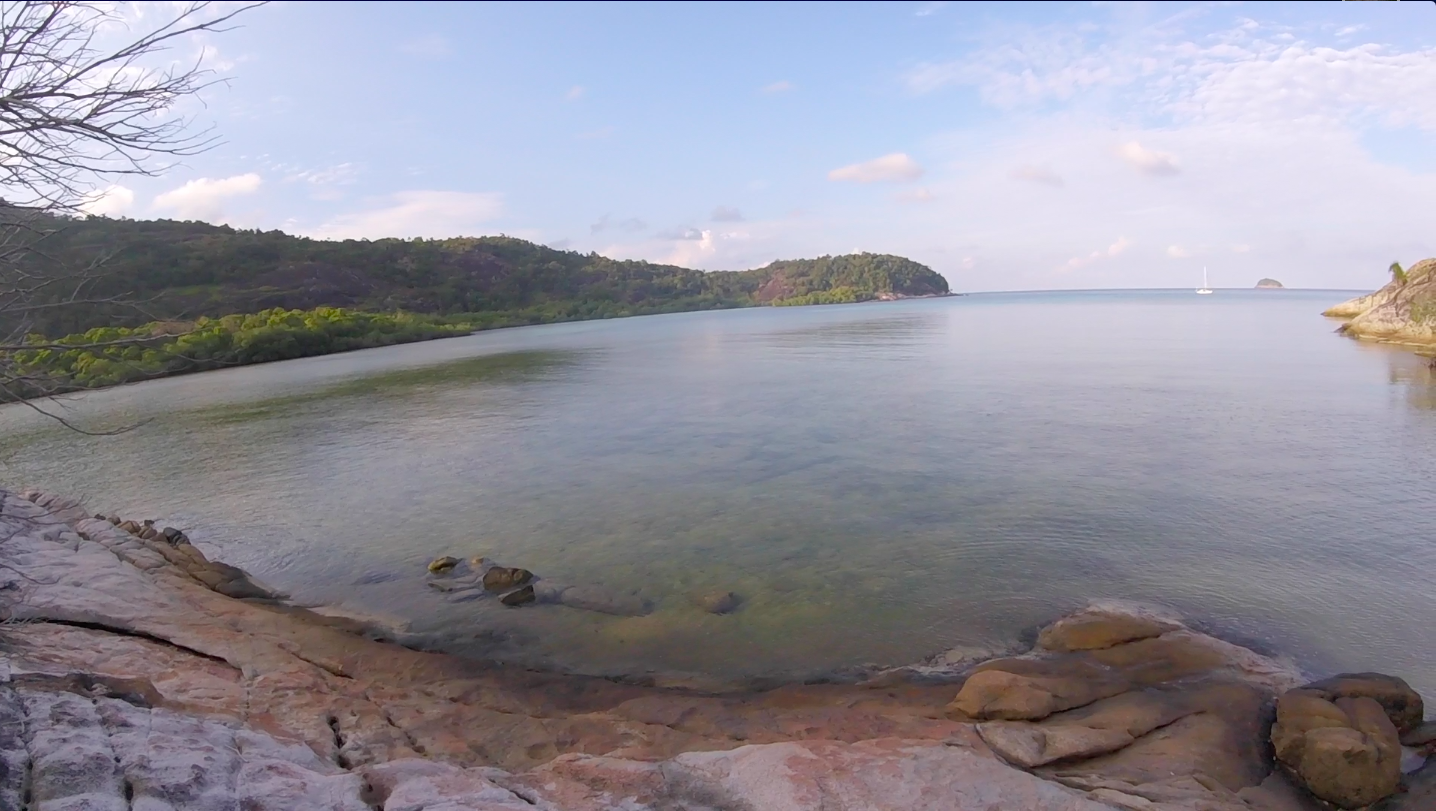
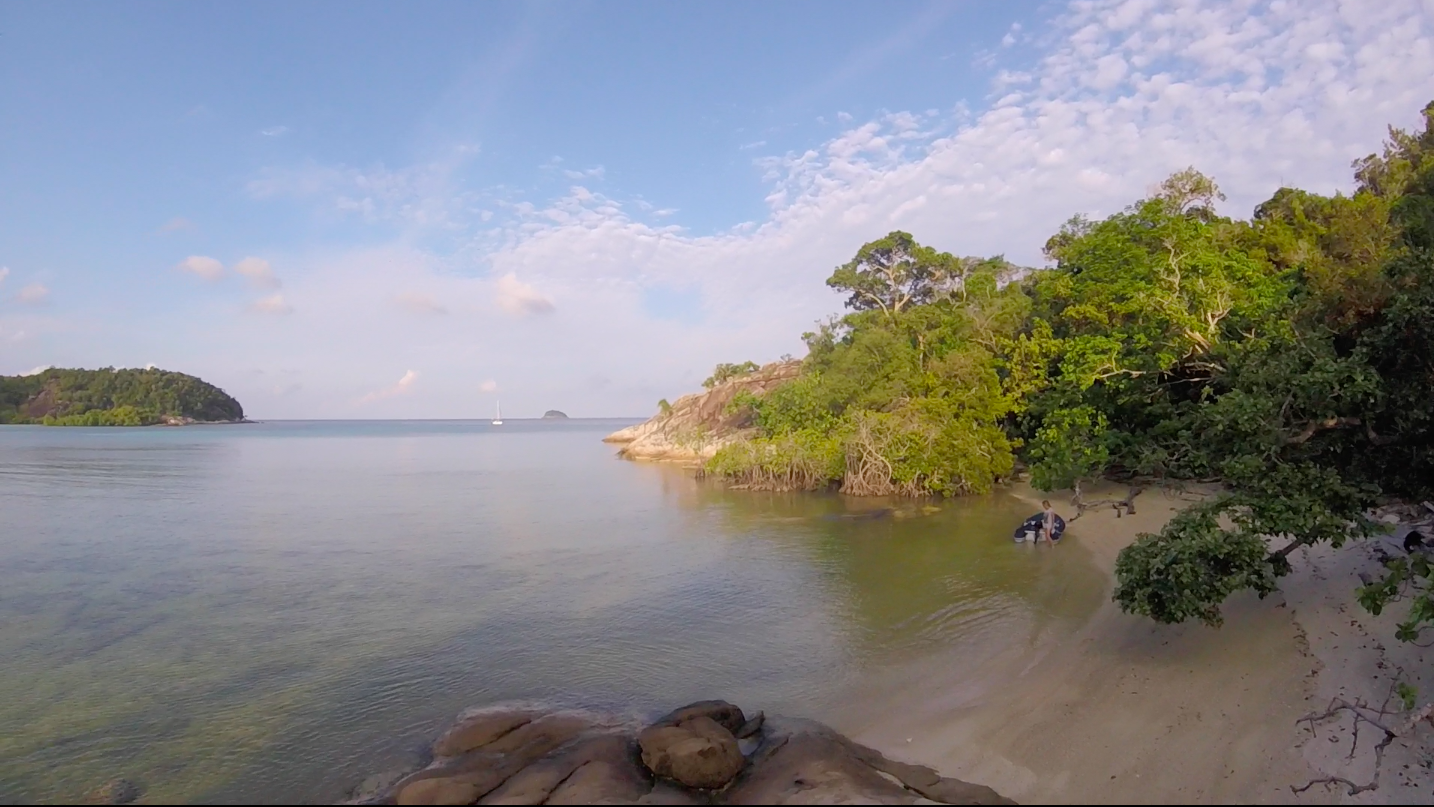
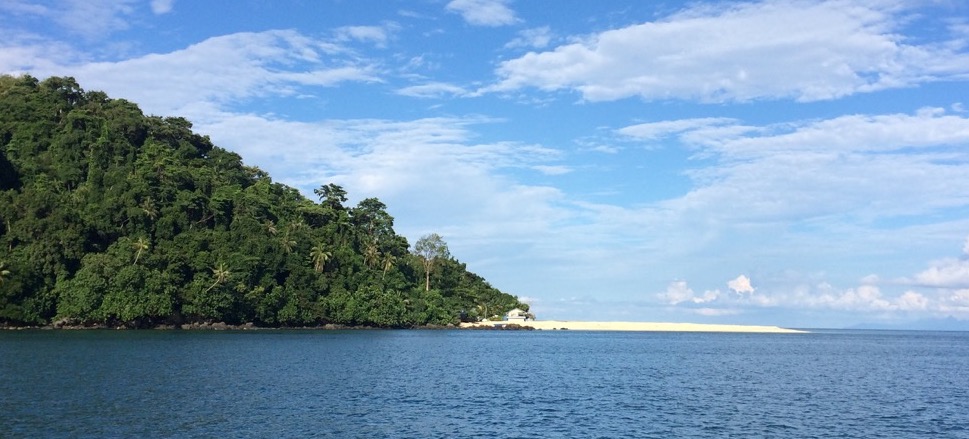
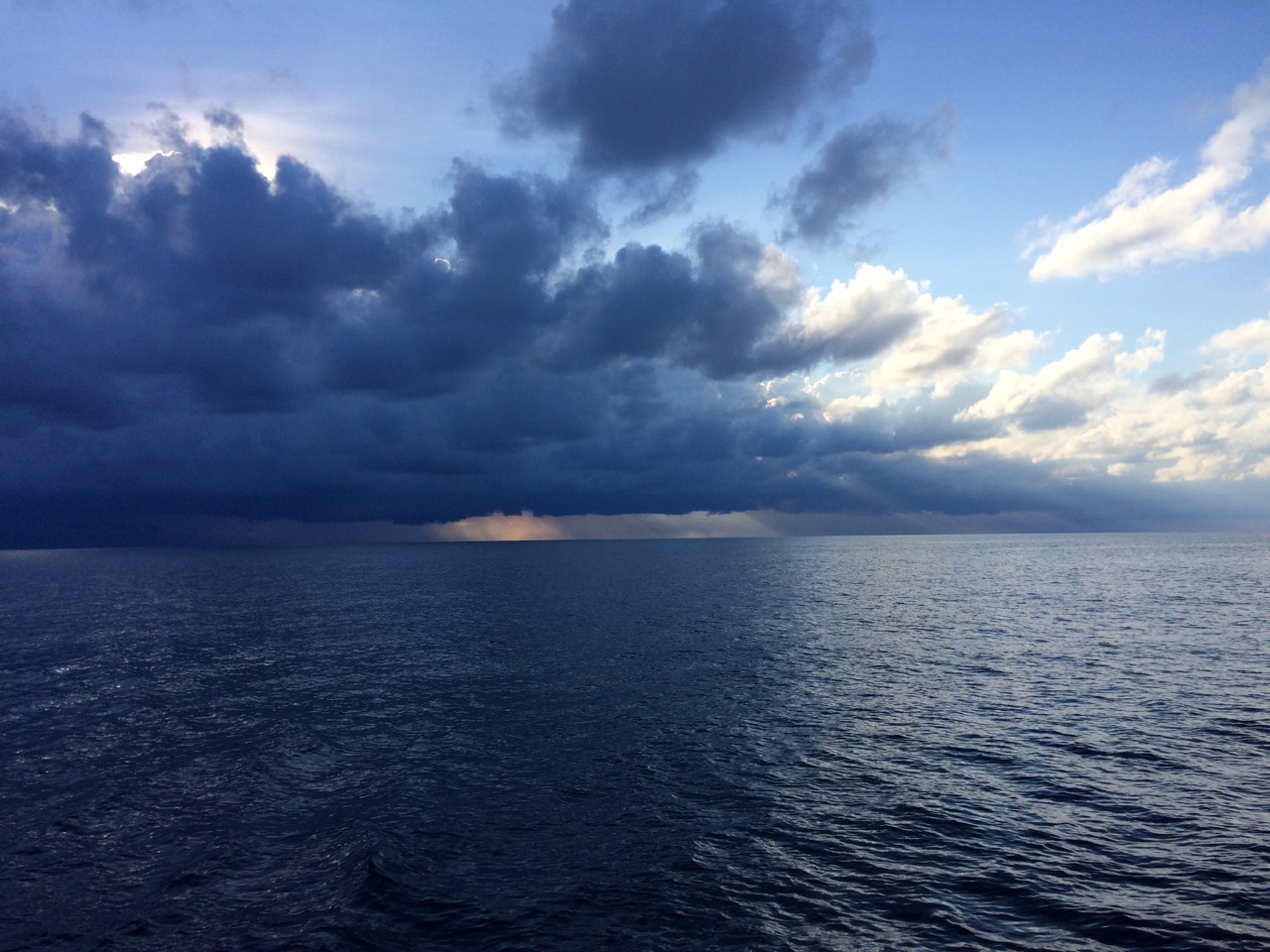 Right now we are happy to be anchored and catching up on a weeks worth of emails, facebook posts and tweets etc. Tomorrow we will try to get to P. Talang, then the day after to the mainland where we can get ashore and check in, then get some supplies sorted.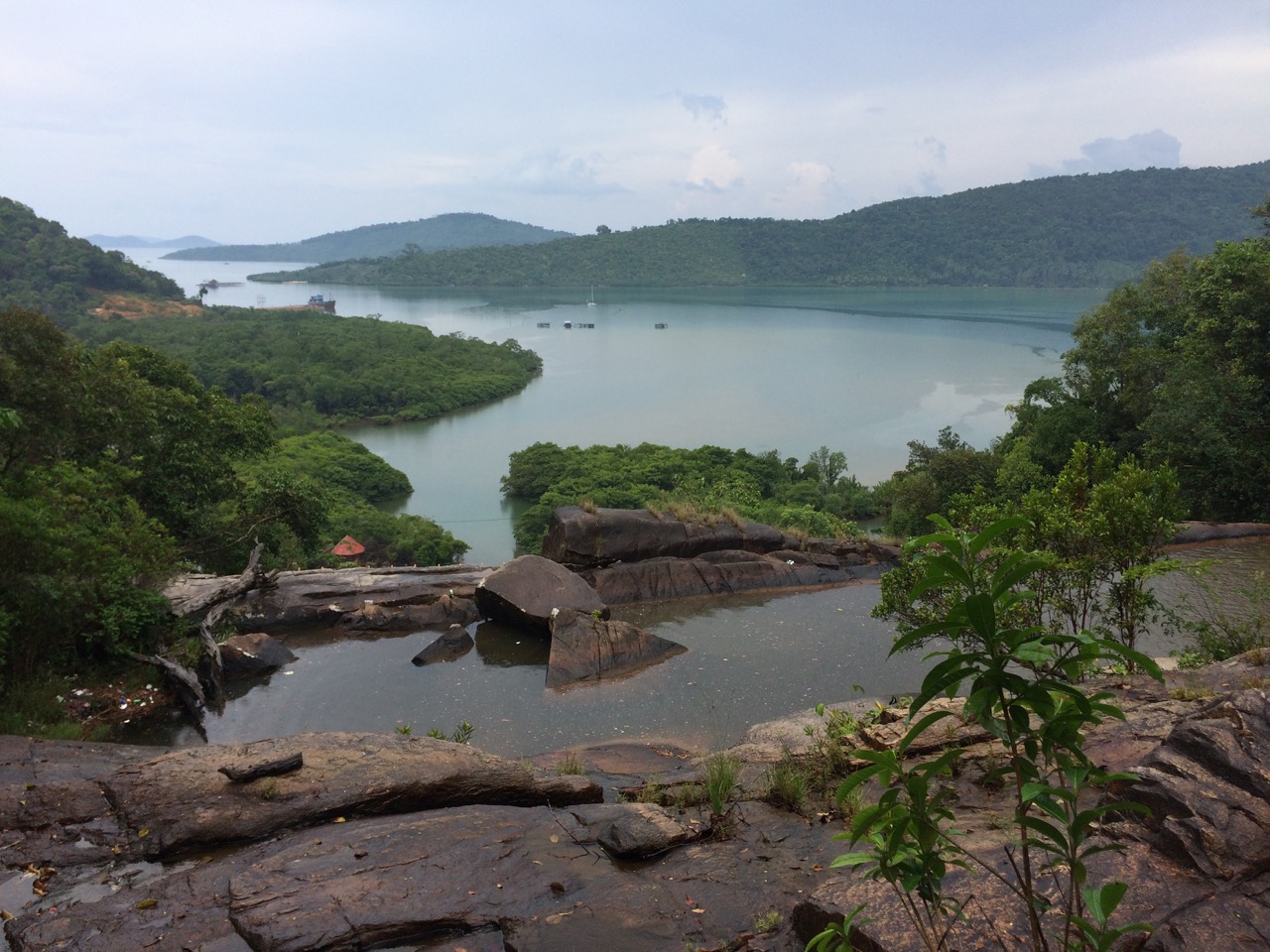
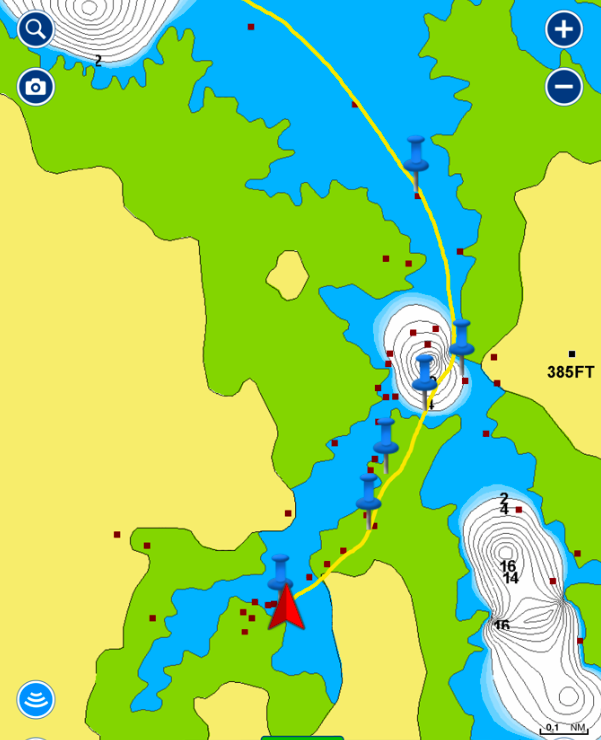
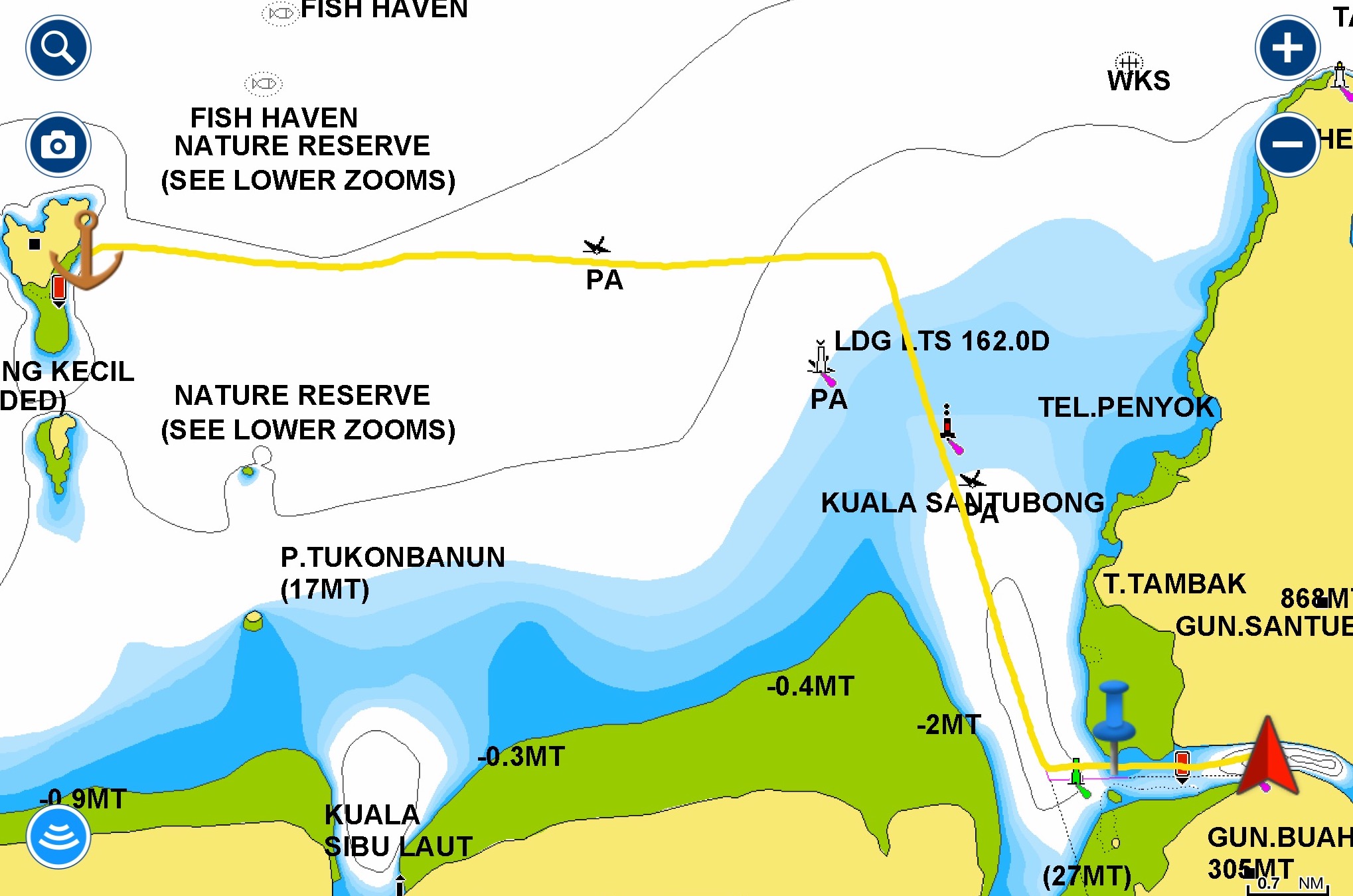
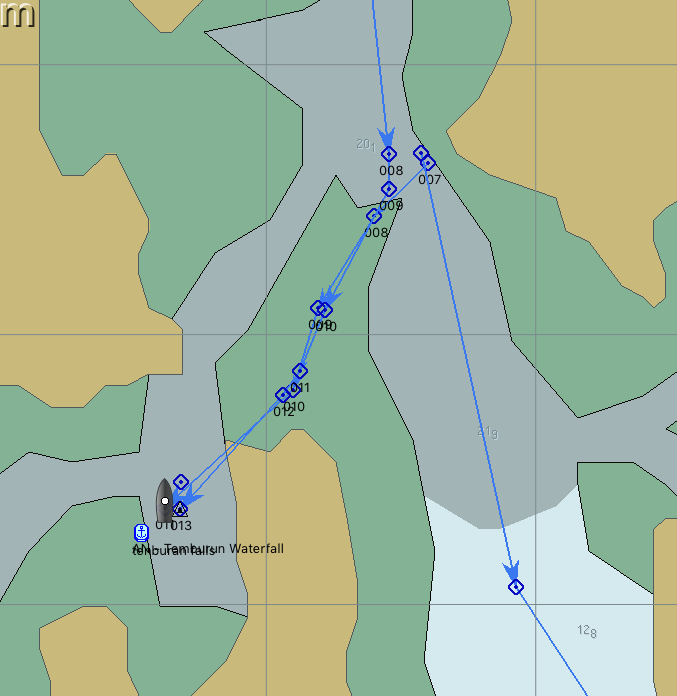 So we overlay google maps images over the charts, these are spot on, and you can actually see the reef clearly on the images.
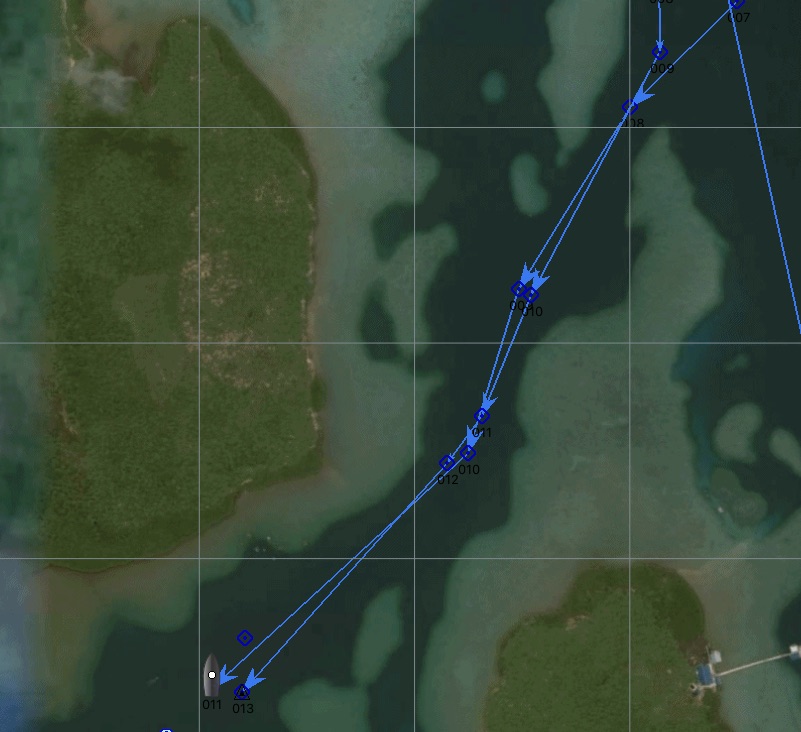 Also we had waypoints from others who had made the journey before, so I wasn’t too worried. As it turned out, besides the software continually crashing, or not picking up the GPS data, it went well. the reef was easy to see.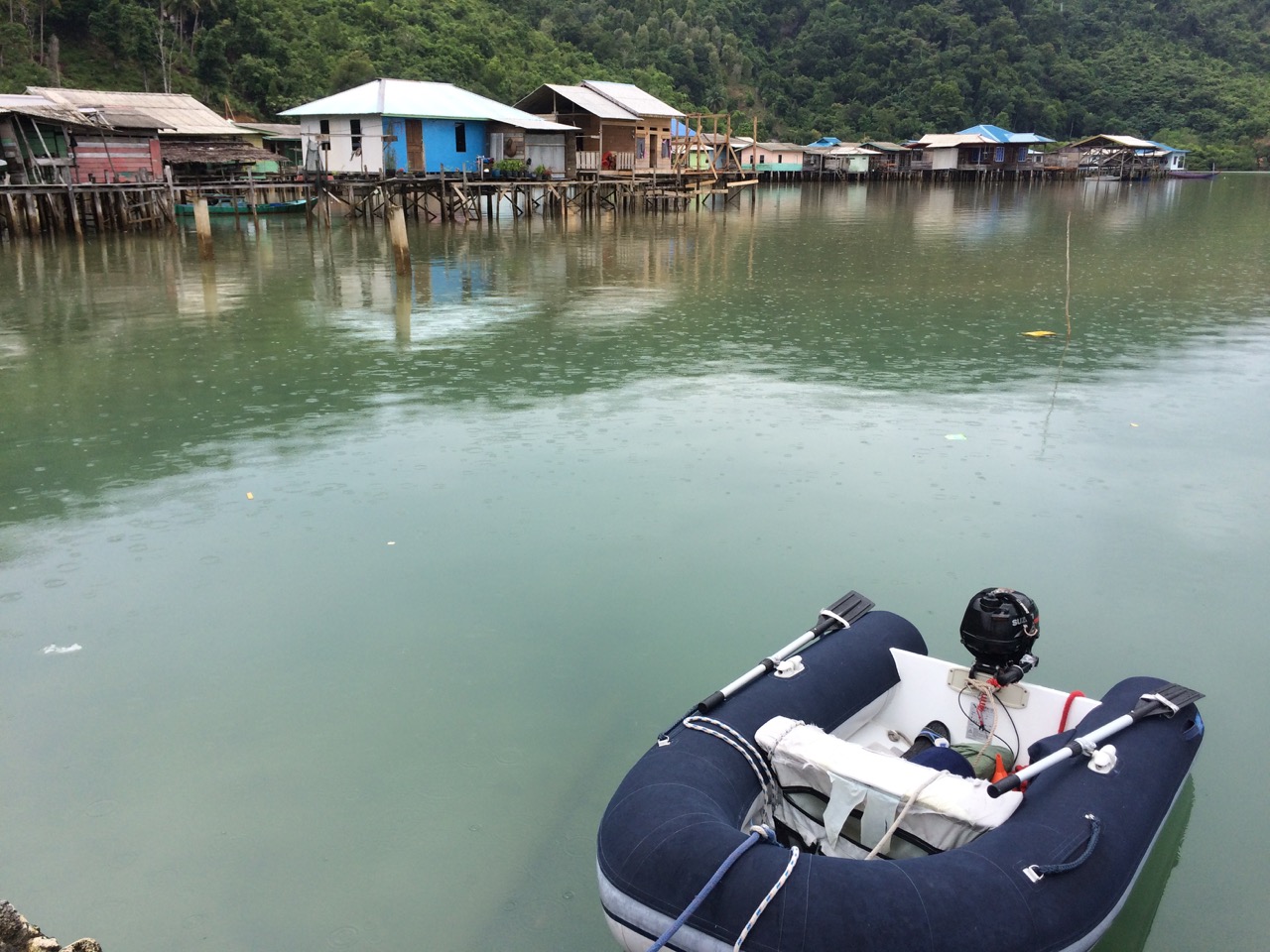
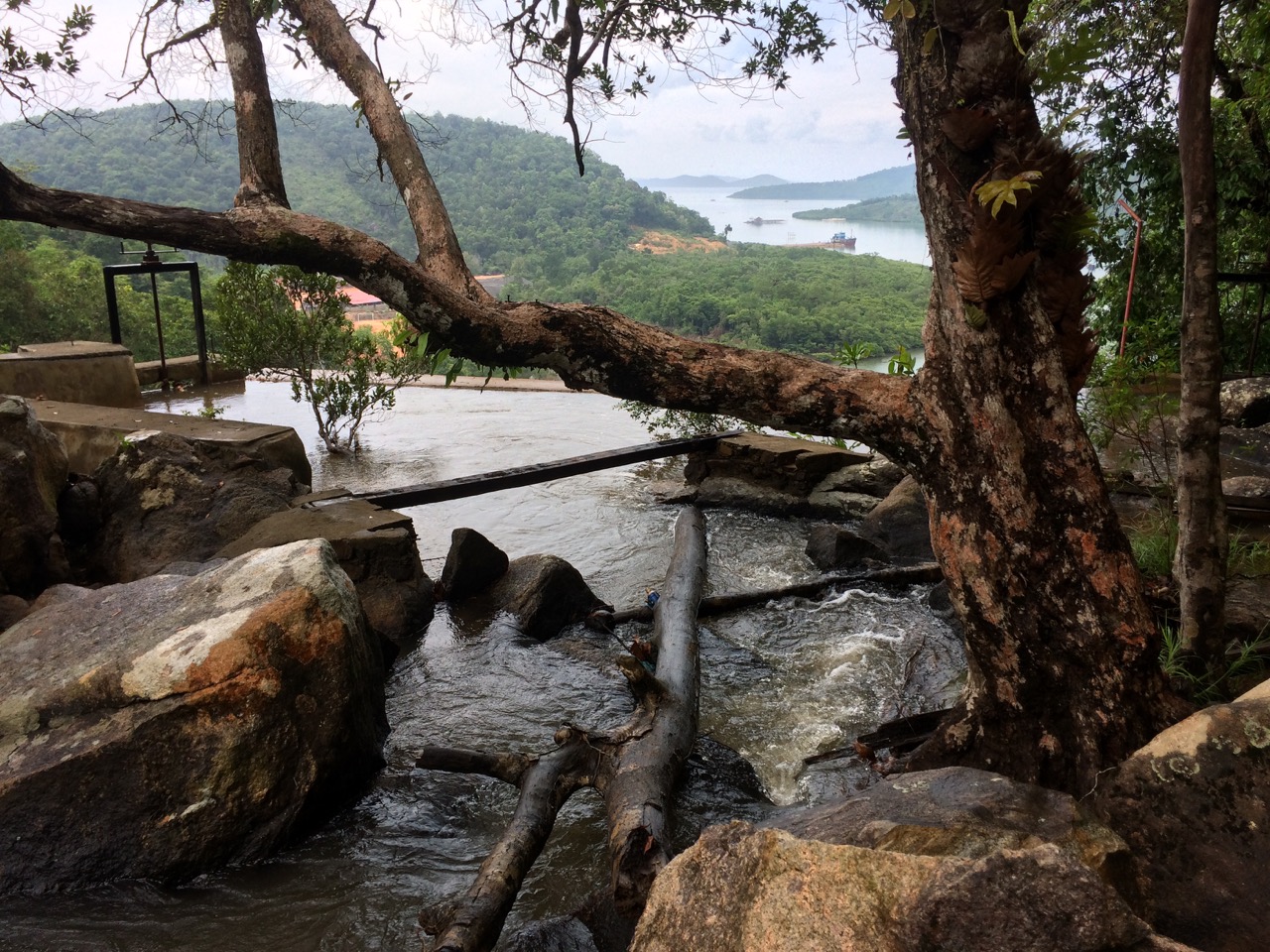
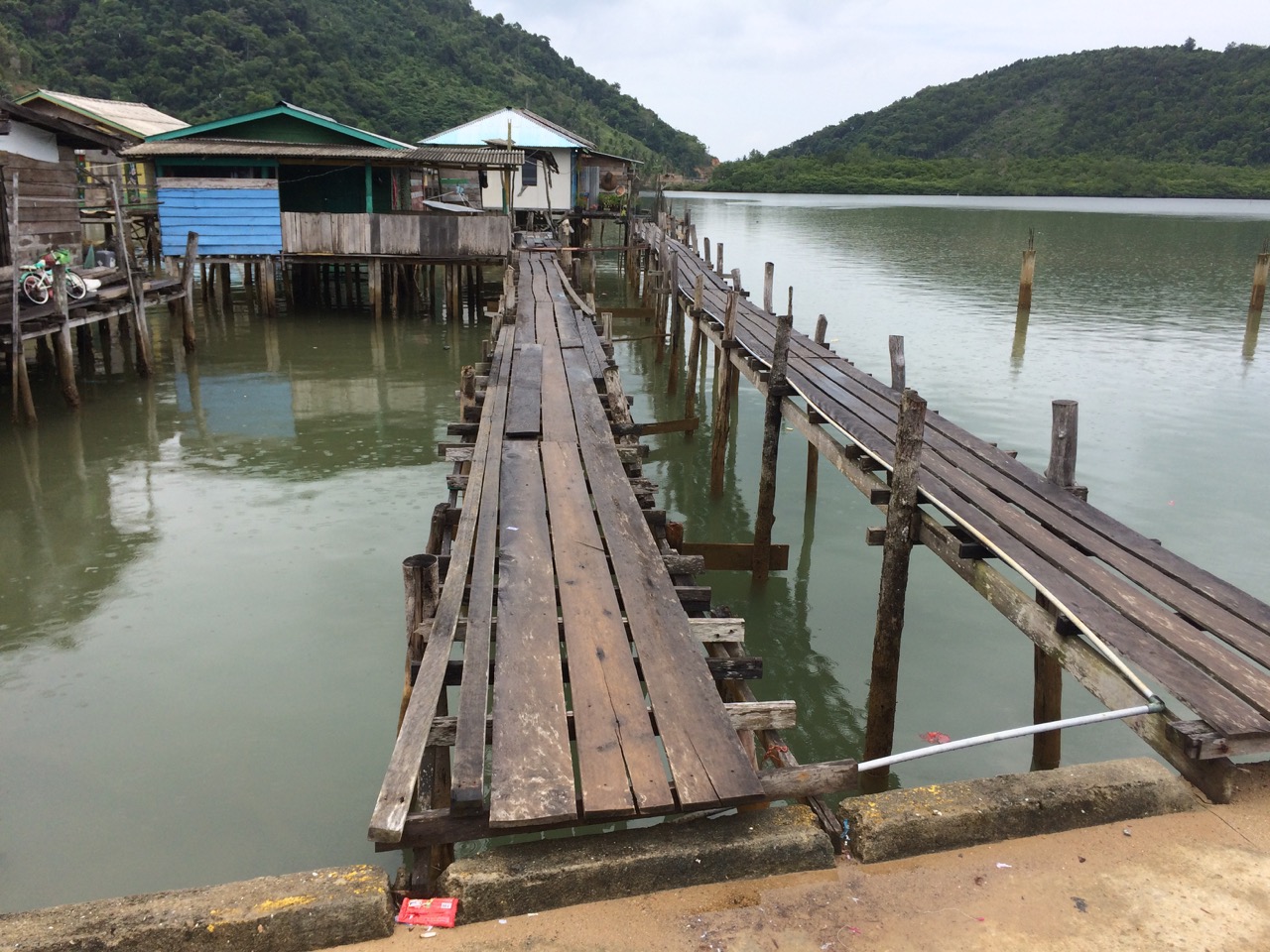 Our reason for visiting was to see the waterfall, which is claimed to be one of the areas main attractions, It’s certainly a big waterfall, and when we visited had plenty of water flowing, but the path up, and the visitor area is terribly dilapidated, and deserted /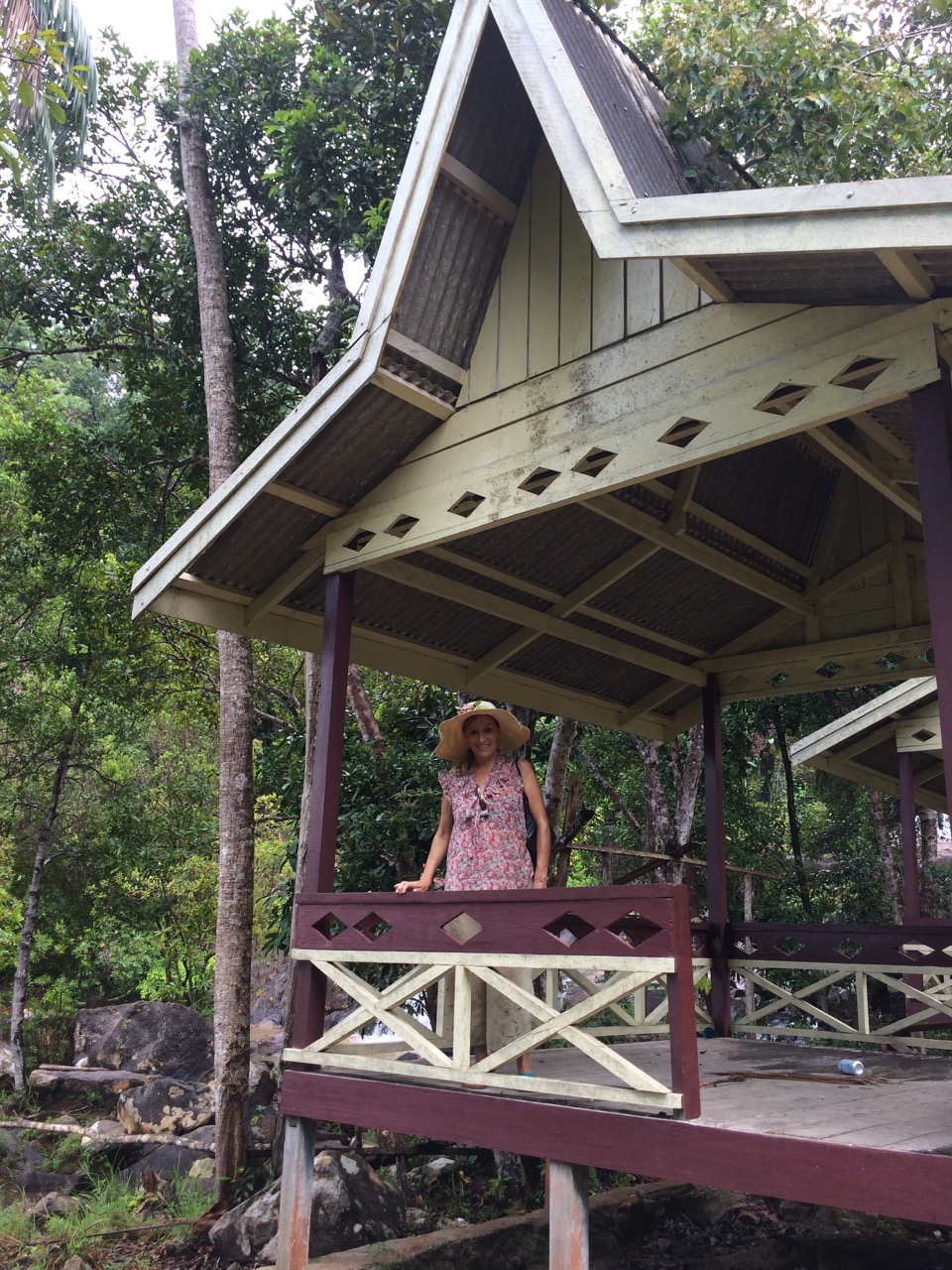
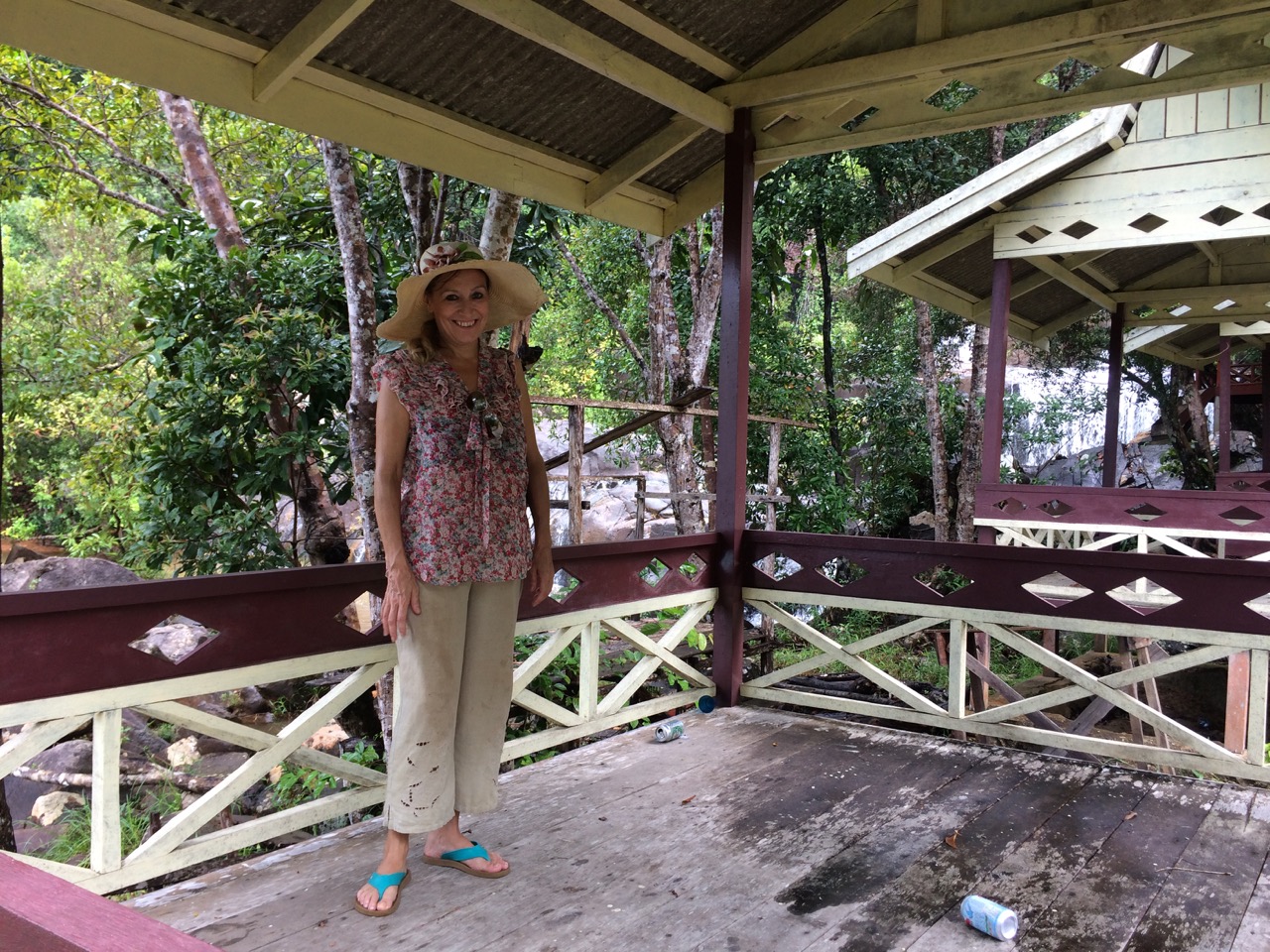 We only made it halfway up the hill. However it was worth the walk, the view was wonderful, and seeing Sister Midnight sitting at anchor a long way away made me realise how comfortable I had now become about anchoring and getting the boat to hold.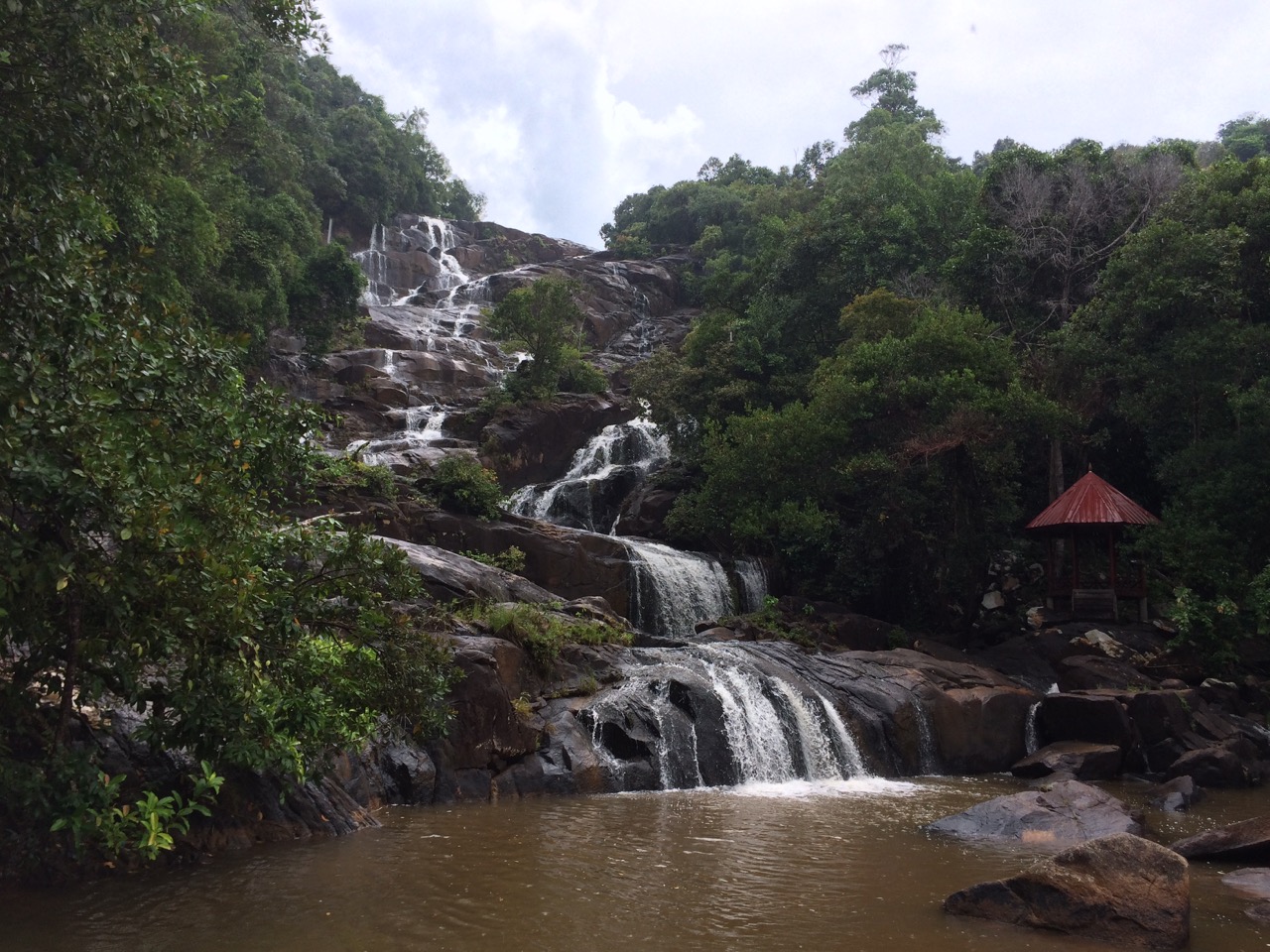
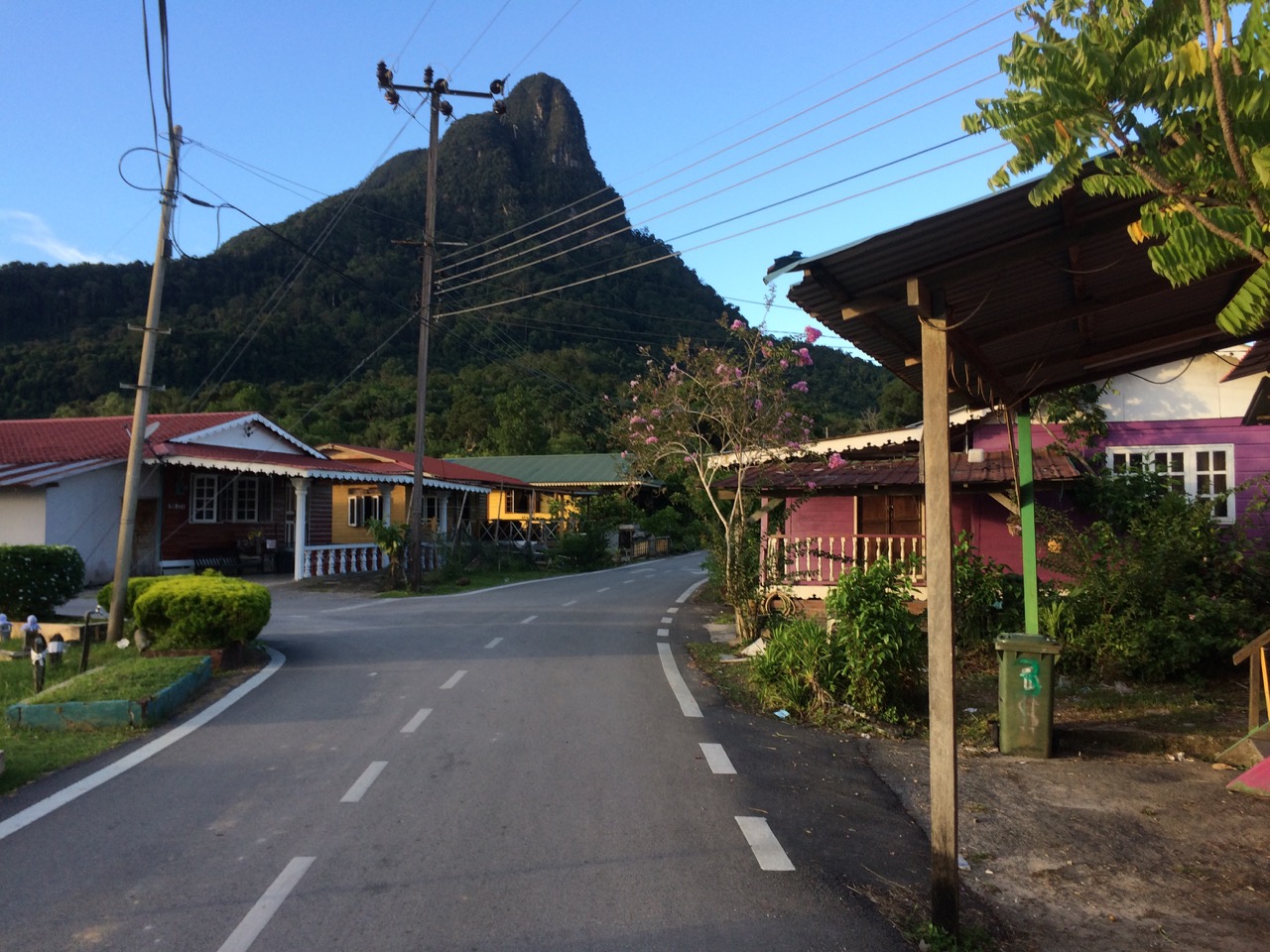
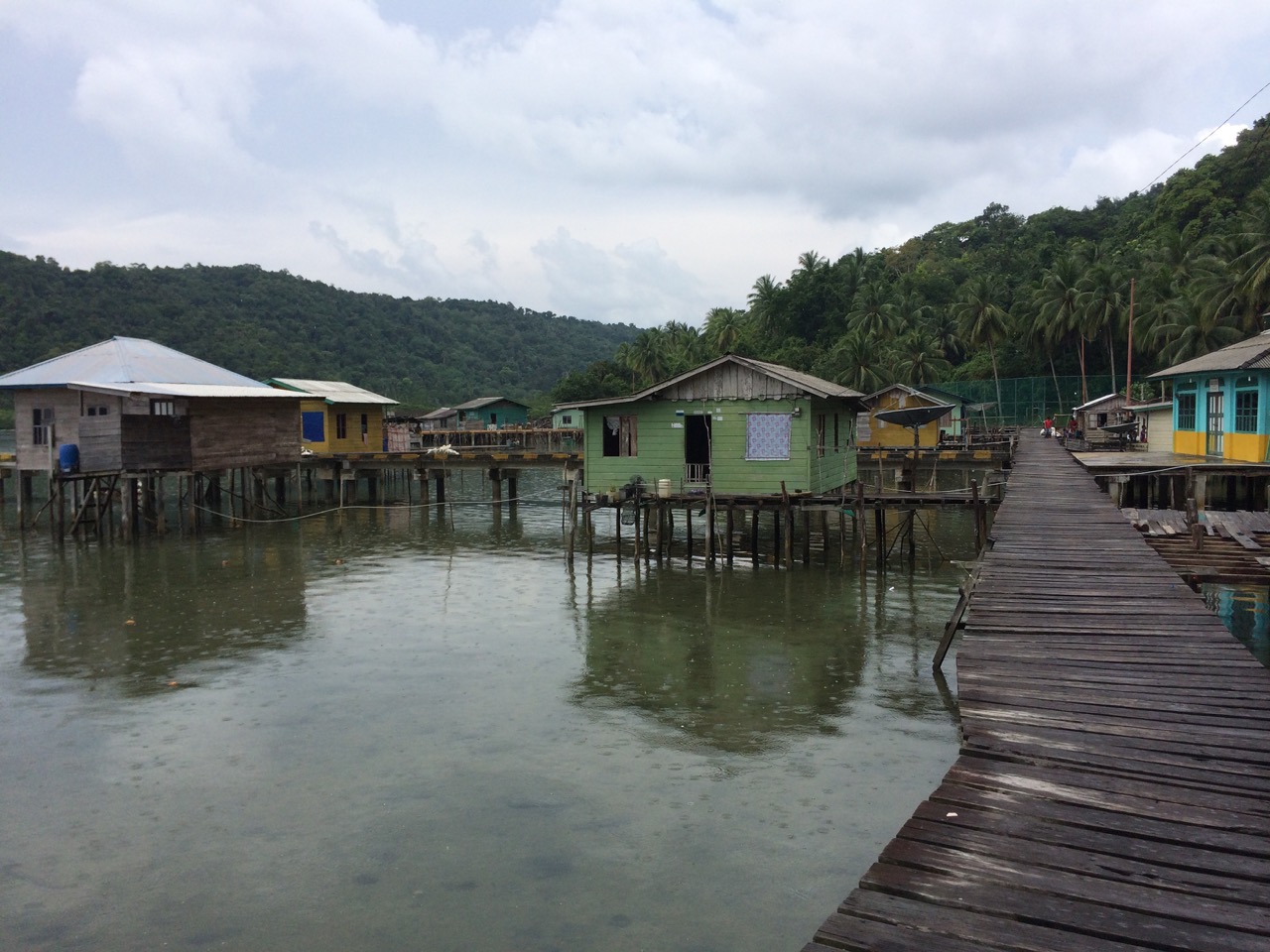
 On our way back to the dinghy we had a walk through the village and along the way the local people, especially the kids were very keen to say hello, or ‘hello mister, how are you’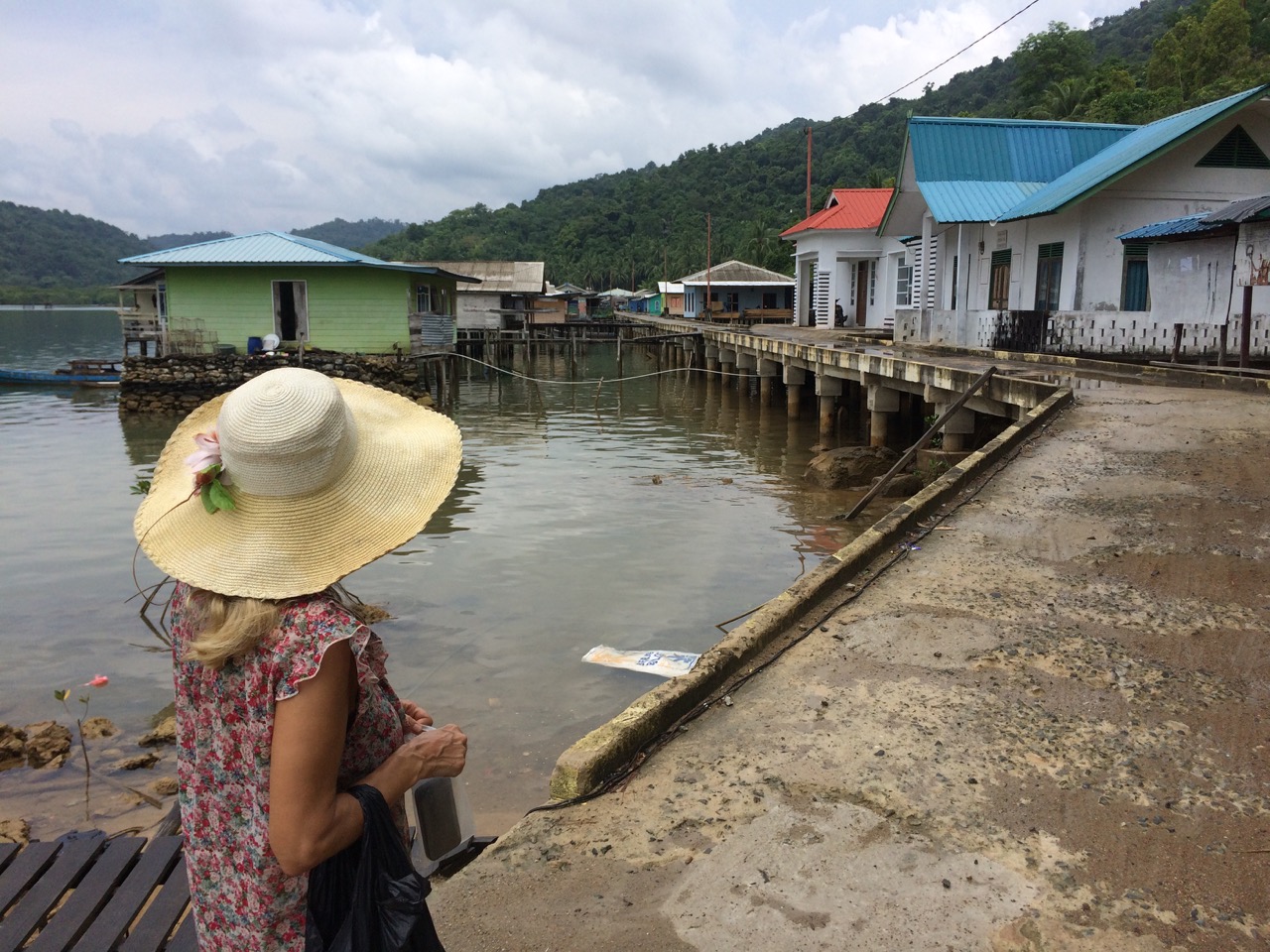
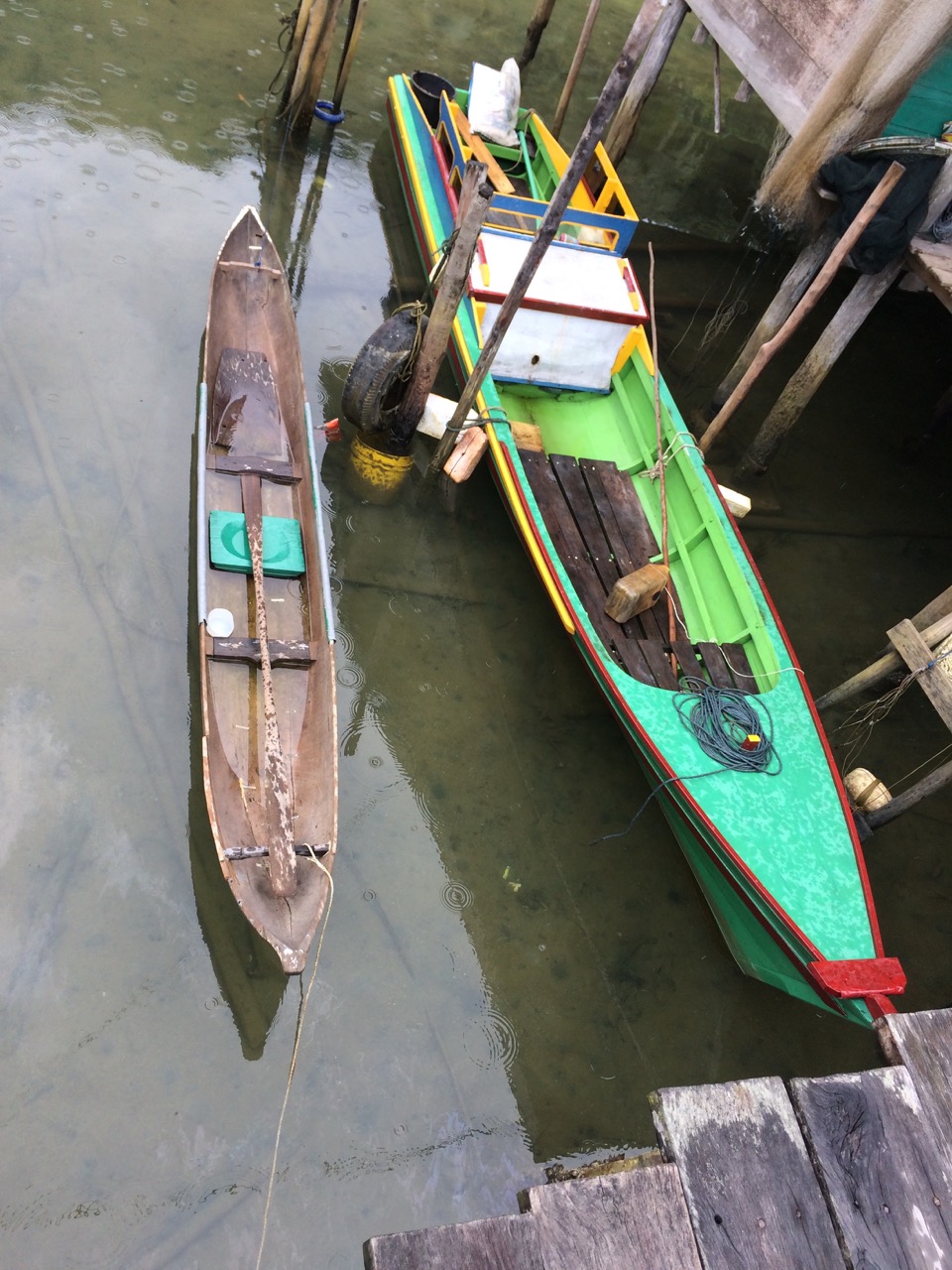
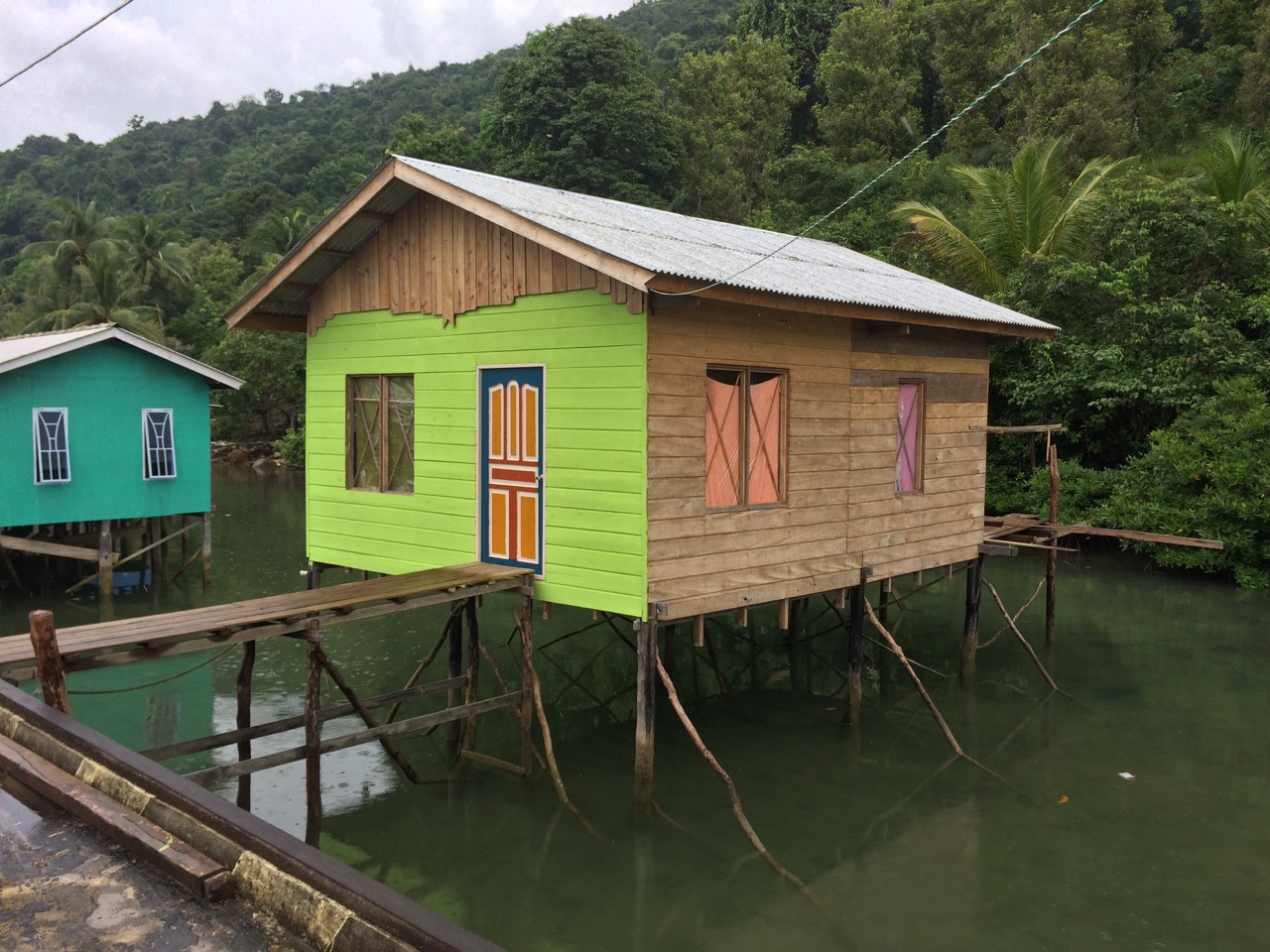
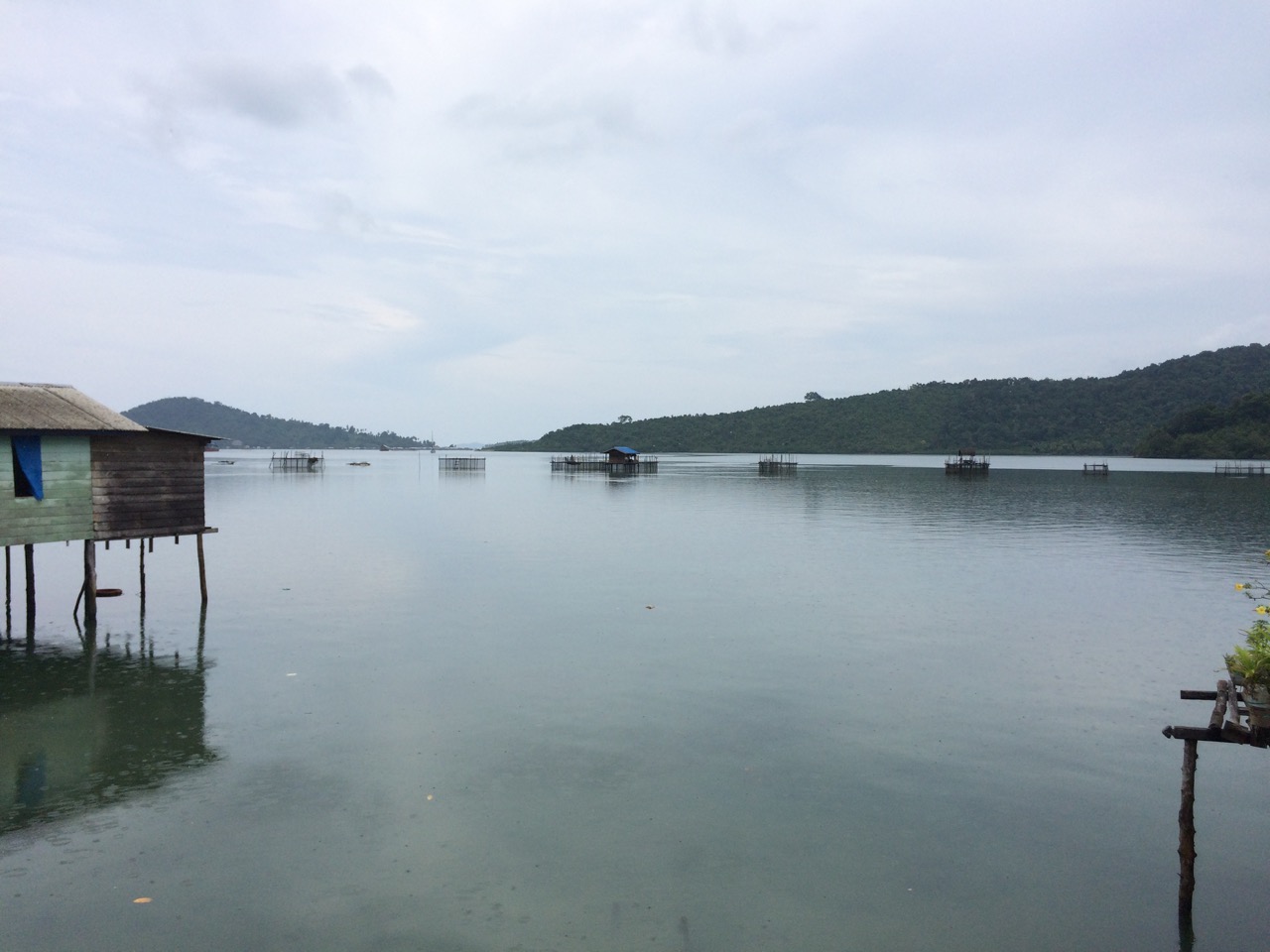
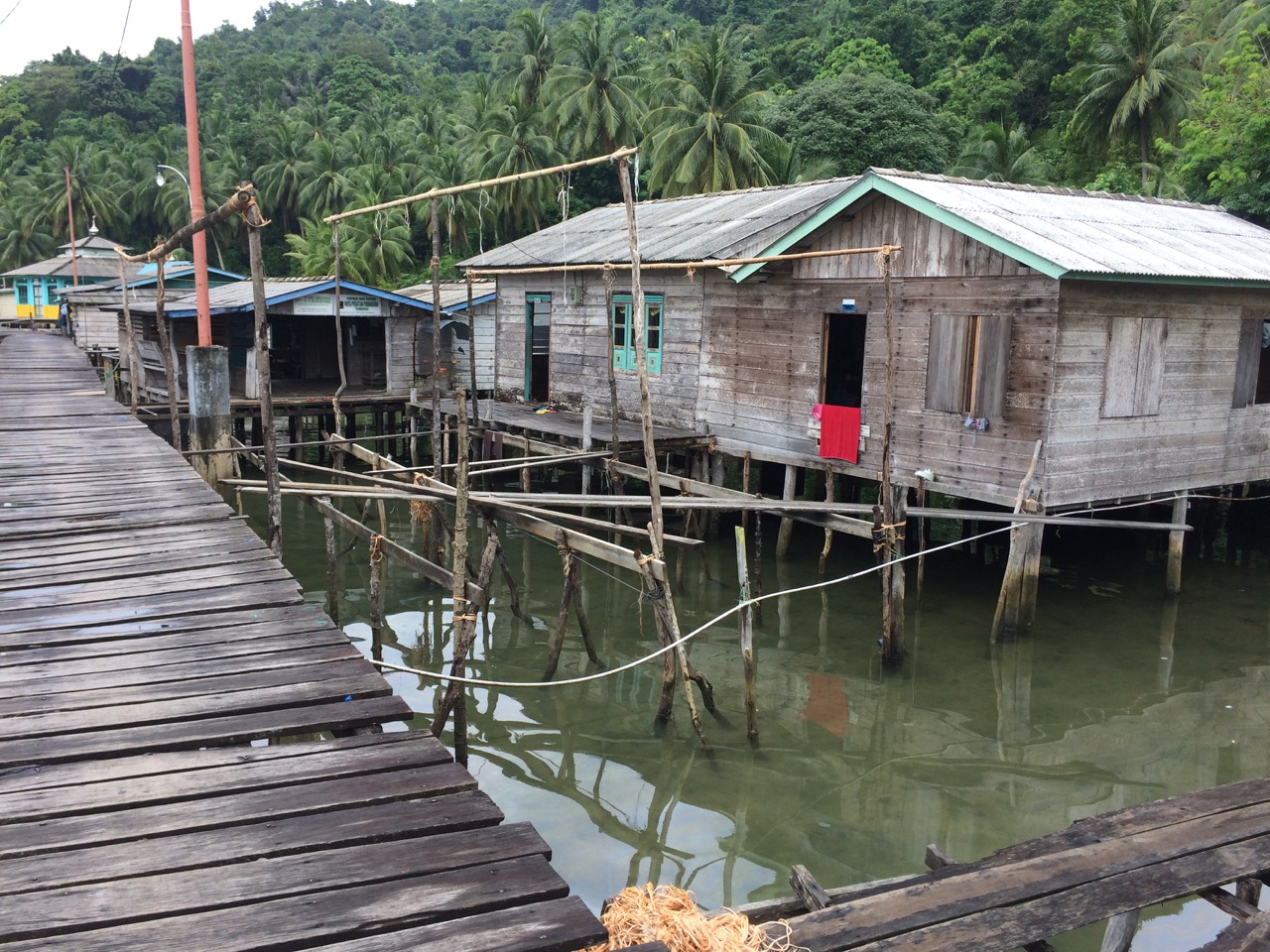
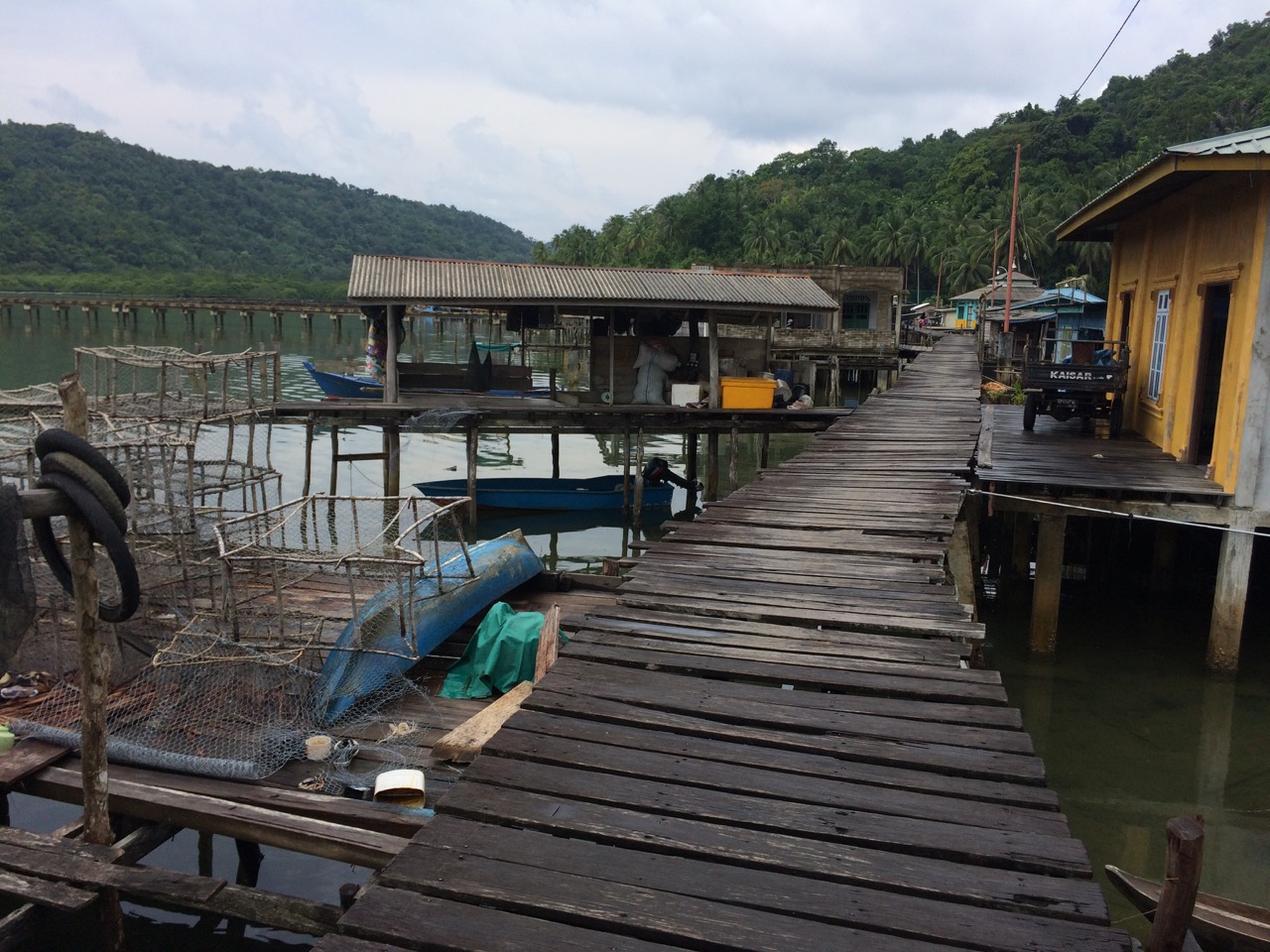
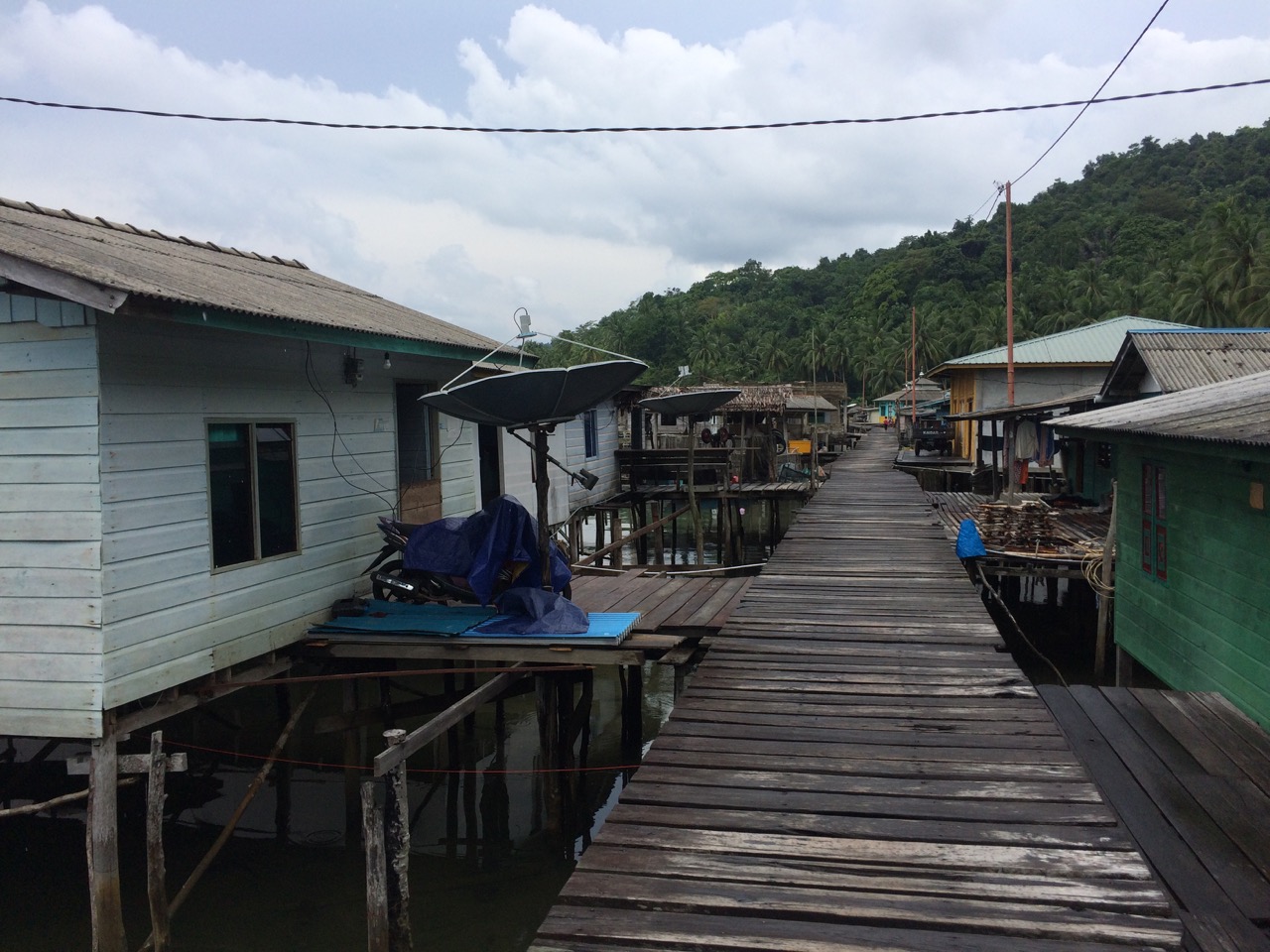
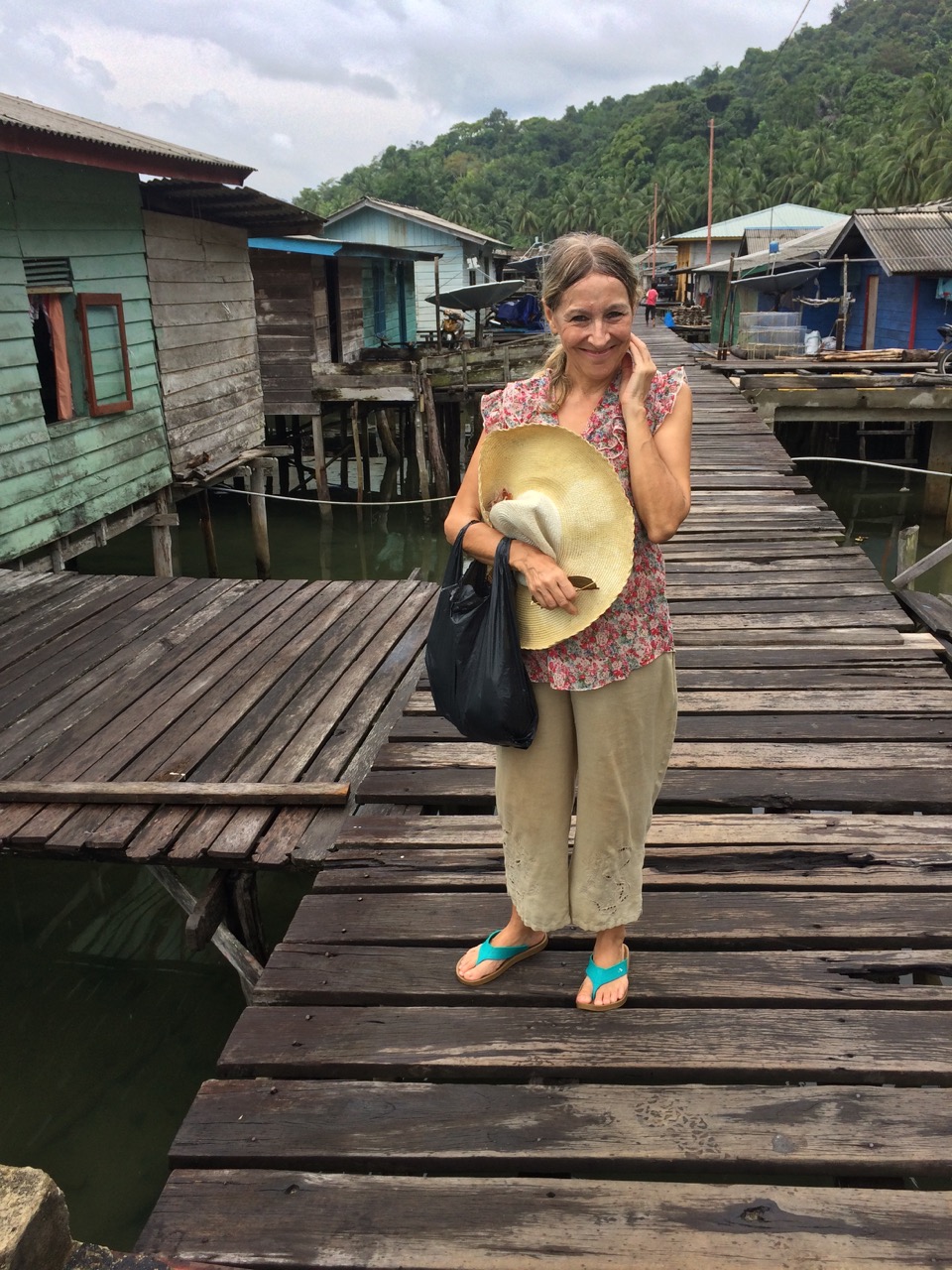
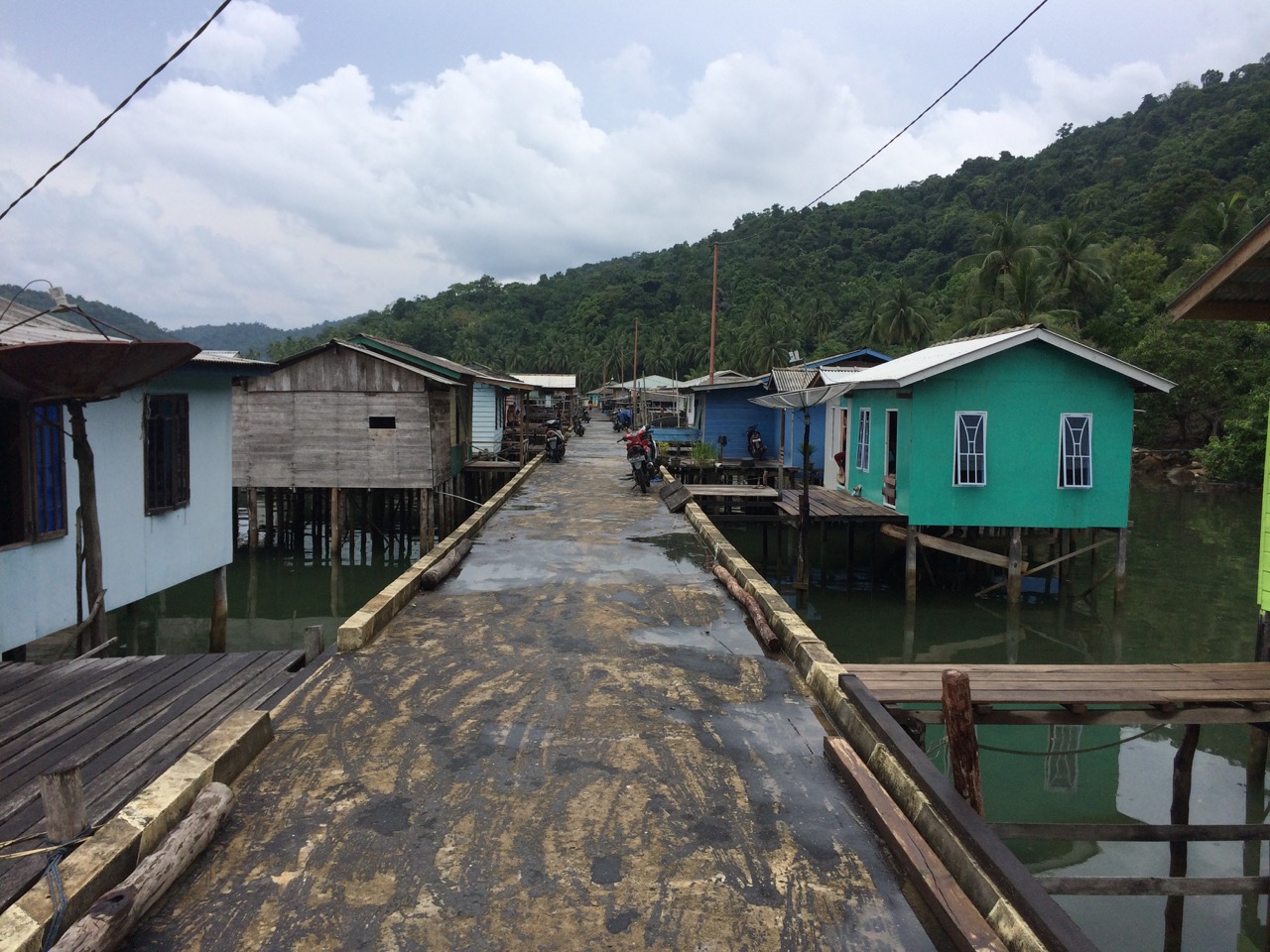
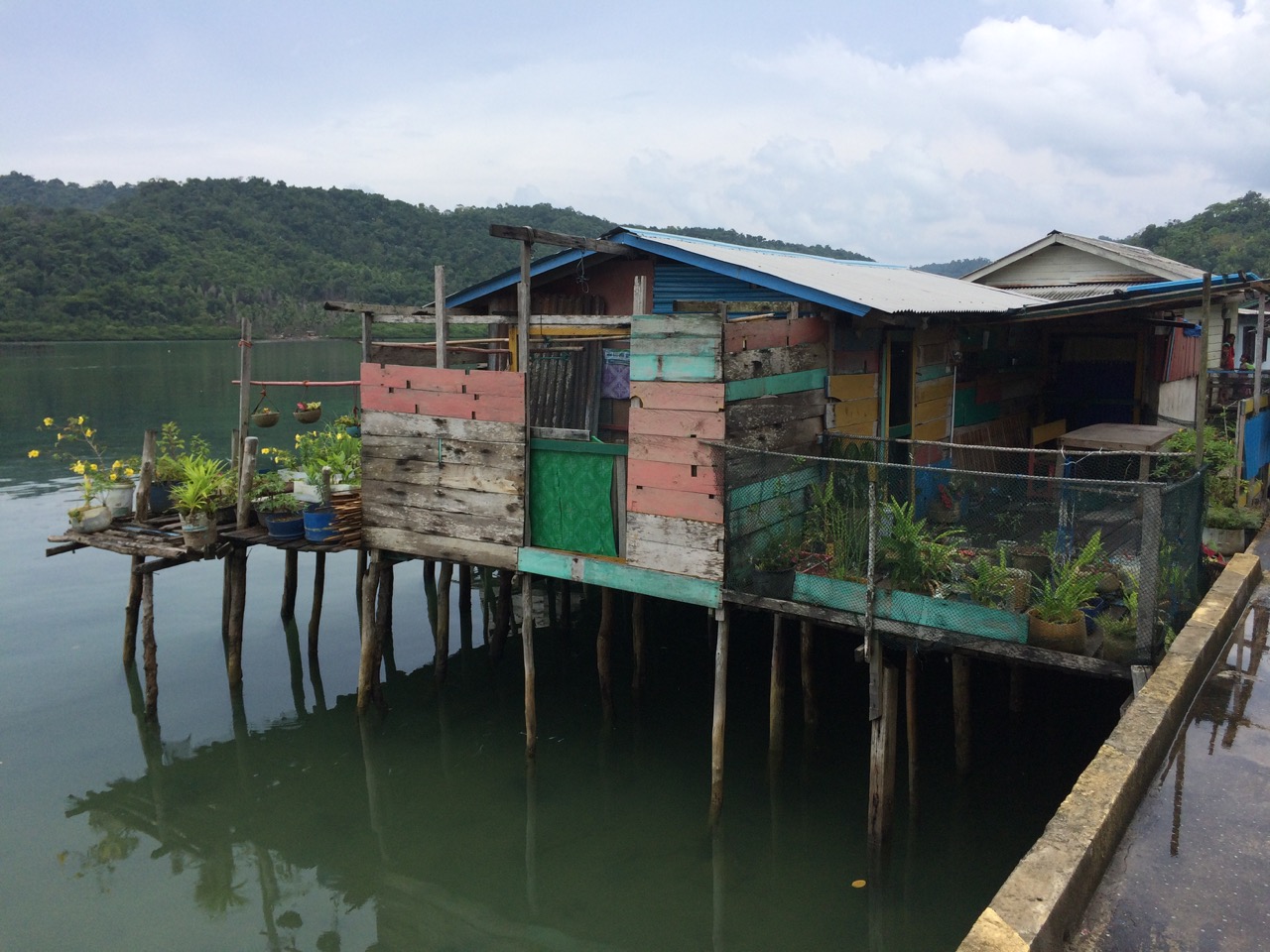
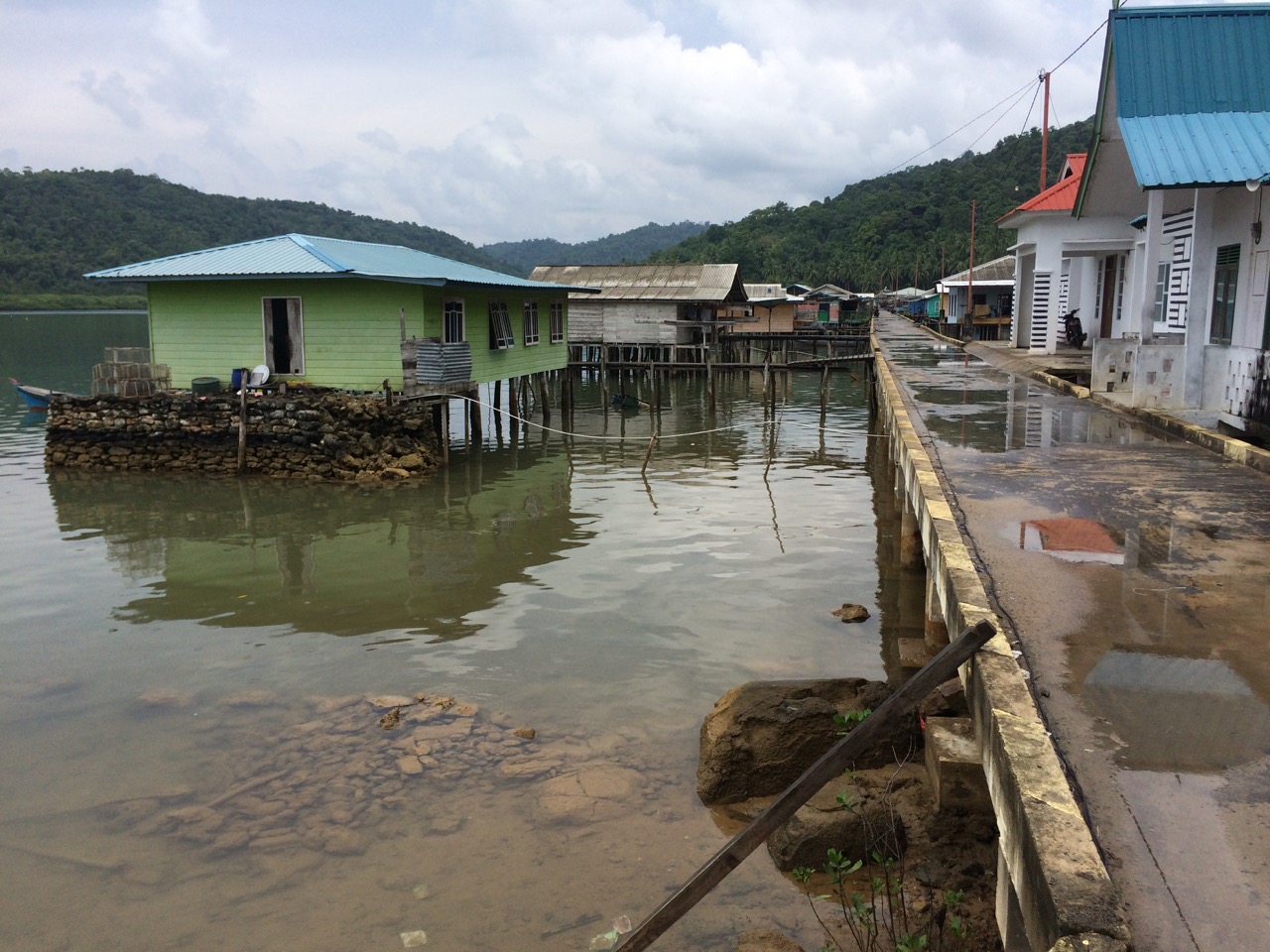
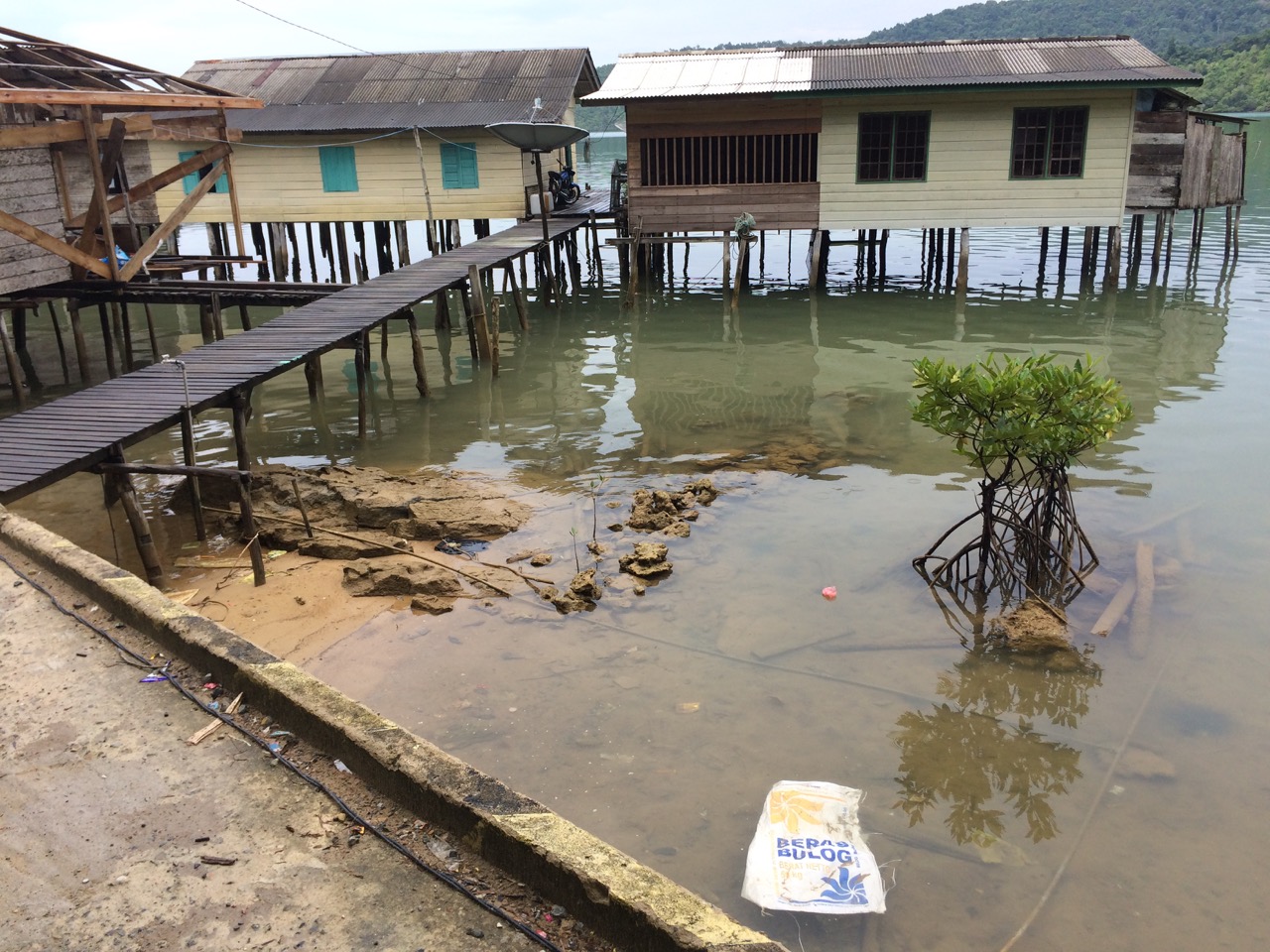
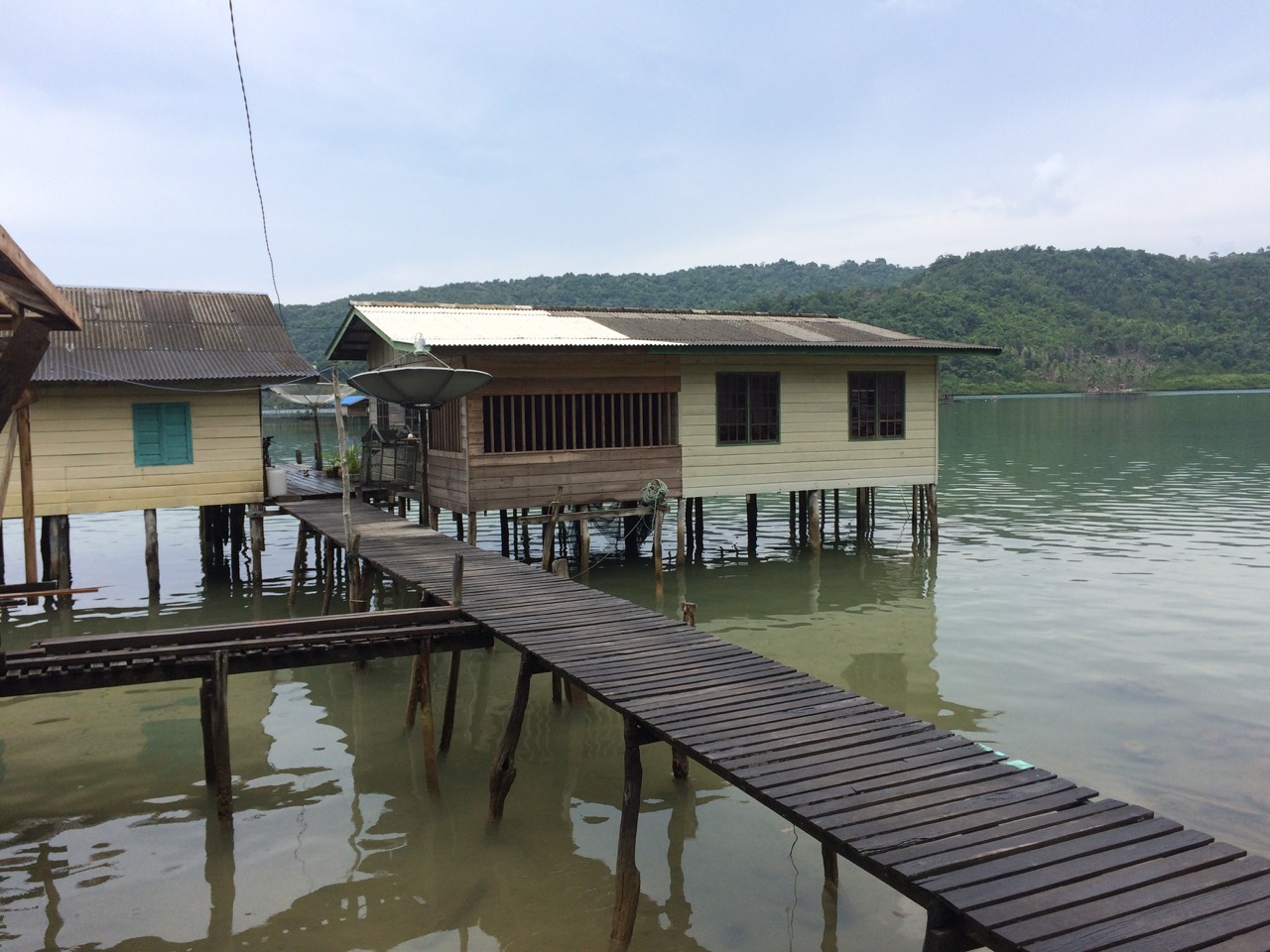
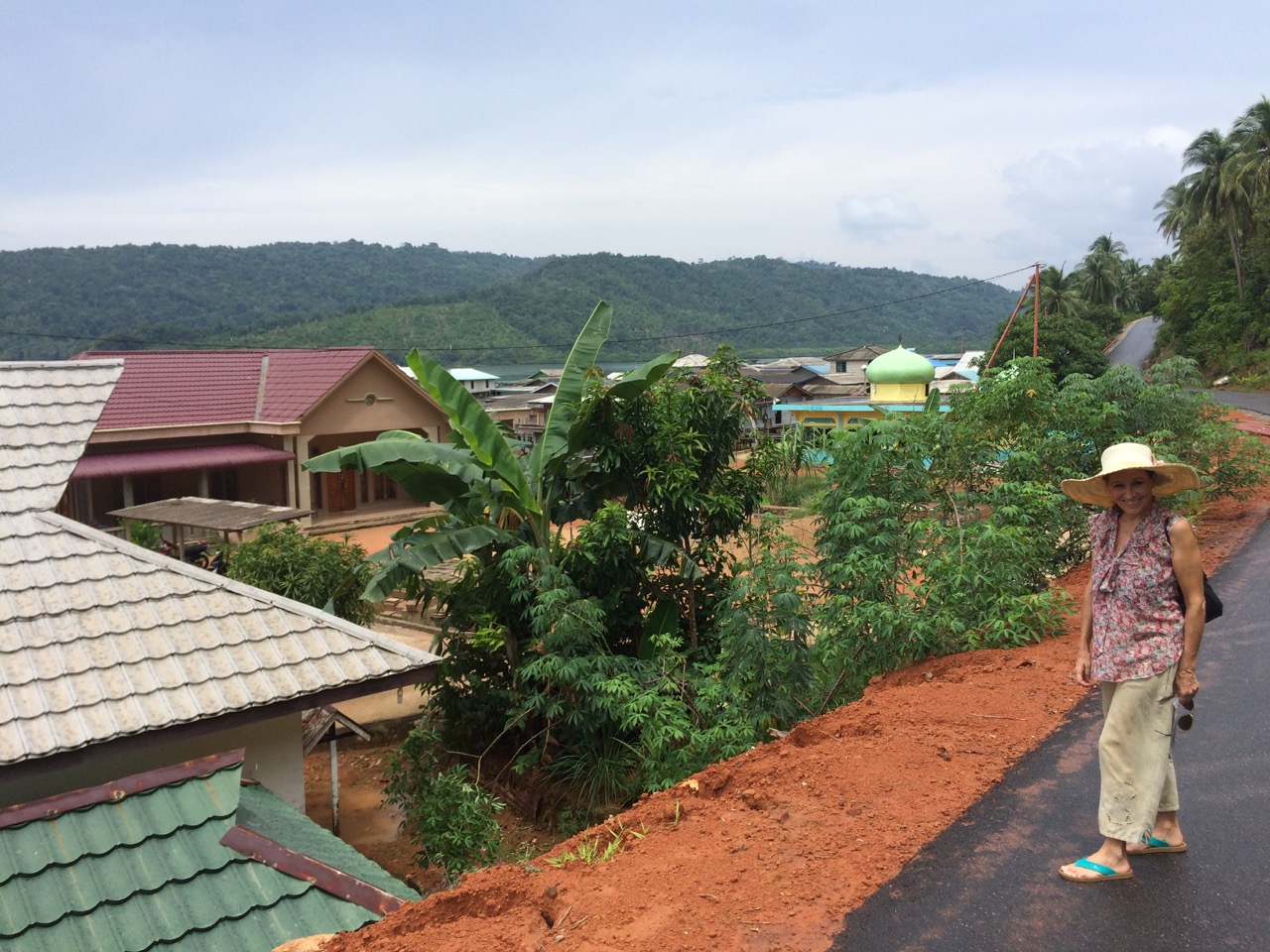
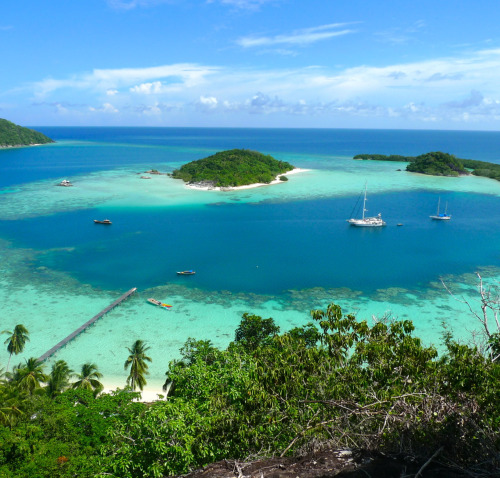 After that 3-5 days sailing the 250 miles east towards Kuching in Sarawak, there are a couple of islands we can stop at on the way, but we may just slog on through the night(s) to get there quicker.