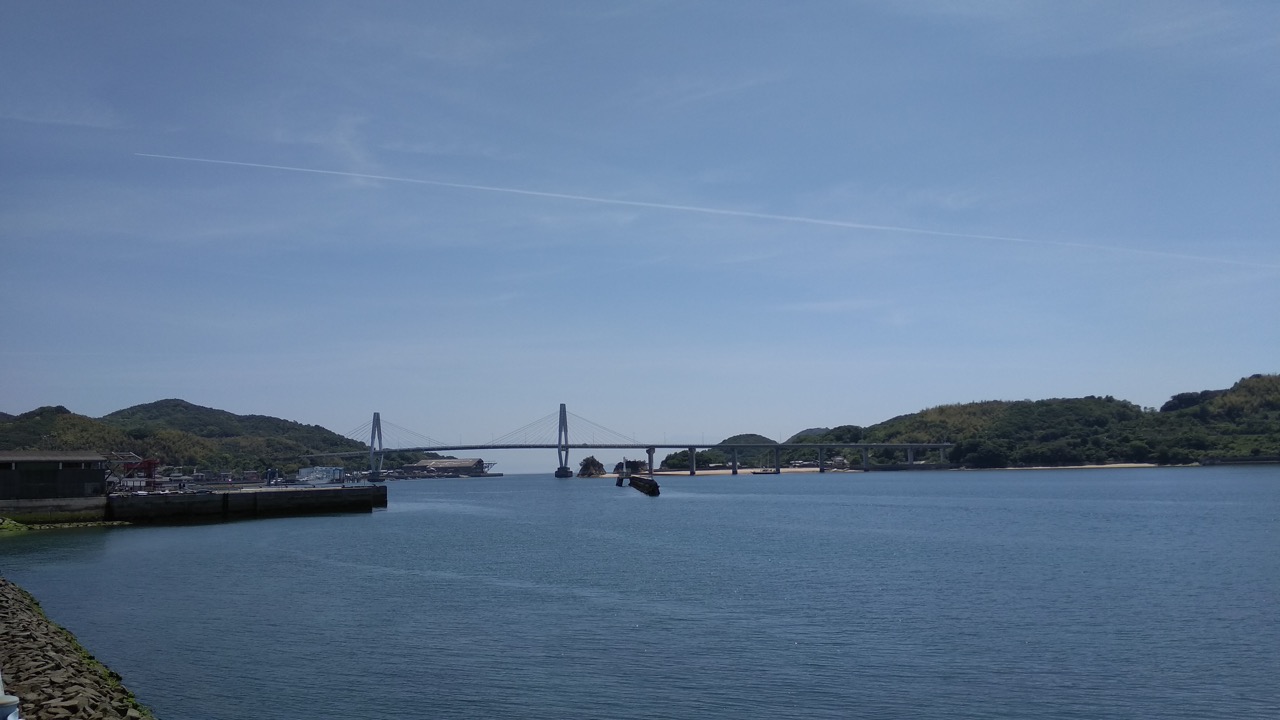
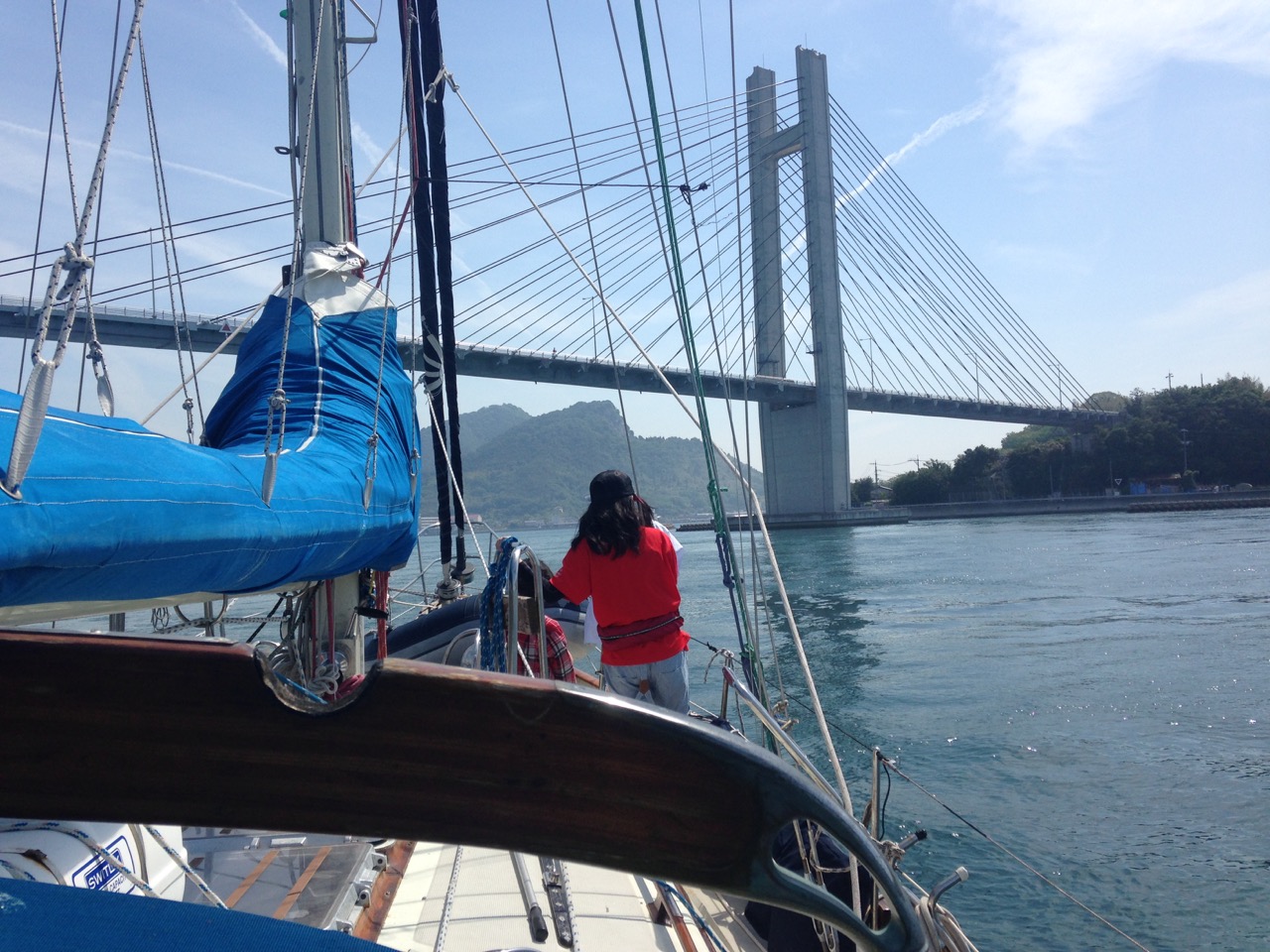
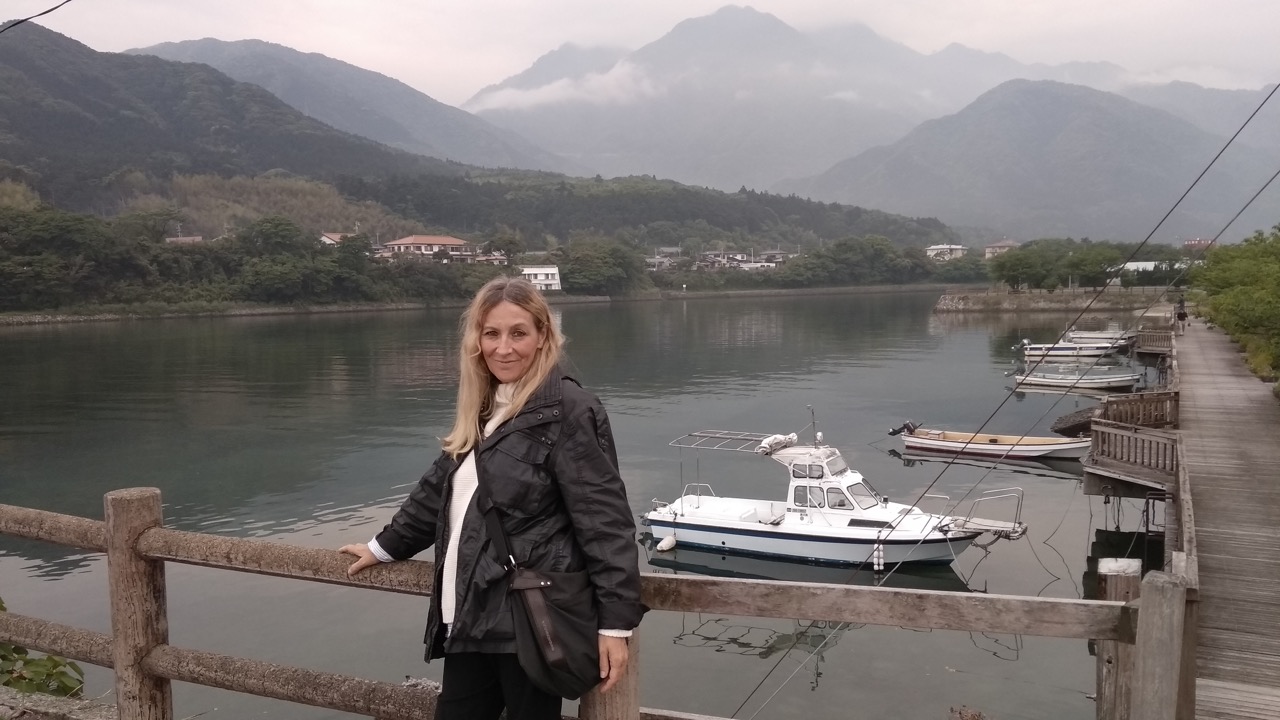
 We arrived in Yuge for the Setouchi the day before the rally began and had a warm welcome from the organiser, “KC” and some other rally participants who were already there. Above you can see the bridge we passed under as seen from our berth on a small pontoon in the town centre. Yuge Town, is a small affair, you can walk all around it in about 20 minutes, it’s very sleepy and although it has a population of 6000, I only ever saw about five people out at any one point. Below you can see the other rally boats on the pontoon.
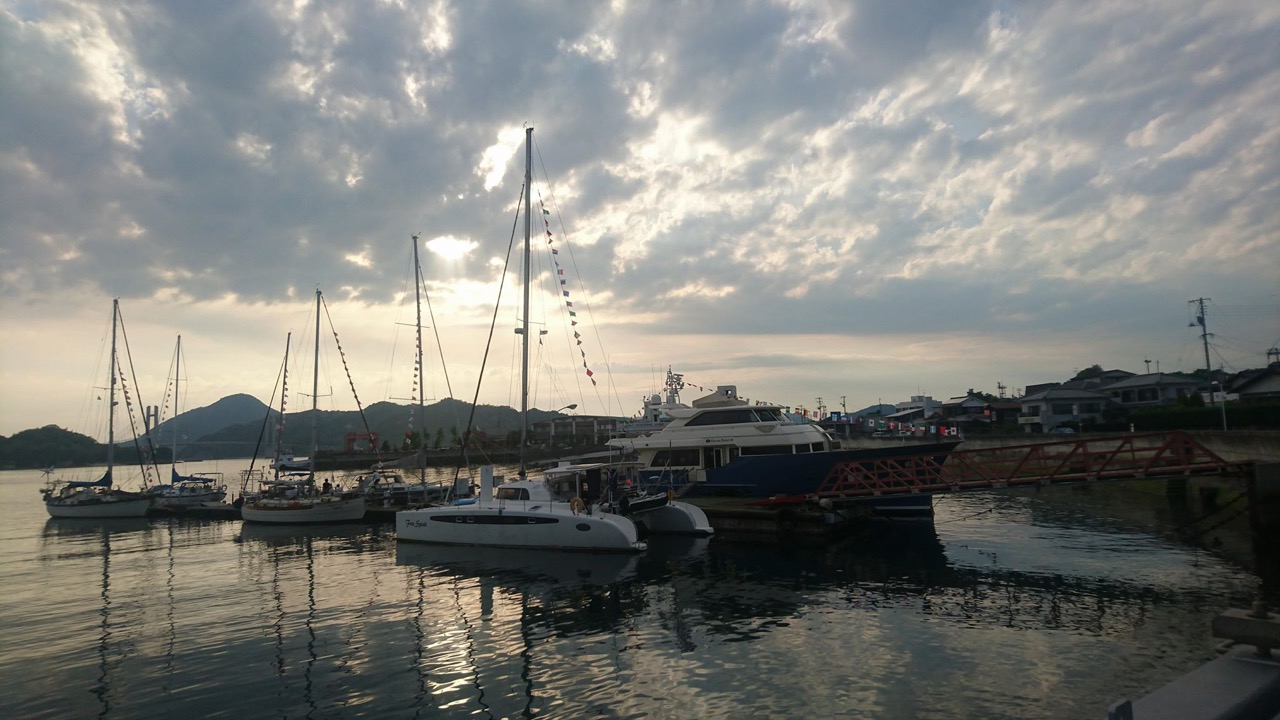 We have an Australian couple, Ken and Belinda, on the big cat who are just wrapping up and heading home after spending 5 years touring the Pacific islands. We have Rob, a Canadian who has left the rally early to get up to Kushiro ready to sail over to his home town of Vancouver. We have scrapped plans to leave from there and instead will leave from a lower latitude of 35deg North where we hope to ride the bottom of the depressions heading east. It will be interesting to see who gets there first, however Rob plans to visit Alaska on the way and may well stop off at the Aleutians if he is close and fancies a rest. The other boats are all Japanese crewed, and mostly a lively bunch who enjoy their sake. The big motor boat is owned by a successful businessman who is also a sponsor of the rally. He has invited 6 Australians onboard as well, so they are enjoying a level of luxury we can’t quite match on Sister Midnight, I’m not sure our deck wash spraying into the cockpit well would be as good as their Jacuzzi on the top deck. However at least we don’t have to worry about staff here.
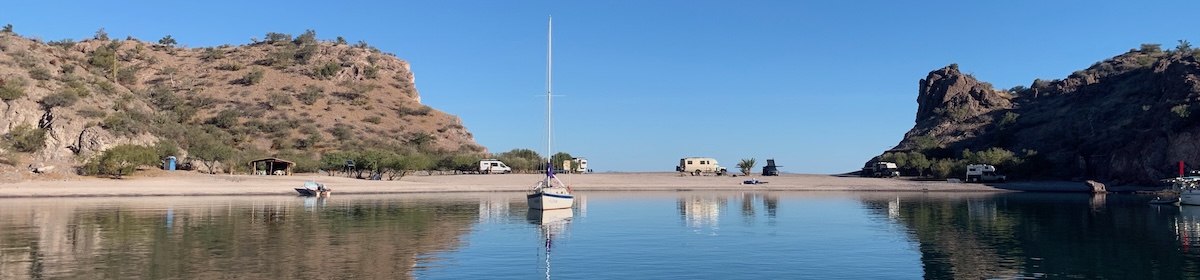
Across the island is a lovely bay with a small harbour at the end, mostly used by fishing boats, but there are a few sailboats there too.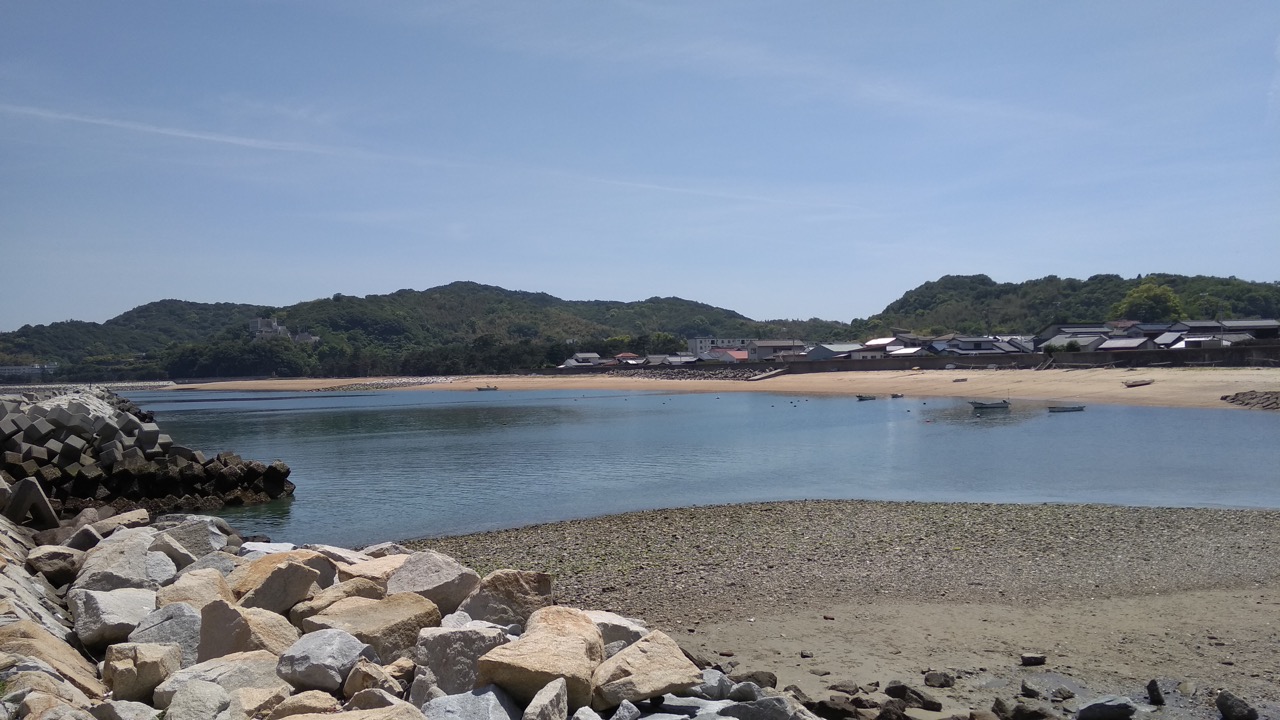
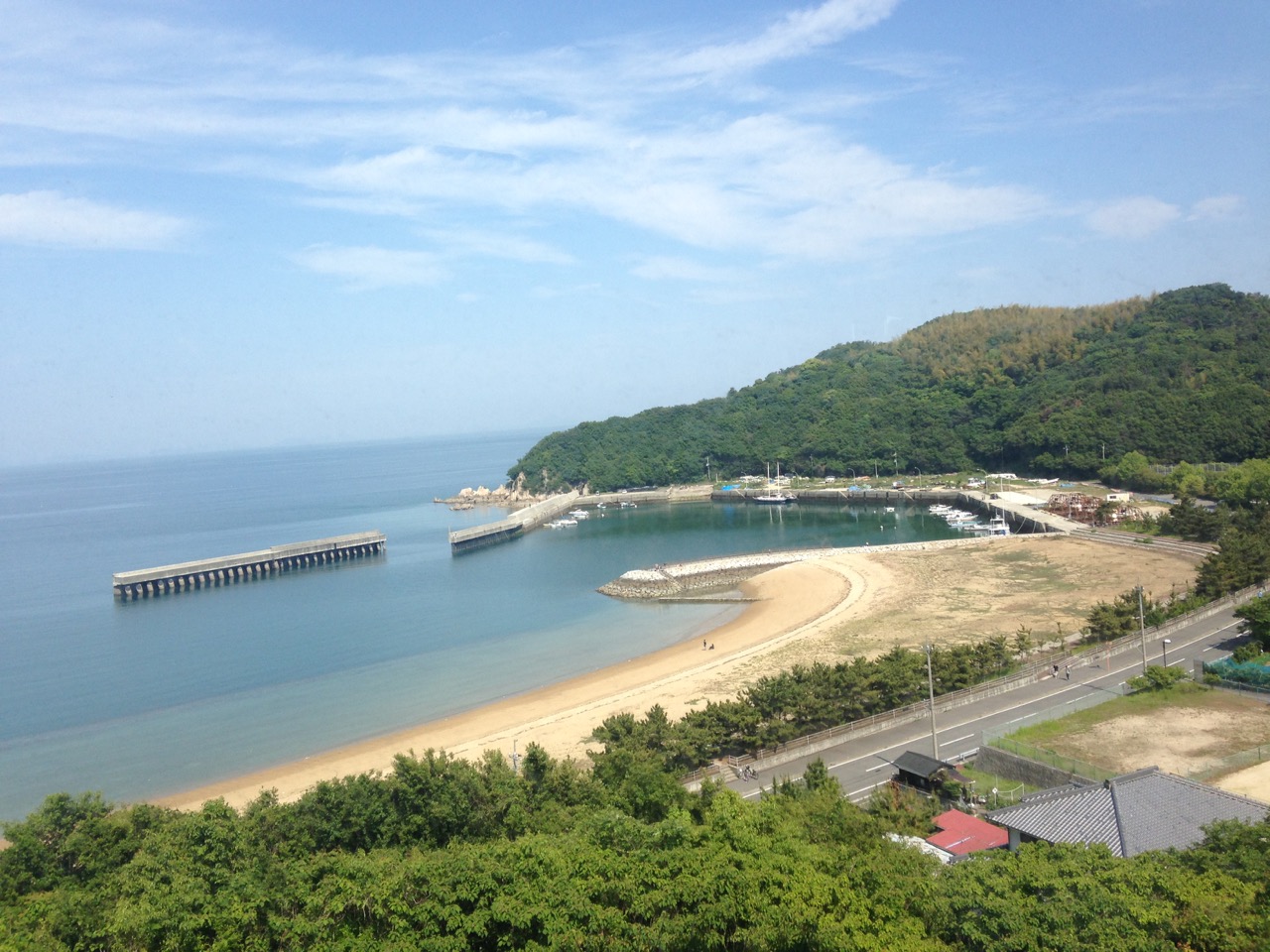
The highlight of our stay here was the collaboration between the local technical college, which is a residential school specialising in Marine tech and the rally folk. We all met at a reception and each of us had to introduce ourselves and explain a bit about our past, our boat and our plans. We were supposed to do the is Japanese as well as English, Kathy had prepared a crib sheet for us both and we did a reasonable job of introducing ourselves in Japanese, but I did the bulk of our story in English.
Later we were paired off with students from the college who would look after us during our stay, We had Mai, Yuri and Suzuki. These were all lovely 19 year old ladies from the college who took a great interest in us and our boat. The next day we all headed off for a sail around the bay, I showed them the workings of the boat and each of them had a go at helming for 15 minutes of so. One of their teachers took pictures from the bridge above.
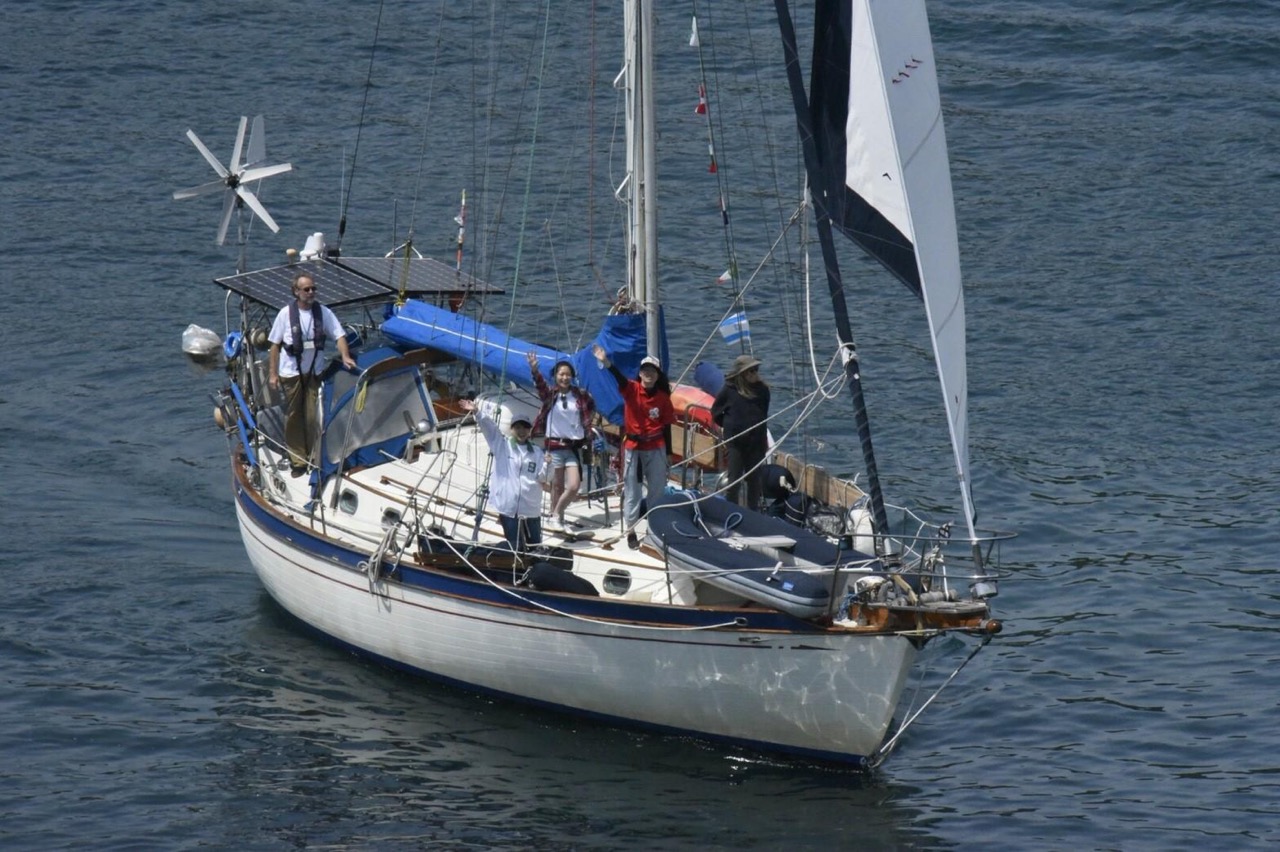
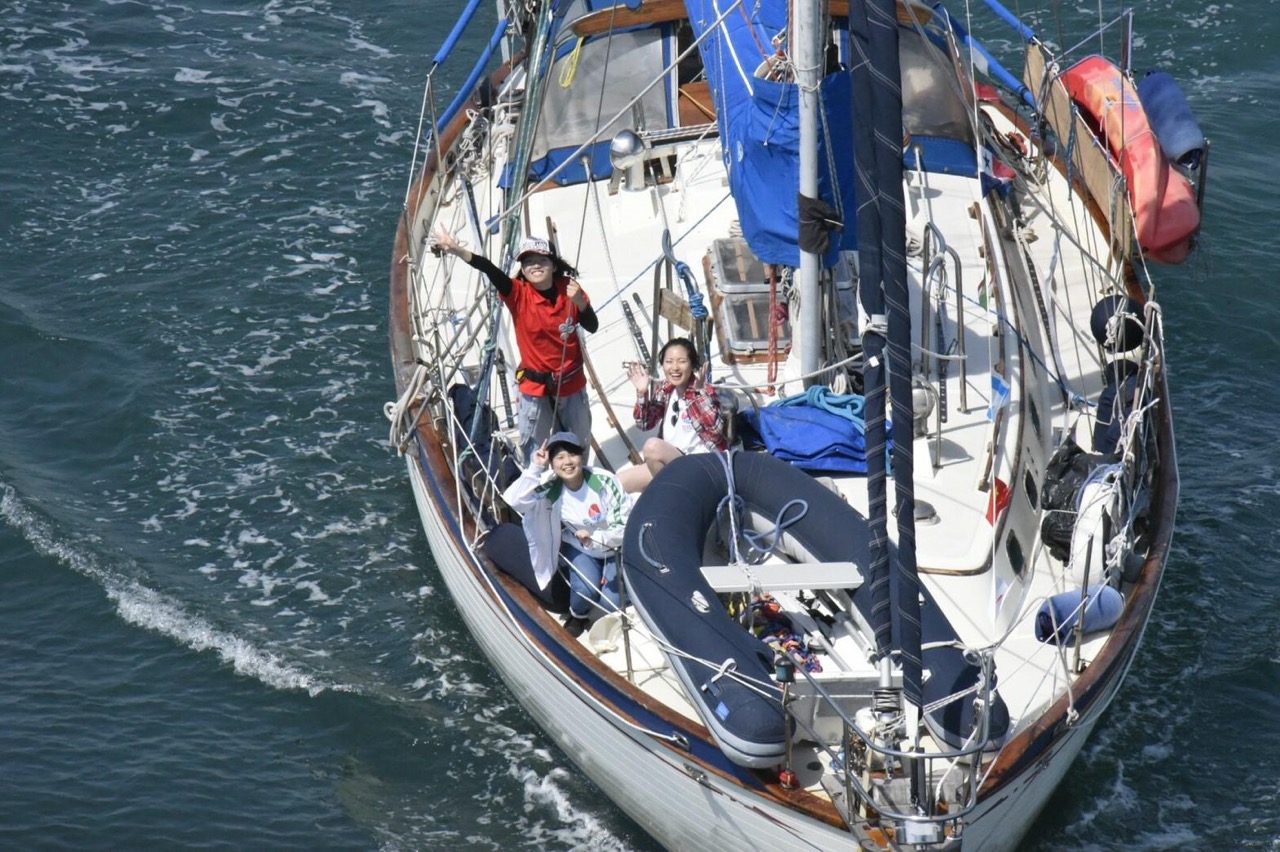
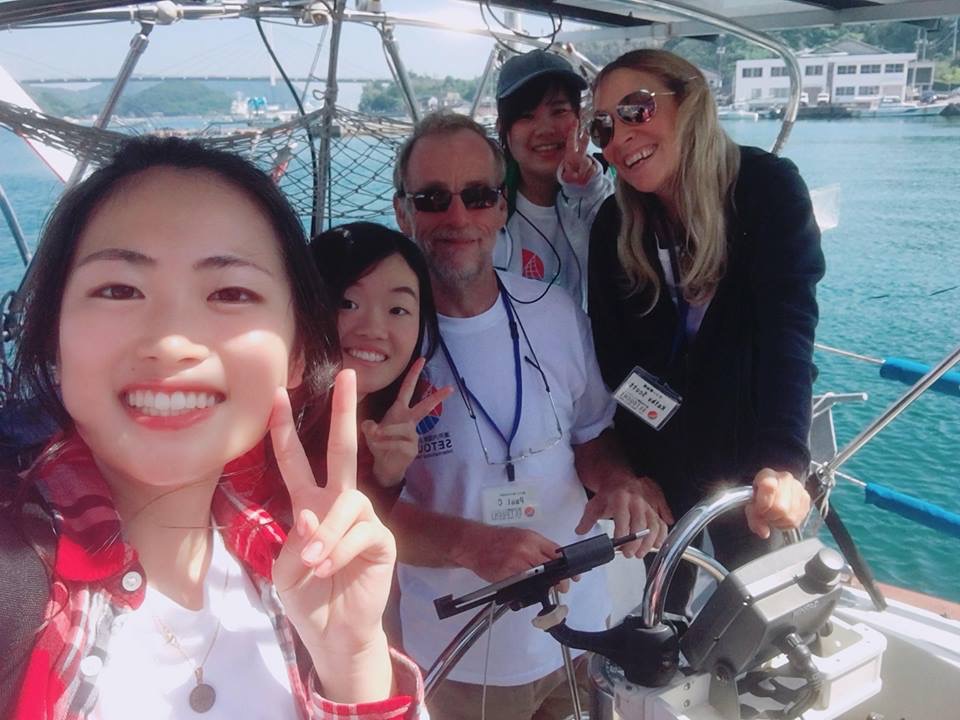
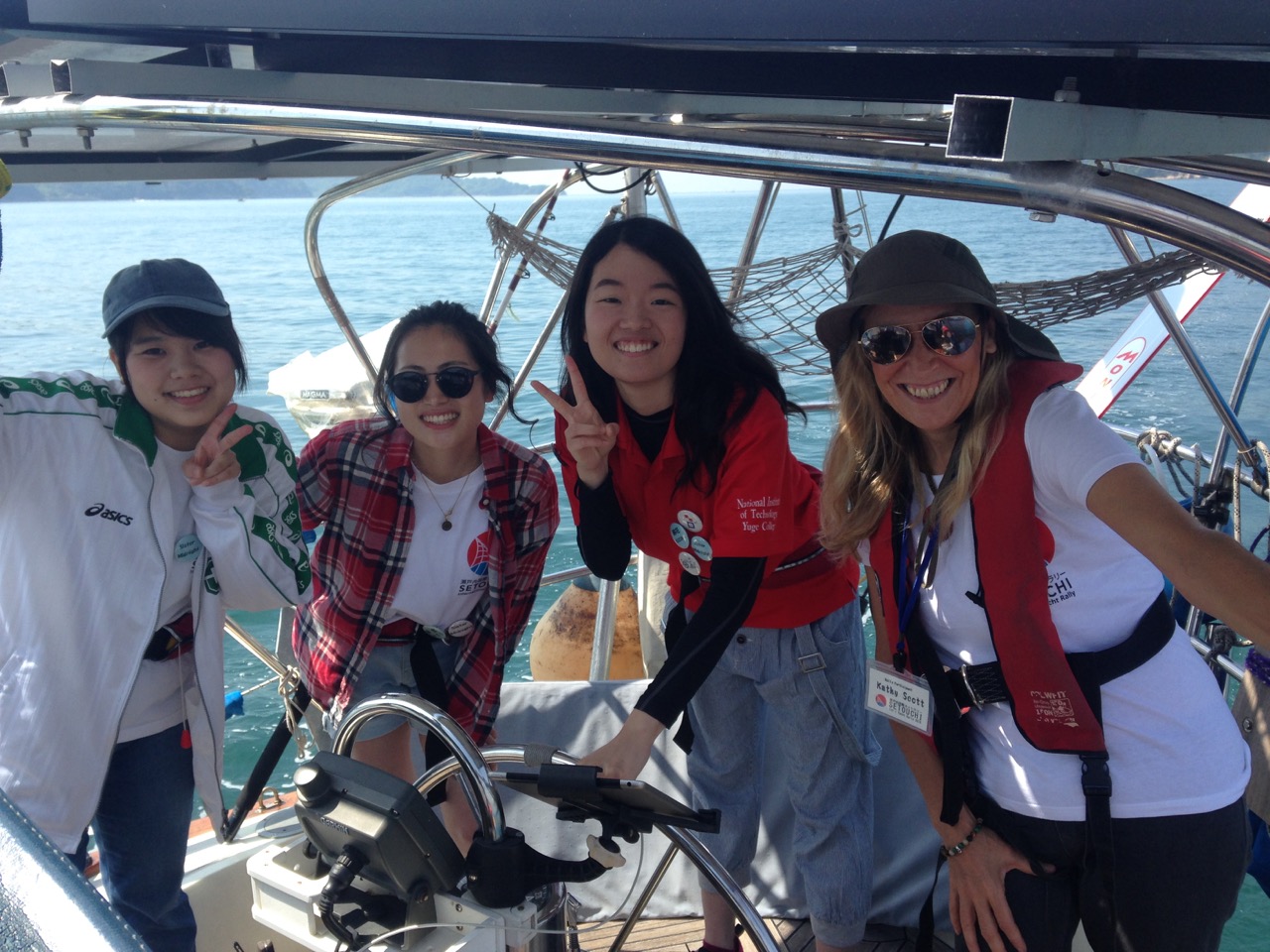
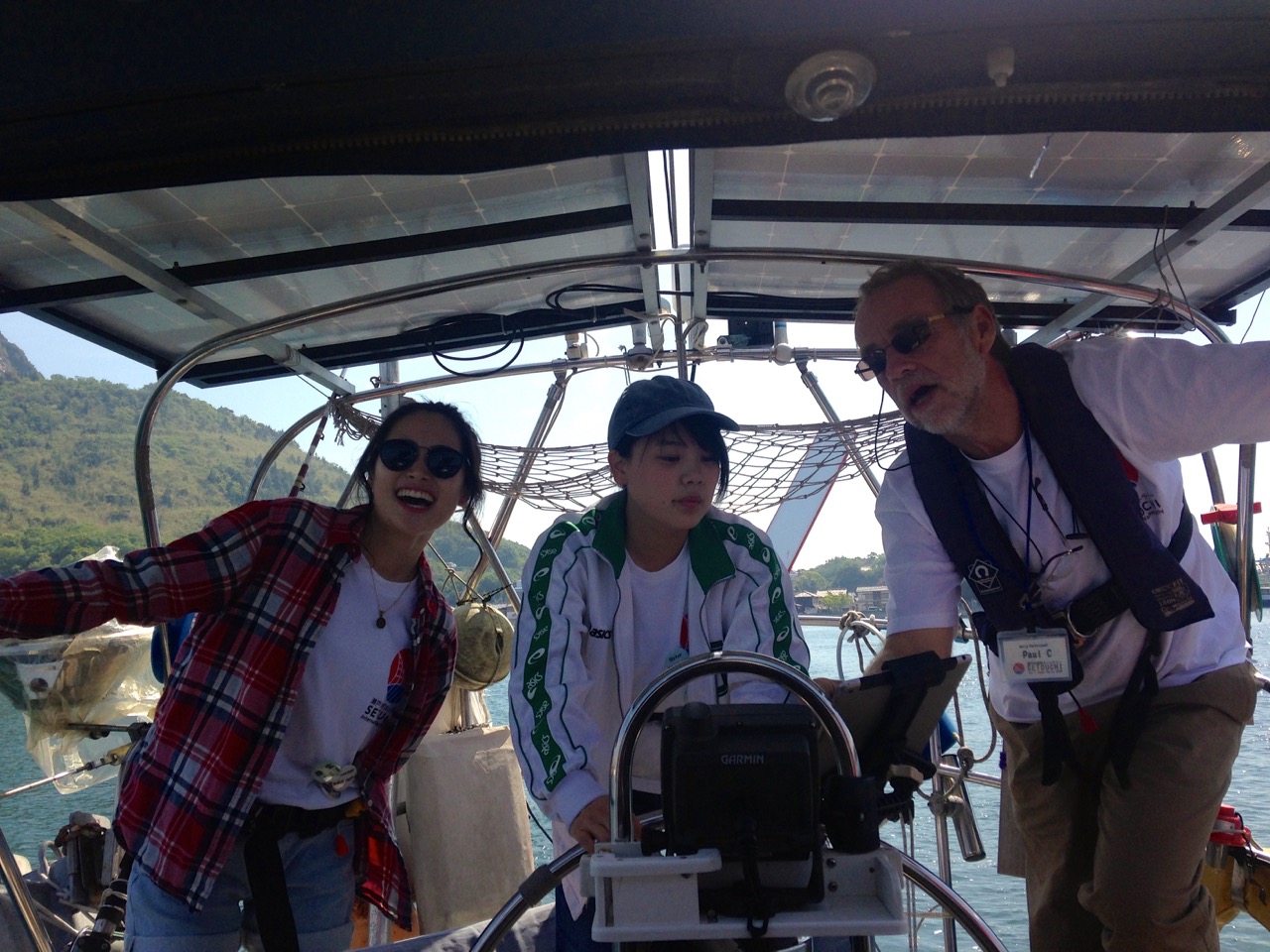 Later that day the students put on a wonderful barbecue for us near the beach and plied us with alcohol and food for several hours.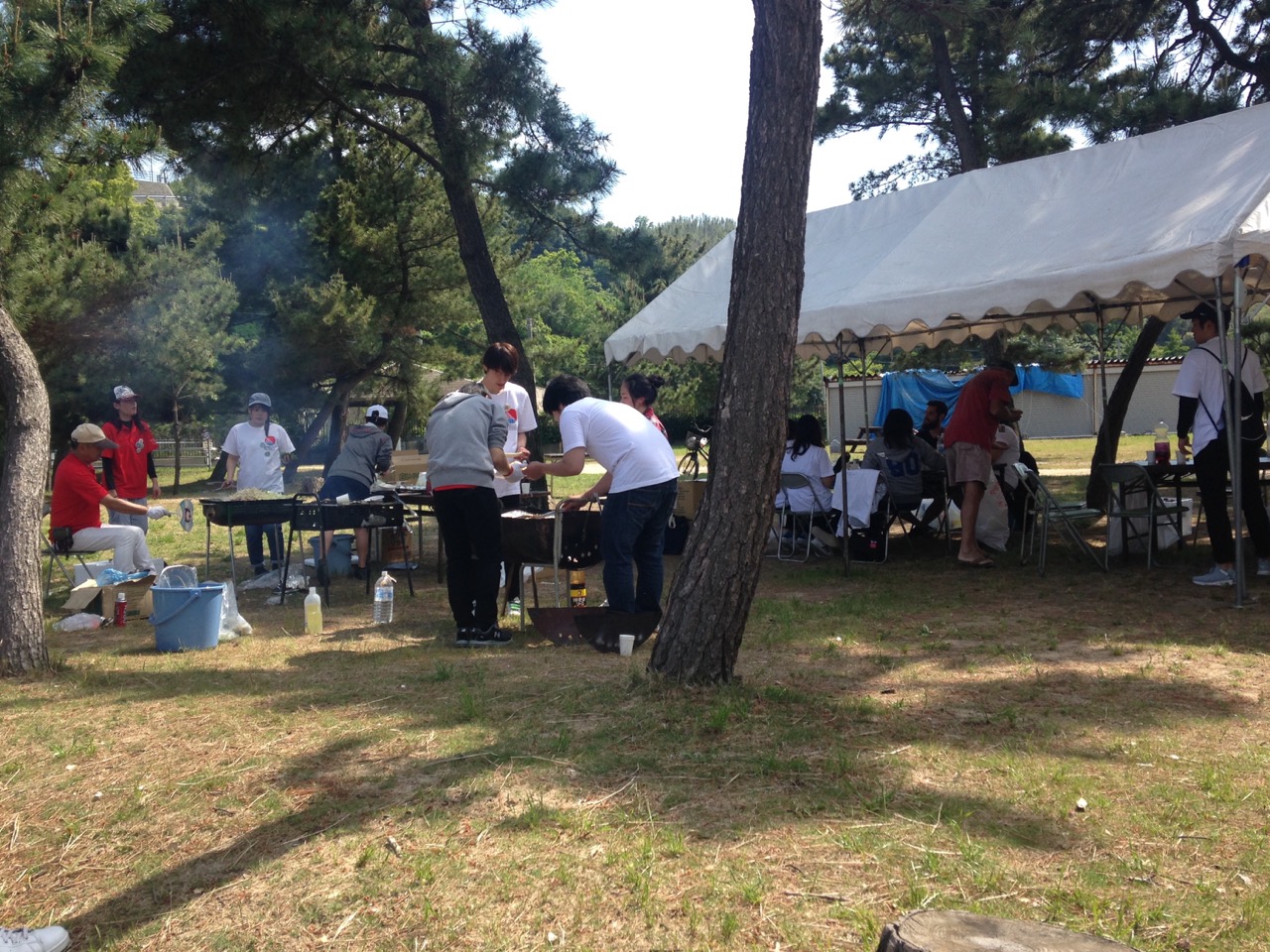
The next day rained so the bike ride around the island which the students had planned was cancelled and instead everyone went off for an Onsen, which is like a Turkish bath affair, however the Japanese have taken this to a high art form, the bath can only be taken once you are spotlessly clean, you cannot enter the bath if you have tattoos, as this implies you are in some way gang related, and there’s a stack of etiquette just around how you manage your hand towel. As you can imagine we didn’t follow much of this. Still it was a very pleasant relaxing experience.
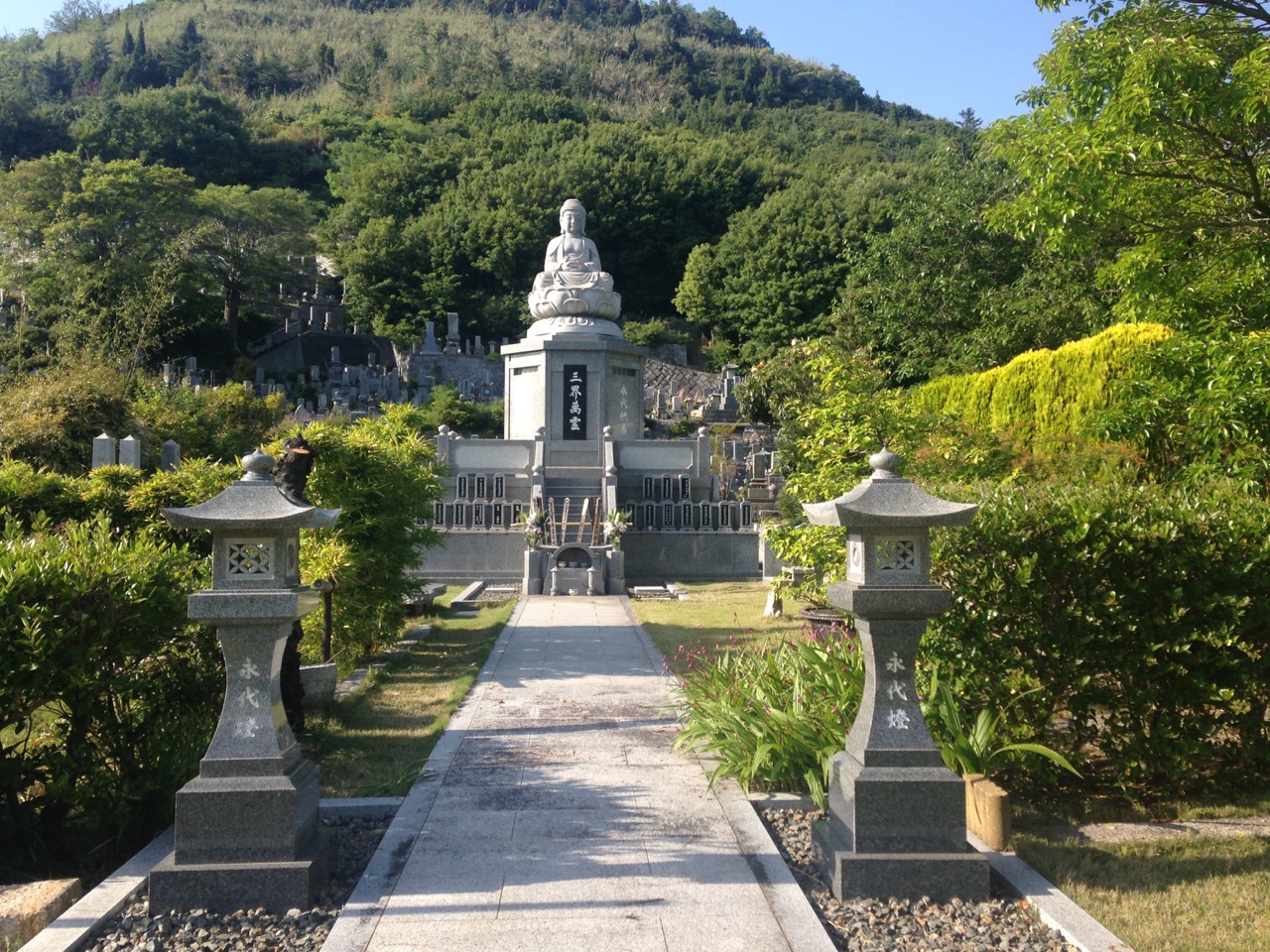
Yuge has a few shrines and temples and this is typical of those we have seen here.
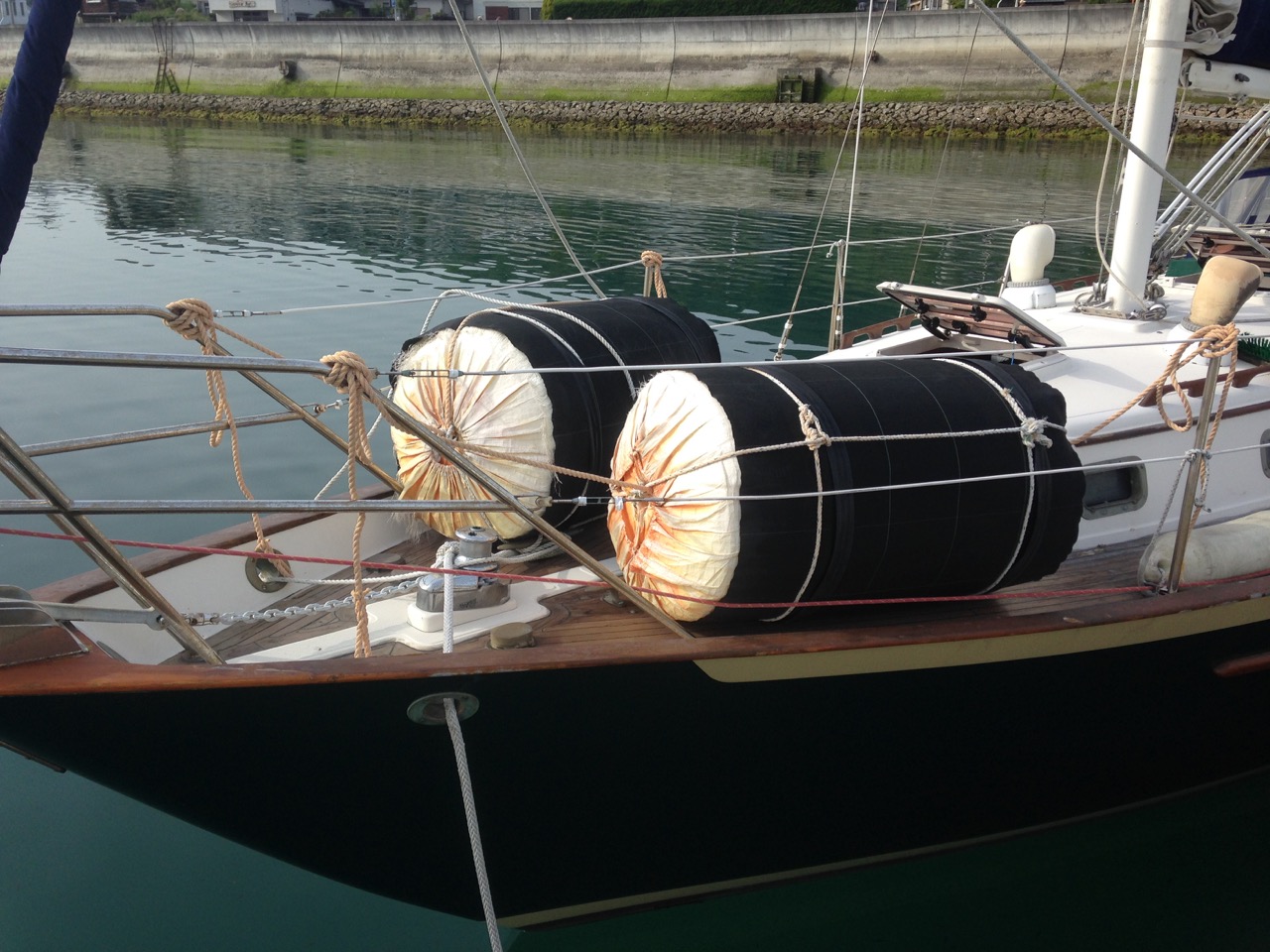
These are typical fenders used around here, huge polystyrene affairs, often wrapped in cloth, often not, and shredding waste into the sea, most un-Japanese.
The next day most of the rally boats left to explore the area, but we booked into the pontoon for another five days just to chill and do some boat jobs.
On one of our days we cycled around the island and on another we left the island on our bikes via the huge bridge to the next island, then another bridge to another island then across a short pass by boat to the destination island, which had a hardware store (Home Depot/B&Q) and a big supermarket.
So far everyone we have met has been wonderful and keen to help whenever possible.
More boats arrived over the next few days and our neighbour got chatting to us in quite good English, I do admire how hard they try to speak to us in English, especially when we are so rubbish at Japanese, and he proceeded to present us with a gift of a bottle of sake, this has been a common occurrence where we are presented with gifts, and feel awful as we don’t have anything to reciprocate with, other than a lot of bows and Aragatos. This same neighbour was keen to know our plans, and when I explained I had to find a marina near Osaka that wouldn’t break the bank, he whipped out his mobile and started calling around for me. Within minutes he had secured me a place in a yacht club in Kobe, which is quite close to Osaka and I was speaking to the president a few minutes later who explained that they had 3 berths for visitors and that one would become free for me, He would help me find an engineer for my injector problem, they would provide free electricity and water, showers, laundry as well and that it would cost me $2 a day. They also had a couple of bicycles for us to use if we wanted. Apparently this level of generosity is not at all uncommon here. As our Australian neighbour said “you can’t out-gift the Japanese”.
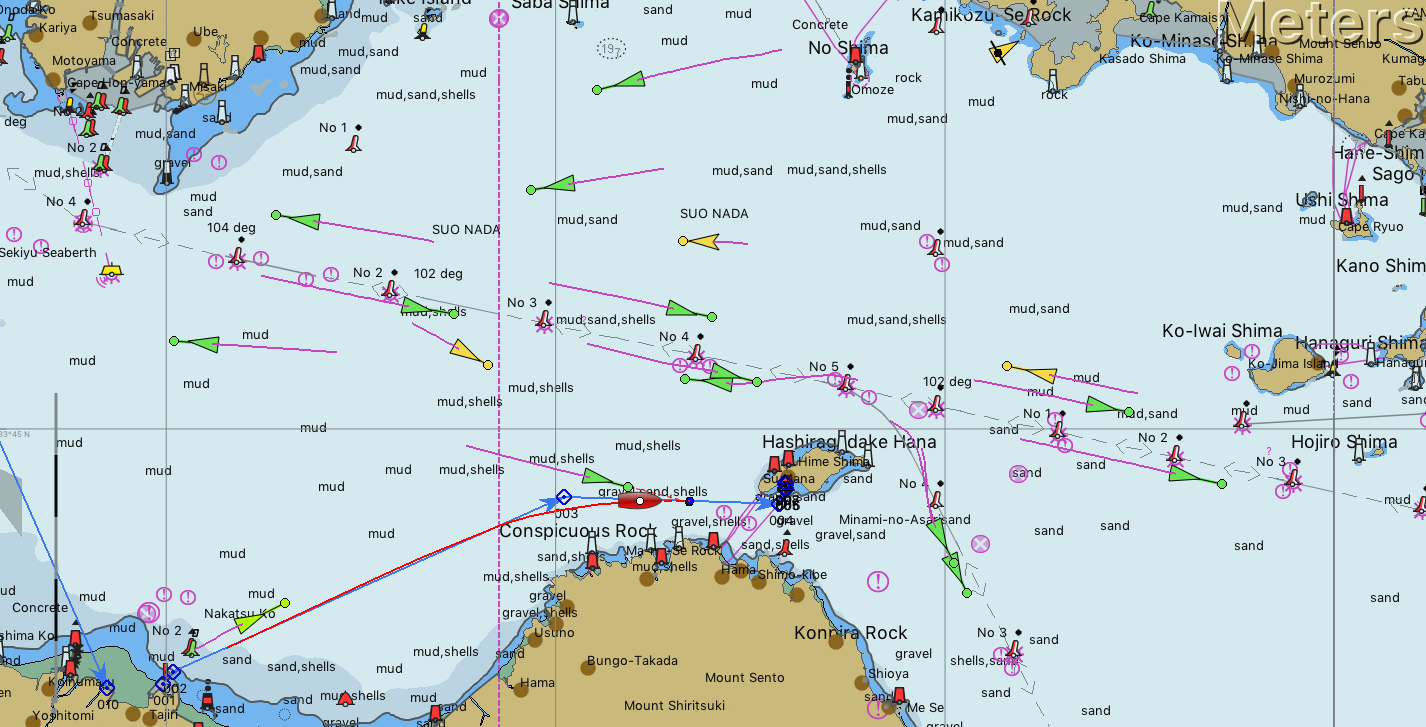
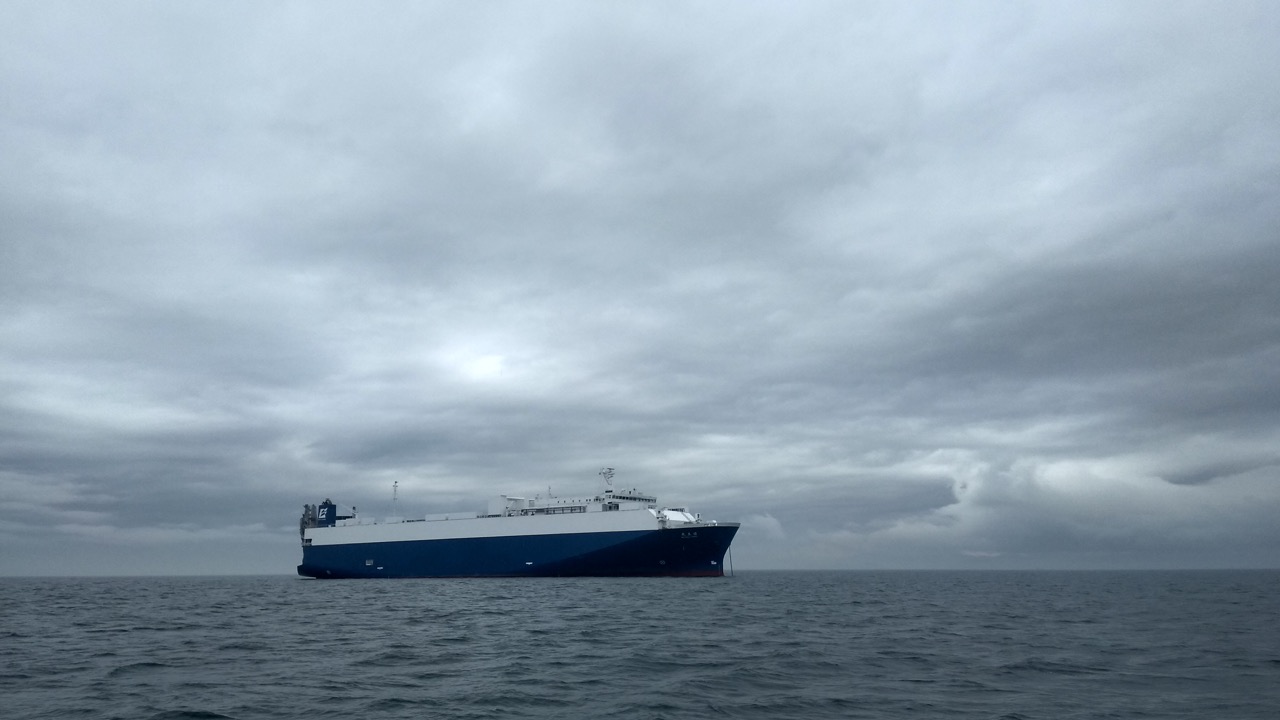
So after a fairly lazy week we slipped our berth and headed south to join the rally again at the small port of Nio on the southern island of Shikoku, the smaller of the four main Japanese Islands. There are nearly 7000 Islands in all here. It was a short 4 hour passage and the main hazard was crossing the shipping lane that ran east west, so we took a long route which took in a few islands and allowed us to cross at right angles. However we had to deal with a couple of big ships also joining the shipping lanes just were we planned to cross. With Kathy manning the AIS and calling out CPAs to me we got across just fine. The wind then picked up and by the time we closed in on Nio we were flying along, close hauled (Sails pulled in tight) at about 6 knots in a 16 knot wind. Once in the marina the wind dropped, and the sun shone brightly, an easy mooring and Kathy was soon sipping her wine while I enjoyed a Asahi Dry Zero beer, I must say the Japanese have got a lot of things right, and there alcohol free beer is the best I have ever tasted.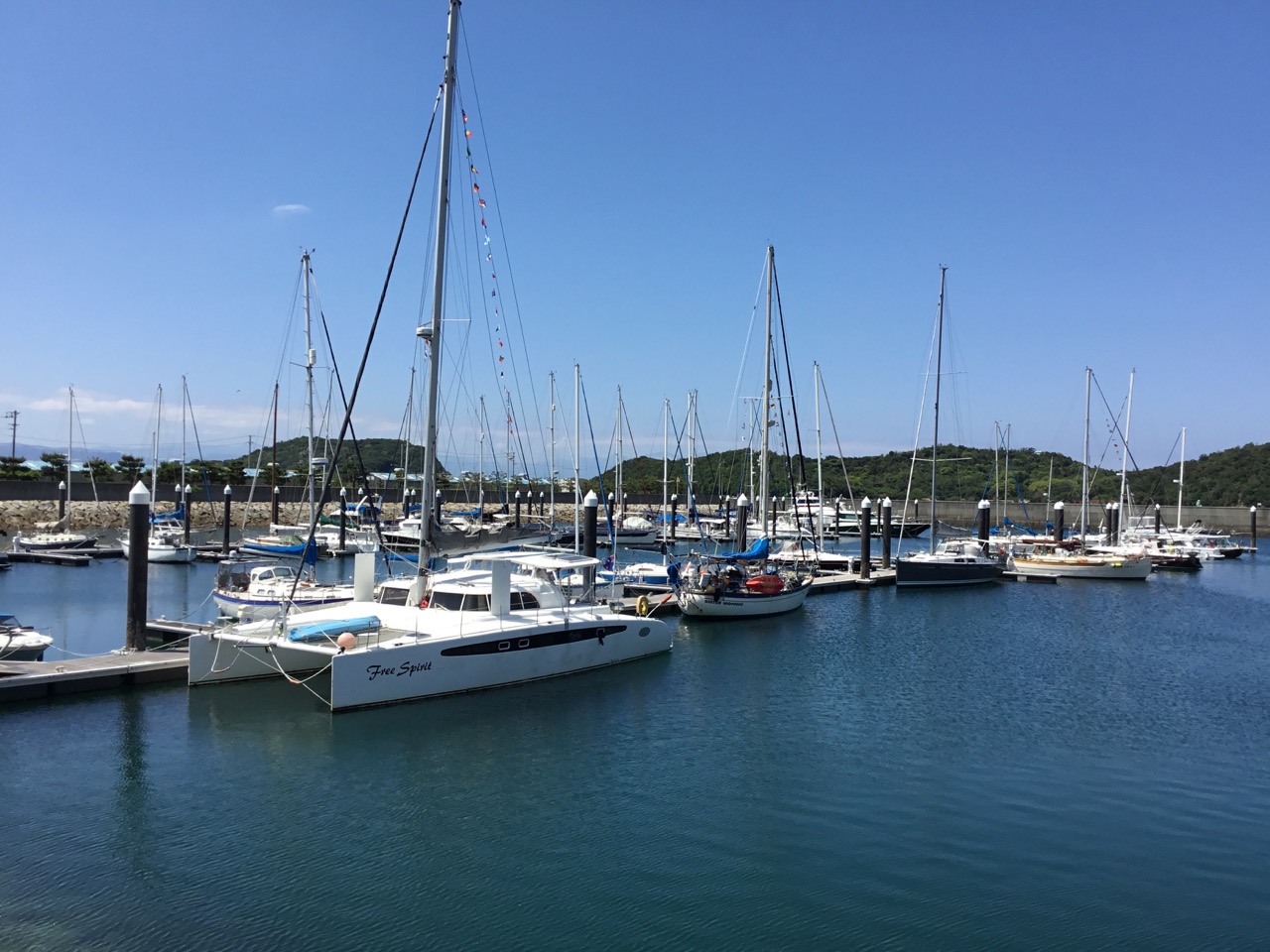
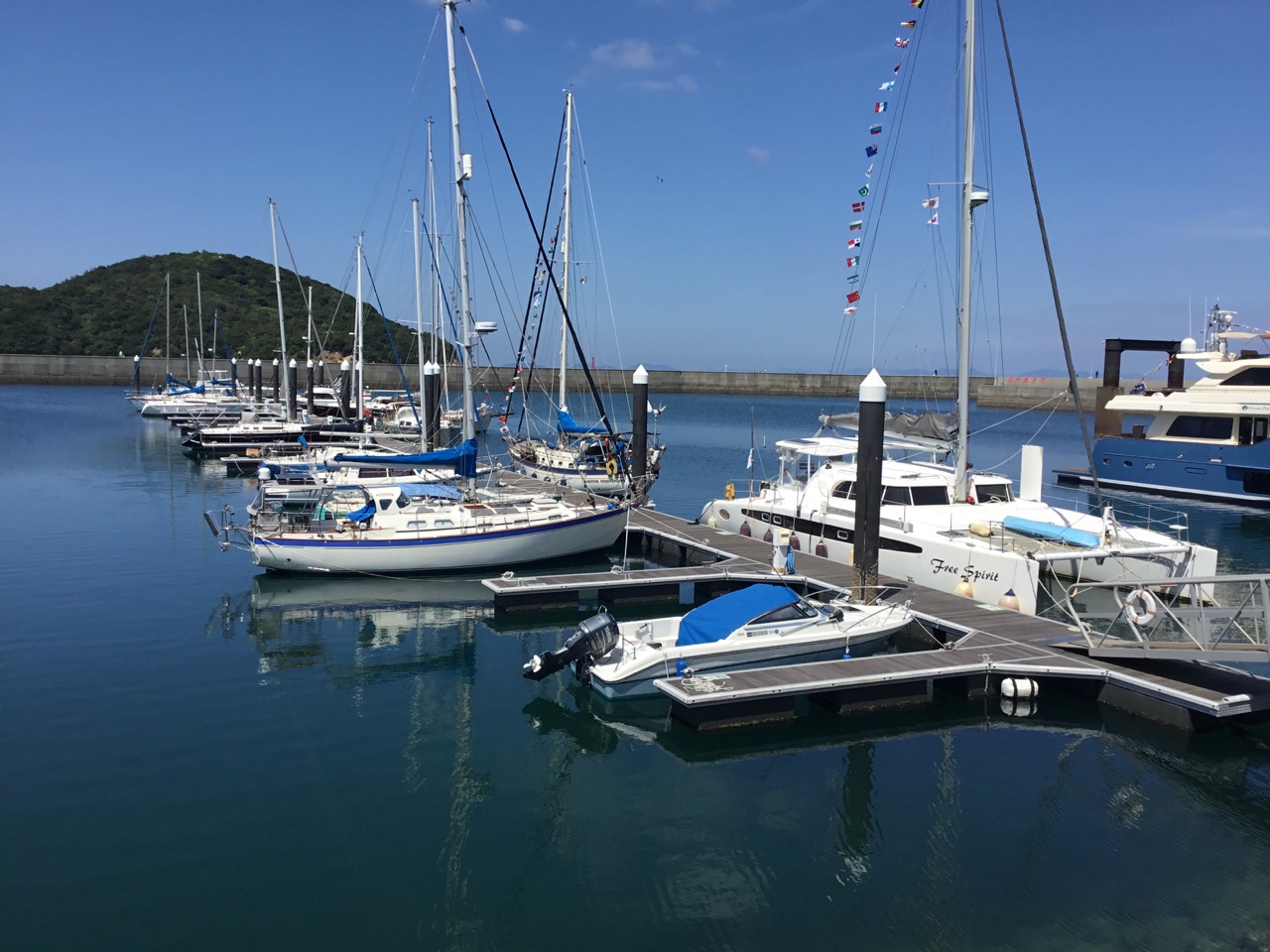
That evening we were entertained by the Nio Yacht club and the local rotary organisation, we were given free food and drink and then asked to go on stage boat by boat and talk a little in Japanese to the audience and also to sing a song. Oh they do like a good sing song here, of course Kathy has gone white now and I’m checking she is still breathing! In the end I go on stage and make a pathetic apology that we brits don’t do sing song, but I do a bit of bowing and thanking our hosts and just about get away with it.
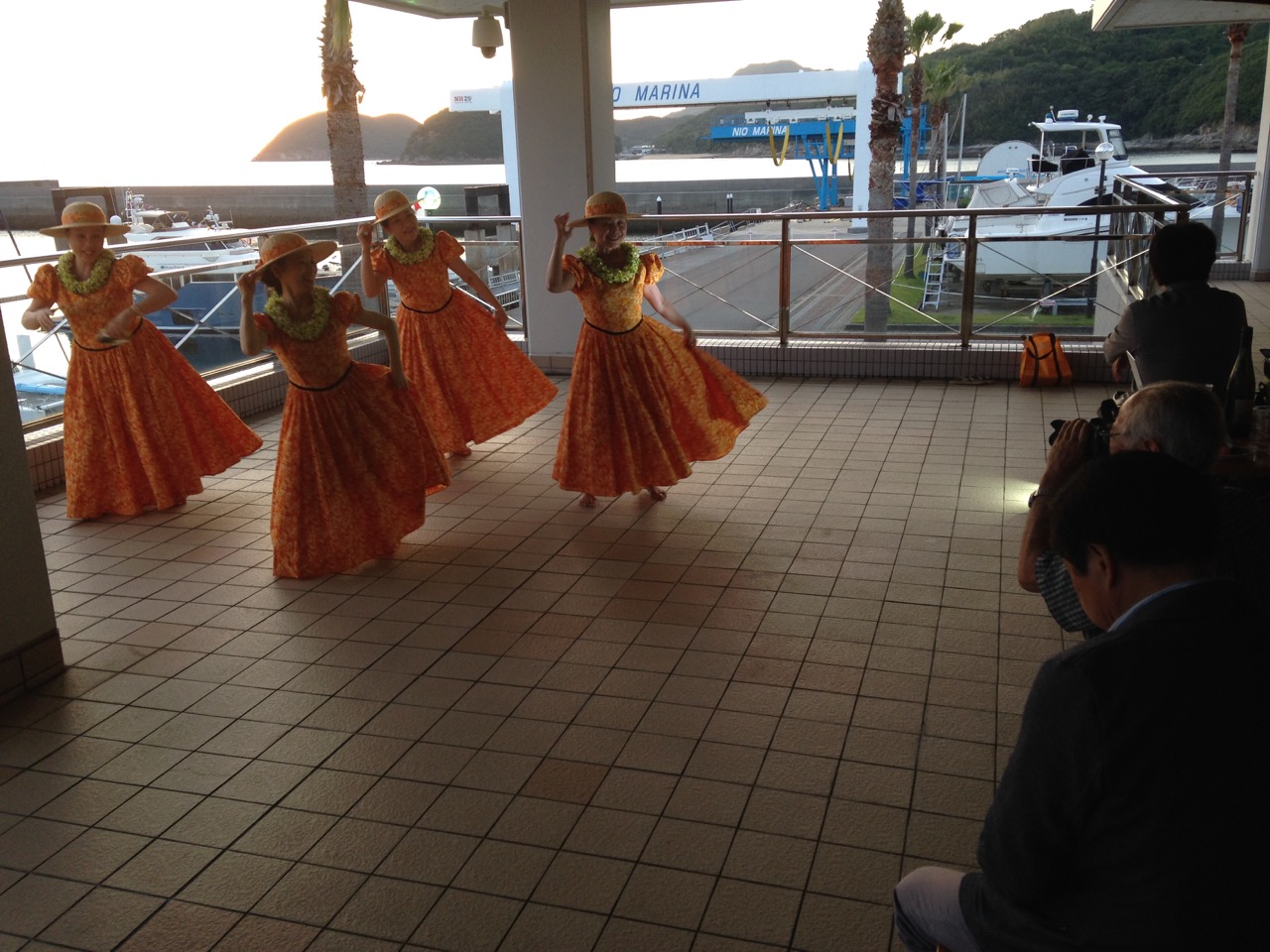
Our hosts organised some dancing entertainment for us which was Hawaiian themed, a little confusing but very good.
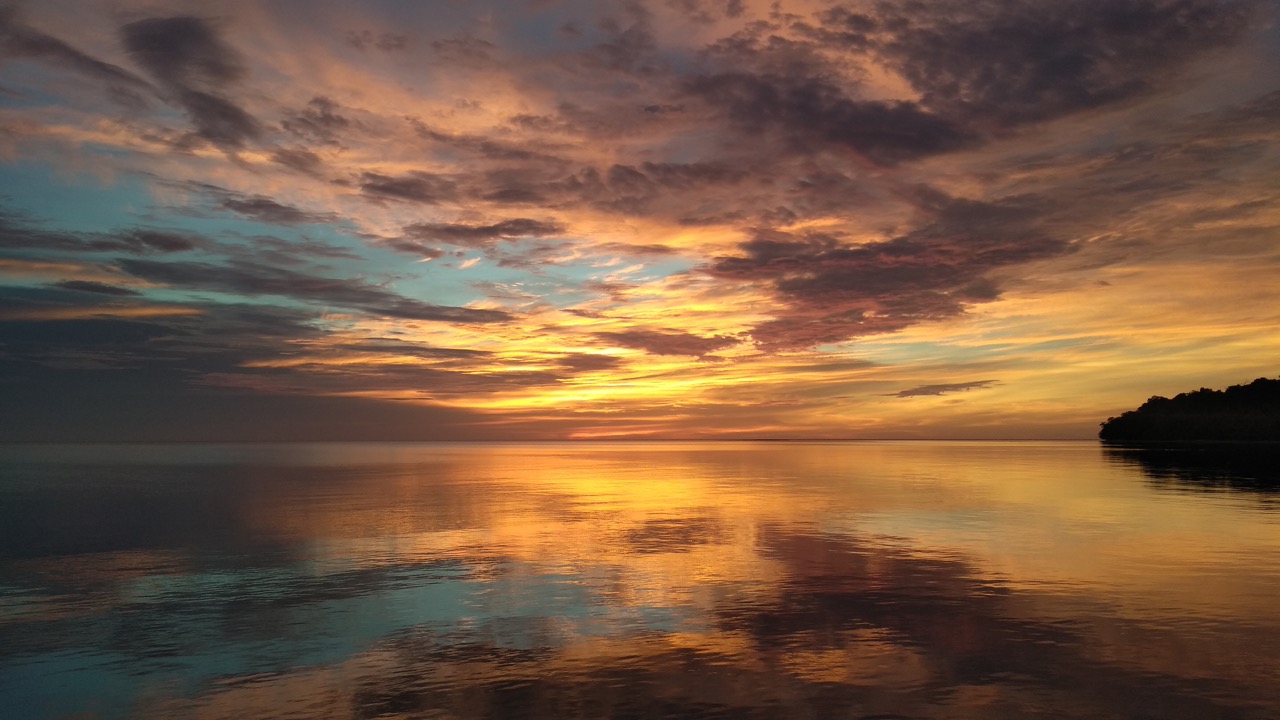
 One thing Nio is famous for is sunsets, and the view from the yacht club was stunning, We’ve seen a few now, but this was good.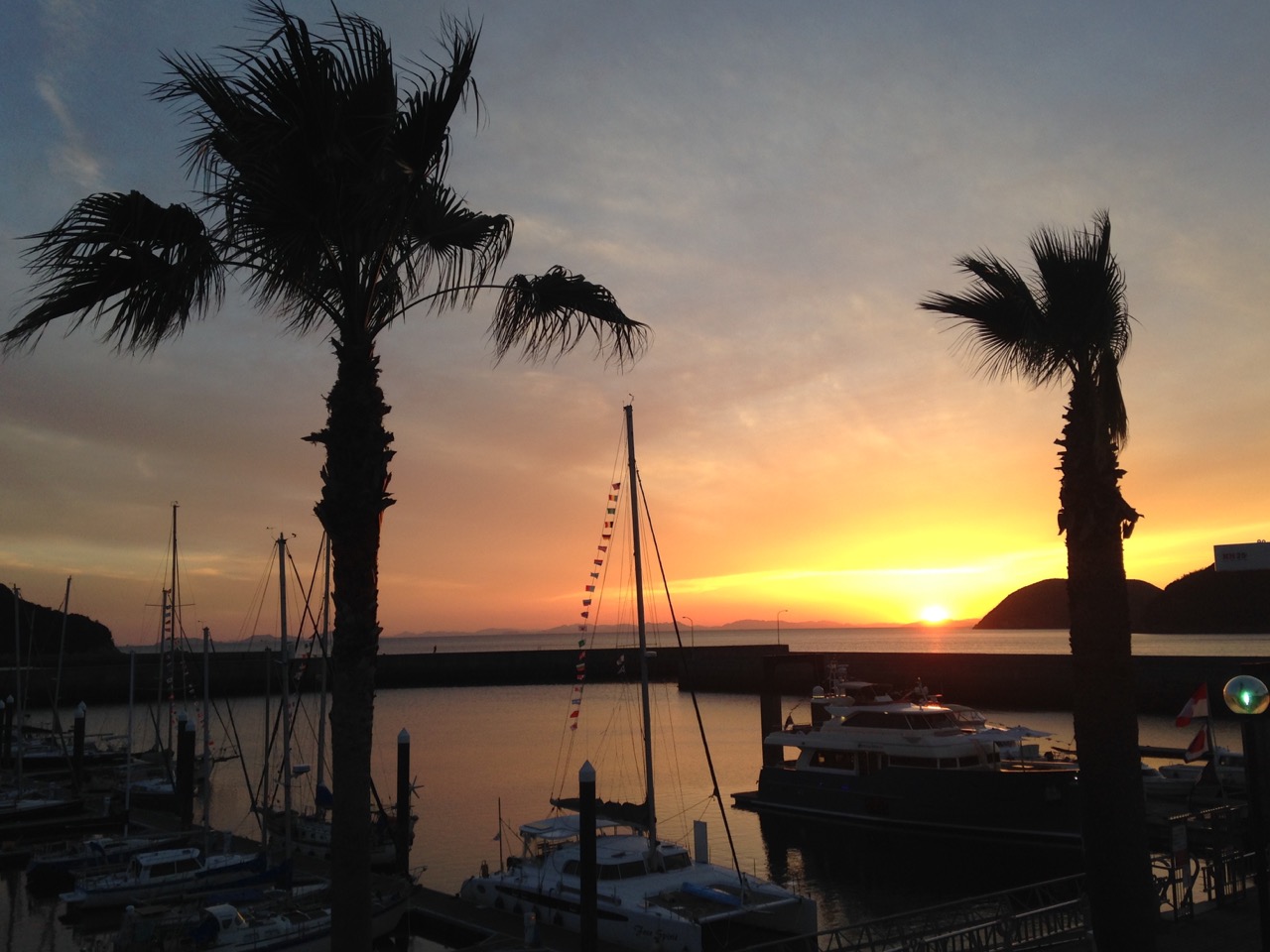
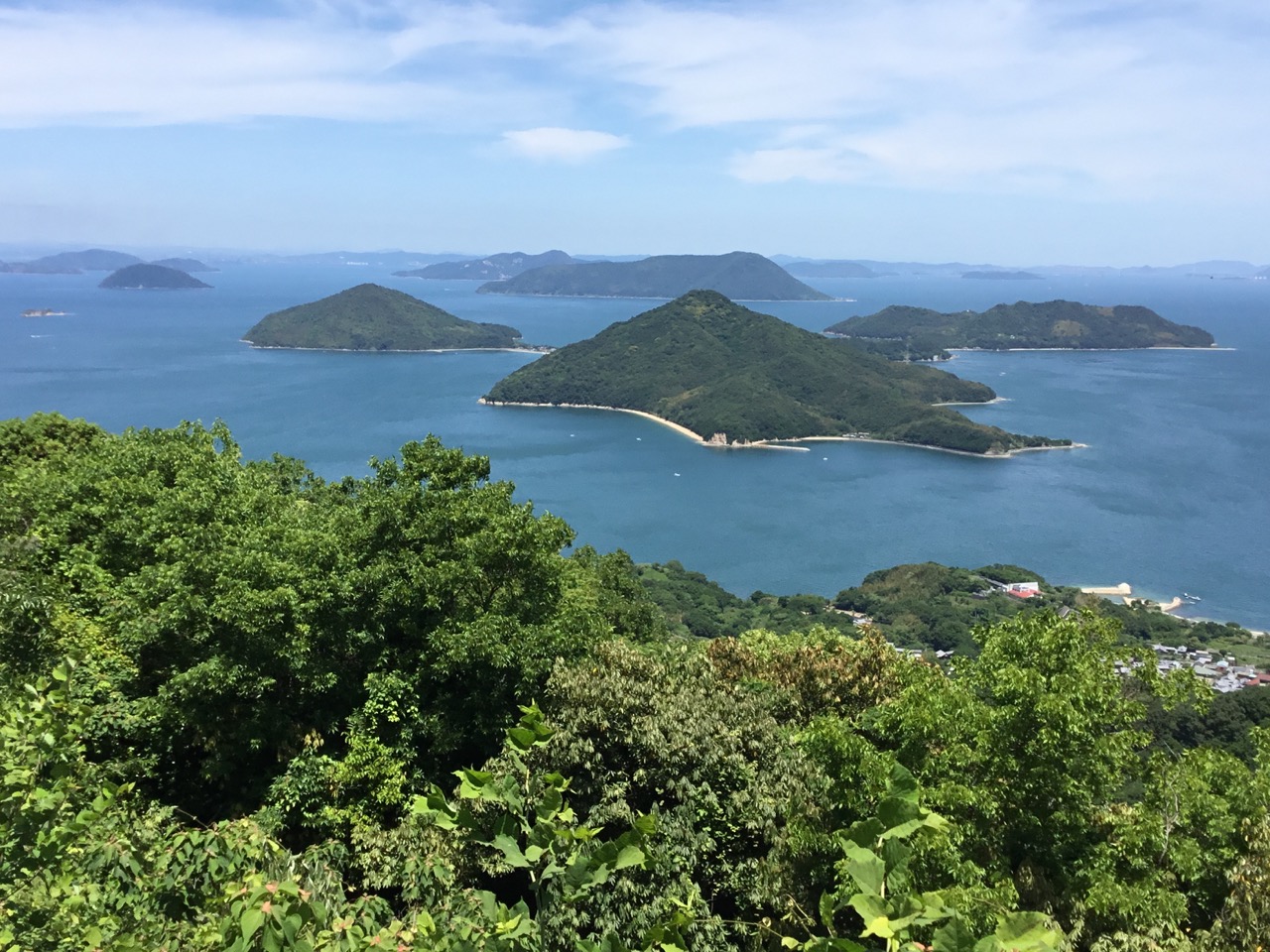
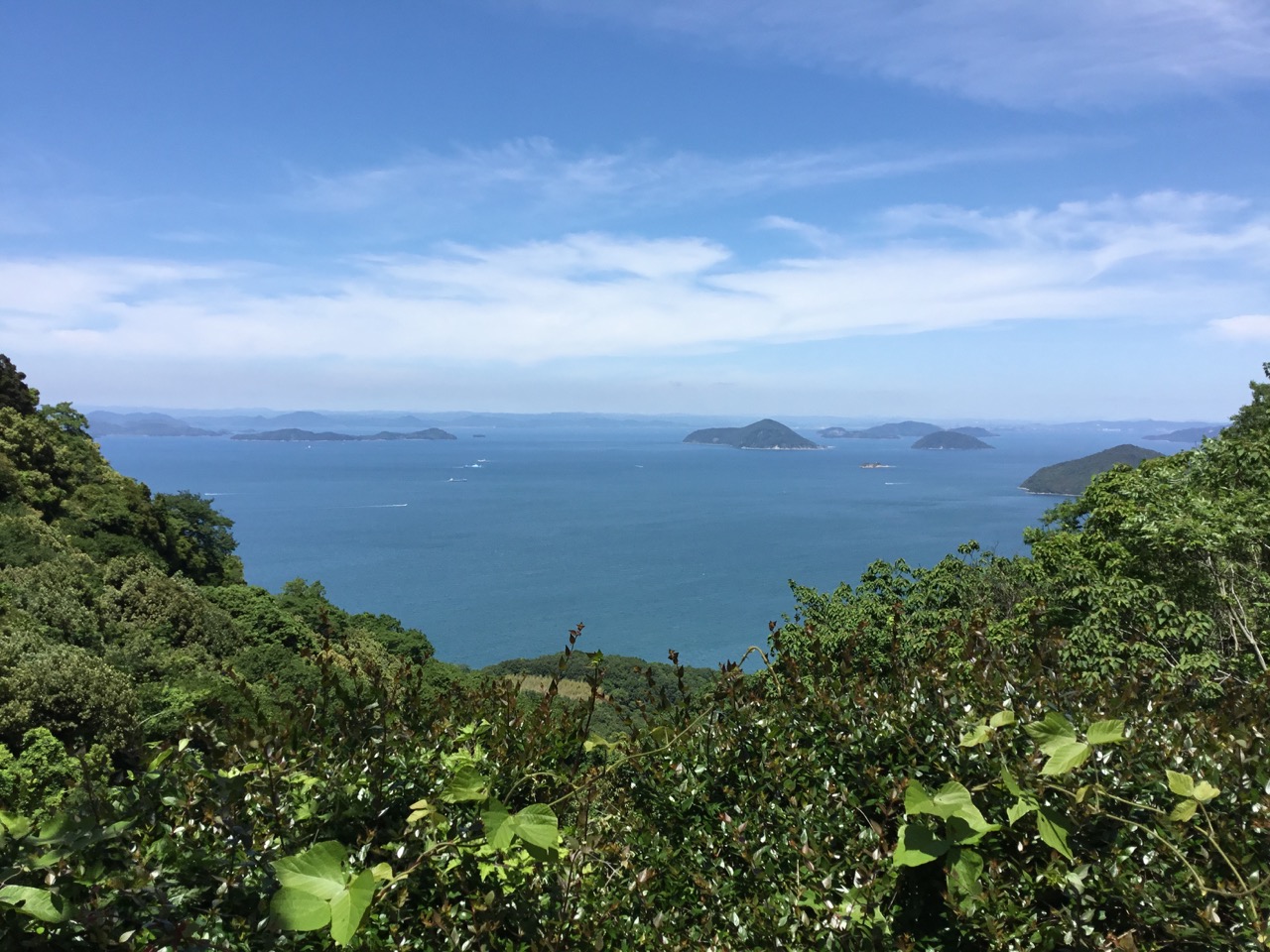
The next day, (today, Sunday) the yacht club organised a coach trip for us all to the top of a local mountain where we had a fantastic view across the inland sea. Neo sits at the end of a peninsula facing north so we had a great view all the way from the west around to the east. I hope the video below gives a little feel of it, the colours are quite striking. On the mountain we were presented with lunch boxes, something else they love here, and we sat in this lovely spot munching away on all sorts of things I had no idea of, but not for the light hearted, and definitely not for the veggie.
Tomorrow we leave here and we have a few days to kill, I’m hoping that the very recent changes in the regulations here means I will get my ‘go anywhere permit free’ pass tomorrow, so we will wander around the islands before we rejoin the rally in ‘Bella Vista’. Our first stop is to a place referred to as Cat Island!
All the time I am studying the weather systems in the North Pacific and also reading up on weather forecasting. we may be departing these shores for the big ocean in about 3 weeks time, so there’s lots to do.
Now for the boring technical stuff, We lost another battery yesterday, So our house bank of four is now three and our engine starter battery is only just up to the job if the engine starts easily. Given that we have lost two from a batch of 5 the odds aren’t good for the other three lasting long. This is a major problem, I don’t think I can afford to replace them here, the first look on the net for replacements have them coming in at around £800 each and I need 4 to do the job properly. I’m going to get more details after the rally when we get to Kobe, but I’m thinking that we may just have to go easy on the batteries on the big passage and I can get a decent price when we reach America.
Water leak on port tank, Not a lot, but too much for our passage, I have to investigate.
Accumulator Tank, I think this may be failing, it’s been subject to a leak before and is quite corroded, I have been expecting it to fail at some point, its job is to make the water run out the taps more smoothly and also to reduce the cycling on the pressure pump, but I can bypass it if needed, what I don’t want is for it to fail and fill the bilges with our drinking water on the trip.
Rudder clunk. I have just noticed a small clunky noise coming from the rudder / autopilot area when hand steering, it’s only quiet but I need to feel 100% sure about this before we leave.
Gas issues. We have been unable to fill our spare & empty gas cylinder, the other one is about 50% full, or 50% empty, depending on your disposition to such matters, I think we can get across the pacific on this, but not if Kathy wants to bake bread frequently. They use the same type of cylinders here, but for ‘Health and Safety’ reasons, no one will touch our cylinder. I’m still hopeful I can find a back street supplier, but we may end up having to buy a portable camping stove and a few dozen bottles of camping gas.
On a more positive note, the boat has been performing well, all the systems seem to work well, I’m getting better at sailing it, I have messed with the spinaker pole a bit and feel I can handle that now, have even jibed the headsail with it ok. I fitted the new gasket to the eberspacher heater and fixed a hole in the exhaust and now we have been able to heat the main cabin up until it was quite toasty, without gassing ourselves. A few days ago Kathy and I spent a day cleaning the outside, the tropics take a toll on the brightwork, but now she is gleaming again, the boat that is, I managed to slap some varnish on, and also removed the slapped on varnish from the gelcoat from the previous varnishing. I also re-bedded the port chainplates, having done the starboard ones a few weeks back. it took me 6 hours to do that, and it should be good for 5 years or more I hope.
So all in all the boats doing quite well and we are having a great time in Japan, the climate is lovely, cool at nights and quite pleasant during the day.
Pul Collister
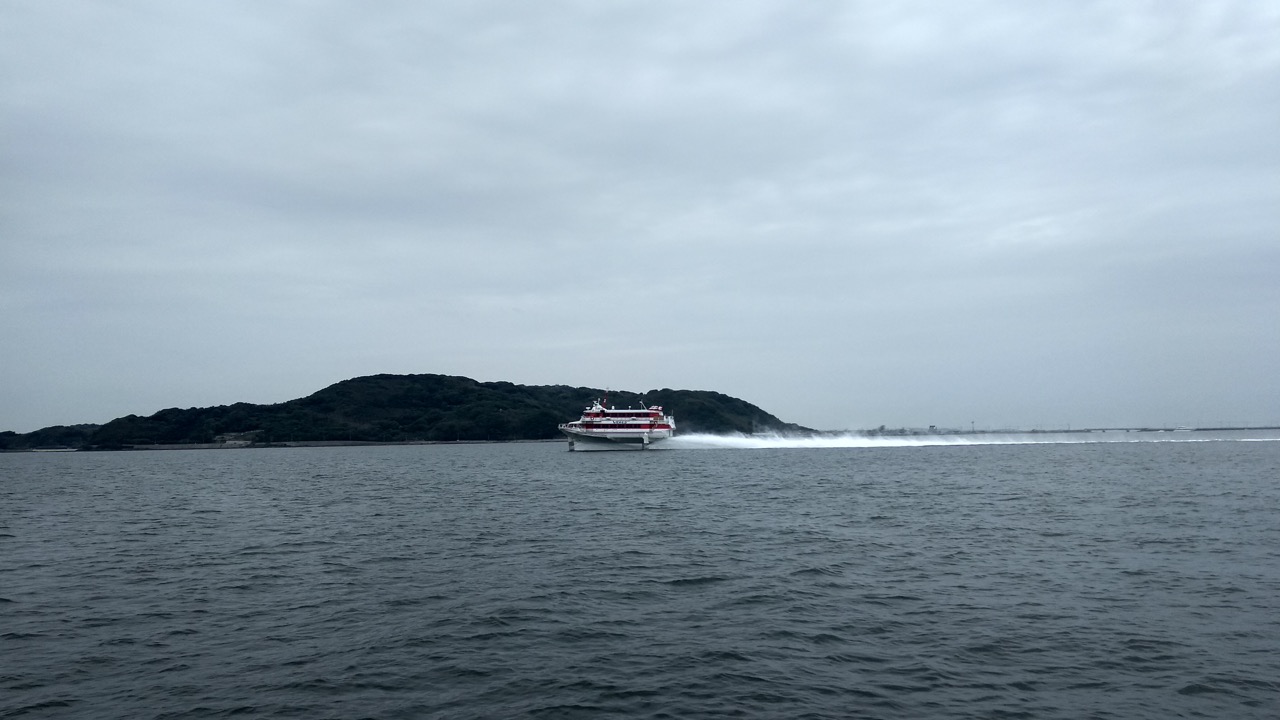 they go so fast and make no wake, but leave a foaming thin spread of white water behind them, like contrails.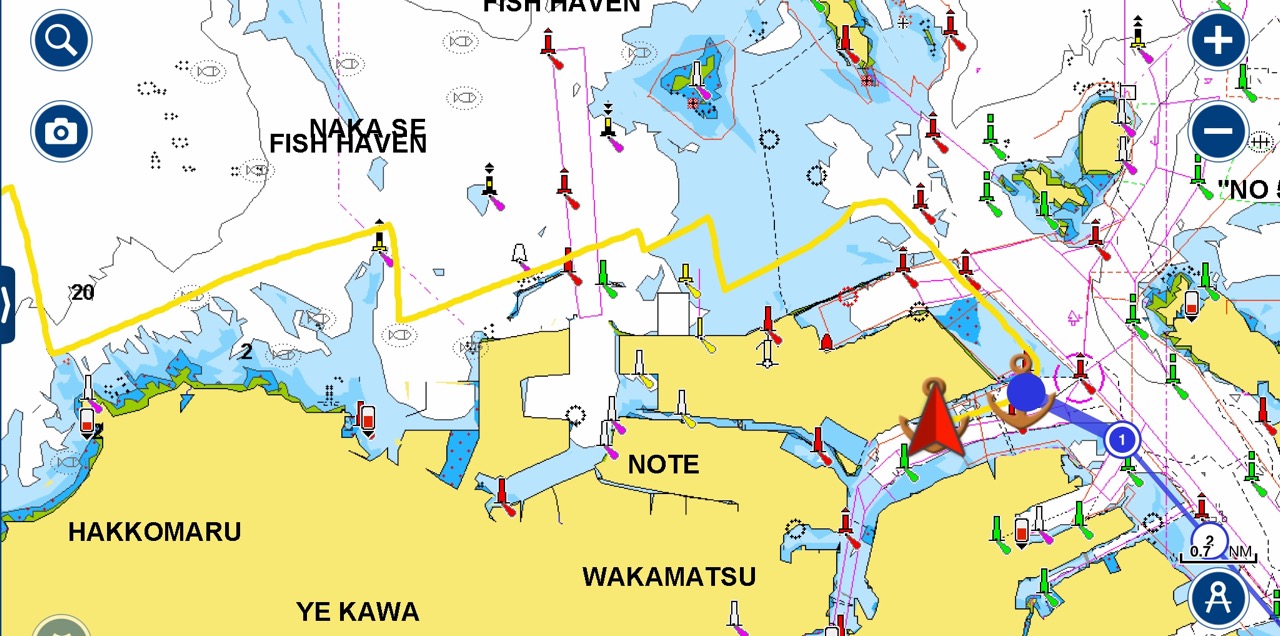
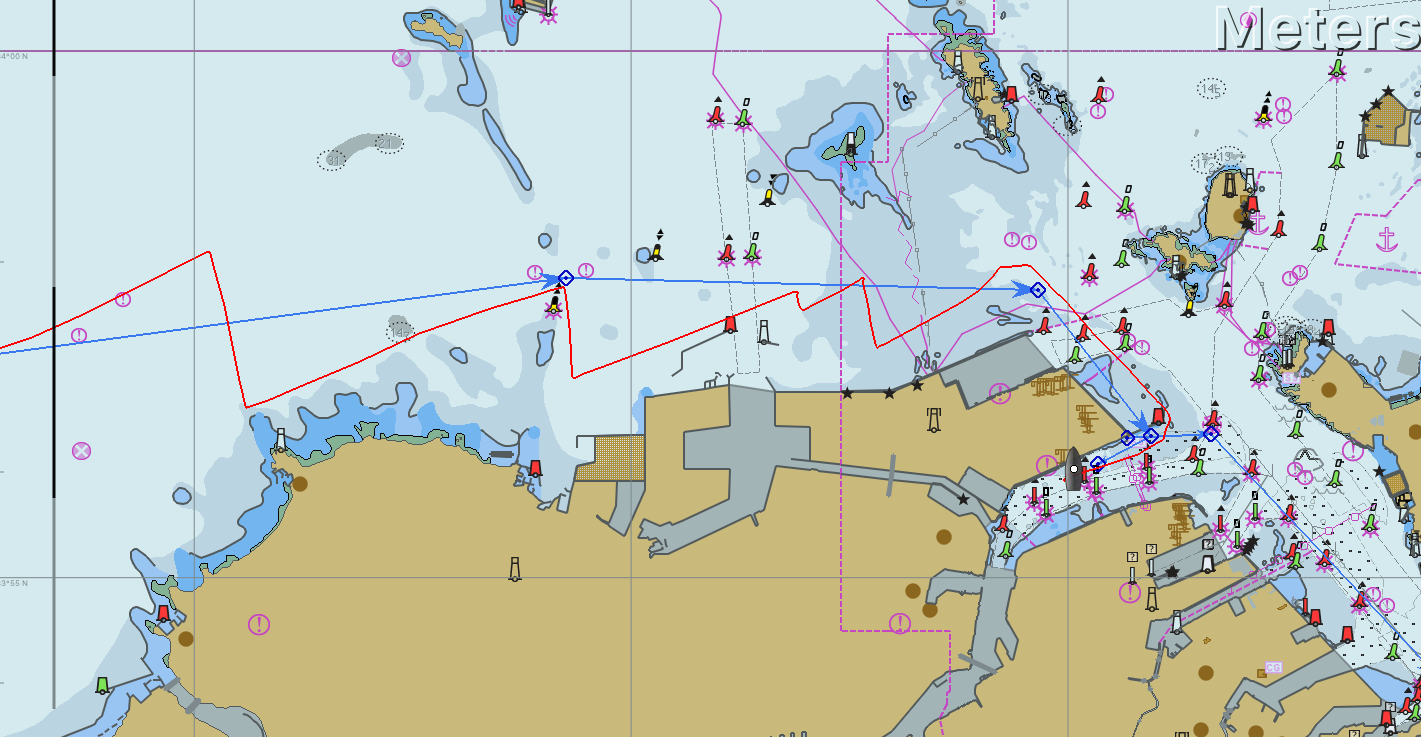 The area was becoming more and more industrialised, and looked like a giant version of Ellesmere port/Stanlow oil refinery where I come from.
 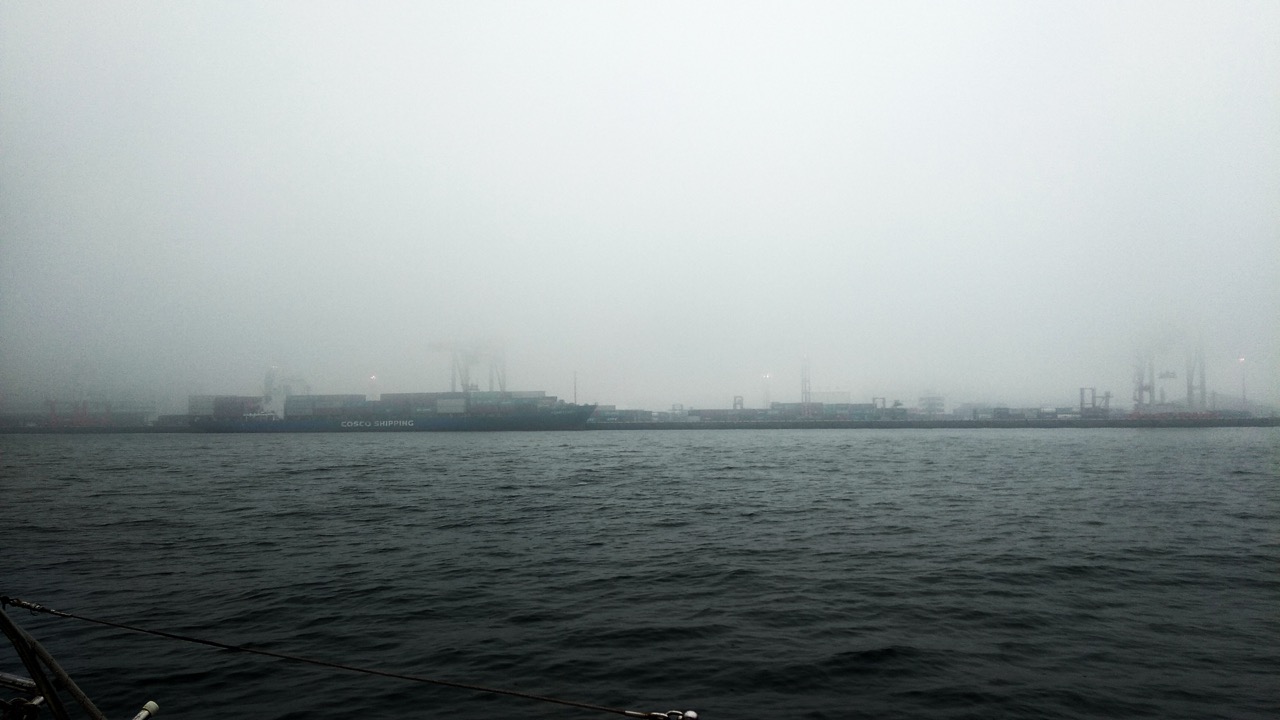 The air was full of sulphurous smoke from the power station on the shore front. I sailed between wind turbines, and while trying to understand what this huge pylon was that I was sailing towards, about 0.2 nm from shore
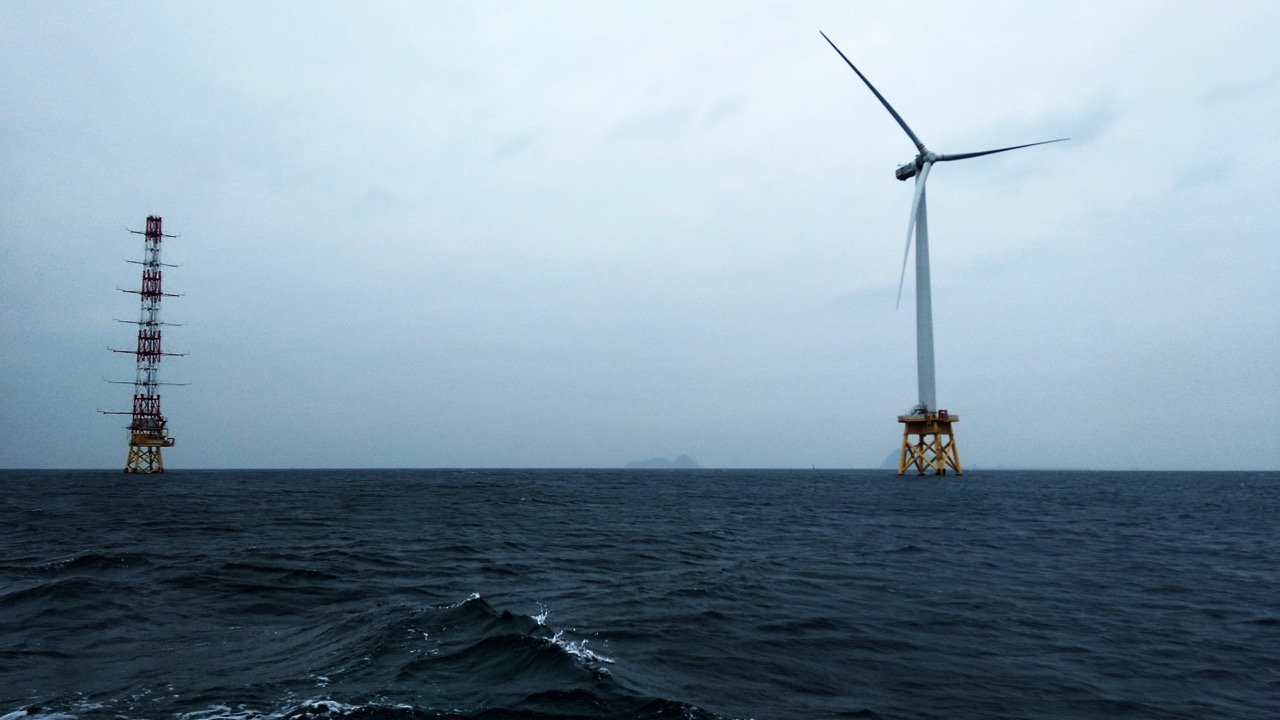 I noticed the chart had printed on it OVERHEAD POWER CABLES, crikey I thought, we’re about to be frizzled, or at best, get the electric toaster working for free. The thing was the pylon didn’t seem to have any wires on it, just a mass of aerials, and looking closer to the shore I could see the aforesaid cables going out to some big round structure off to starboard. so false alarm.
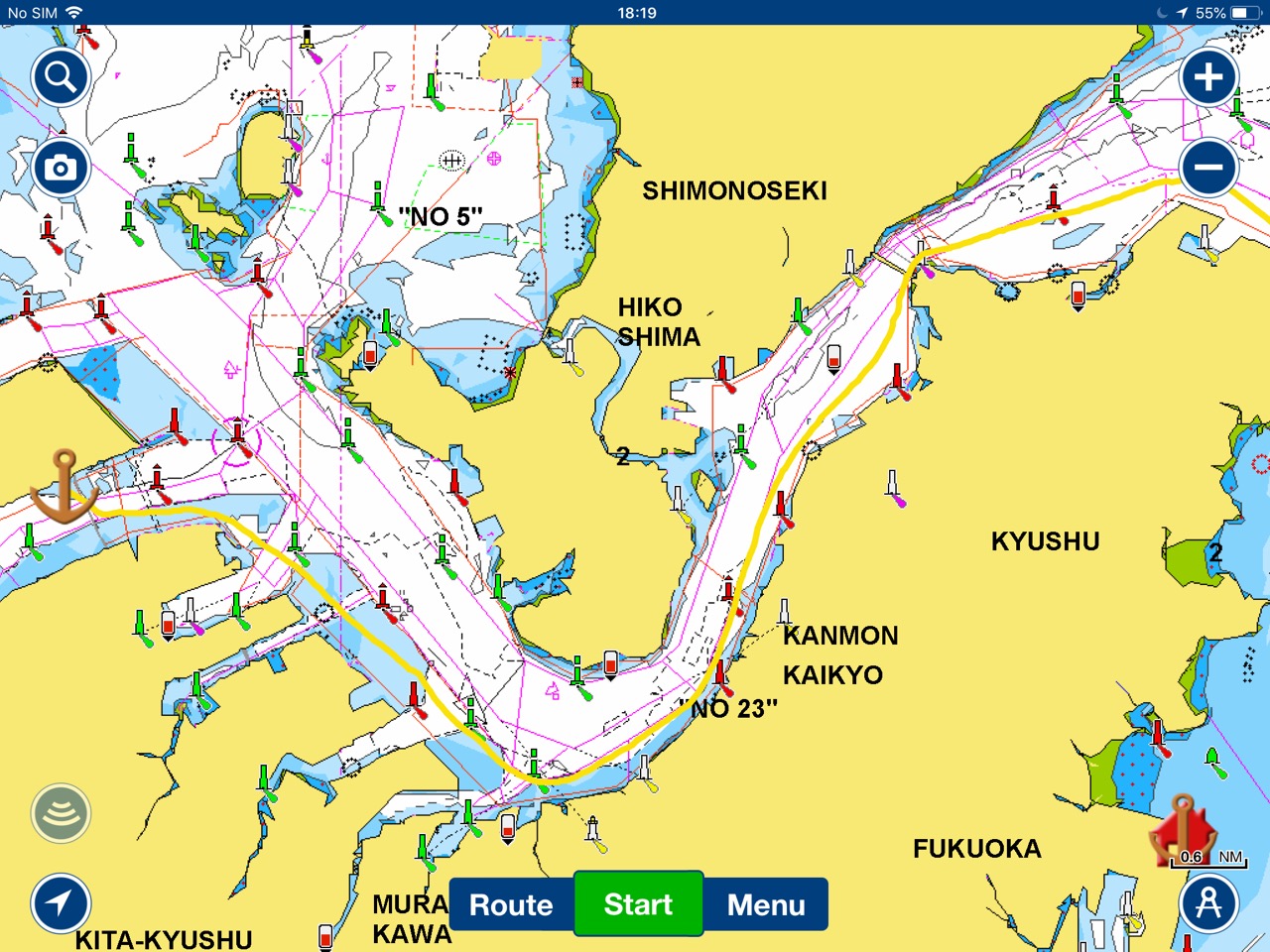 It seemed too rough there to stay, the wind was making the sea quite choppy, but I noticed a coastal cargo ship and a tug attached to a barge both at anchor where I had my waypoint. I went beyond them, turned into the wind, slowed the boat and decided it wasn’t that rough at all, we sleep through much worse on night watches, and the forecast was for an improvement anyway, so down went the hook in 10 metres of water. Kathy came to help with the anchoring, she couldn’t believe me that I was going to anchor in such a rough sea, but once the anchor was set, and we went below, shut the hatches and removed our soaking wet-weather gear, everything was just fine. We both slept very well, the new duvet we bought in Fukuoka, along with the three blankets works well, how very different from just a month ago.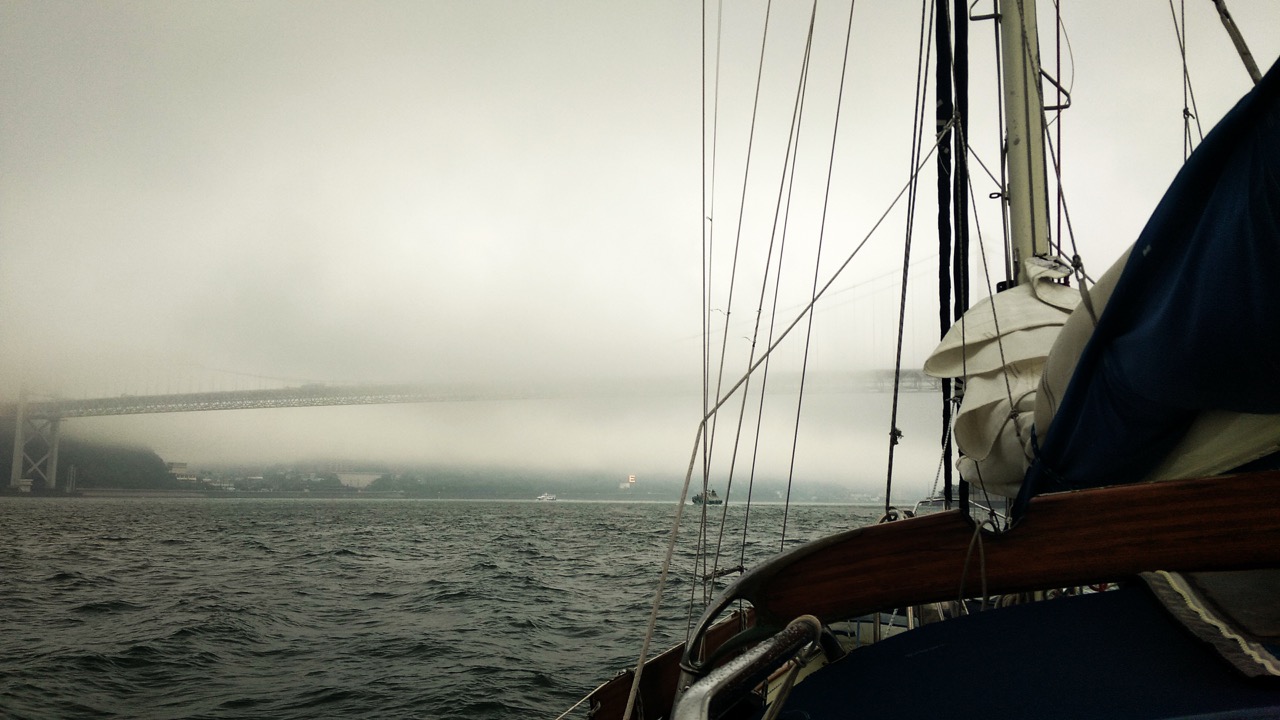
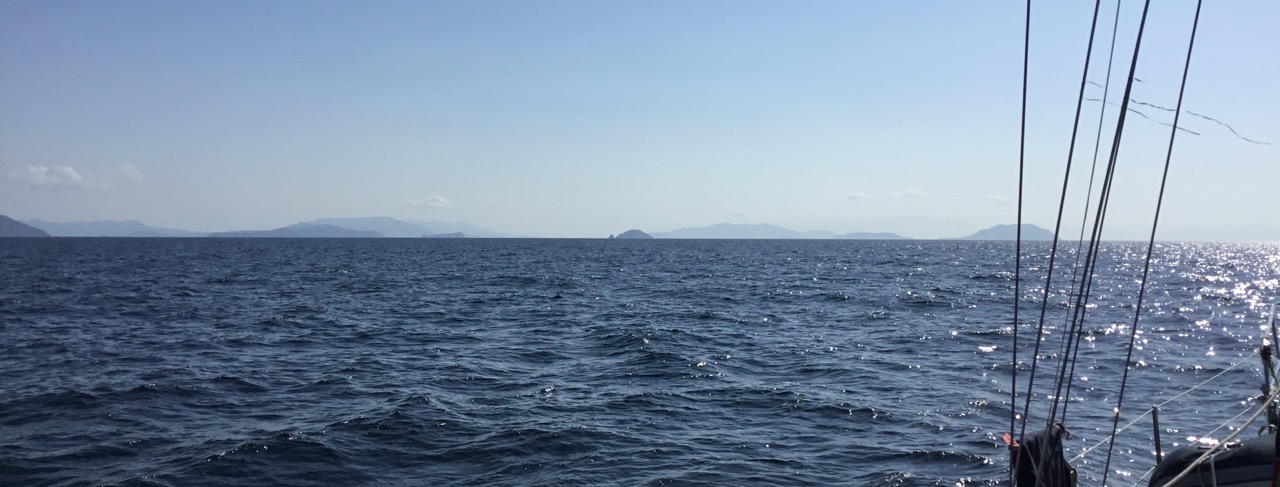
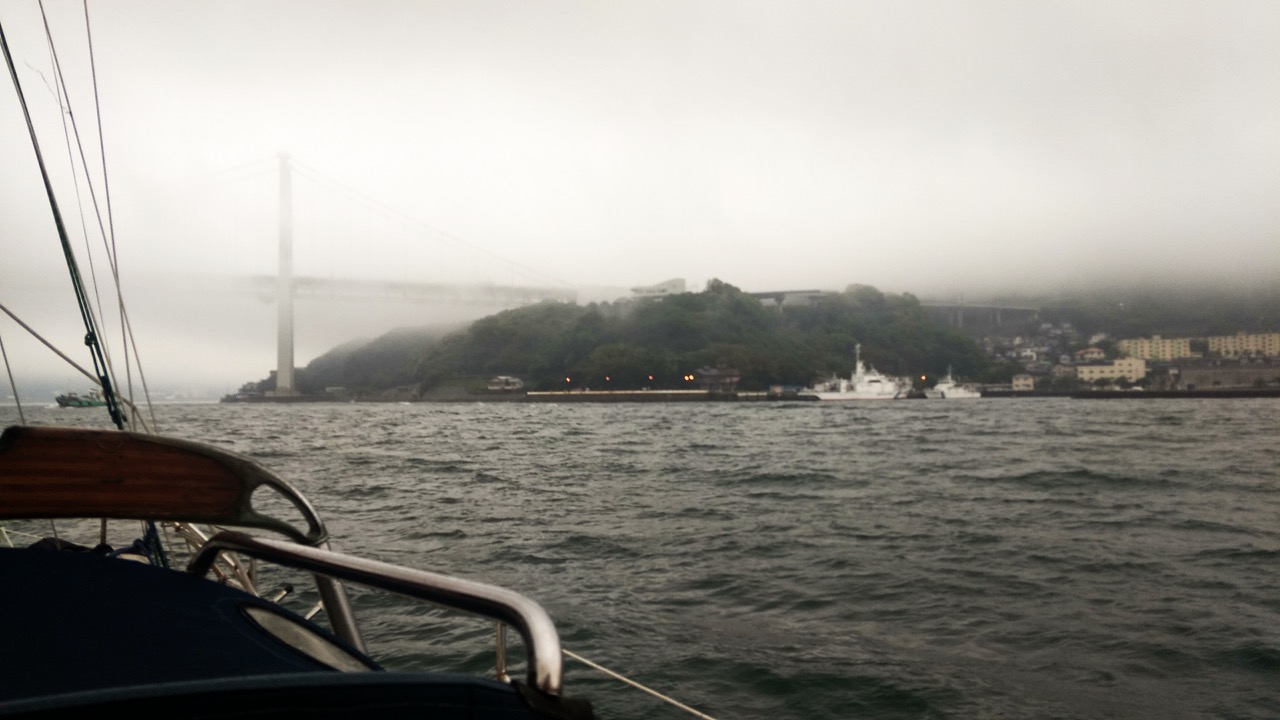 then 15 minutes later we were in the inland sea proper. A place I had wanted to see for many years.
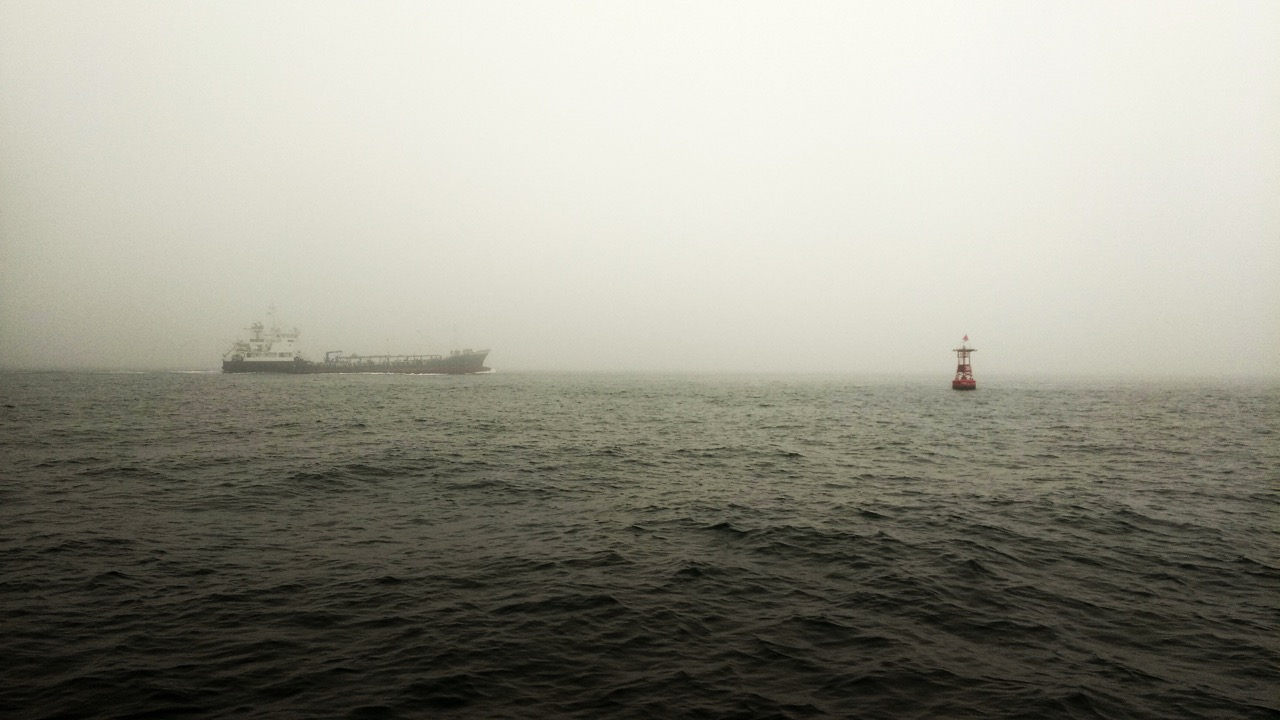
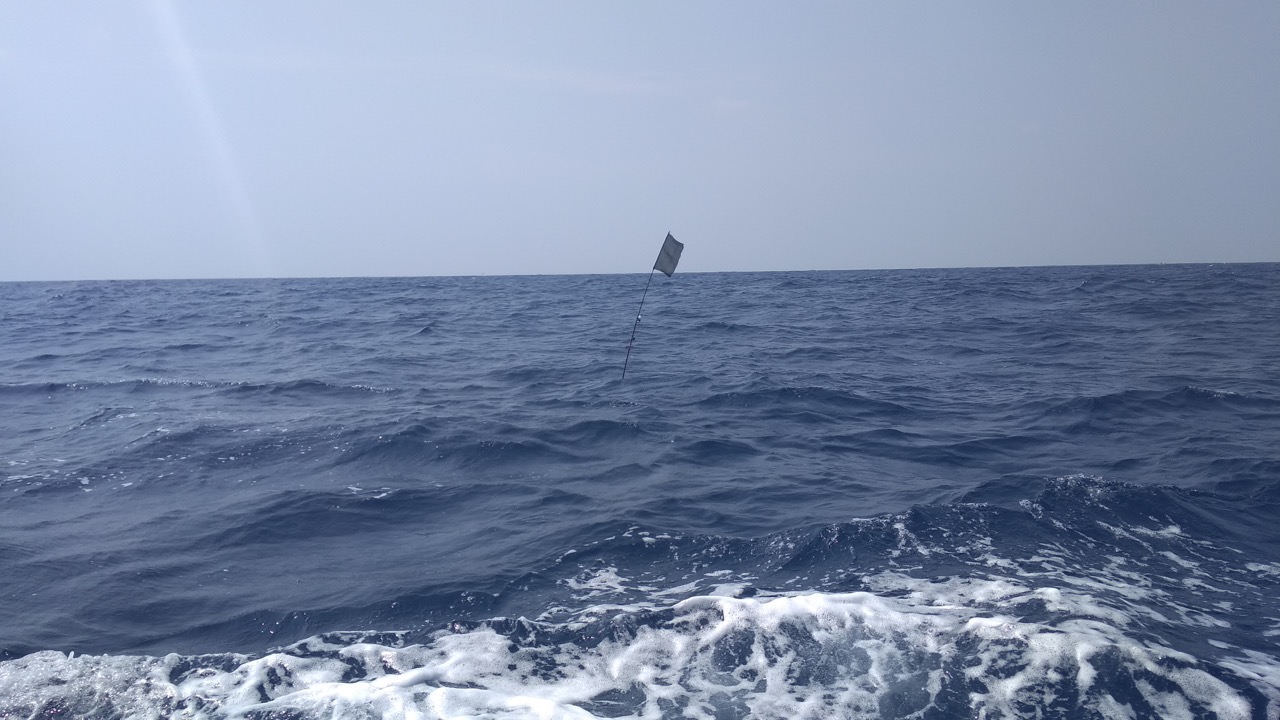
  Unfortunately during our passage along the strait, the fog and rain returned, this is normal in Japan at this time of year, and so I wasn’t seeing much at all, Kathy maintained AIS watch, and I looked out for small boats from the helm. What disappointed me was the huge amount of fishing buoys/flags we encountered, I presume they have nets strung between them. They are everywhere, and although they don’t present much of a problem to us, due to the underwater shape of our hull with an enclosed propeller, it’s still a fear we might snag one, or have to deal with a fisherman who insists we go around them. Our charts show lots of Fish Havens,
 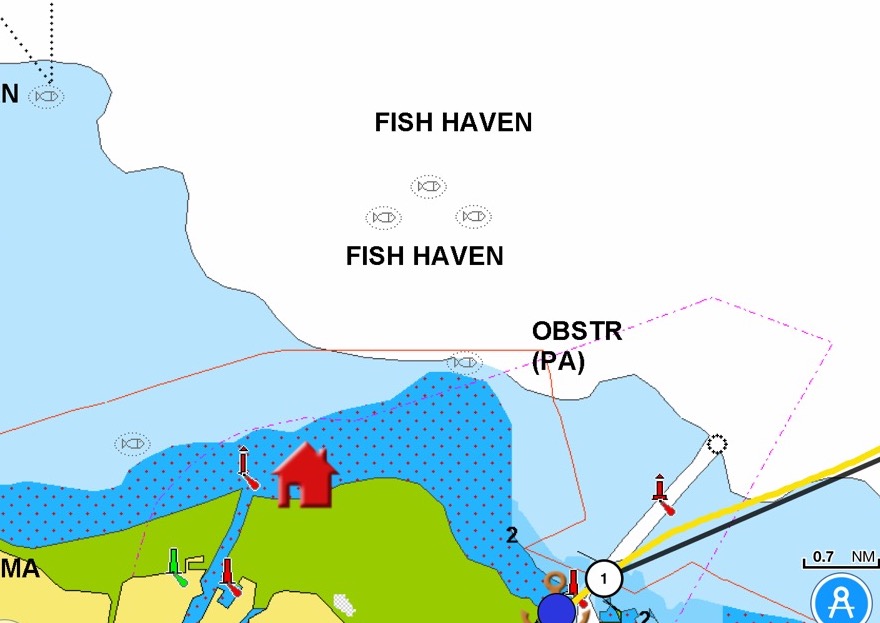 which back home usually is a place where fishing is strictly banned, I presume to allow stocks to recover. Here it seems to be a place where you can fish and string out loads of nets. Interestingly our charts also shows Fish Heavens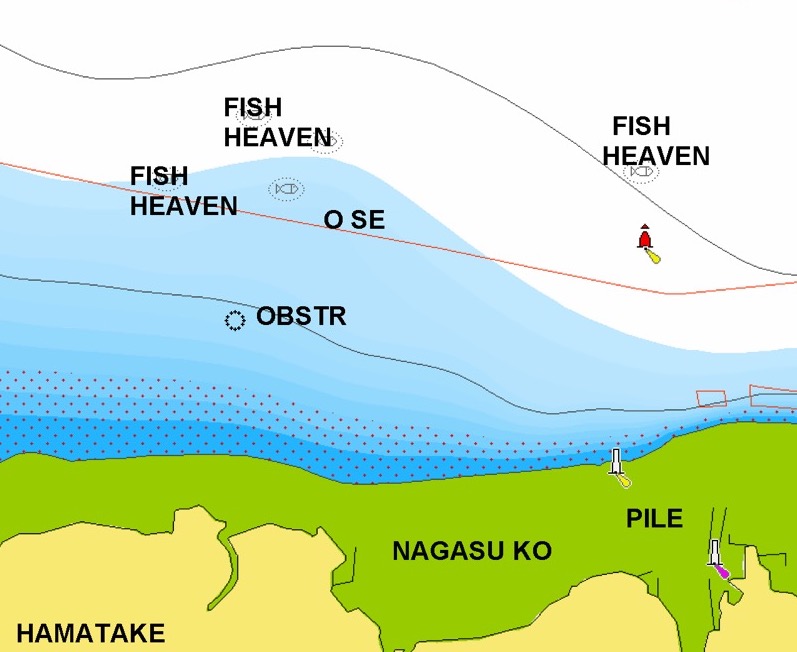
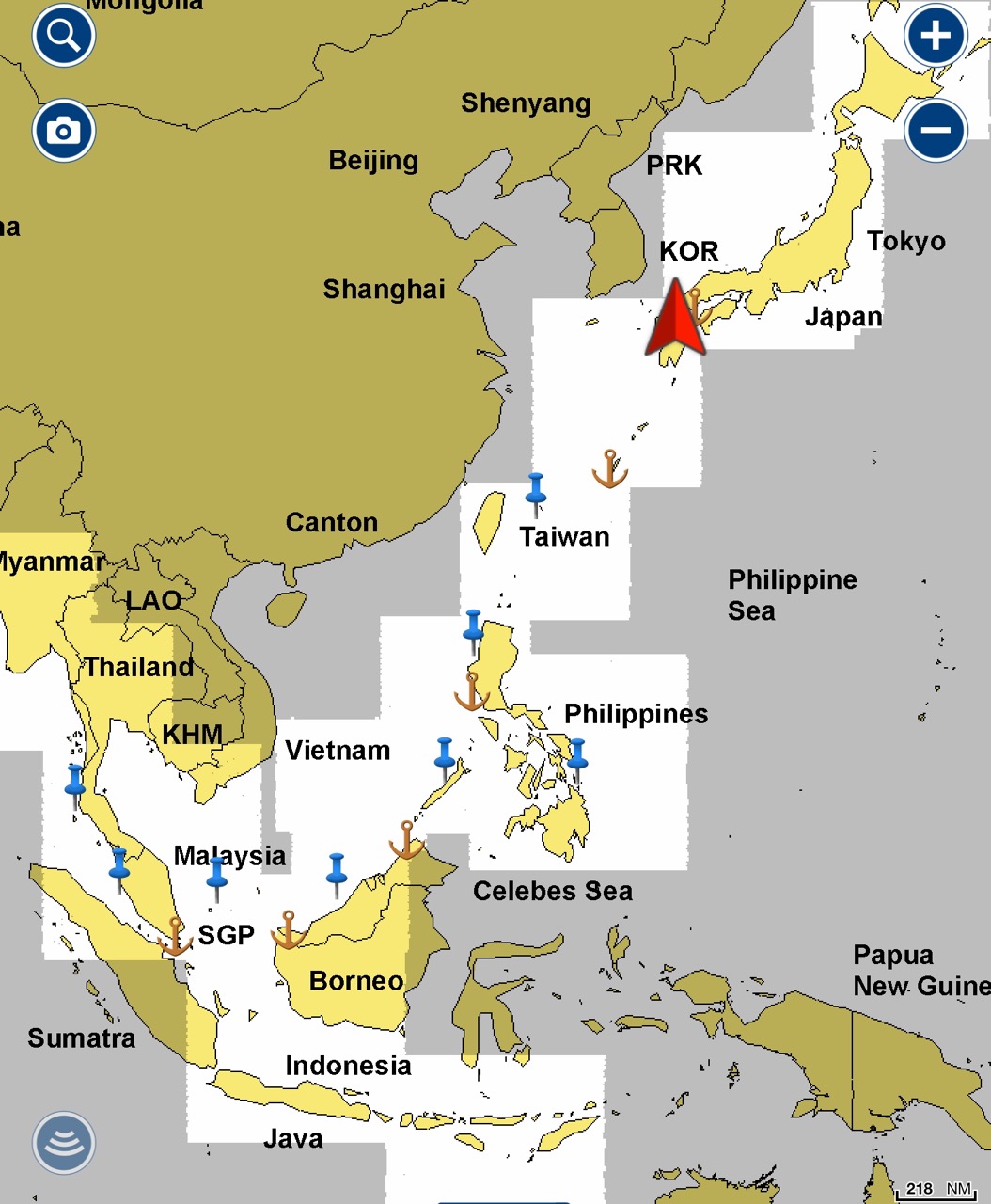
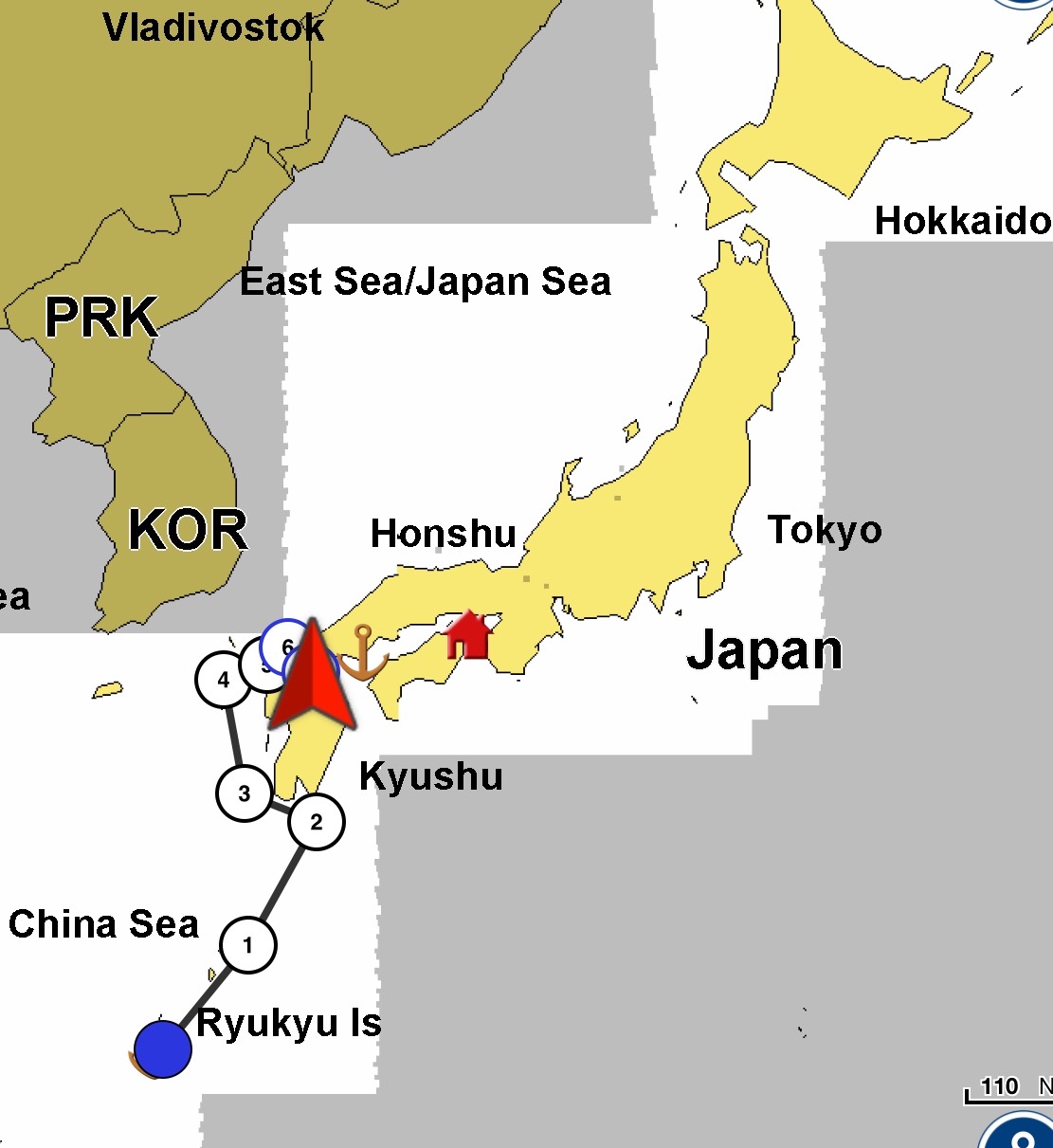
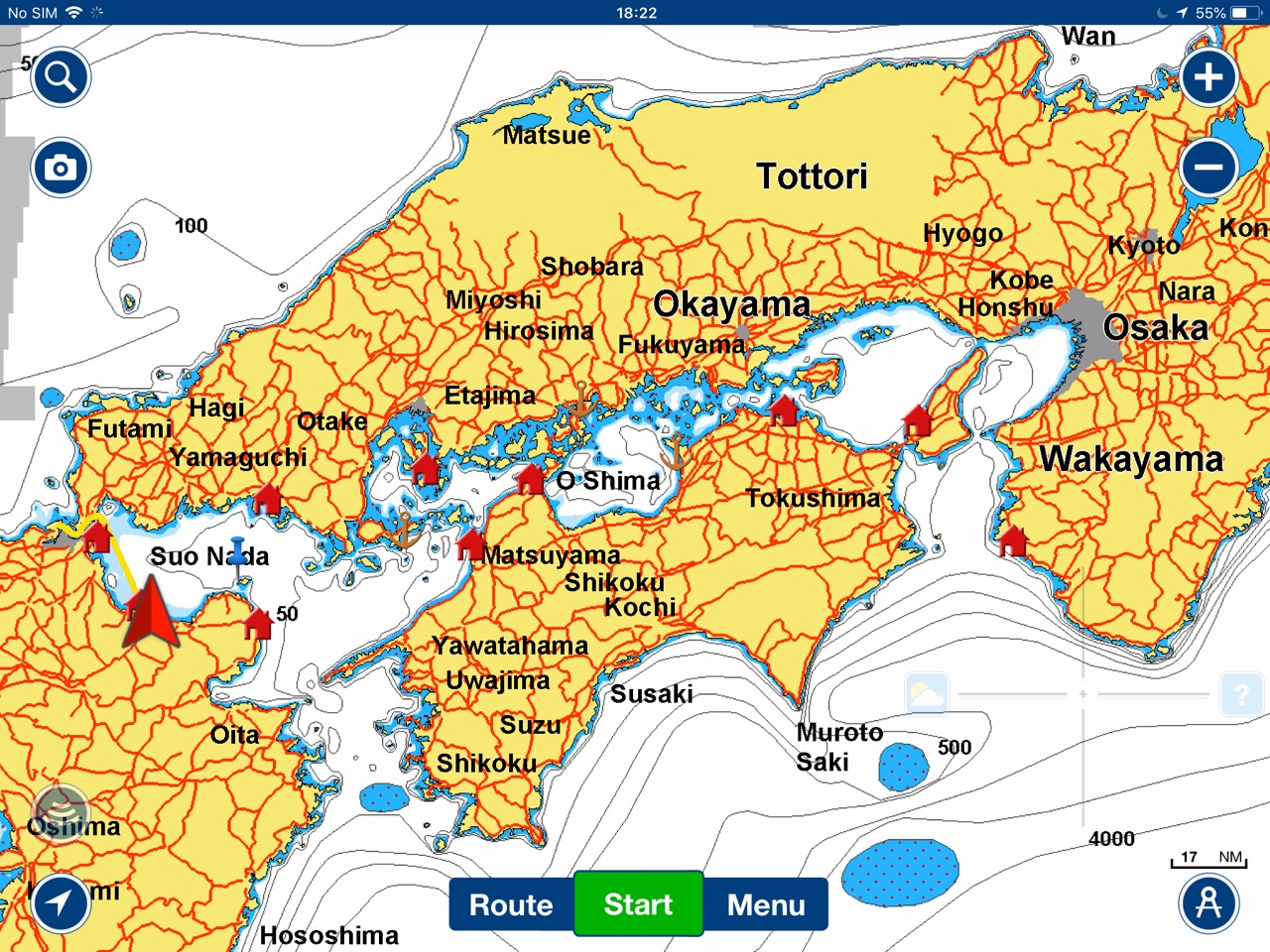
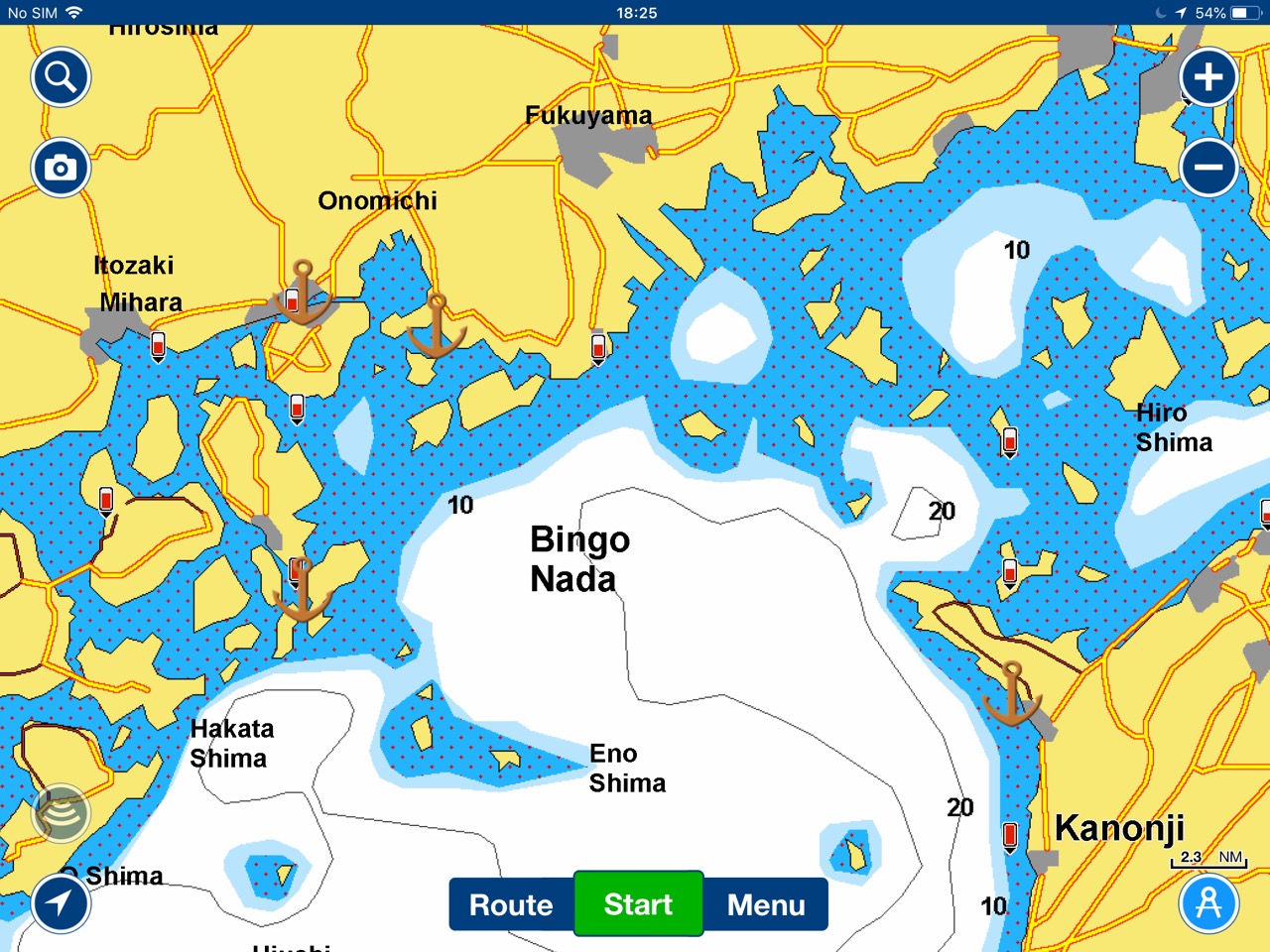
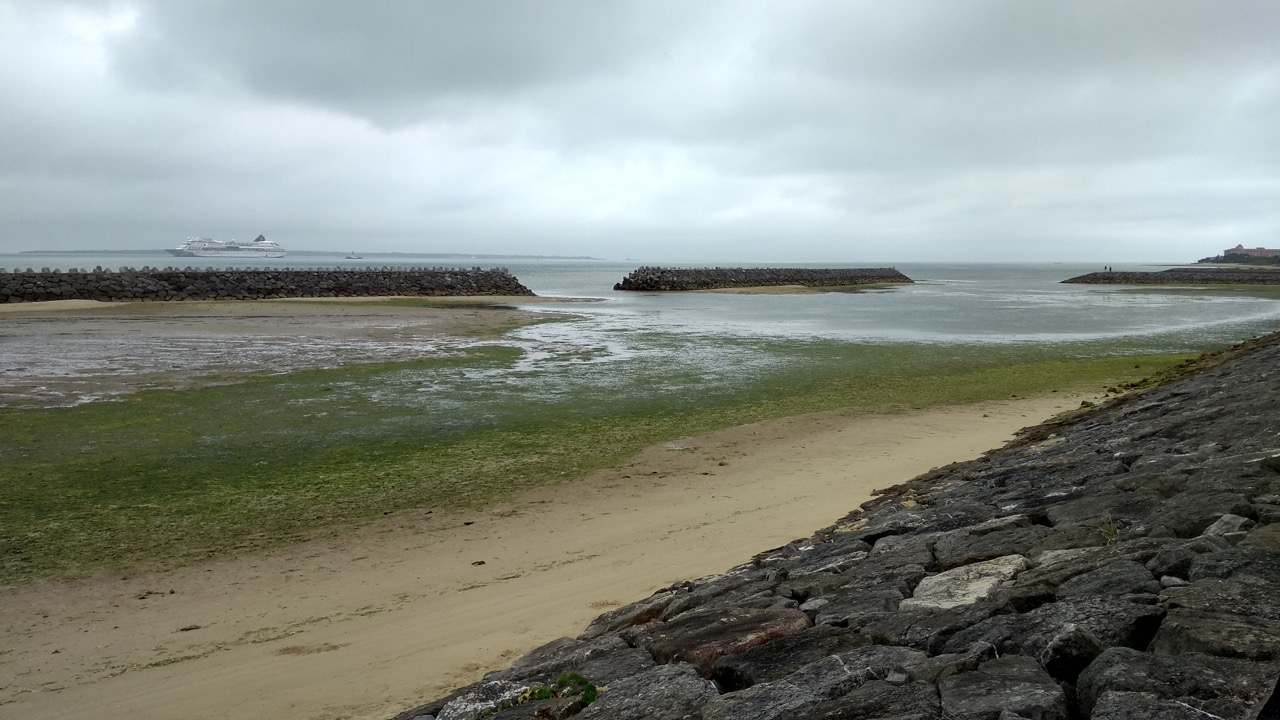
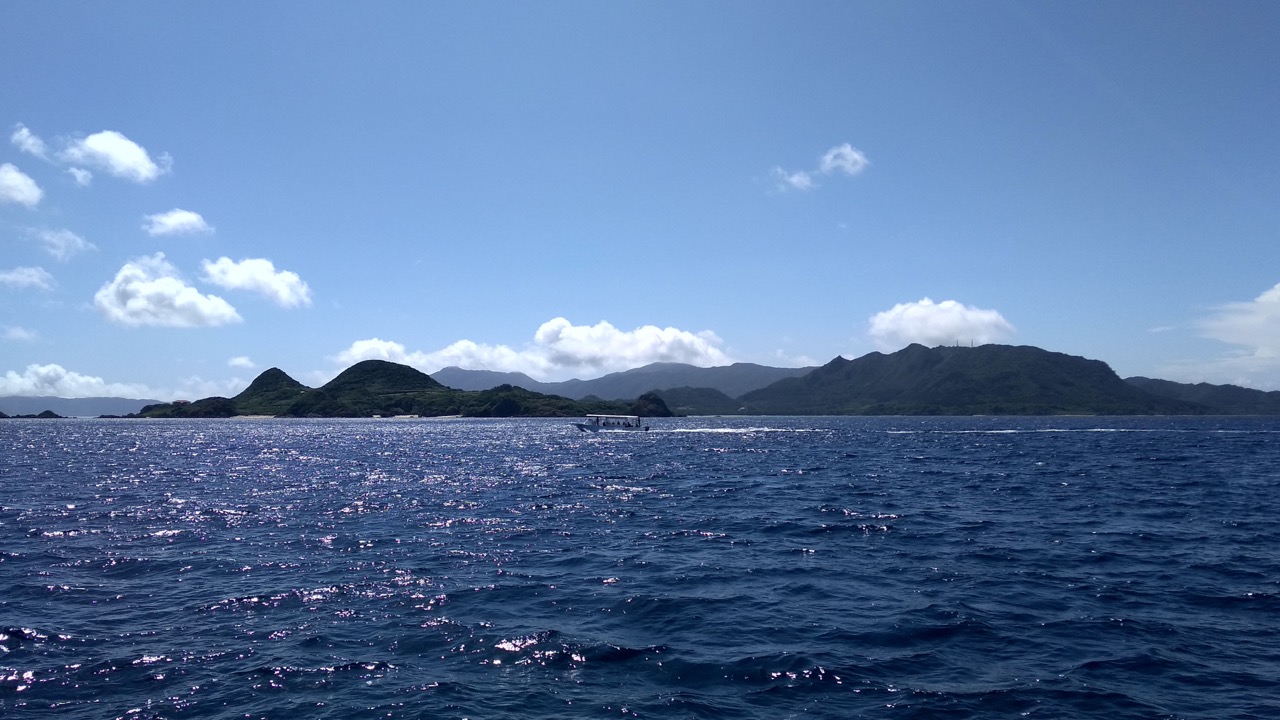
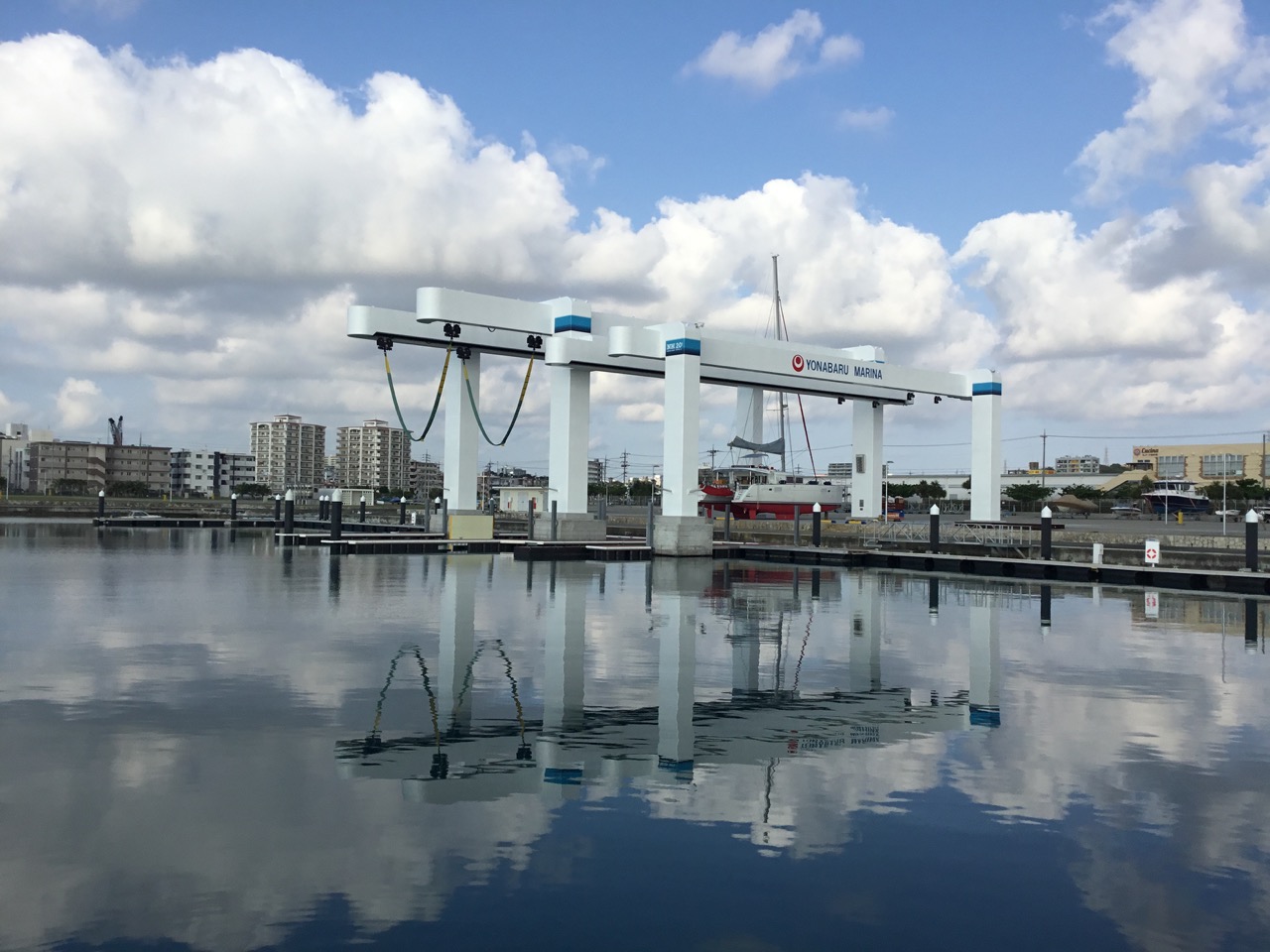
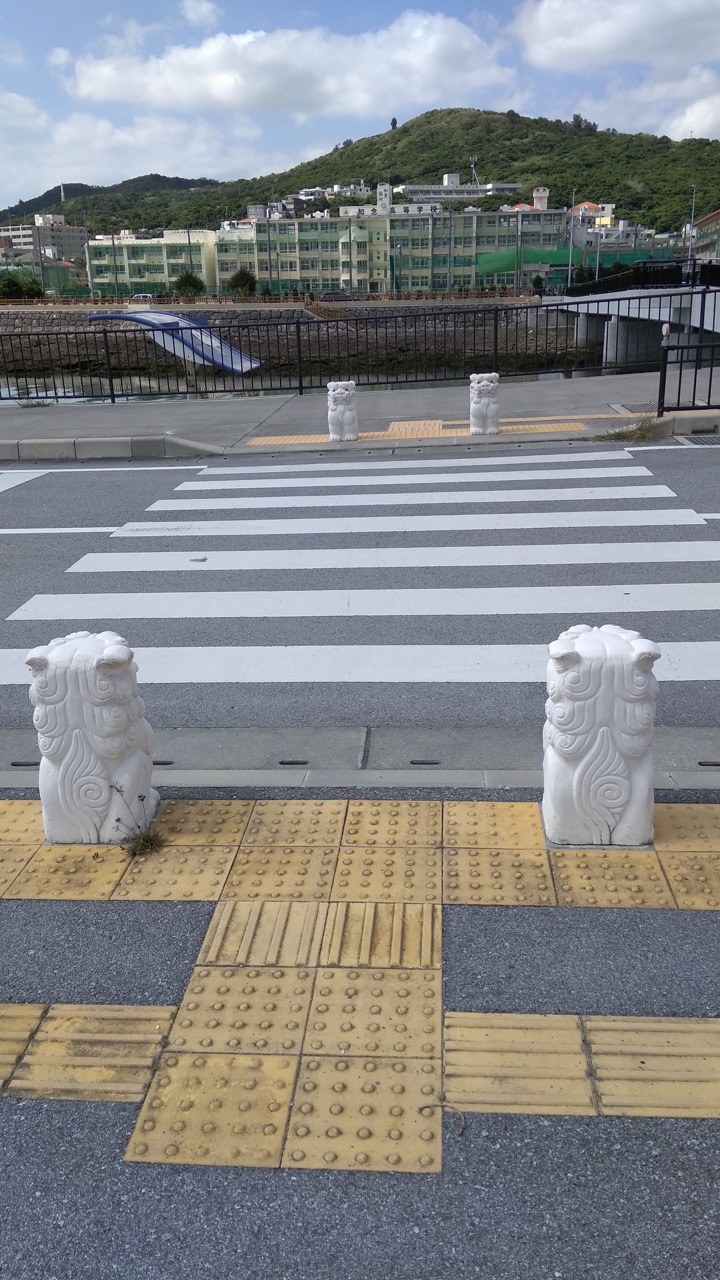
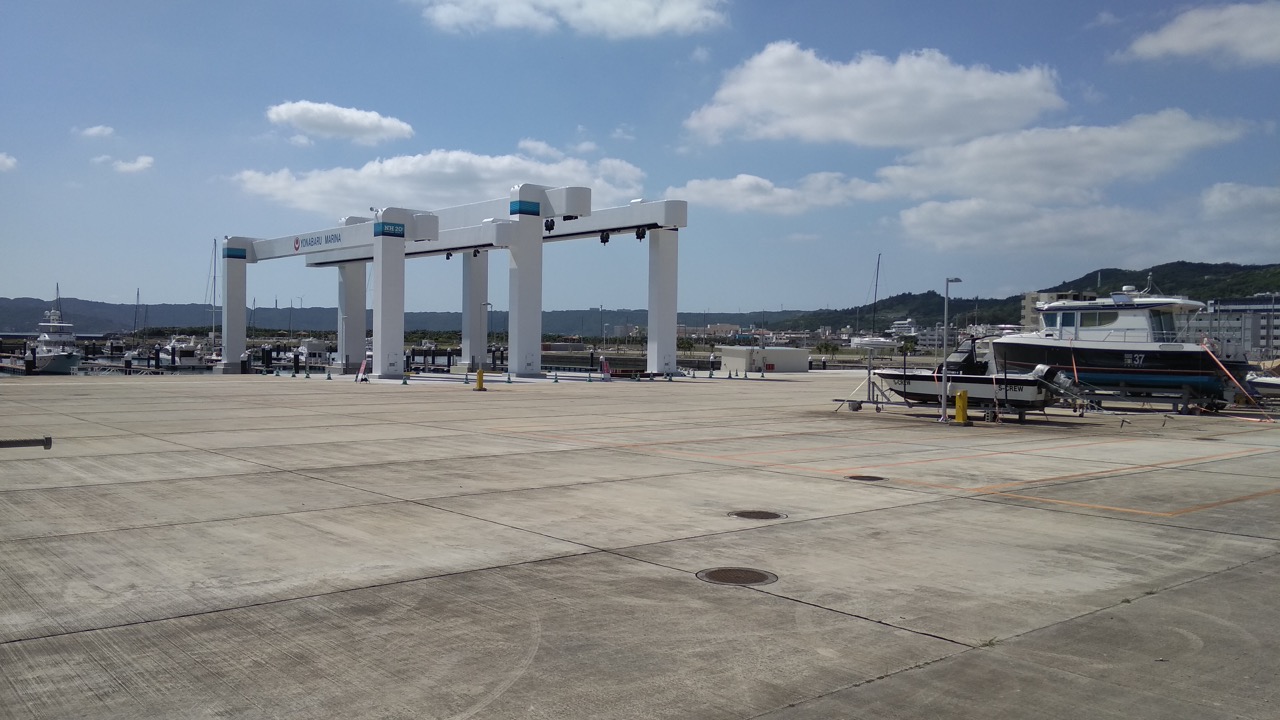
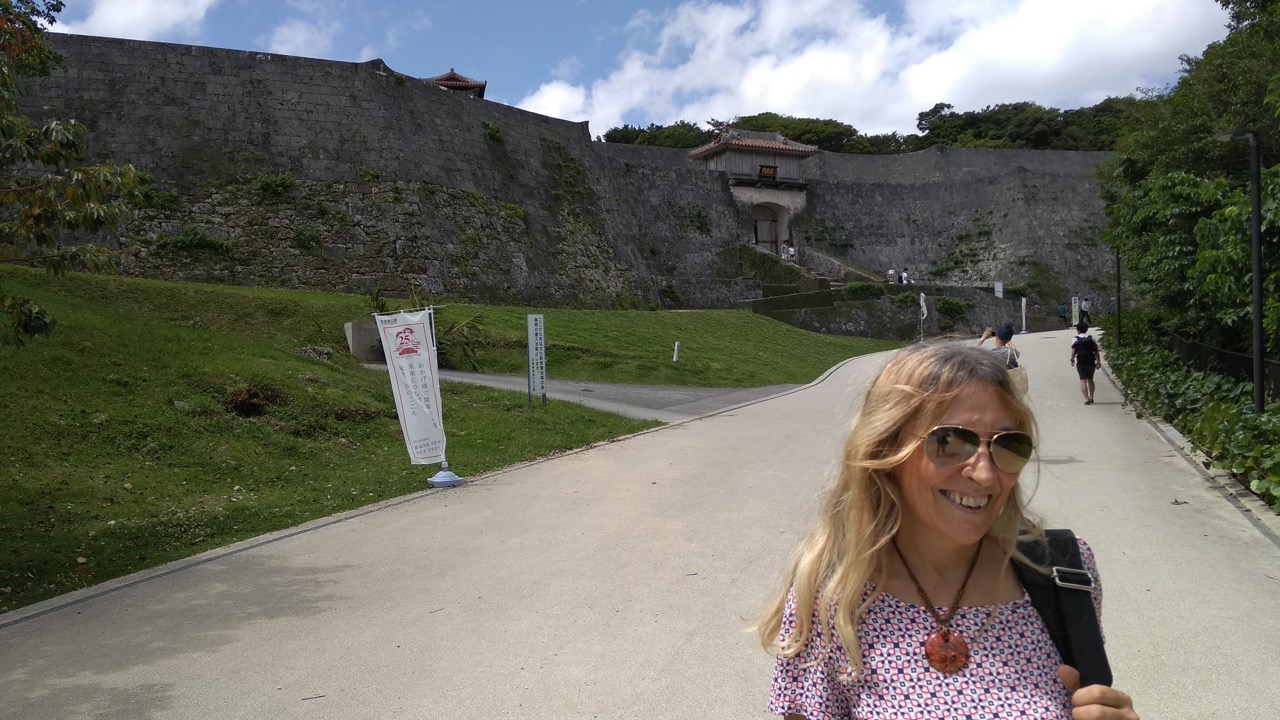
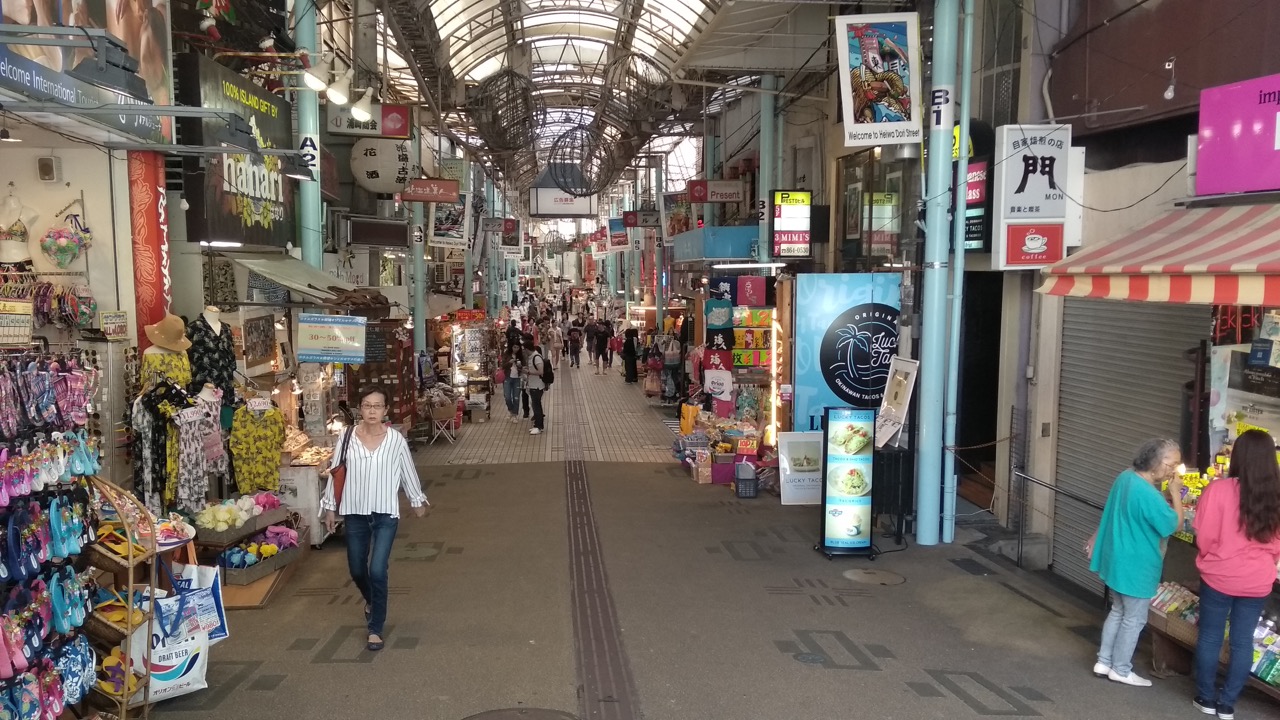
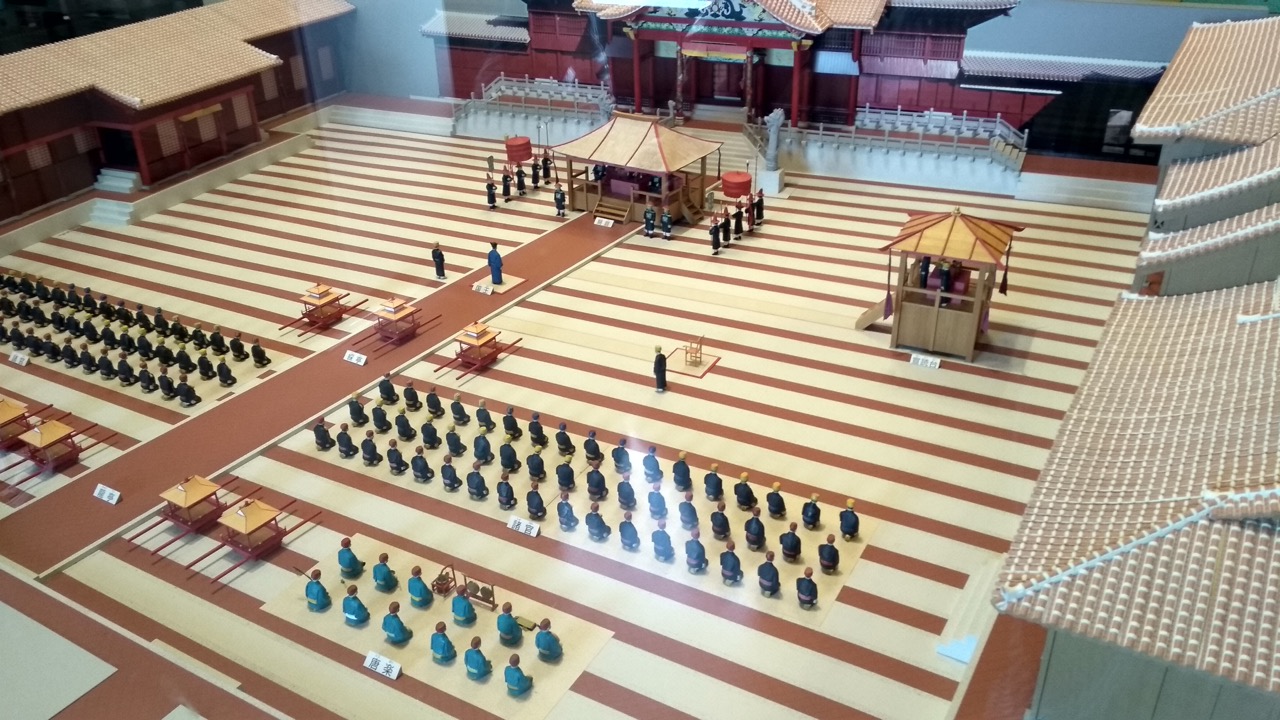 Some nice architecture, disguising the fact that most buildings here on the islands are made of chunky concrete, and tend to be very boxy, designed for earthquakes and tsunamis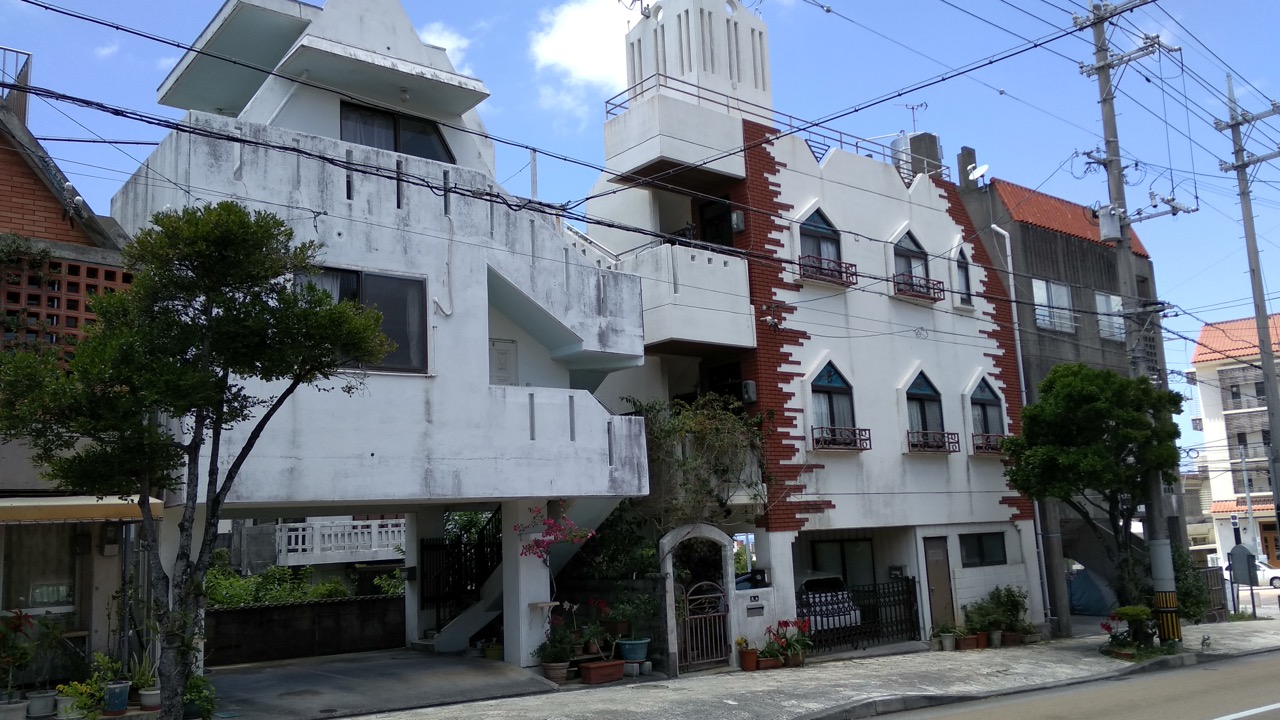
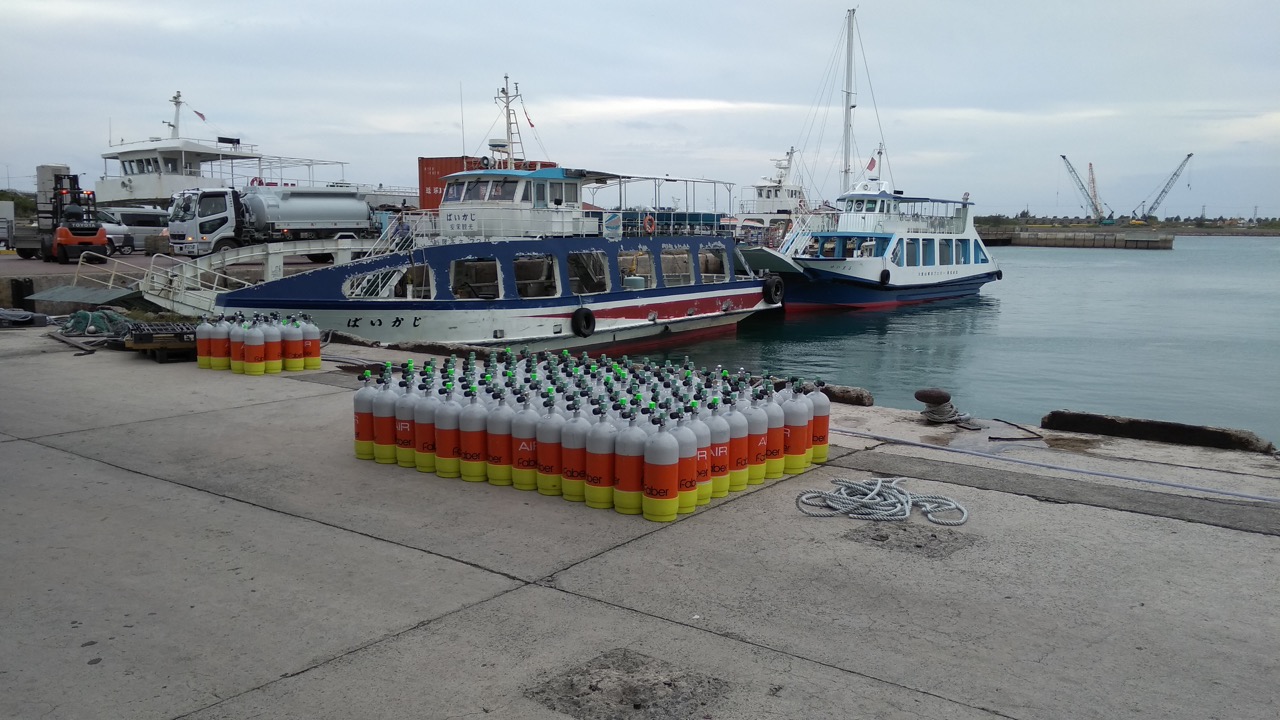 From Okinawa we headed up to Miyanoura, a nice port on the island of Yaku-shima, This is a gorgeous island full of wonderful mountains, forests, hot springs, wildlife etc etc. We were running a day late because the previous marina here couldn’t accept us when we planned, due to being closed on Tuesdays! When we arrived we tied up to the only wall we could find, but it was very rough and high, and had a lip that the boat would slip under at low water, so I tied up, took another hit on the cap rail, fortunately on the section I need to replace, but I also lost the bow light (port) when a wave threw us onto the wall. I headed off to explore the port for a better berth and was directed to an inner harbour I hadn’t even seen when we entered by a local fisherman. You can see us on the wall below. We need 6 feet of water to stay afloat, the local fisherman looked worried when I said 2 m water, he shrugged and indicated ‘maybe’. The tide was going to drop by another metre so I took out the lead-line and measured around the boat, on the quay side we had 1.5 metres, on the offshore side we had 3.5 metres, so I figured we might just make it. In the end we didnt touch bottom, but must have been close.
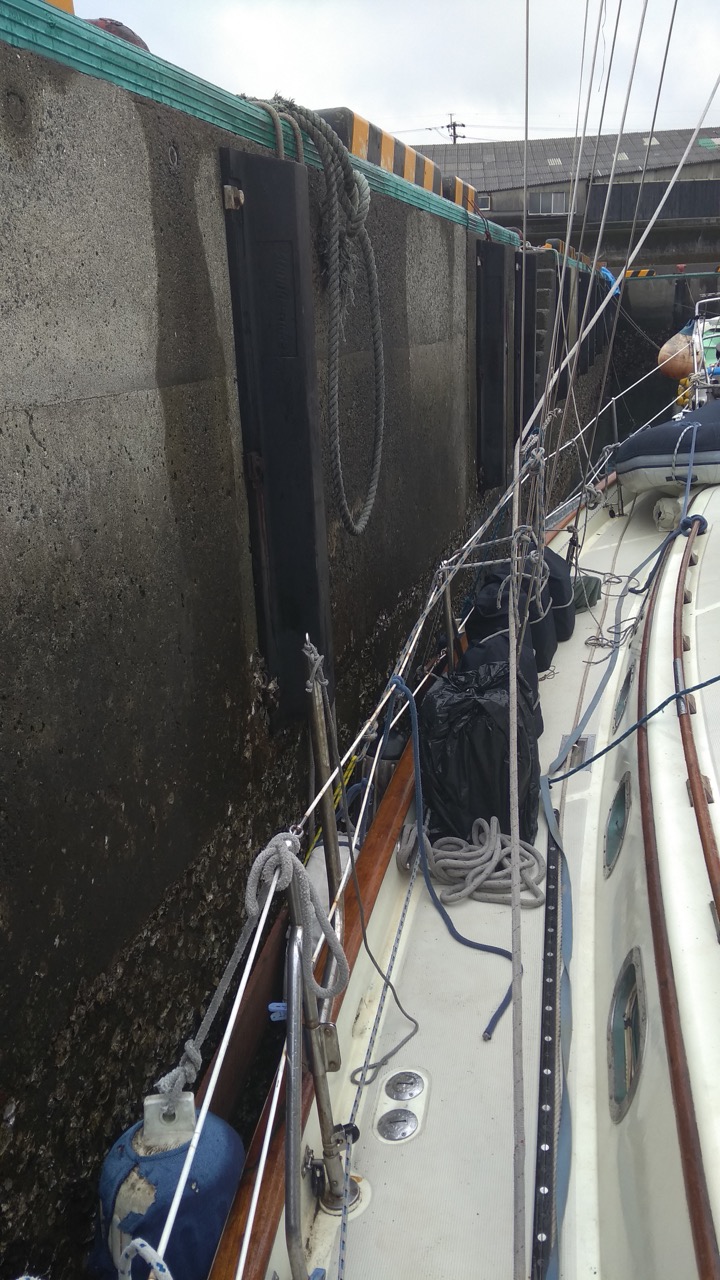 The wall we were now on was much kinder, and you can see below how we rig up the fender boards to protect the boat and fenders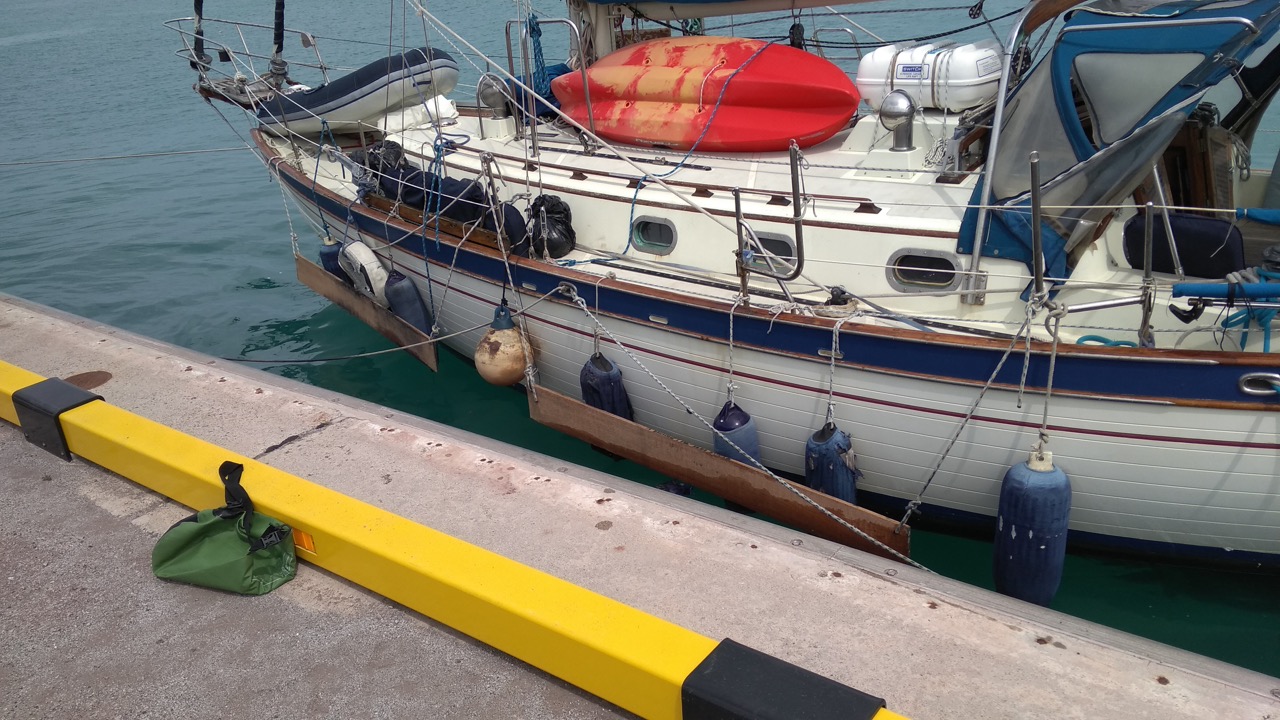
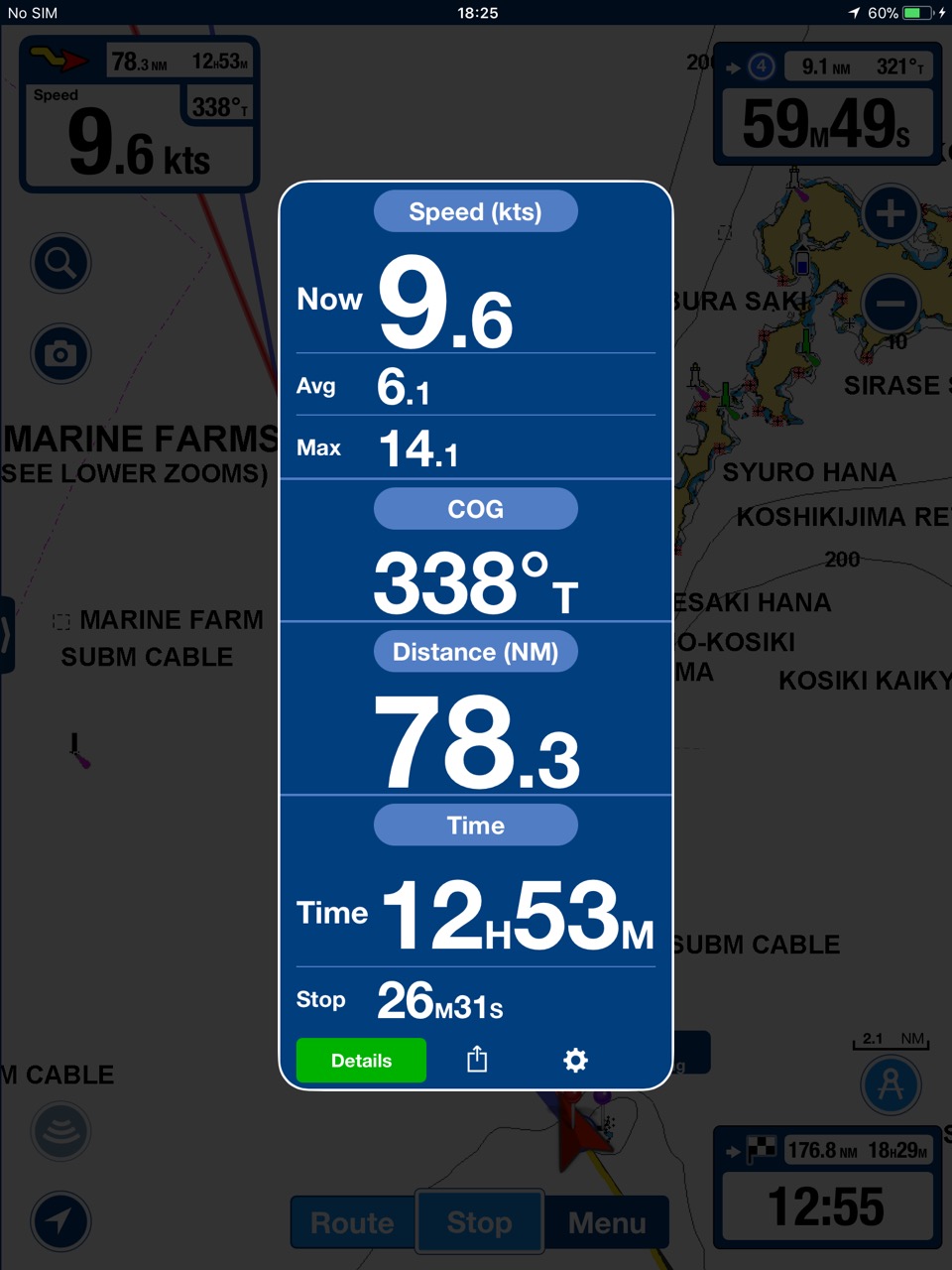
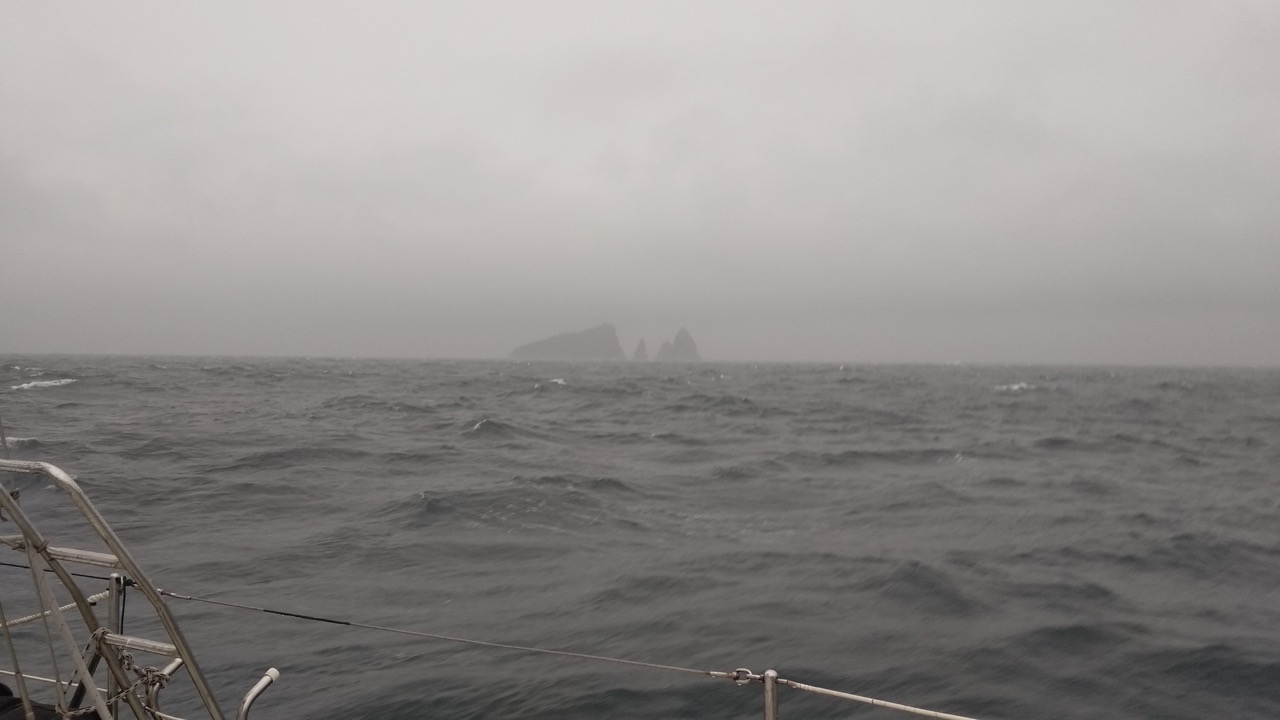
 We passed many islands, often uninhabited, but this one stank of sulphur, so I presume it’s still an active volcano.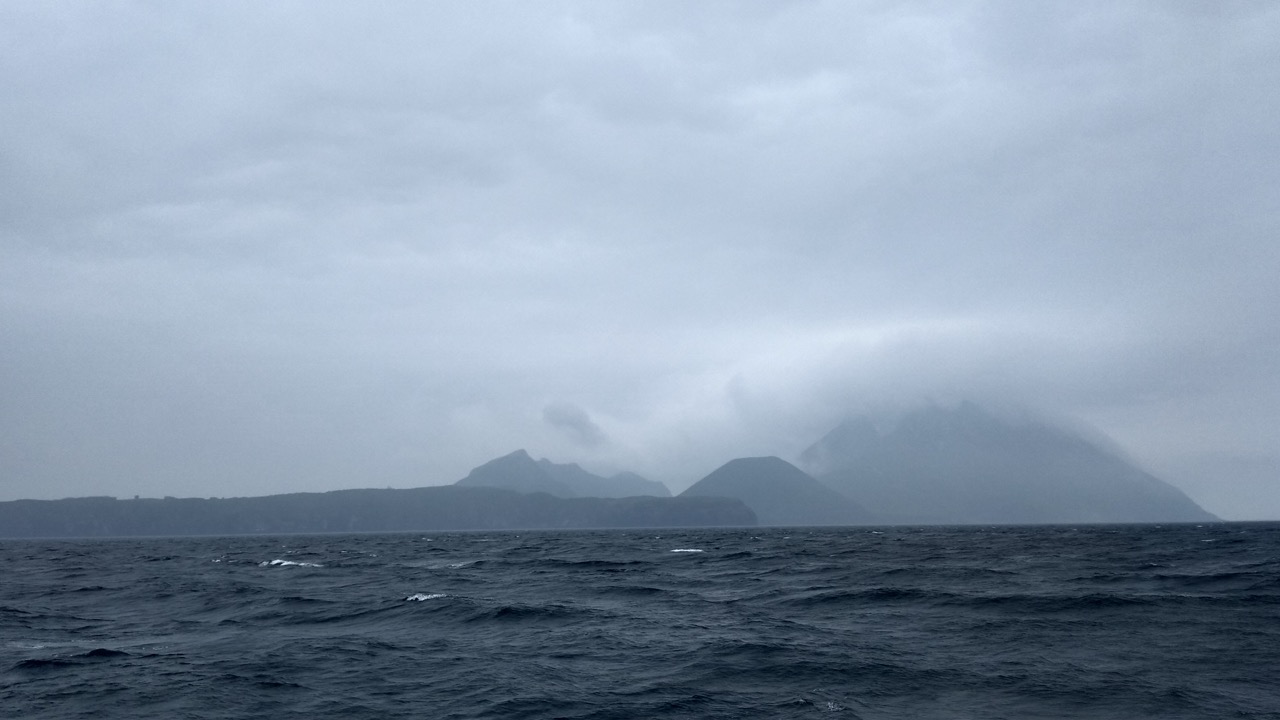
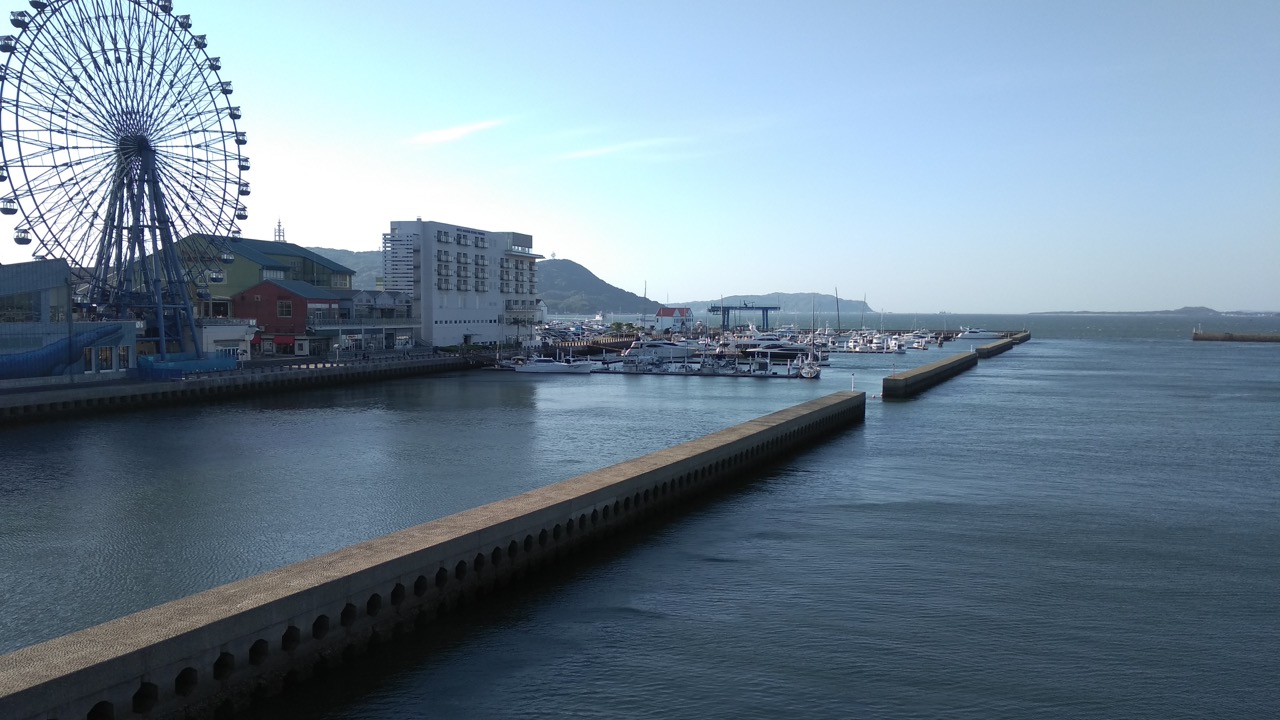 The marina above is next to a big wheel, which is part of a huge outlet mall.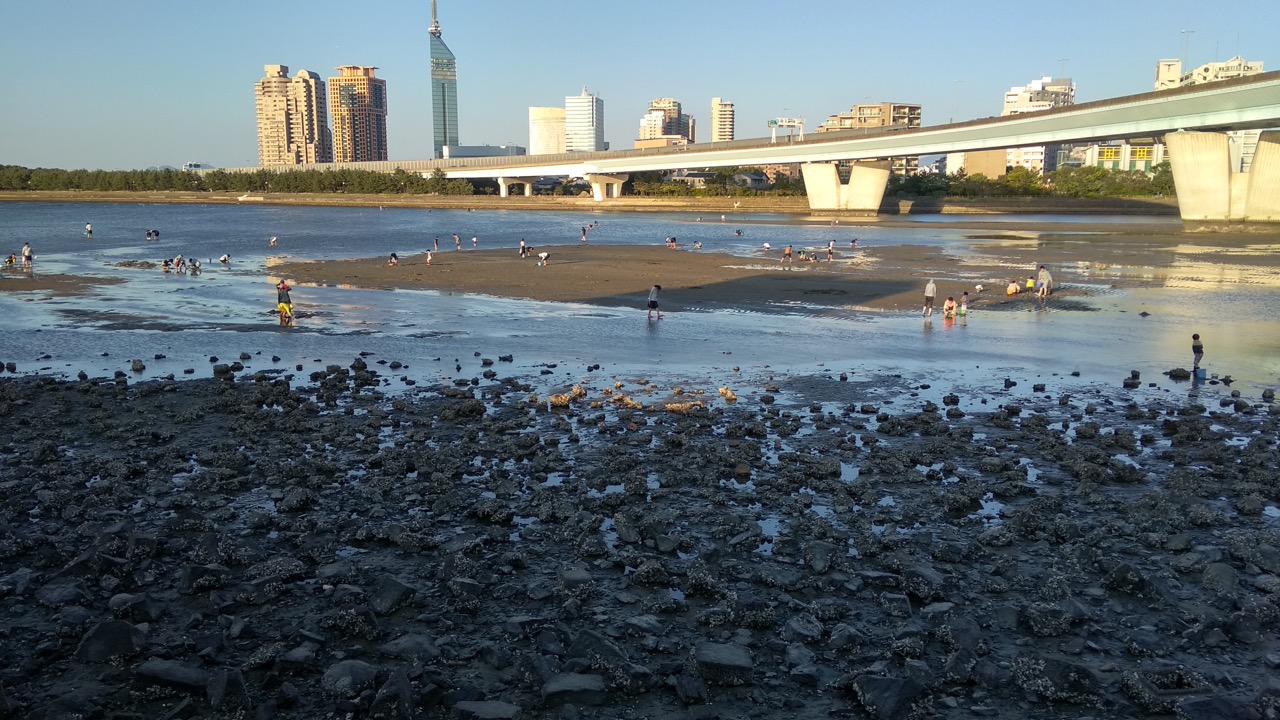
 Kathy ponders the instructions for the fender covers we make from a kit of tubing and cable ties.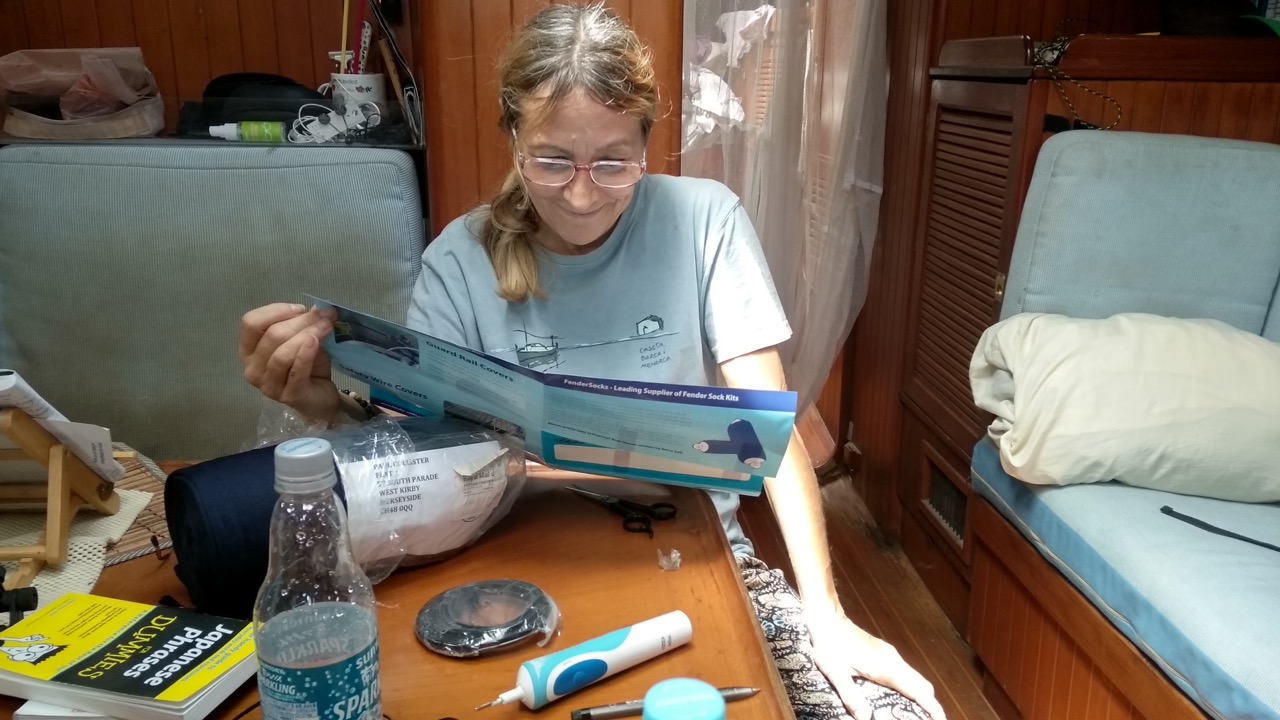
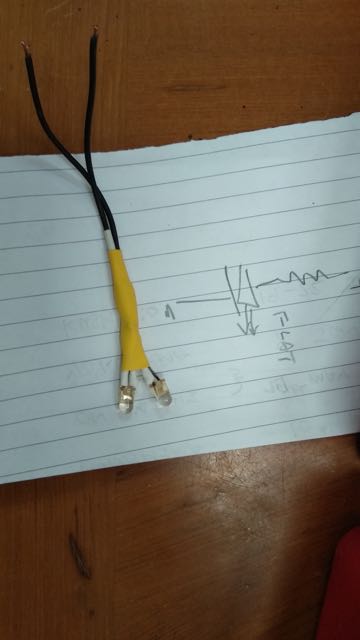 Yet new things break at a pace, the sump pump switch for the shower has failed, both of our toothbrush charges packed in, why?
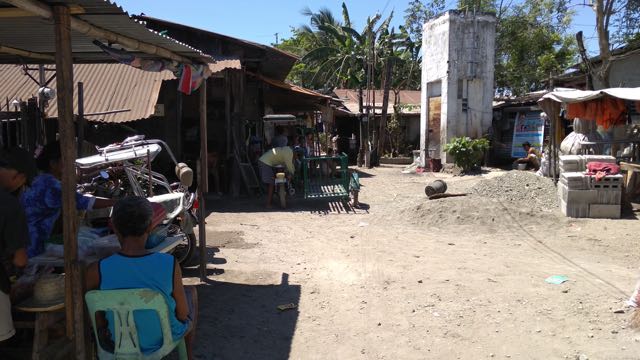 The people there were very poor, they lived in a small shanty like town on the edge of the beach, and although very basic, the people there seemed happy.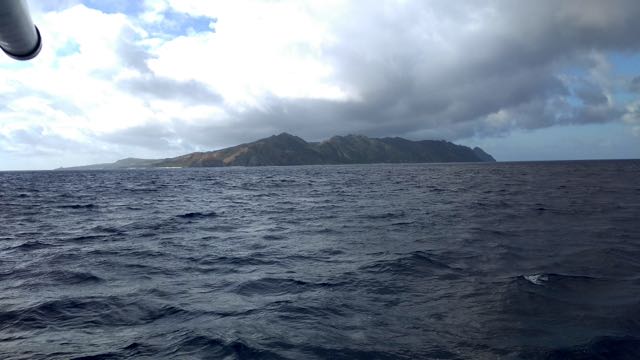
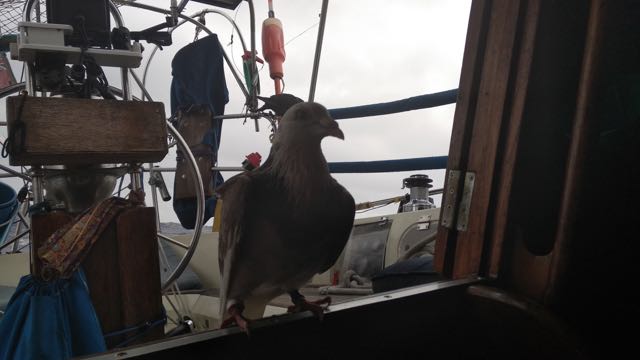 They were all ringed, so presumably they were on their way home.
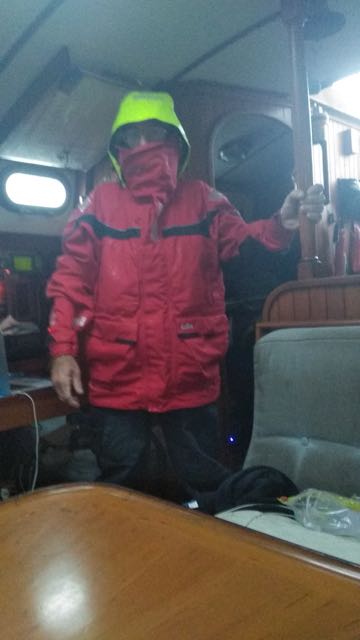 I began to wonder what madness had driven me from Malaysia. Of course all was fixed with the help of a torch and a few resets on the wind sensor.
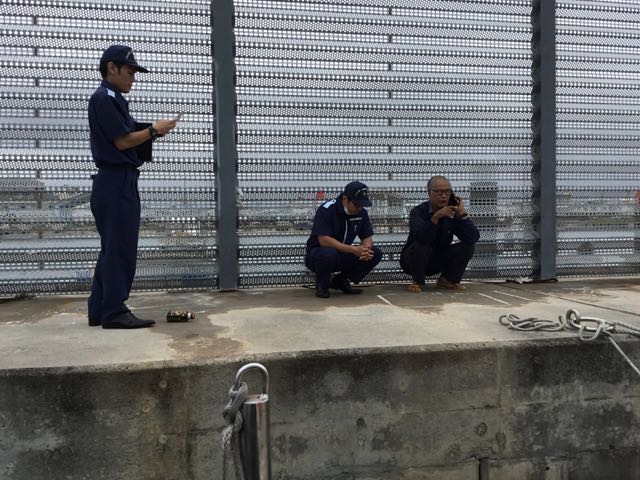 One was the official I had been in email contact with to notify them of our arrival. Pre arrival notification, along with the 7 page forms you have to send is just the start of a prolonged check in process that takes a day or two. The CG was very polite but also vert very keen that we stay on the boat until formalities had been completed, he even seemed upset that kathy put a hand on the wall. We waited an hour while the CG made phone calls and chatted amongst themselves before we were told we had to move to another berth. Then they arranged for one of the big (200ft) CG vessels to launch a RIB to guide us to the dock next to us, something we could have found ourselves by them pointing to the spot.
 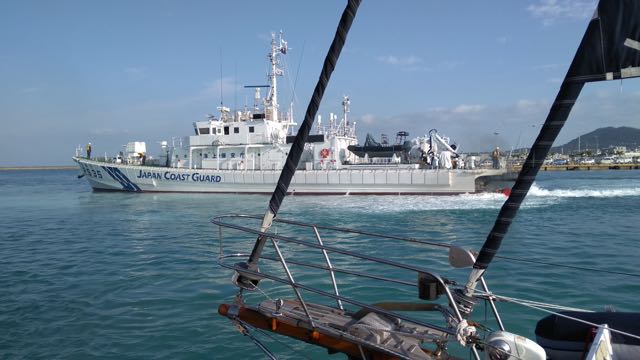 When we were in the new dock, much more foreboding in terms of concrete covered in barnacles, and also 6ft higher up than the decks on our little boat, the CG men reappeared, they were joined by several more CG staff. A regular occurrence over the next 2 days as we started the check in process. We were told to stay on the boat and Quarantine, customs and Immigration would be along soon. Sure enough they all duly turned up and I had 8 people in the cockpit taking turns to get me to fill in forms, customs, Quarantine and Coastguard. Immigration would be done later at the immigration office. While I was dealing with all of this the tide was dropping. I wasn’t allowed ashore to adjust the lines, and they had tied me off with little slack, I hadn’t noticed at first, but the boat was close to the wall, and some passing wake from a powerboat pushed us hard onto a big rubber fender bolted to the wall and smashed a chunk of caprail off, this is the very pretty wood that goes around the edge of the boat.
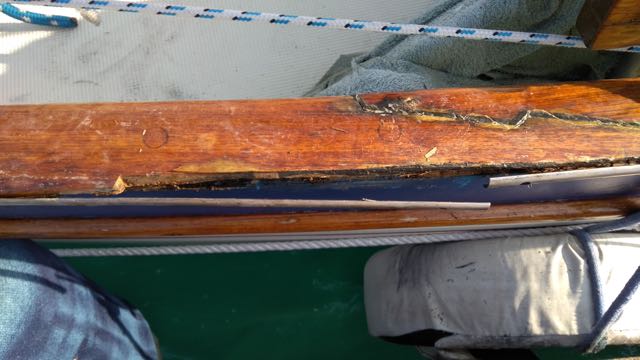 I pointed this out to Kathy and she went and had a look and came back and told me the bowsprit was smashed up. Fortunately it was only the platform,
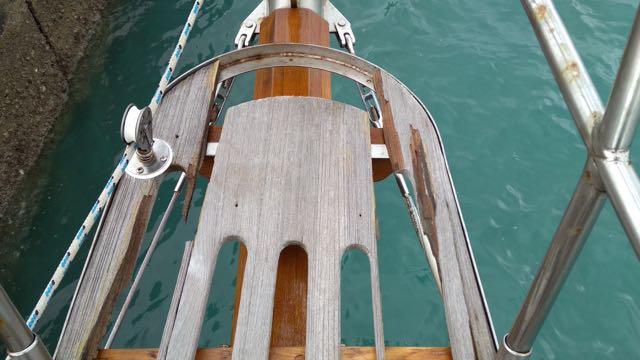 This was on the replacement list anyway, but I expect it smashed when we slammed down into a wave on the passage. I have sellotaped it back together and hope it will get us to America. I may have to screw some wooden slats over it to make it more secure.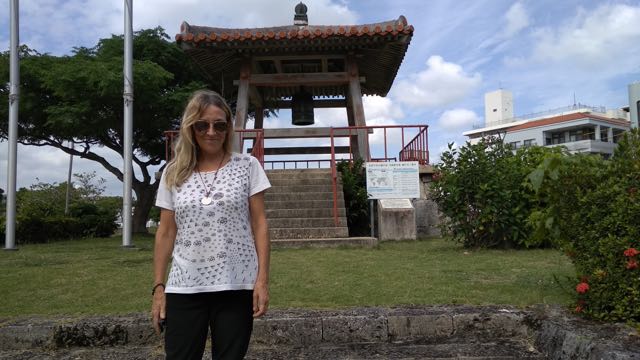
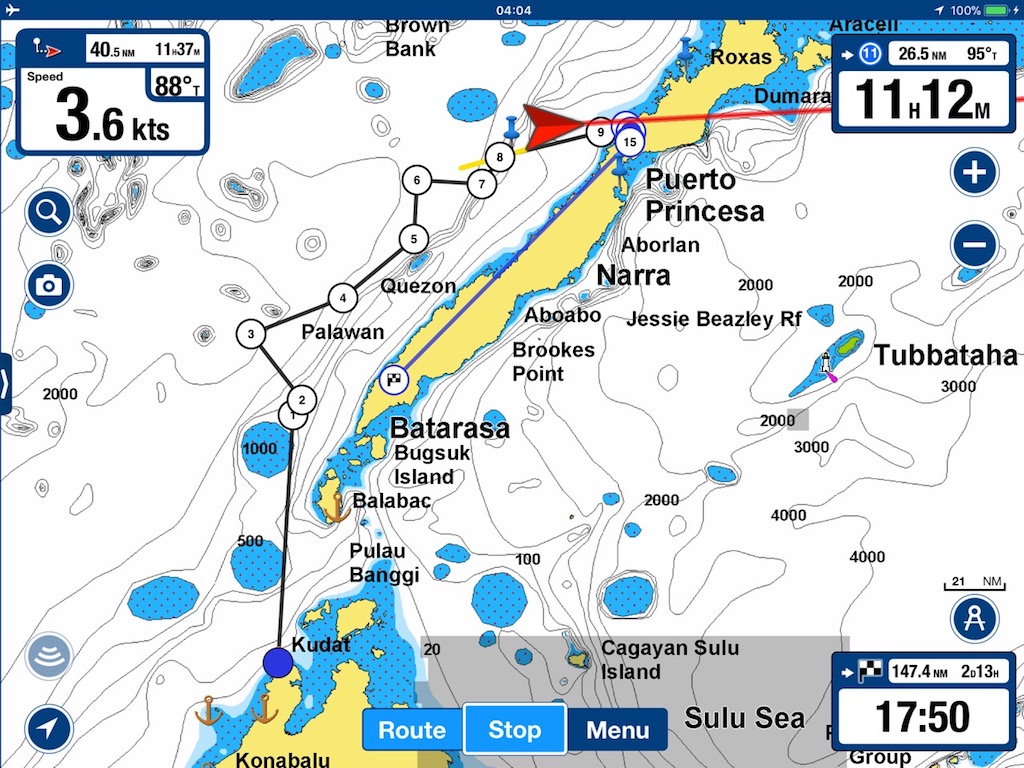 The boat goes to wind quite well, and under sail alone it was a much more comfortable ride, and also faster as we were making 5-6 knots into the wind. However because of the zig zagging involved in tacking, we wouldn’t get there any quicker but at least we would have some fuel available, and a more comfortable ride. The Palawan passage is a route up the west coast of Palawan which is quite deep, mostly between 500 and 1000 metres, however it is 20 miles offshore and either side of the passage depths can drop to 1 or 2 metres in a very short time. On the NW side of the passage there is a large area of reefs and shallows, roughly the size of the UK. Amongst this area are many disputed islands including the Spratly islands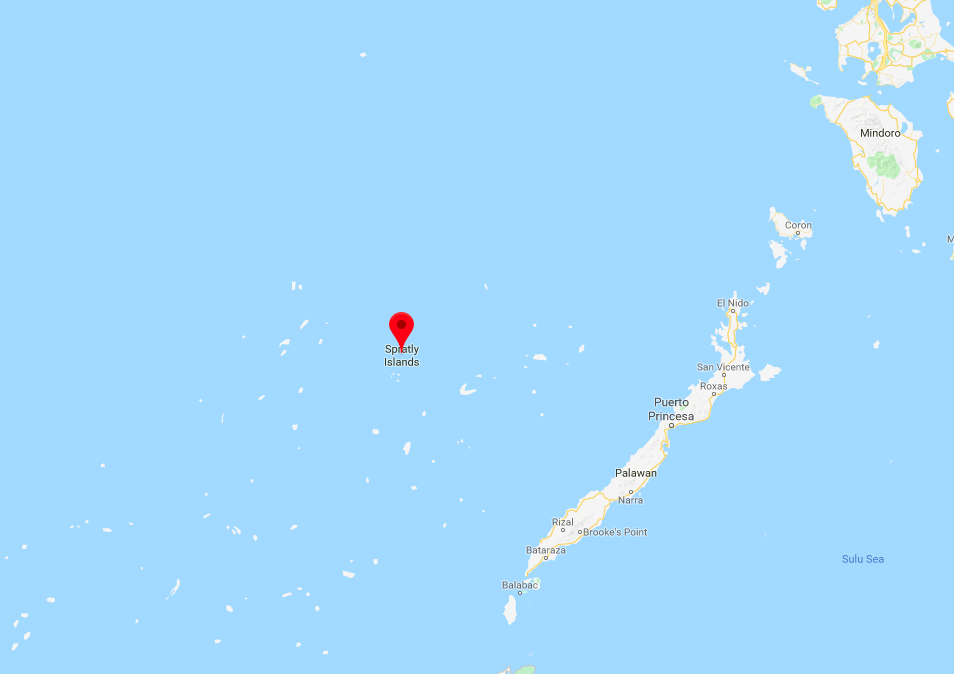
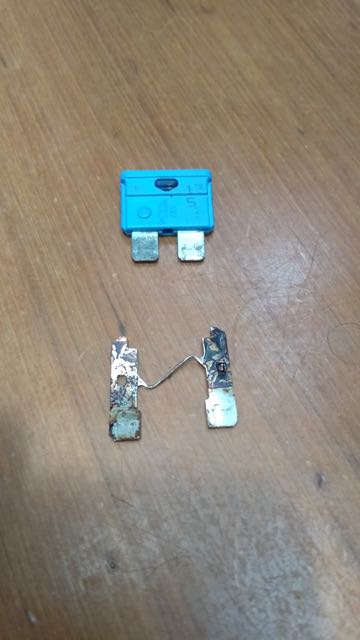
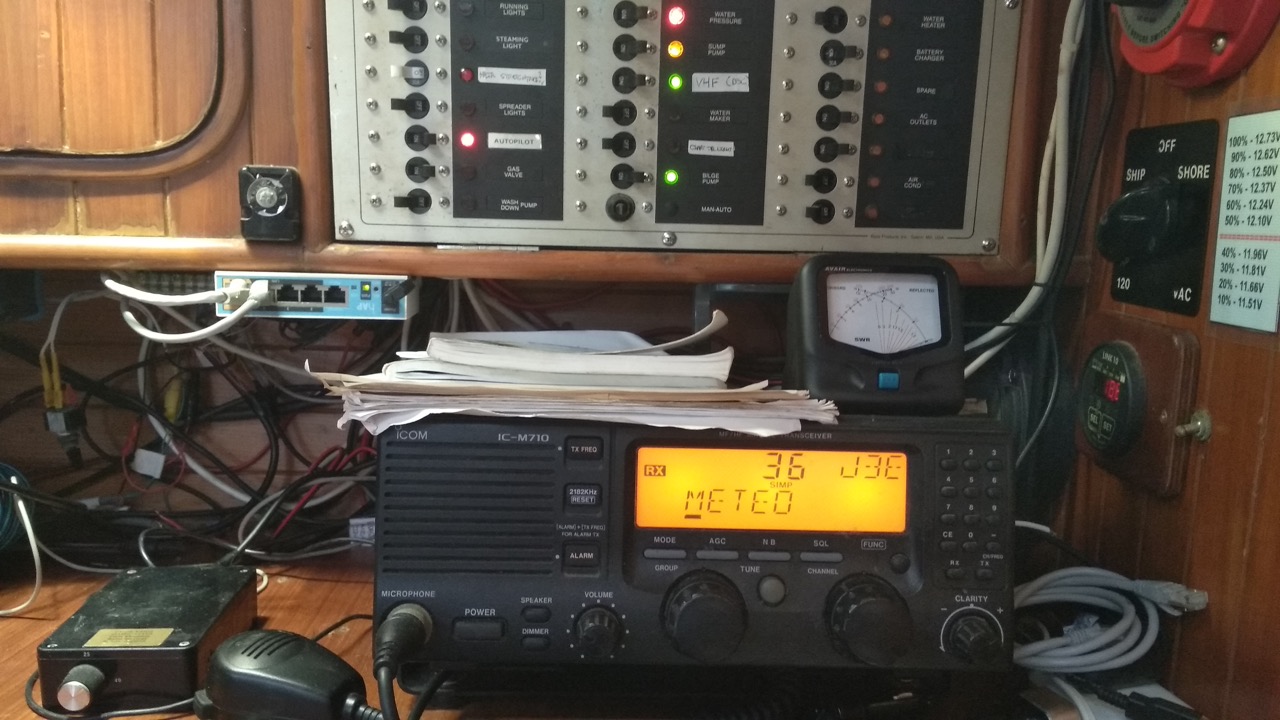
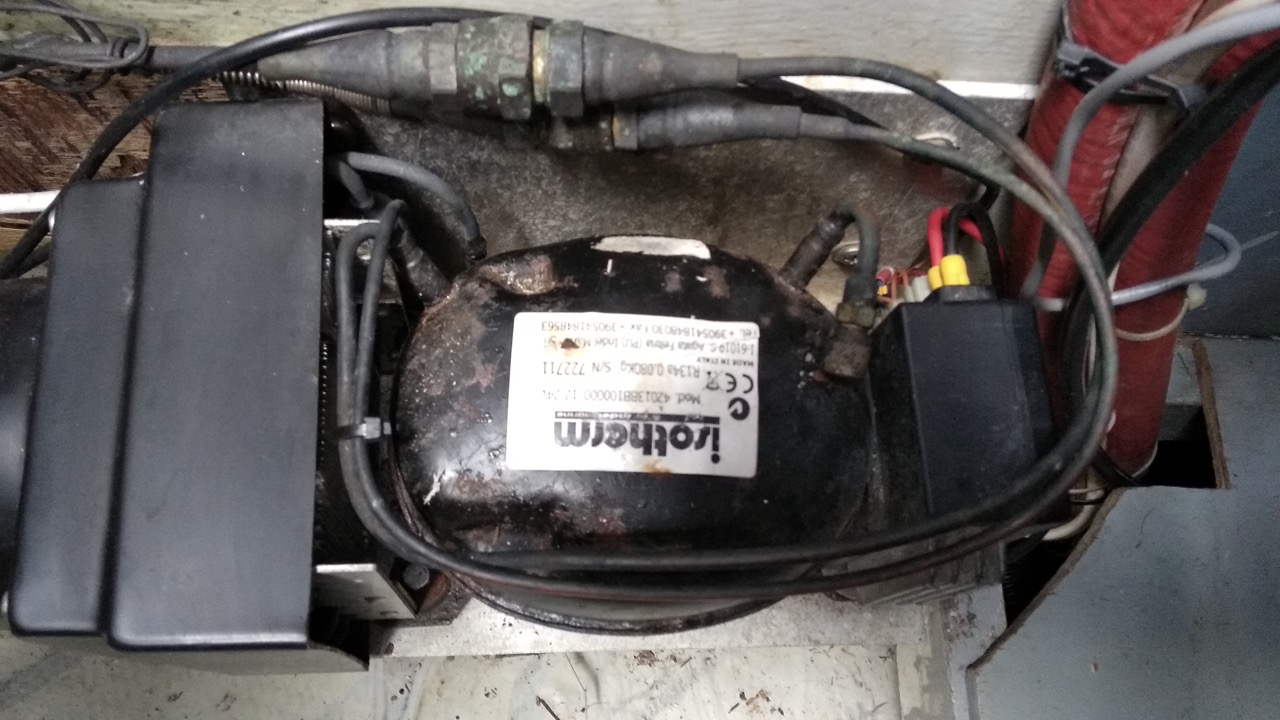 I was able to make an educated guess that the compressor was ok and that the Electronic controller was most likely the problem. This is shown below.
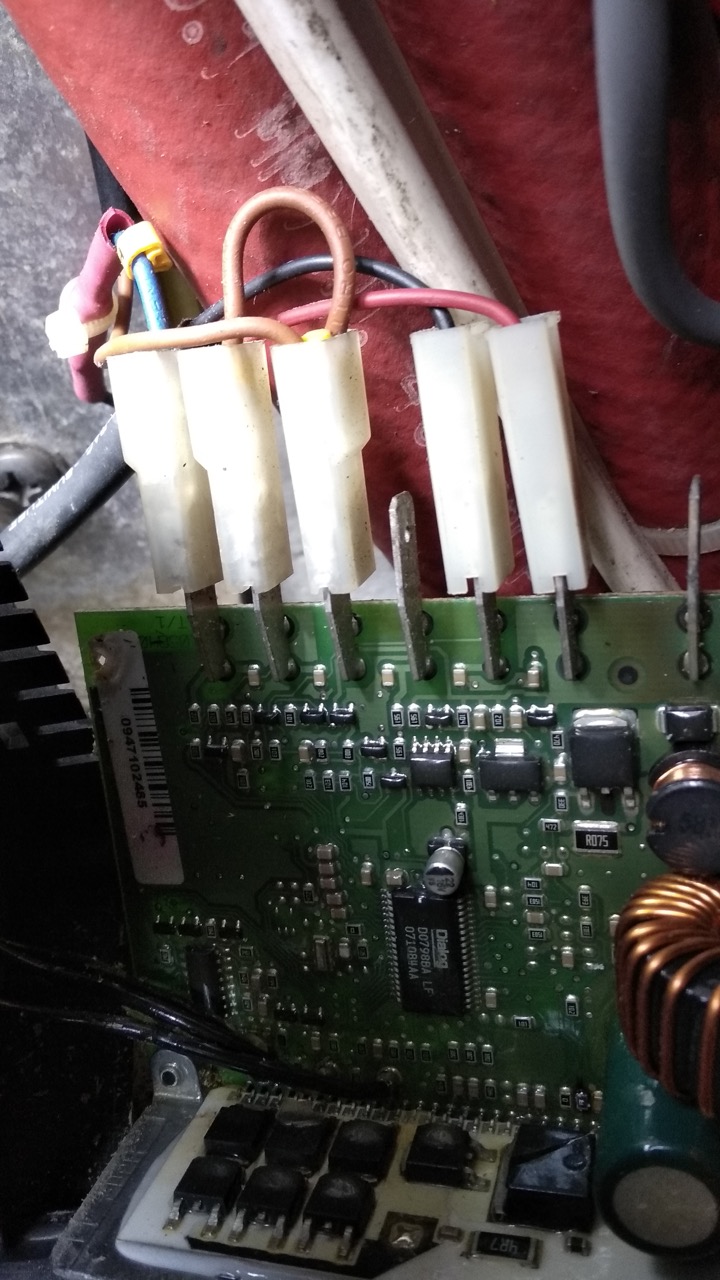 Looking closely once I had extracted it from the fridge, I could see a big crack across one of the power semiconductors, A Transistor/Triac or some such device
 I’m not sure when I will get to post this blog, I’m going to wait until we leave port, assuming that happens in the next few days.
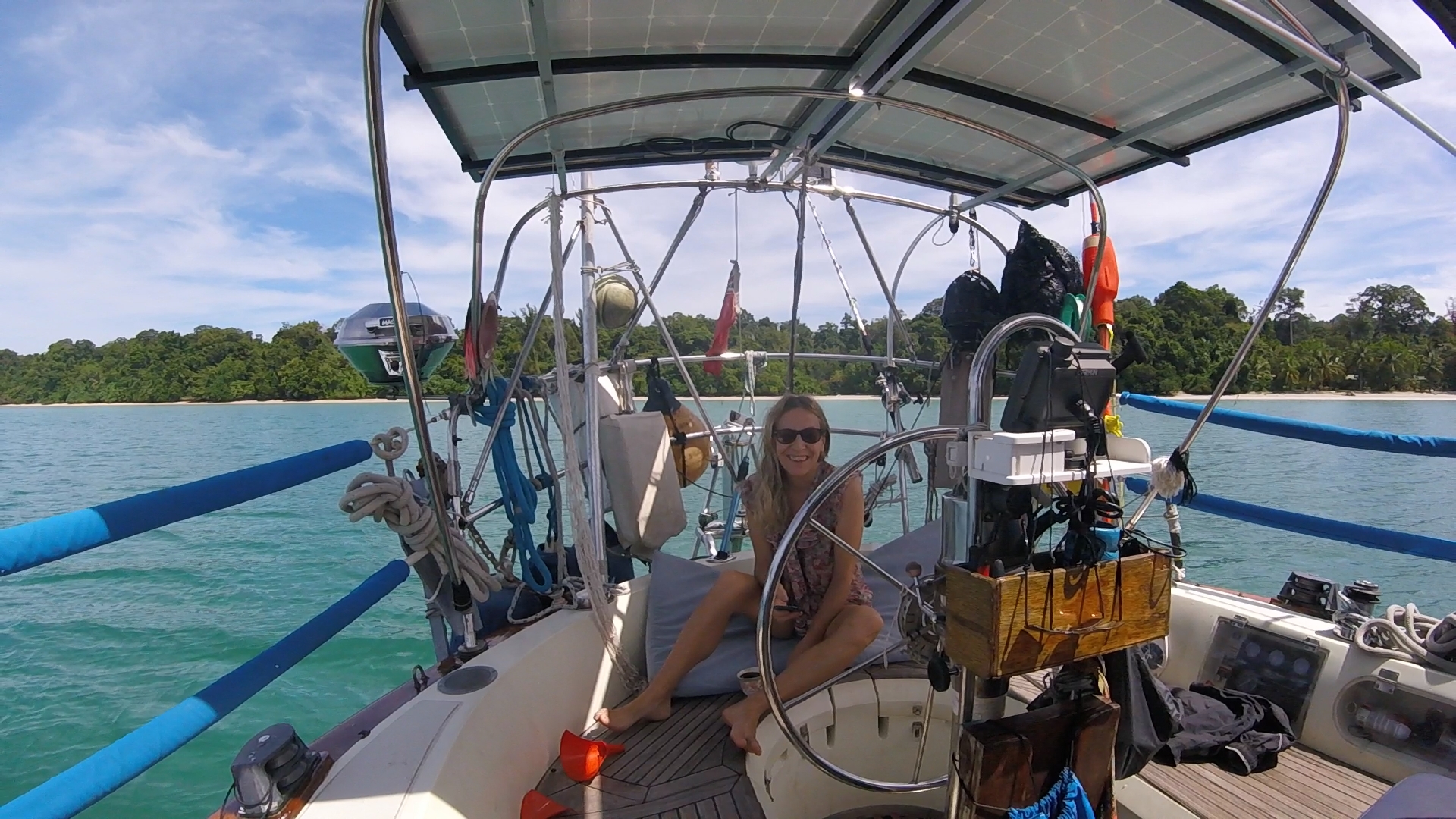 Right now there is a strong wind predicted from the NE Monsoon, which will make the passage quite uncomfortable. We could try to beat it by leaving now, but that could backfire if the winds are early or if we make slow progress. This passage takes about 3 days for us and is just a bit more than we have fuel for, so we need the wind and waves to help not hinder us. Many of the upcoming passages are like this. Still it’s most pleasant sitting here in a very calm anchorage.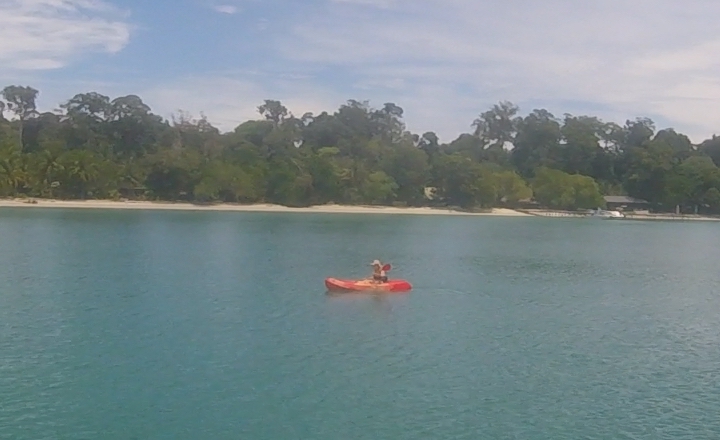
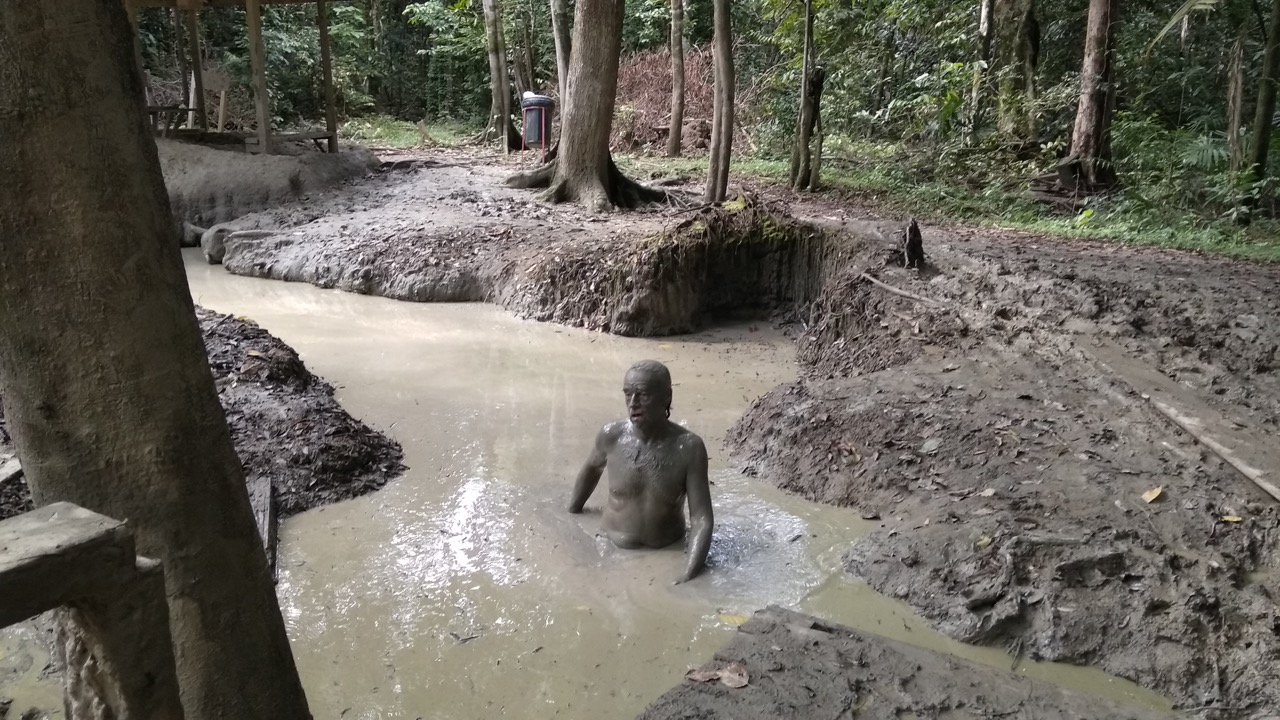 Not sure why, I was dirty enough already, but this is one of the main reasons people visit the island.
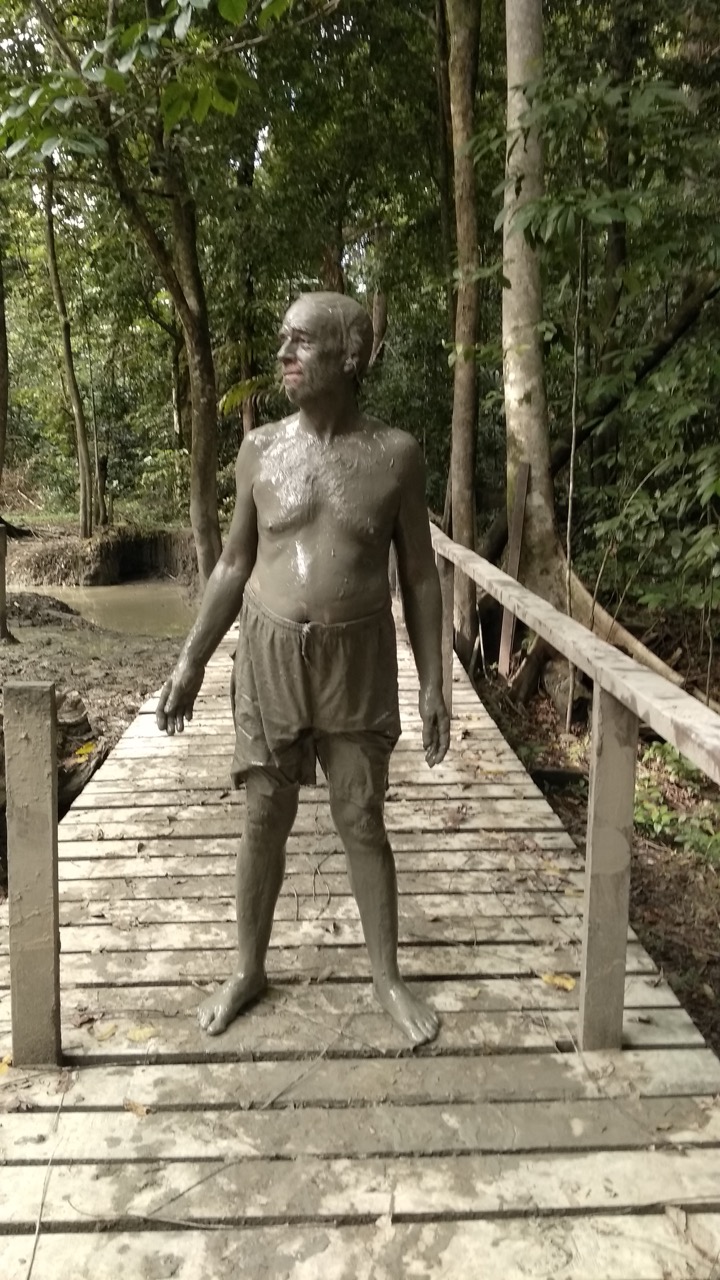 It certainly was an interesting experience, I tried to swim in the mud but that didn’t work, but it’s very pleasant just lying on the surface, I can skip the Dead Sea experience now I think.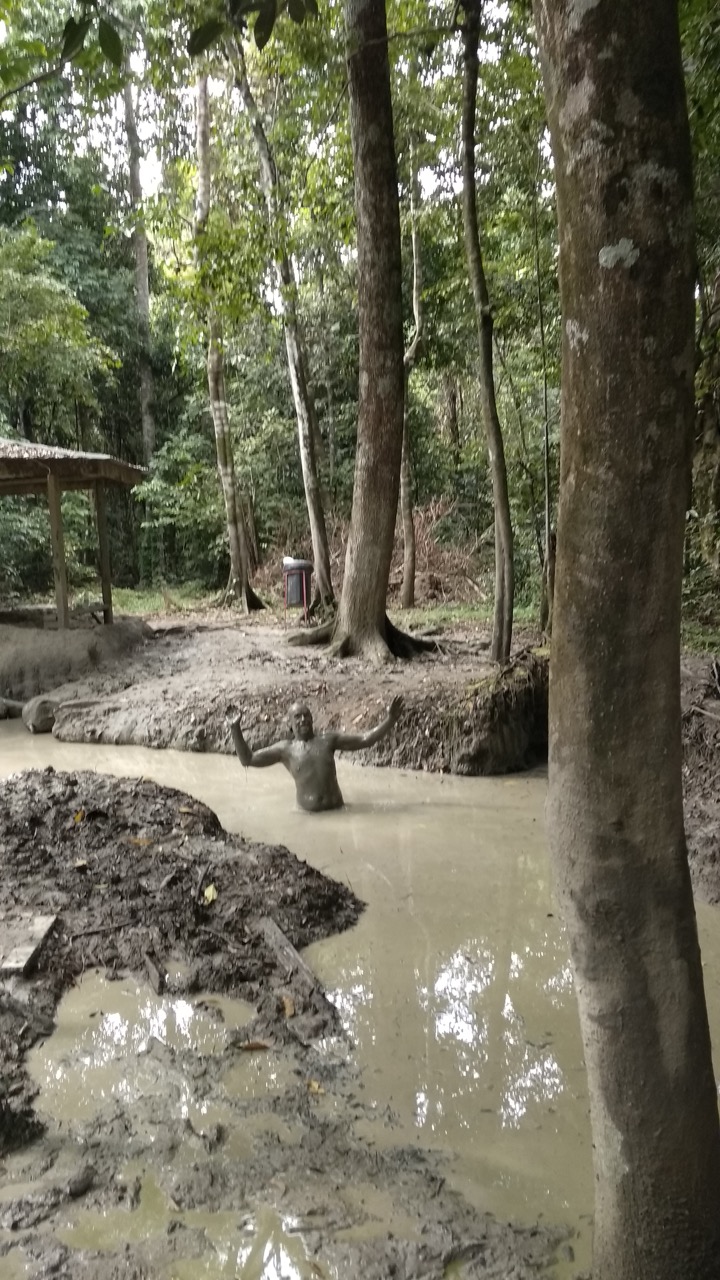
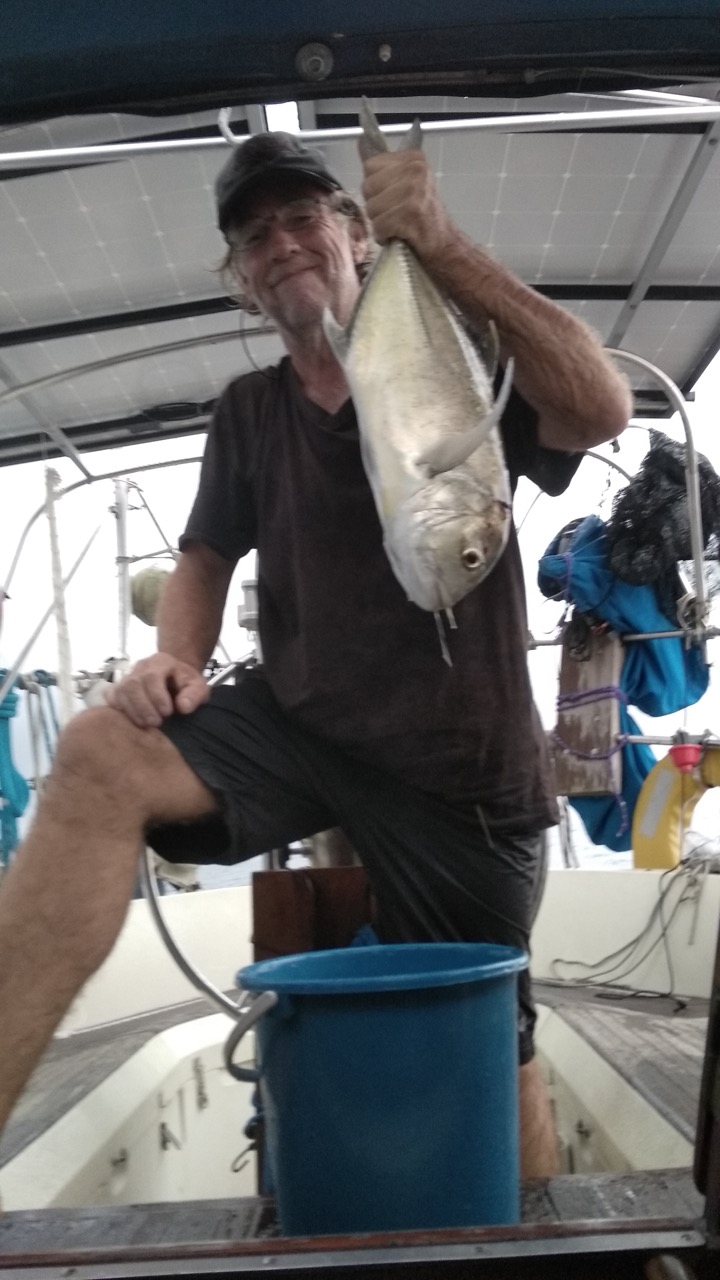 My first this millennium. My average is now one per decade, with the last catch being in 2006, on the ARC. This was with a fancy lure and a wire leader, I’m confident this is just the beginning of a constant supply of fresh fish. The said fish was a Trevalli and tasted gorgeous, even if it was one of the most miserable looking fish I have ever seen. I suppose he/she might have been a lot happier before it took my hook, but I don’t think so. I filleted it into 4 large pieces and have just finished off the last two, which I cooked in the barbecue.
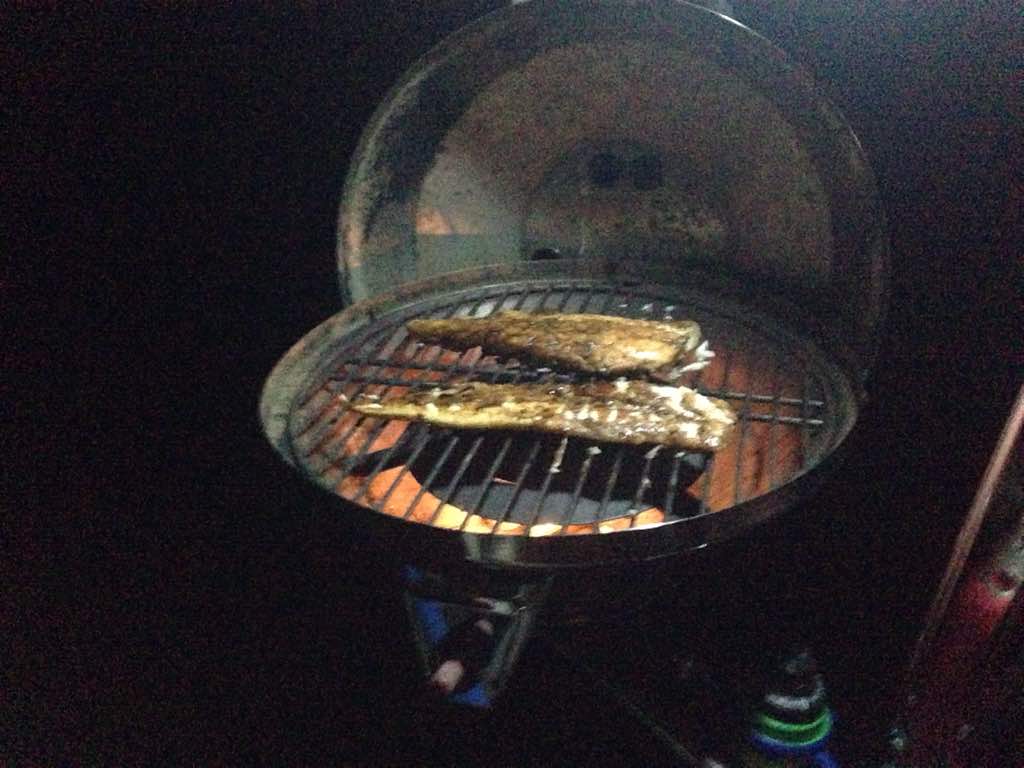 The barbecue is made by Magma for the American market and uses a disposable gas cylinder which I haven’t found outside the USA. I bought an adapter to allow it to work with European Gaz cylinders, even though they are rare outside of Europe. I just ordered two canisters from a specialist camping store in Kuala Lumpur only to find they can’t ship them here due to restrictions on postage of gas bottles, you would have thought they might have known that and advised me before I handed my money over to international money transfer companies. Anyway, I spotted a camping shop in Labuan and couldn’t believe they had a big stock of gaz bottles, cheaper than the ones in Kl, so as the saying goes, ‘we’re barbecuing with gas’ ?