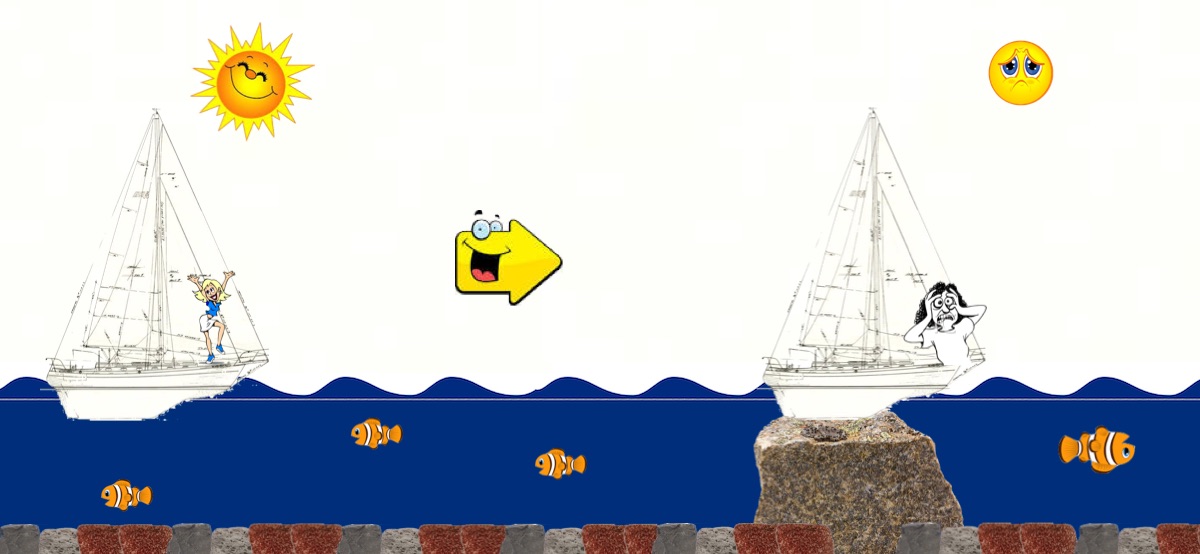
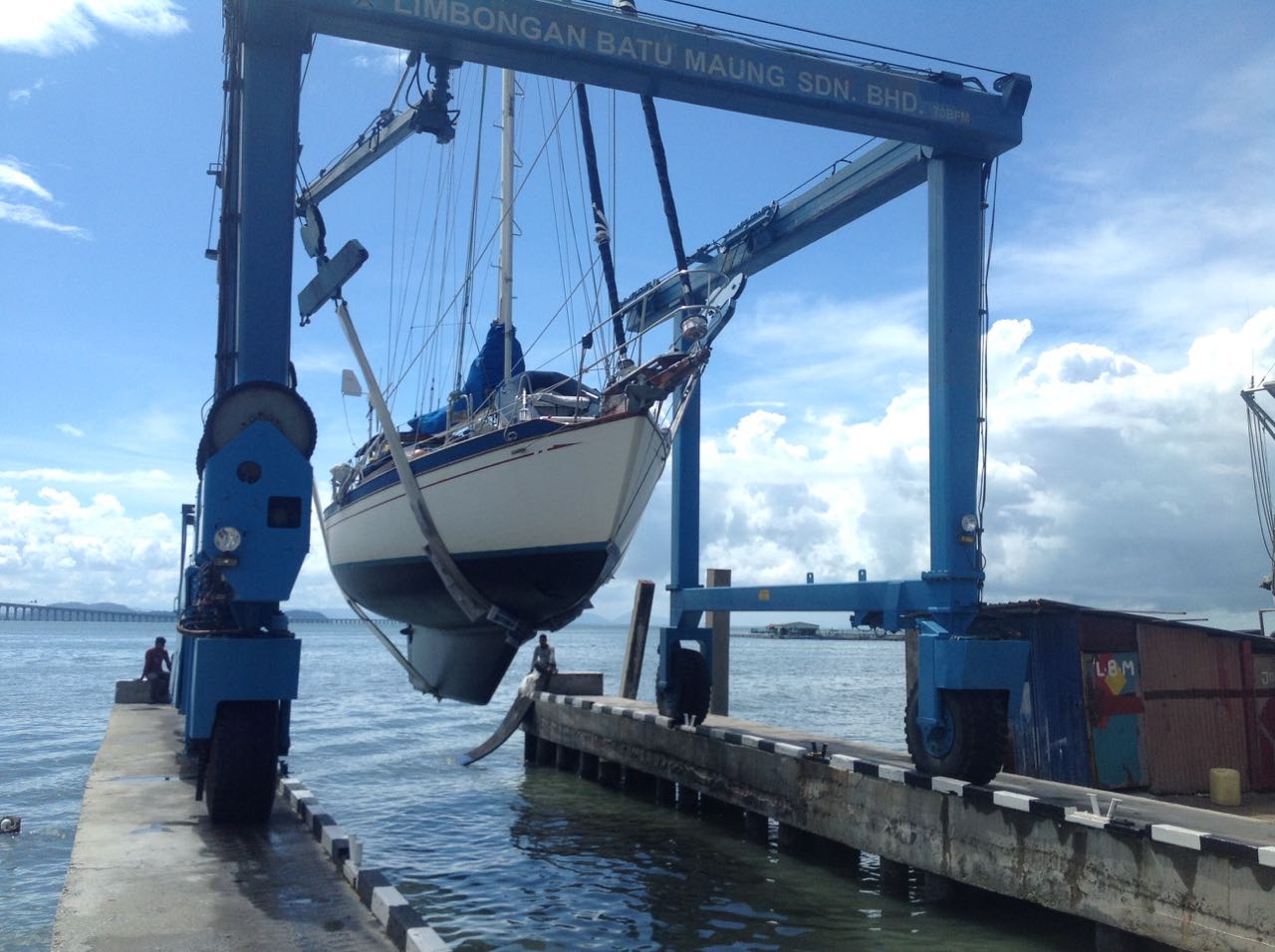
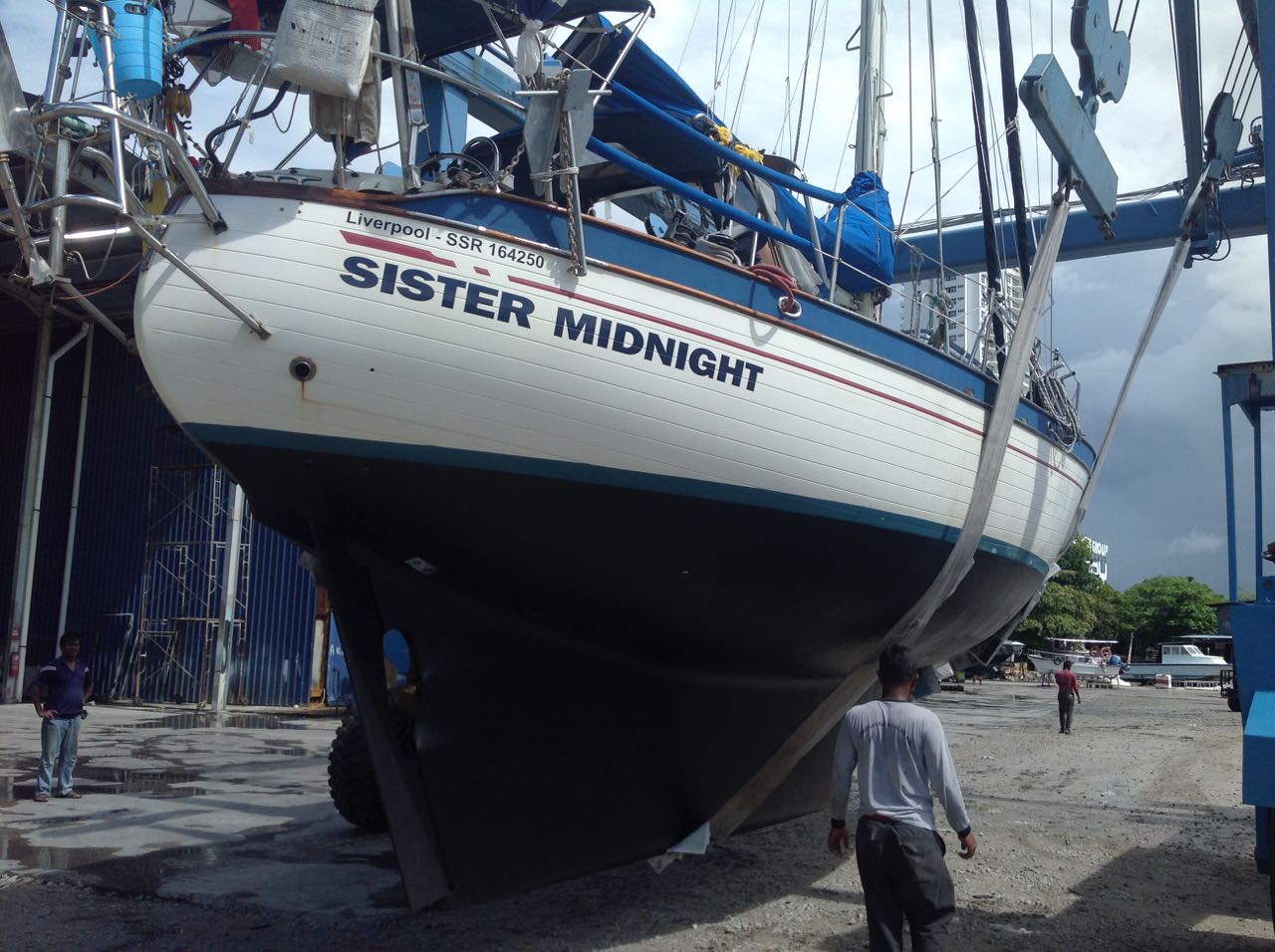
So we launched this morning, a little delayed, but that’s how things work here. All in all I’m very happy with the work they did in the yard here. They hauled me out within an hour of me phoning them, and we were back in the water a few days later.
I’m getting quite blasé about the whole launching thing now, however, they had a guy helping who didn’t understand boats much and they almost scratched the boat when it was lowered, as the current tried to take it away before they got the shore lines on. In the end it went fine, and I reversed out into a strong current, I had swung by 45 deg before the bow sprit cleared the dock, so I had to reverse fast and whack the bow thruster on full power. It looked quite normal from the dock, but was a bit hairy from the helm. I also hadn’t realised that the dinghy was blocking my view, as I had lifted it up high onto the foredeck.
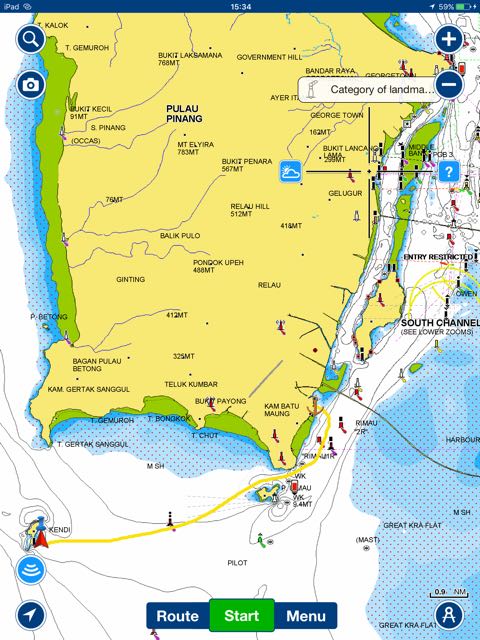
From the dock I motored down to Pulau Kendi, which is just an hour or so to the west. Lots of nets to dodge on the way. I was extremely pleased to find the new propellor pitch works well. I can now get the engine up to 3000RPM and the hull speed was nearly 8 knots, in calm water. I also burnt off a bit of soot on the way here which is good. I need to see how the engine performs on a longer run now.
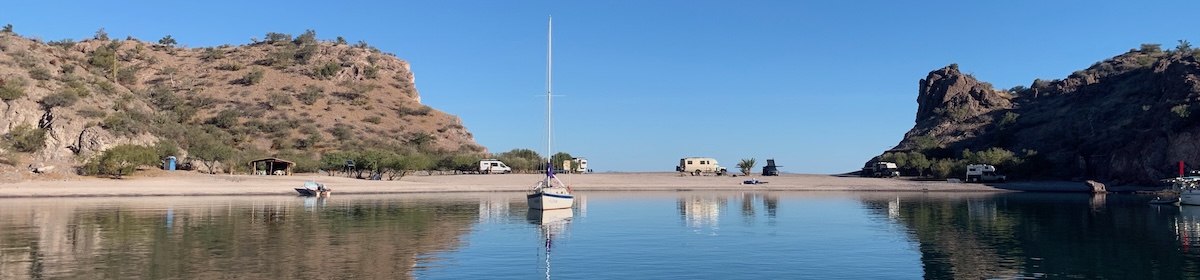
This little island anchorage is my home for the night, I have cleaned the decks, and tidied up the boat, when you are on the hard, you can’t use the toilet, shower or the sinks, as the drains go out the side of the boat. The sink was particularly messy as I kept the old coffee contents in it 🙁
A lot of fishing boats are anchored here, it seems to be the place to come for a nap, well protected from the big sea to the west and NW winds. The weather forecast is for light winds with a few thunderstorms, so nothing too exciting.
I will leave for Pangkor tomorrow morning at 7AM ish.
The boats all ready to launch now, but the yard were late getting the paint on, so we slipped a day, but I’m more than happy as I gained two days hauling early.Once the hull / keel was properly cleaned and rubbed down in the damaged areas, it was clear that there was nothing to fill really, the gouges were in the crud mostly. So we applied primer and then another coat of antifoul and she’s ready to go. I made adjustments to the propeller, as it can be changed so that the angle of the blades can be finer or courser to the water. The exact setting (pitch) is critical to get the maximum power transfer from the engine to the prop and provide drive. It was obviously wrong, as the engine could only get to half the revs it should. This is typically caused by too much pitch, or too aggressive a propeller. The last engineer to take the prop off, didn’t put it back on properly. So that’s sorted, I’m hoping for a good improvement, but expect more fine tuning will be needed when the boat comes out next.
The keel, that’s the thin bit hanging down, is actually solid, and part of the boat. It’s made hollow in the mould, with walls that are very thick, I think more than 4cm, then the void is filled with iron crud, could be anything, but it weighs several tons. Once it’s all stuffed in, a polyester resin is poured in to seal and fix everything in place. So effectively it becomes one solid, very heavy piece that is part of the boat, with no joins that can fail. This I think is one of the strengths of this type of construction, and is why I suffered next to no damage in the grounding, not that I will be doing that again in a hurry! More modern yachts have an all metal keel, bolted onto the bottom of the boat, this makes them faster, lighter and much more manoeuvrable, but they occasionally lose their keel and sink. The bolts also fail or leak, but I think they are a lot better these days.
I got to use my new grease gun on the prop with some rather expensive grease I shipped out here. I’m no expert with grease guns, and suffice it to say, the prop, boat, me and quite a bit of the yard is well greased now.
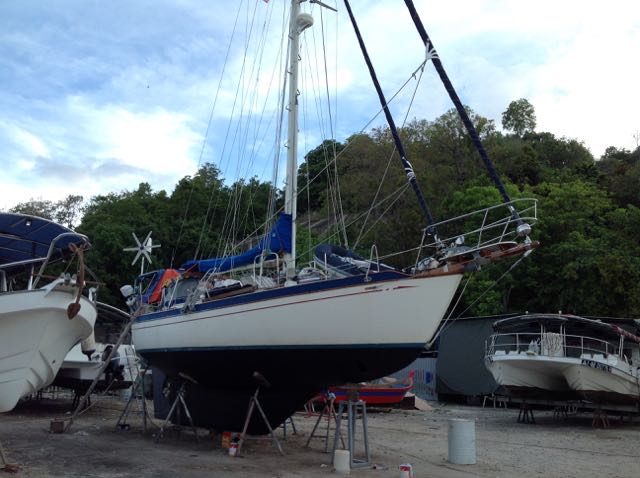
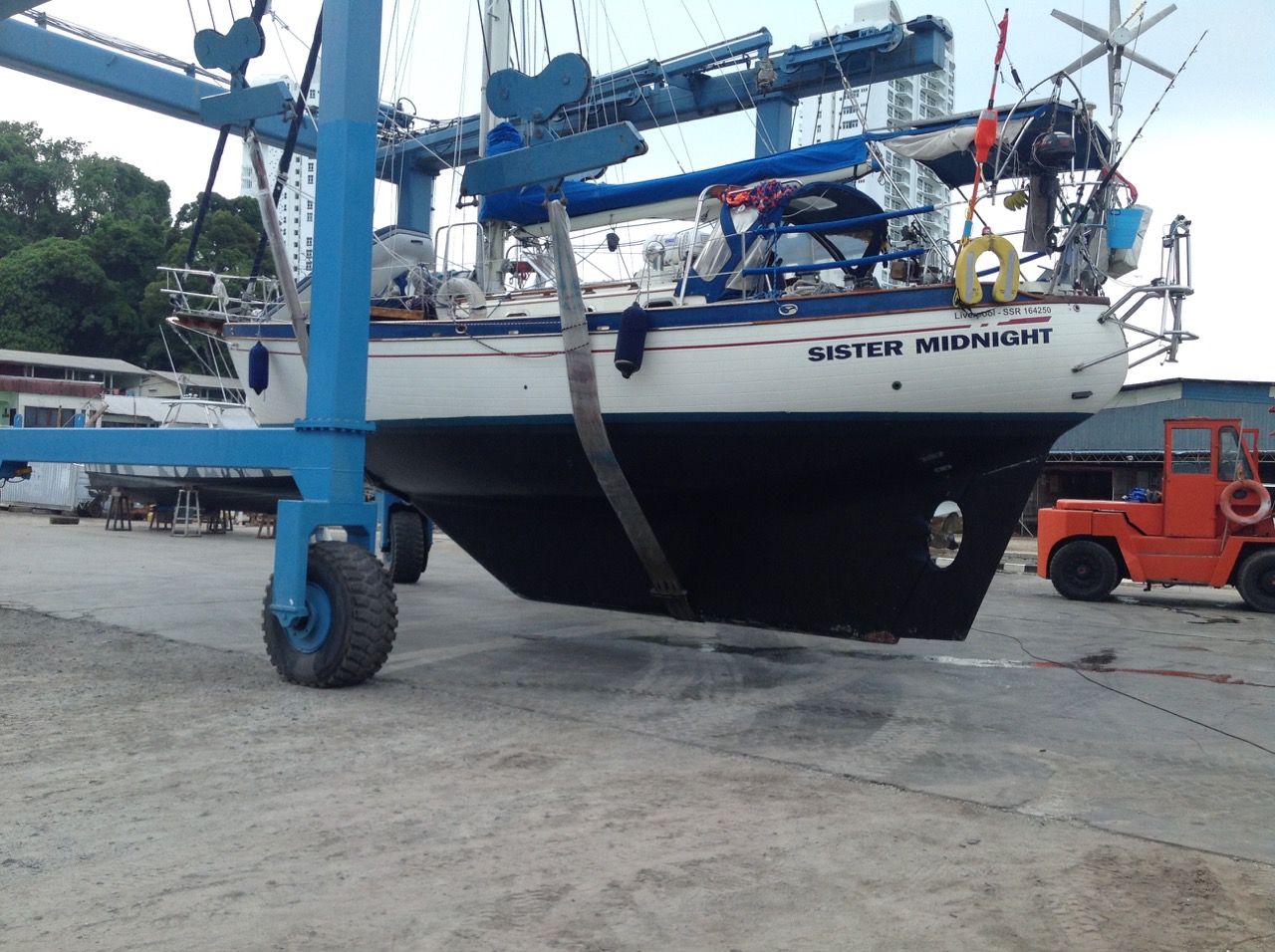
From this angle the boat looks deceptively fast, shame that’s not true.
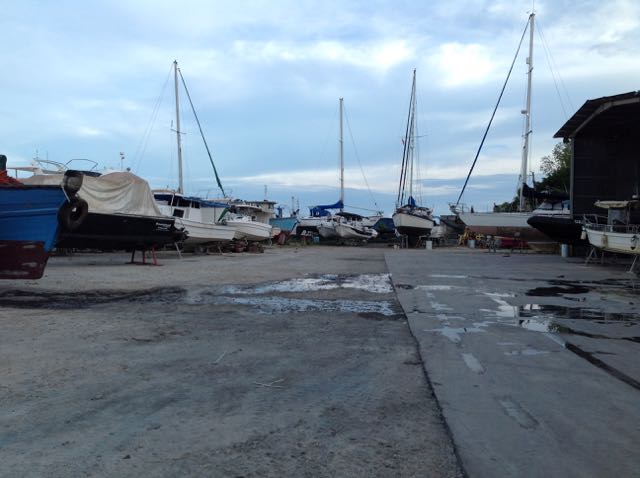
Above you can see the corner I’m tucked into and below the mass of mostly decrepit boats around me.
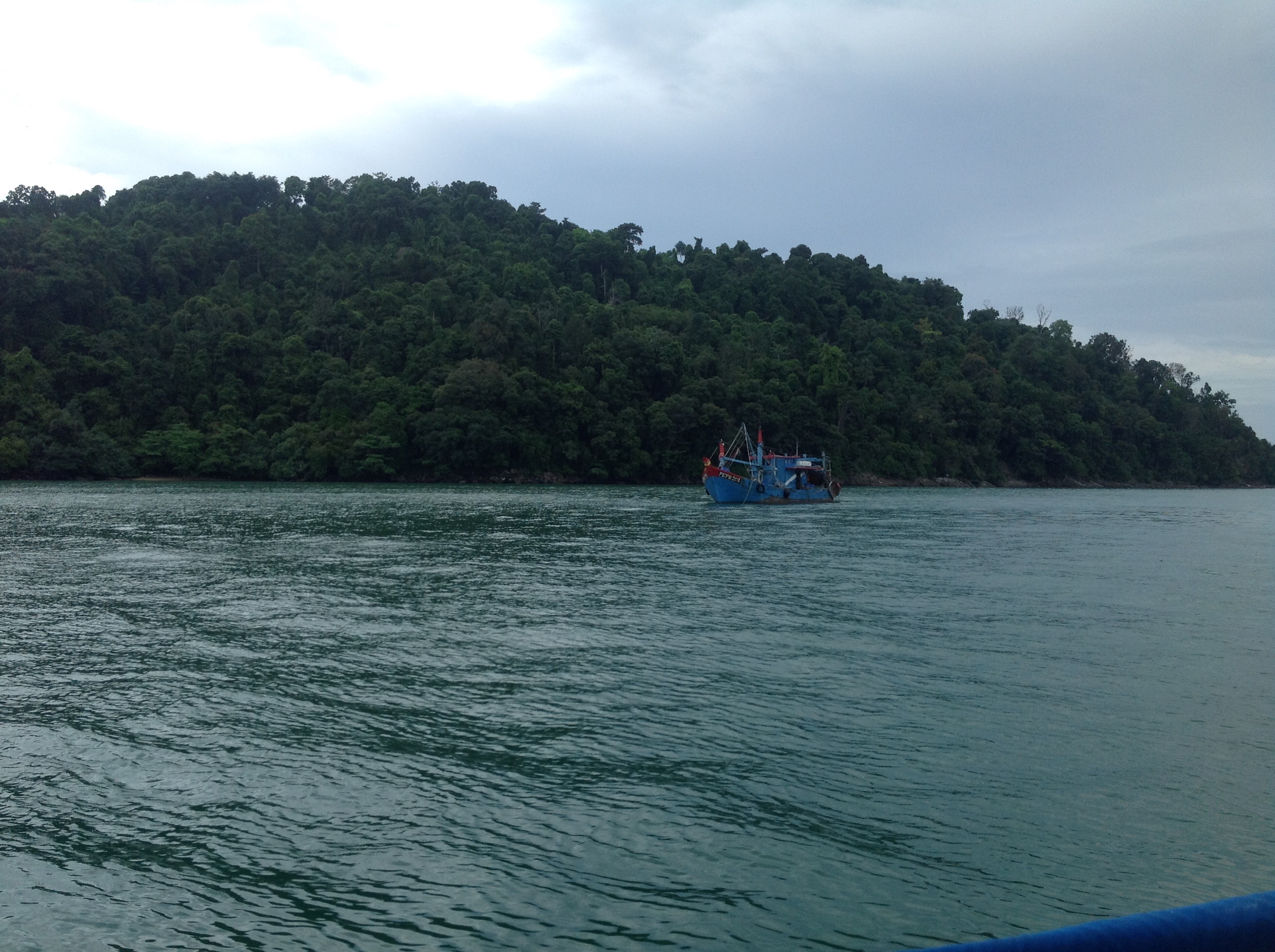
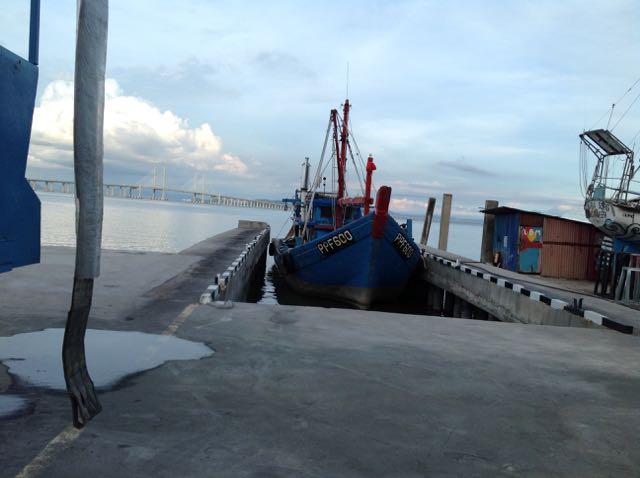
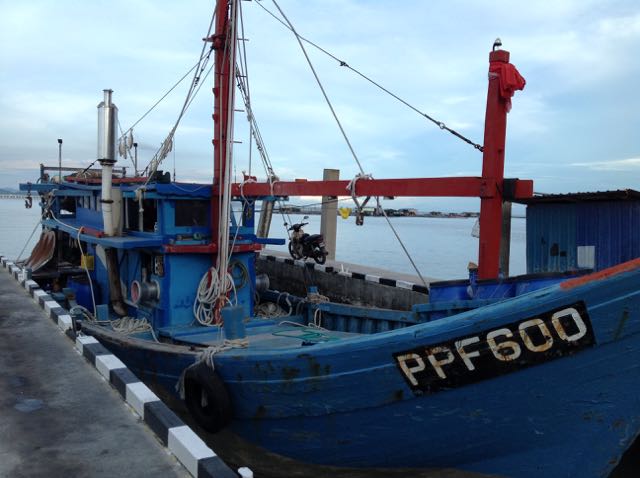
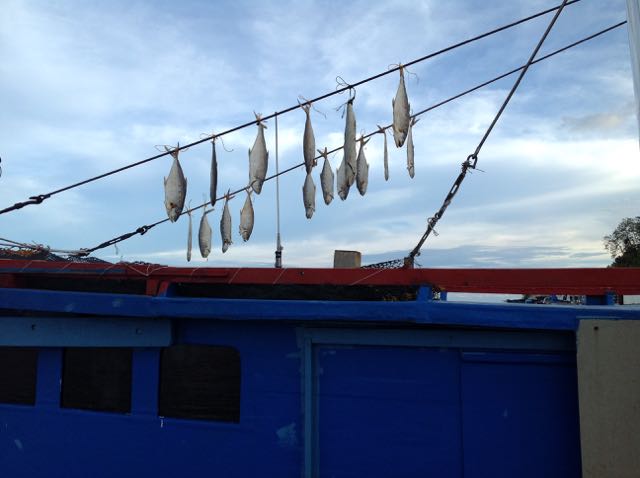
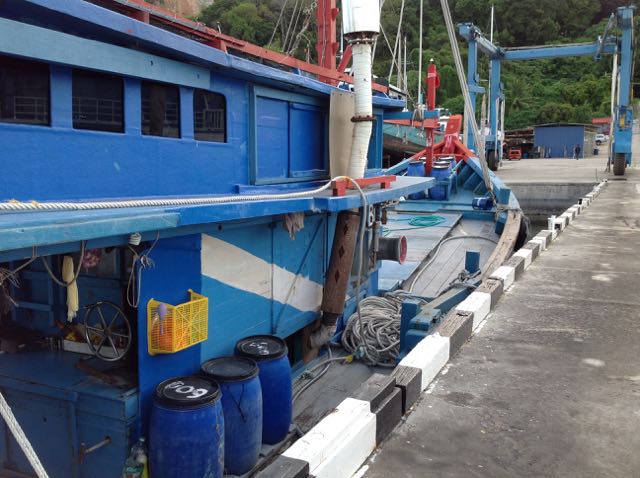
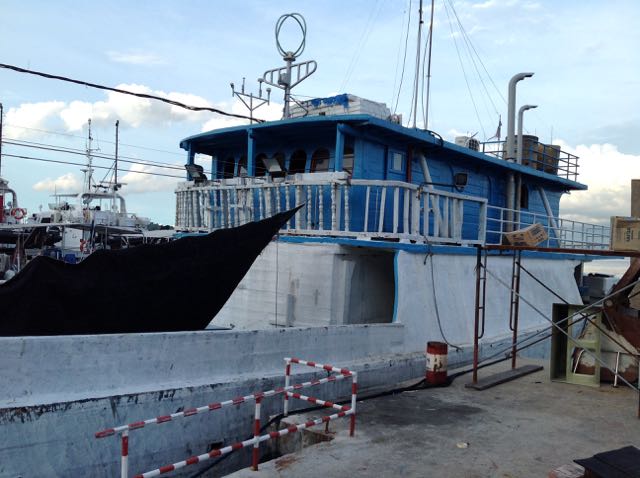
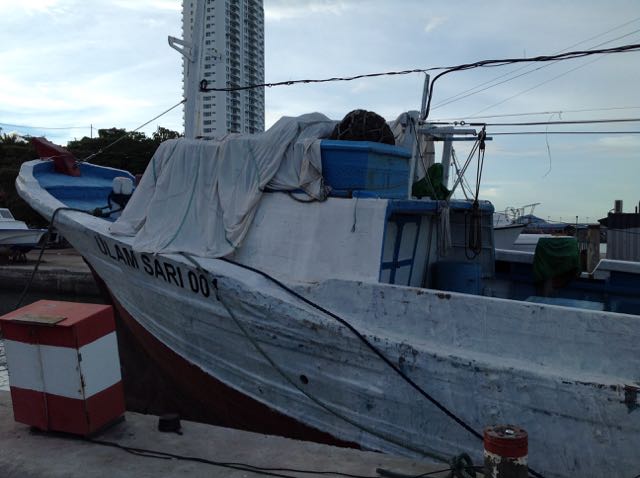
There was a big fishing boat blocking me in, it came in right after me, one of the propellor blades had fallen off, but when I got back to the boat it had been launched. Every day in the yard is a day of bills, and a day not catching fish, so they tend to turn around very quickly. I took the pictures below just before they motored off. I’m quite fascinated by these boats, they truly are working boats, there’s nothing fancy on them, and despite their crudeness, I expect there’s a lot you can learn from their minimalistic approach.
What’s with the fish?
Can you see the wheel?, is this where they wind it up?
Theres another old boat in the yard that intrigued me, it looked like the worst fiberglass boat I had ever seen. I wondered how the mould could be so bad, but then I worked out that this is probably a wooden boat and it’s been encased in fiberglass. Please tell me if I have it wrong, I can’t believe someone could actually turn out a boat this bad. The very thought that there is a wooden boat rotting away inside the fiberglass shell is just as worrying.
On an aside, I’m not going to name names, but if anybody wants to leave a bottle of vegetarian mushroom/tomato sauce bottle in the fridge, horizontally, could they please close the lid first!
So up early tomorrow, I need to clean the log before launch, thts a little propeller thing that sticks out of the bottom of the boat and revolves as we go along and sends pulses to the speedo, or log as we call it. This gives me the speed though the water, which is different from the spped on the GPS, which is the speed over the land below the water. The water either adds to my seed or takes away from it, depending on the flow of the tide. It’s called a log, allegedly, because it used to be a log, thrown over the bow, and someone would count how long it took to get to the stern of the boat, from this the speed could be calculated. Not sure if this is the same log as in data logger, but I expect the log book was where they recorded the readings.
Then I need to fit the windvane steering rudder and vane, get rid of the rubbish and pay the bill. I expect I wont be away much before eleven, which is a problem, my next anchorage is by Pangkor, which is 60 miles away, which could take me more than 12 hours. The tidal currents get stronger now as I head south down the Malacca straits, so 5 knots seems like the best I can hope to average. I don’t want to sail solo in the dark, so I’m going to do a two hour motor around the corner to a little island called Palau Kendi I, have a lazy time washing the boat, and passage planning the rest of the trip south, then at 7AM Saturday as the sun rises I will be off to Pangkor, not the marina, but to an anchorage, just for the night then push on further south. I need to get close to Singapore for when Kathy gets out here.
The plan to sail to America from Japan in July is getting serious now, this is going to be the most challenging sail I have ever done, so I have a lot of prep to do. It’s a long journey for two people, could be 6 weeks or more!
So after leaving Langkawi, just outside the main harbour area I saw this boat, I had mentioned her before, She was from Grimsby and had a rich history as a working boat.
This was the picture I posted last October. Very sad to see this, she has been on the rocks for six months or more now, so I can’t see her being salvaged, but who knows.
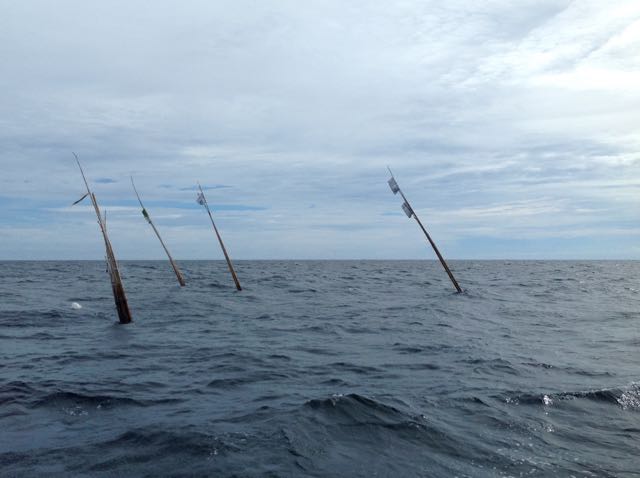
I headed off in very calm seas, but thunderstorms were forecast and I could see lots of them on the horizon, however they seem to like the land, Langkawi, behind me was covered in heavy cloud, and the mainland to my port side was the same, yet it was quite sunny over me for most of the trip. This particular cloud set was heading for me, or so it looked, by this time I was well on my way and the winds were picking up to 15knots, so I rolled in the headsails a bit. I wanted to put a reef in the main, but by now the autohelm was not able to steer the boat. I had let her get unbalanced, with a full main, and not much headsail, she had a lot of Lee helm, or was it wetherhelm, and would veer widely off course. So I was left to hand steer for the last two hours of the passage. I could have started the engine, turned into the wind and sorted it, but I was enjoying the ride, regularly hitting 7+ knots. The wind had started off on the beam, but was now behind, and the waves were causing me to surge forward, almost like surfing, but at 16 odd tonnes, she takes a lot to surf. Not to many obstacles, but I got close to these fish sticks. These are big sticks, the water it 25ft deep here, the idea is that barnacles grow on them, things eat the barnacles, bigger things eat them and even bigger…. Then the really big fishermen come along and catch the big fish. Talking of fish, I did catch one, honest, it was massive, well I reckon it must have been, but of course it got away, but the manner it did was amusing. I was trawling a line behind from my fishing rod, the lure was a big squiddy thing, big enough to catch a small whale, anyway, as usual, the reel started running out at speed, just as I was doing some other critical job, probably furling sails, by the time I got to the rod, and put the brake on, a lot of line had gone out. I took the rod out from its new holder on the very back of the boat, (Spoiler Alert) right next to the wind turbine, I could feel the pull from the fish, it was very powerful, I raised the rod high and then a bang, clunk and twang as the line snapped, First thought that the fish had broke it, but no, I had got the line caught in the wind turbine and it had snapped at the end of the rod. Now, a little like my kedging cock up, I looked up to see the line was taught from the turbine, all the way back to the fish, so not all was lost, what was even more impressive was that the turbine was winding in my catch, the fishing line had wrapped around the blades and was now accumulating on the axle as the strong wind kept it turning. I thought this could be very cool, it would haul the fish right up to eye level, and then stop, I could just lift the fish off and dispatch it, if the turbine hadn’t already, I think there might be a market for something similar out there. A quick reality check, and I thought there’s not enough room for all the line on the axle, and like getting something wrapped on the prop, when it does come to a stop, the force of it can do some damage. So I stopped the blades tuning and slowly removed the line. By now the fish had bitten his way through the line and buggered off. While hanging off the back of the boat, high up, one hand on the turbine, one on the solar panels, and the cutters between my teeth, I thought one slip and it’s bad news, the autohelm would have just took the boat on it’s merry way, leaving me to pray for a fishing boat to pass! I must make a rule to clip on when on my own.
There were quite a lot of big fishing boats, and two of them had a massive net enclosing them, I thought I had left enough space to pass behind them, but as I approached I could see the top of the net, buoyed, and covering the area of a football field around the boat, incredible, I can confirm my gybe preventer does work!
I was making such good progress, I passed my first destination, and my second and went for the third and last possible stop before Penang, it was a very small island Pulau Bidan, but when I arrived the wind was blowing 20-25 knots from the north and the sea state was getting quite rough, perhaps 1.5-2 mtr waves and coming from the NE and NW at the same time. I found a corner where the waves were a bit subdued, but still rough, and within an hour of setting the anchor the wind shifted making it very rolly. It was now getting dark, so I just hunkered down, had a butty and an early night. As I have done the last two times I anchored, I set the Drag Queen App up to alarm if I move more than 300ft from my anchored spot, but forgot to press the activate button, so that was a waste of time. The winds dropped through the night, I checked every hour or so. Finally I woke at 8am to a calm sunny day, looking out the cockpit it was hard to match the image below with the harsh weather from the night before. But it was a gorgeous start to the day.
View from my anchorage at Pulau Bidan, NW to the left NE to the right, shallow ahead
From here it was 4 hours down to Penang, I had had an email from the boatyard that they could lift me out in 2 days time, then I got an email from Pangkor marina that it would be ten days before they could haul me, so I decided to head to the boatyard and anchor and chill for a day or so.
Penang was busy, lots more land reclamation going on, I went through a restricted area by mistake and realised when I saw a giant loch ness monster style pipeline sticking up, that explained the big yellow and black cardinal buoy on my port side, that should have been on my starboard side. These things aren’t on the charts as they happen so quickly, but no harm done.
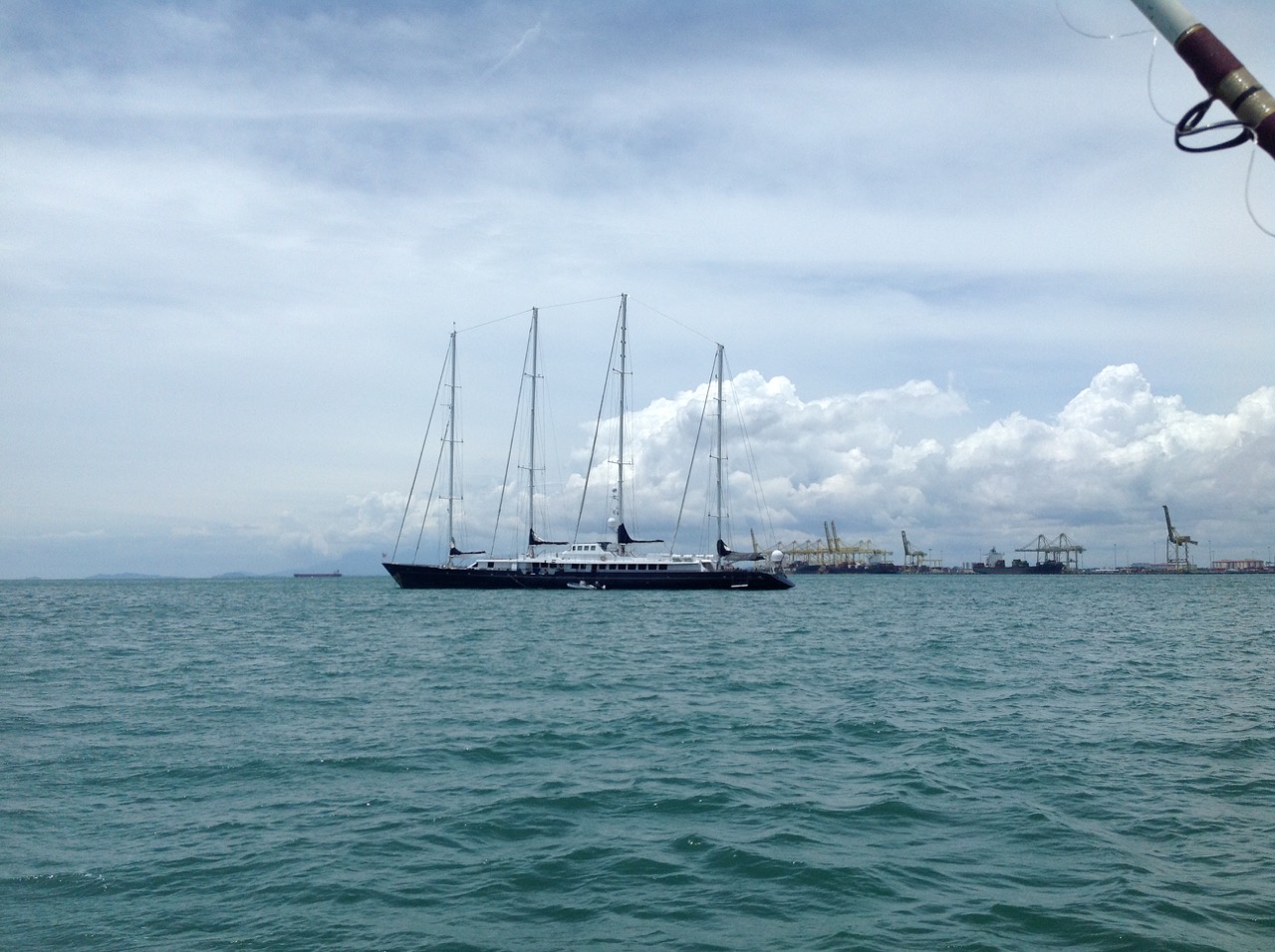
This yacht was huge, the crew all waved to me as I passed, which was nice.
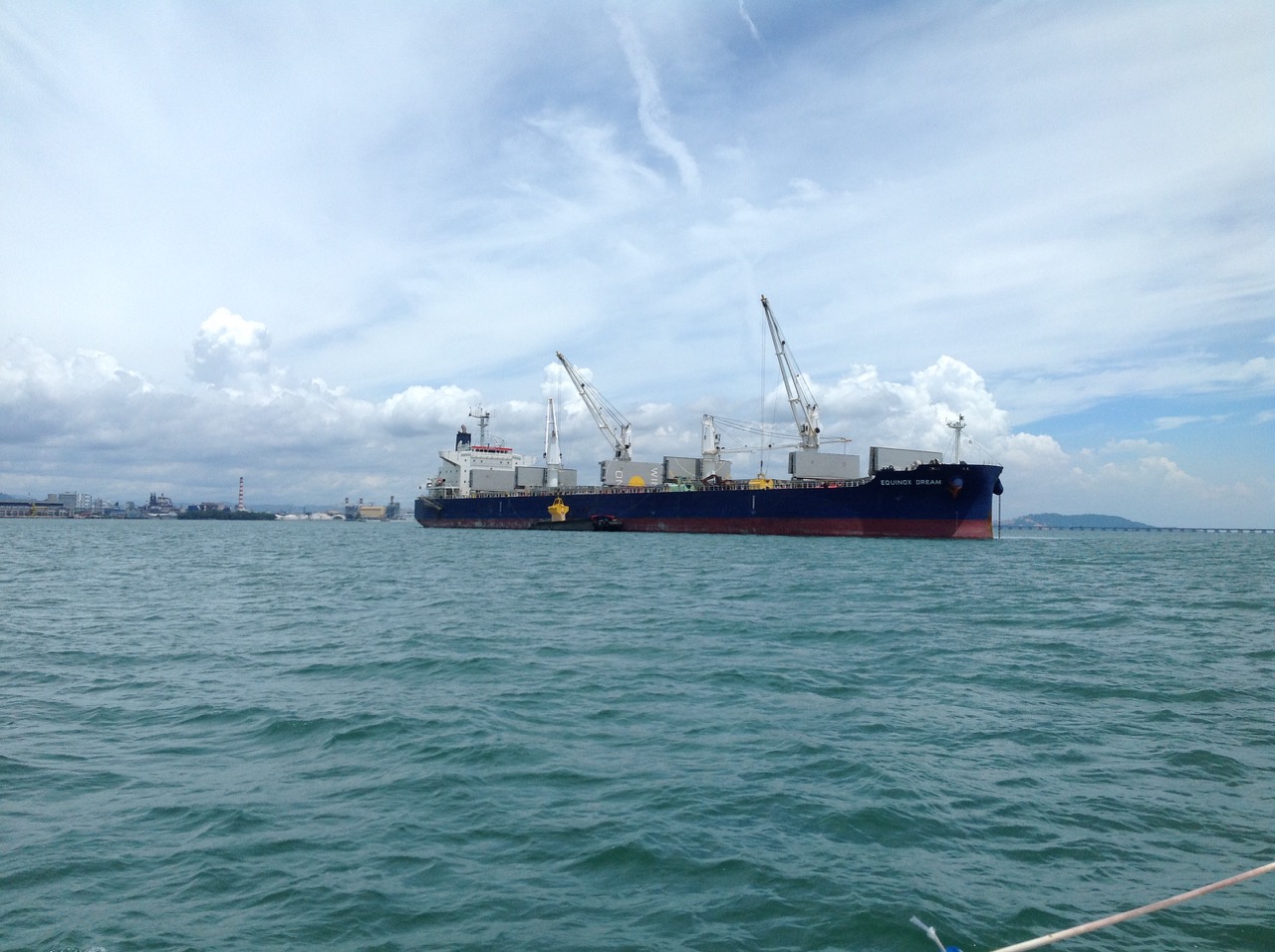
This next bulk carrier was even larger ,you can see the barge next to it being filled. I don’t know what the cargo was, but possibly powdered land they use so much of here.
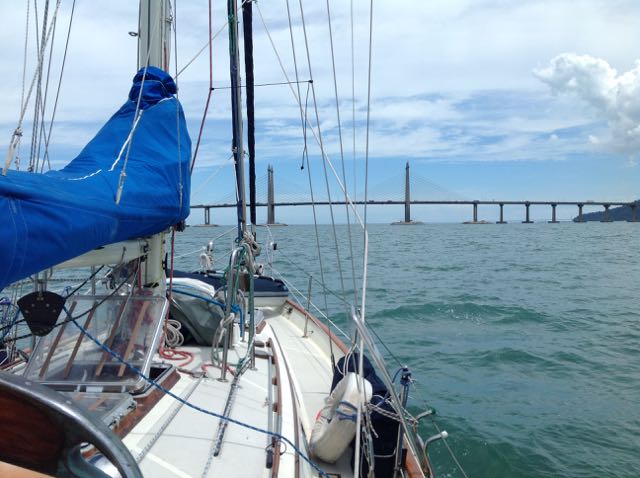
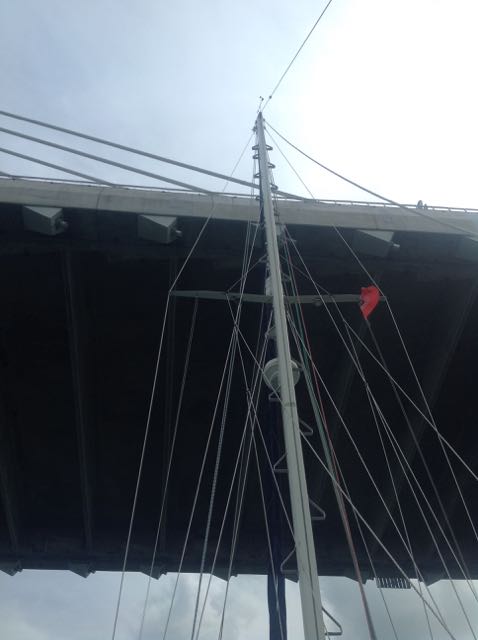
So then there was the old bridge to pass, I wasn’t too worried about this, I had been under it a few times now, and knew we would fit.
The second bridge is a bit lower and really doesn’t look so easy, I really thought I might hit it, even though we have been under it twice before.
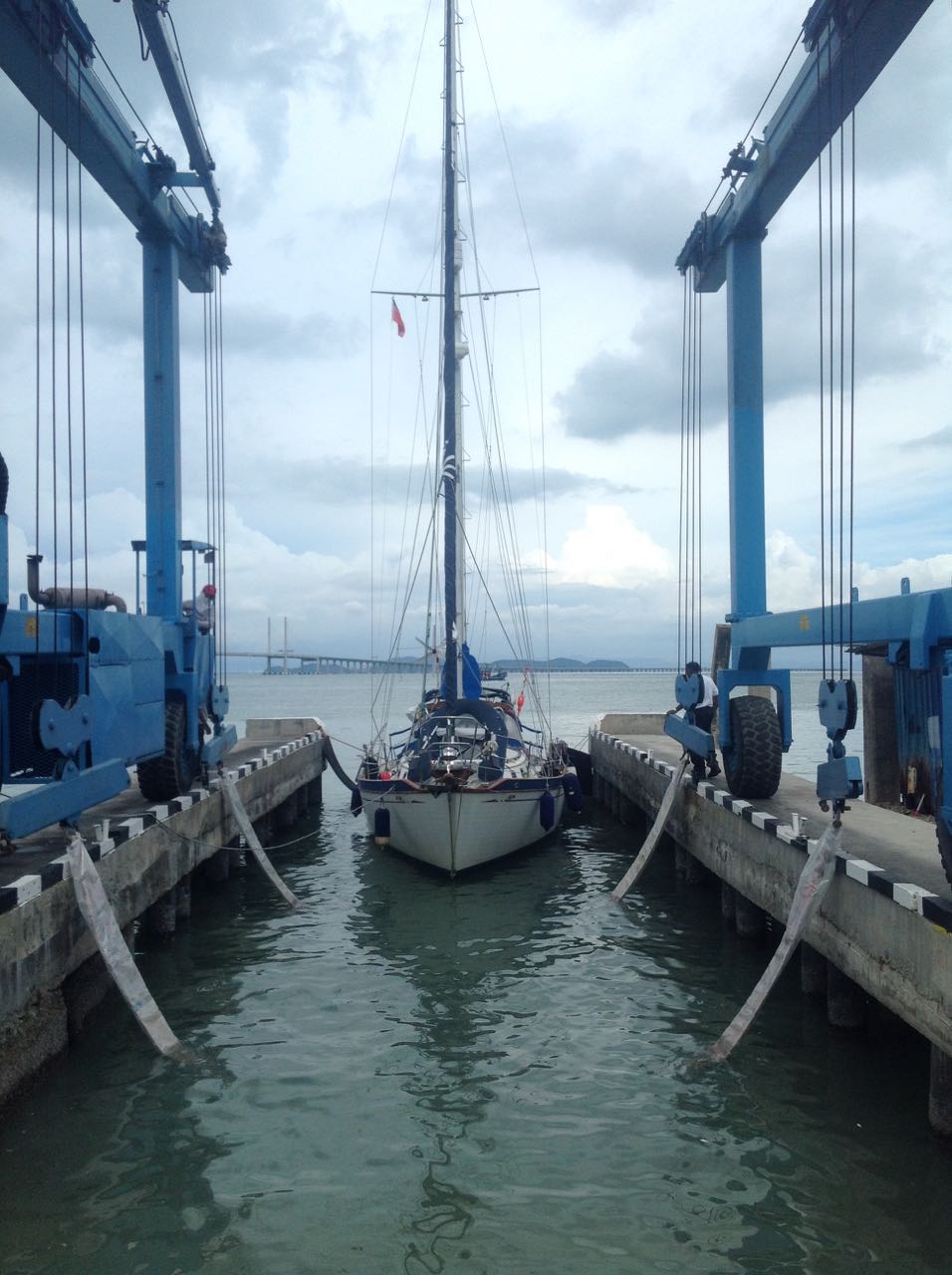
So as I approached the second bridge at the southern end of the island, near the boatyard I gave them a call on the off chance they had an opening, and sure enough they said to come over and they would haul me. Brilliant, but a bit scary as the entrance to the travel lift dock is fraught with jagged concrete obstacles, and a strong cross current is hard to handle. However the timing was perfect, we are getting into neap tides now, much milder, and I was 3 hours before high water, where the tidal flow is less. I got in with not much trouble. I could have done with my fenders a lot higher, but we didn’t scratch anything, the steel rub rail might need a polish.
So it was with great interest I watch the boat lift, and sure enough the damage from the grounding was superficial.
Scrapes on the bow where we hit the rock, gelcoat damaged, fiberglass intact.
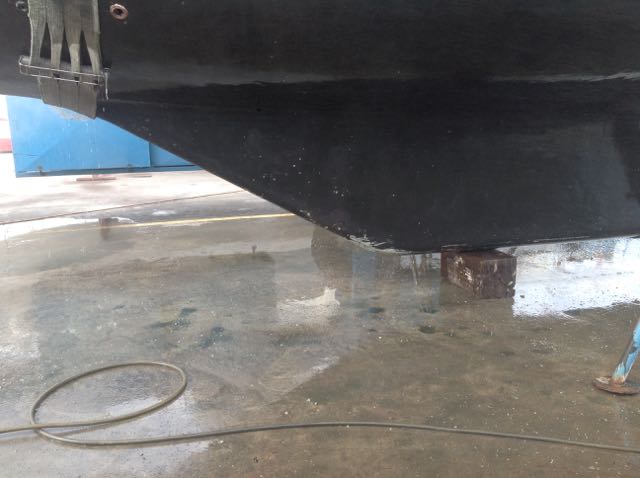
After she was washed, the hull looked great, the antifoul has lasted the last year well.
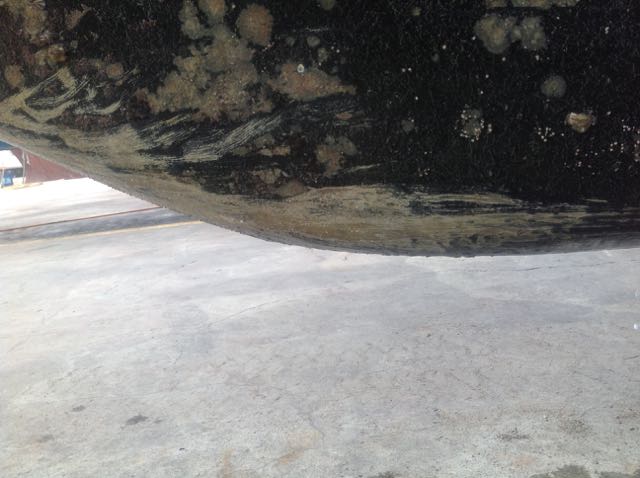
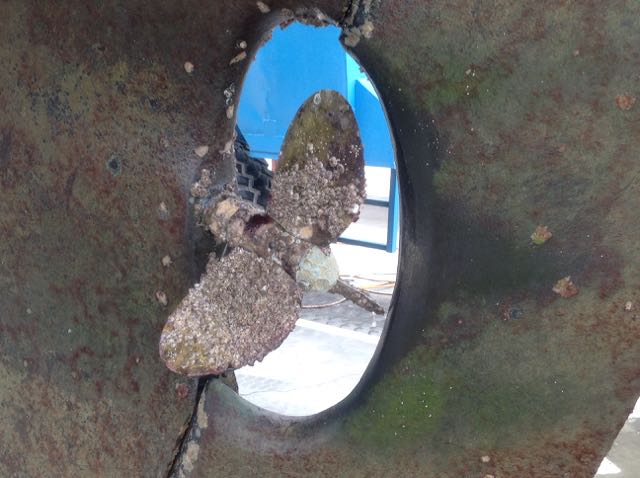
I thought there was a bit of vibration from the prop, this explains it. This is just 6 weeks fouling, must make a note to keep cleaning it often. I have a very small amount of tiny blisters, but 99.99% of the hull is blister free, so I think the work we did last year worked well.
So the plan now is to fill the scratches and grooves, prime, then put another coat of antifoul on tomorrow. I have cleaned the prop and put a new anode on, tomorrow I will grease it, and possibly adjust the pitch if I can work out the correct setting. Then we launch on Thursday and I head south. I plan to get down to KL or maybe even Singapore before Kathy flies out. Then I am thinking we will try to get to America’s PNW after all. I need to be in Japan for the middle of May if I want to be safe from cyclones, The route is Singapore-Hong Kong-Japan-Seattle, so there’s a lot to do.
Yes I was talking with chappy earlier at the fuel dock who spoke Malay and he enquired about the name, he was an Iggy Pop fan and liked the name, I think? Anyway, I pointed out that it often caused amusement with the Malaysians when I had to give them the name, and he explained that it would, given sister means gay here. The Malaysian government have banned gays, and officially these aren’t any, except, it seems, for my boat,”Gay Midnight” and she is quite brazen about it !!
I was up early and got the boat ready for the trip, fuelled up and left at ten, after giving some boat handling lessons to a lovely couple from Estonia who are just starting their sailing adventures, having bought their first boat here, from a guy I became friendly with when Tim was over last year, and now they want to head off into the blue yonder, just once he has worked out how to leave the dock.
The wind was strongish from the east, 10 knots at Langkawi, building to 20 by the time I arrived near Penang. It was a great sail down, with thunderstorms threatening all the time and plenty of things to dodge. I will write more tomorrow, as right now I’m at anchor in a rather uncomfortable spot just north of Penang. I couldn’t get to the shelter of the main island before dark, so I pushed on to the last island before Penang, much further than I had hoped, but then I was making between 6 and 7.5 knots most of the time, under full sail. All of the islands en route are long thin affairs and generally lie North/South so great if the wind is from the east or west, but by the time I got here the wind had changed to the NNW, So I sheltered on the SSE corner of the island, not much shelter as the waves, which had risen to 1.5m were getting round the whole island and the wind, a steady 20knots was everywhere. Anyway I dropped the anchor and it’s holding very well, I just have to pretend I’m crossing the Atlantic and it’s a bit choppy an the boat is bouncing around a lot, in order to get some sleep. As I write this the wind has dropped to 15 knots and the sea calmed a little, so that’s good.
Things I need to put in tomorrows blog, once I work out how to get the pictures off my iPad are, birds on the sheets, Caught a fish, but it got away, and nearly took me with it, Almost drove through the biggest fishing net I have ever seen, self steering hassles, and fish sticks up close.
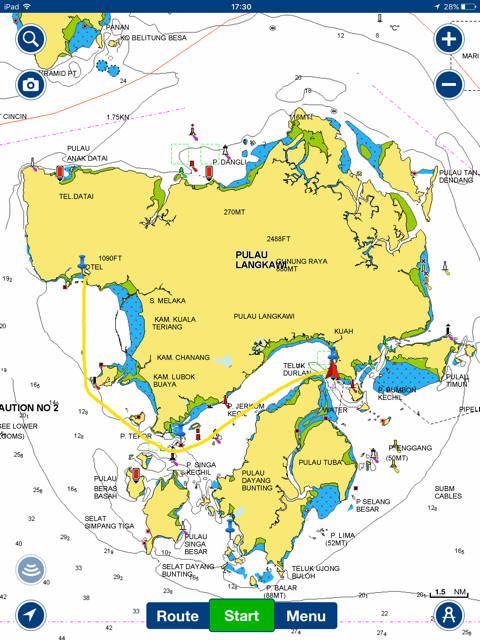
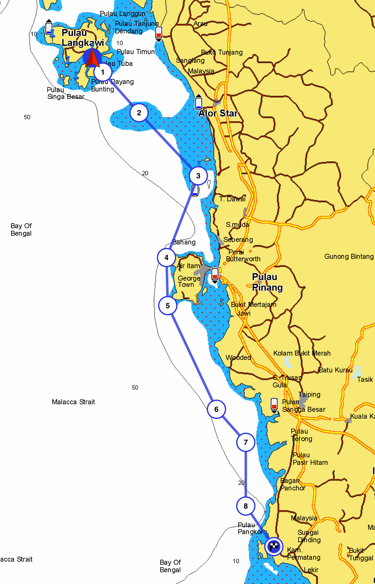
Tomorrow morning I’m going to slip my mooring here in Langkawi and head south. In theory this should be a simple operation. The plan is to get some fuel at the dock here, then I can do a 3-4 hour trip to an island called Pulau Paya (2 on the map), if all is going well I might continue onto another island 3-4 hours ahead called Pulau Songsong (3), I have stopped here before a few times doing the sail from Penang (4/5) to Langkawi. It all depends how quickly I can get away, the fuel dock doesn’t open till 9am.
The plan so far is to get as far as Pangkor Island (8/9), which is not far from Kuala Lumpur by Friday. There I can haul out the boat and check how much damage I did on the rock. I can also see if the osmosis has re-appeared and I may try to adjust the Max-Prop propellor to see if I can’t get some better efficiency from it.Since Kathy went home I have been busy doing chores on the boat. I have fitted the new Throttle and gear cables, Changed the oil and filter, cleaned out the raw water filter and changed both the fuel filters. On my last Volvo engine on the baba 30, I only had to look at the fuel system to induce an air leak into the system. These were always annoying, often they would hide while the revs where high, but as soon as I throttled back entering the marina the engine would stop and not want to start, good game. So after changing these filters I bled the system and it has started perfectly, high revs, low revs, it works great. I haven’t tested the new cables away from the dock, but they seem fine now. What could possibly go wrong 😉
What could go wrong is the weather!Above is typical of the weather here now. It’s forecast for thunderstorms for the next 7 days. A met office warning to shipping for the Malacca straits for today warned small ships to stay home, the forecast said in areas of multiple thunderstorms, waves could reach 12ft high with 30 knt winds. However that was for today, no warnings for tomorrow. I have a variety of sources for weather information, The national weather services for maritime service, the equivalent of the uk shipping forecast is a main one. I make a lot of use of grib files. These are weather data files you download over the net. They are a very compact form of data, so ideal for loading over HF radios, or expensive satellite links. With a viewer on your PC you can see the data as wind and wave patterns as shown belowThis covers the area I will be in tomorrow. It is animated on our iPad, showing the changes every hour over a 96 hour period. Here is the legend/key expanded
So the worst weather tomorrow will be at 17:00 and you can see inshore the wind is about 5 knots, calm, and further offshore, at the extent of where I might be, the wind increases to 15 knots, very healthy for sailing, plus it’s from behind me, so that’s even better. Also the waves go from <1m inshore to 2 mtrs offshore, This might make it a bit more lively, but as they are in the same direction as the wind, and behind me, I’m not too concerned. The only problem is that at some point there will be a strong current flowing north, on the ebb tide, this will slow my progress down and make it less fun, but at the same time, well actually 6 hours later or earlier, the tide will be pushing me along adding a couple of knots to my speed. I think High tide is about 5pm, so the southbound current will be strongest between 3 and 6 pm, roughly. and the current against me between 9-12pm.
I bought a stack of squid from the street market last night, and had them for dinner just now, I’m very pleased at how quick I can prepare them, ripping the body out, removing the plastic spine thing, and skinning them, all in seconds now. Just need to work out how to catch them myself. I don’t eat the tentacles, seems like to much effort, which I know some will think a crime.
I read an article today about how Trump was turning off GPS Accuracy for non military use, and would allow Americans and certain others to buy a license to use it. This would not be great news for sailors, even worse for satnav users, I was concerned. He was quoted as saying it was a great way to raise money for ‘the wall’, he might even make so much money from it he would build a second wall on the Canadian border. At that point I checked the date on the article to see it was the 1st April, I’m just hoping it was a hoax. It did make me think though, just how dependent we are on GPS these days. However I think the European system should be online soon, oh, just realised, as a Brit, we might not be allowed to use it, damm 😉 !!
Kathy is back in Liverpool now and I’m having to endure this relentless heat on my own. Actually, I decided to go crazy now she has left and yesterday I headed off into town for some fun. First stop was the department store where I bought an omelette pan, guess what I’m having for dinner tonight, and a food processor. Next I bought a giant bag of kit-kat chocolate bars, it’s going to be wild back on the boat tonight, I have already ground some coffee beans up that I’ve had since Tim was here and made a very strong cup of coffee. I might even make up a smoothie with all the fruit that’s hanging around (literally) on the boat.
Seriously I have made a list of the chores and tasks to work on. They are:
Work out where our next stop is, somewhere between Africa and America (not the Atlantic side) is as close as I have it now.
Sort out the head waste system, somehow the holding tank is filling up, yet it’s not connected!
Get the engine looked at, it’s like I used to be, smoking and drinking too much
Get a new canopy made, the current ones won’t last much longer
Get the boat hauled out, the hull checked for damage after the grounding, and some new antifoul
Get the water-maker into service
Source some new solar panels, these computers/phones use more power than I thought
Buy a liferaft
Wash the hull and polish, this could wait till the haulout
Fit the WiFi aerial.
There’s quite a few other minor jobs as well, but these are my main tasks I need to complete in the next week or two, certainly before Kathy gets back.
I have uploaded these two videos to accompany Kathy’s blog about the river trip in Tarutao, It doesn’t look as good as it was, honest. I’m still trying to learn what works and what doesn’t, probably should have taken a video making course before I started this trip. Must also remember to keep the lens clean, sorry 🙁
We are back in the yacht club, it’s not like a real yacht club that we have back home, this is a marina, and now it’s grown to quite a big commercial operation. The office hangs off the end of a large development of apartments/hotel rooms, trendy designer shops and the usual array of franchised food and drink outlets. However, having said that you can see from the header picture I just uploaded, you get some cracking sunsets from Charlie’s bar. The complex is a short walk from a decent shopping mall, and a nice walk a little further into town, but not for the faint hearted when the suns out. I’m ok being an Englishman (mad dogs and all that).
We have had a week here, and haven’t done a lot really, the gang of grey ships we passed through on the way into the harbour were part of a huge military showcase here for the International Maritime and Air Festival, I think that’s the front for what is more honestly known as an arms fair. But we have had fighter jets flying overhead all week, some of them are very noisy. It coincides with school and public holidays, so the whole island has been rammed.
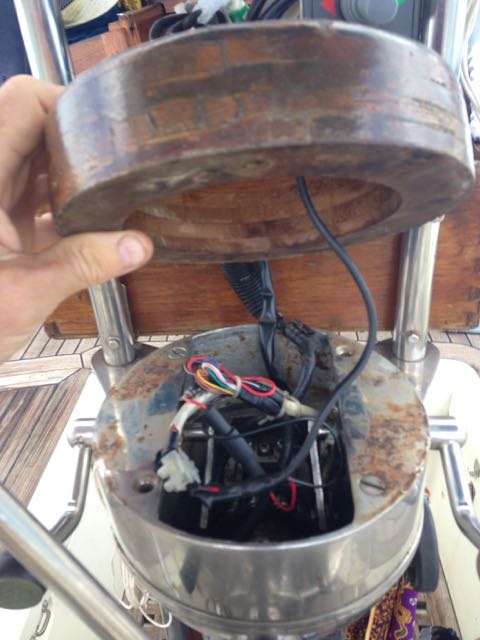
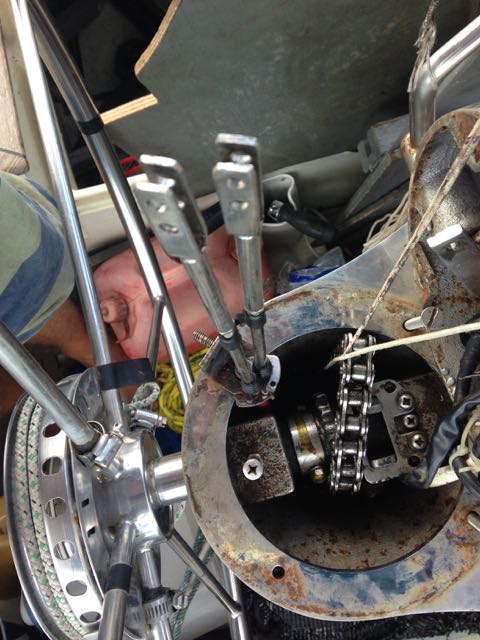
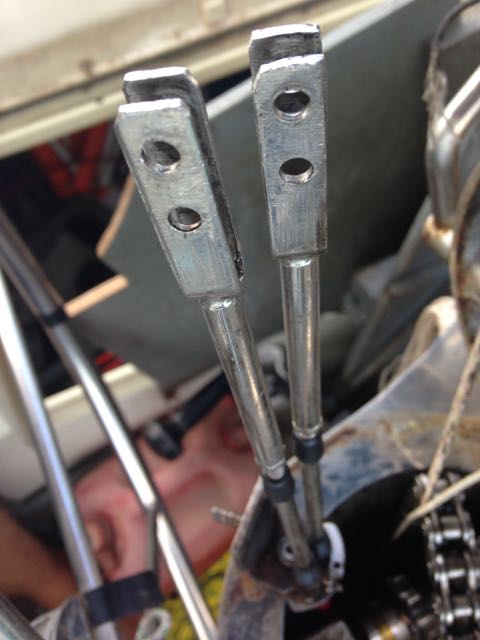
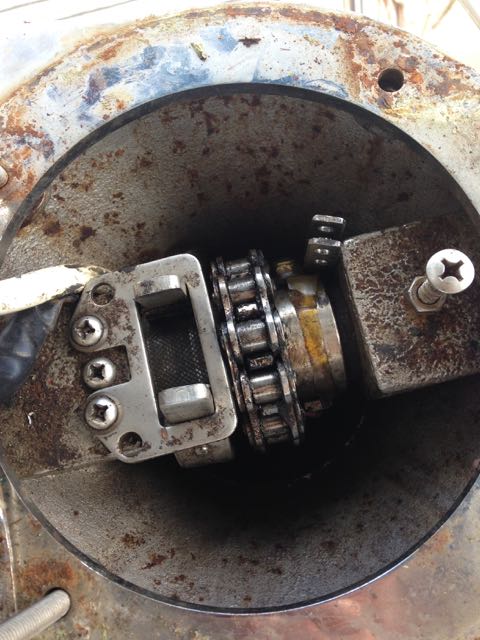
I was very pleased to find my favourite hardware store here stocked the cable I needed for the broken gear stick, so I picked up two, as the throttle cable is the same age, and presumably on its way out. It took the best part of two days to change the cable, as the steering had to come off, the bracket on the engine was seized, on and I had to saw off the connecting rod and fabricate a new one. I took the opportunity, while I was deep in the bowels of the boat to do a few other jobs, like cleaning the raw water filter, and generally cleaning the hull inside. I also managed to identify a couple of jobs to add to the list, like replacing one of the water hoses, that seemed a bit crunchy when squeezed.
I have put a few pictures of the binnacle, which is the thing that has all the engine and steering controls on it, mostly so I can remember how it all works in the future 😉
The new cables waiting to be connected
The gear works well, but I have a problem with tension on the throttle, I have a practical solution, involving a clamp, but it’s abhorrent to me as an engineer, so I’m musing on a better solution, I will probably post to the baba owners group for their wisdom on the matter. Basically a big spring at the engine end is always pushing the throttle back to idle, much like the spring on a car’s accelerator peddle, but unlike a car, you don’t keep your foot on the throttle, you need cruise control, the clamp I took off, basically crushes the cable casing onto the wire inside, that can’t be right.
Still, I have a strong elastic band that works amazingly well for now 🙂
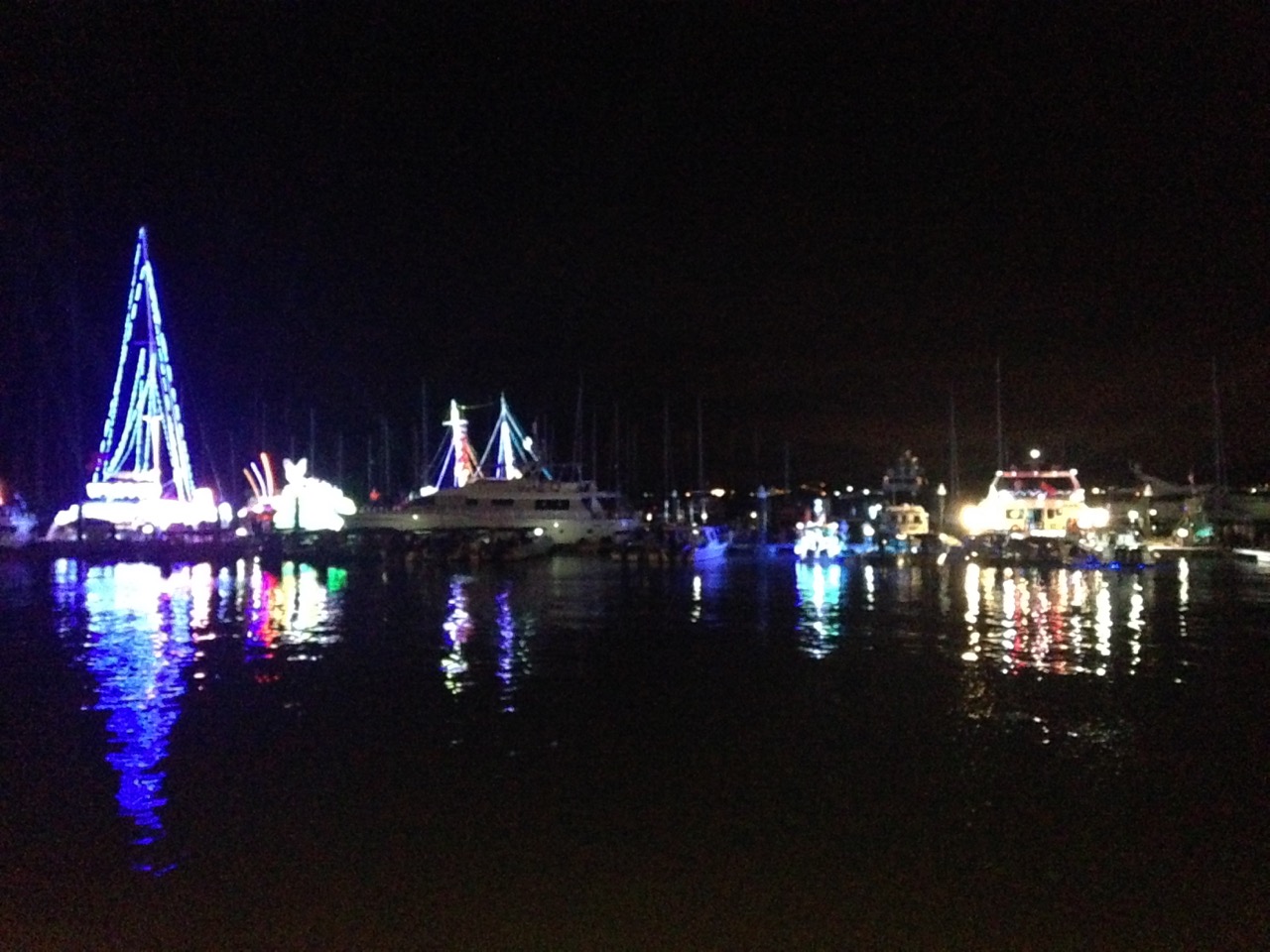
The authorities here threw a maritime parade for the holidaymakers this week, about a dozen big cats, motor boats and old schooners were dressed up with lights and TV screens and paraded around the harbour/bay for a couple of hours, they seemed popular, I can understand that as the Malaysians seem to love their bright LED lights, and these boats were so decorated, that to me they looked like garish fruit machine/one armed bandits, on steroids. One catamaran had the whole side covered in a wall of flat screen tvs displaying flashing lights, 80 style pop video effects and adverts.
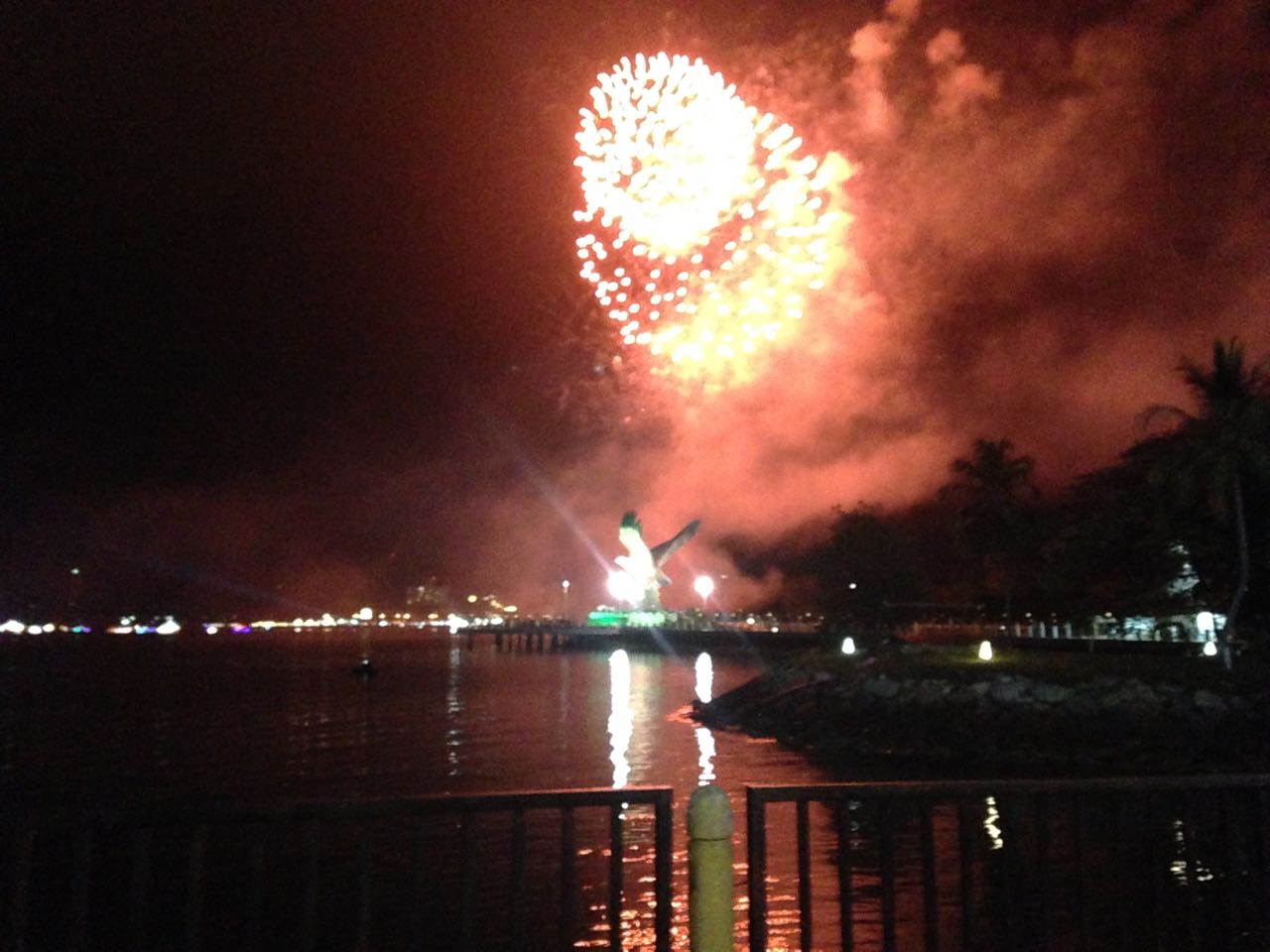
The fireworks at the end were nice, above the giant plastic eagleFinally I managed to upload one of my videos, it’s me and kathy swmming around the boat in Ko Phi Phi. The boat is in about 8 metres of water, so clear.
Let me know if it doesn’t work.
We are hiring a car tomorrow, it’s Kathy’s last day here, so we are going to take a ride to the top of the big hill here in the gondola ‘sky ride’ and also stock up on a few bits and pieces. We will also check out the food festival in Chenang.
We checked into the Harbour Master, Immigration and Customs this morning, then we upped anchor and went to get fuel, however they didn’t have any. This was the main reason I went to Telaga yesterday, Oh well, we left at 12:00 and motored straight to Kuah, passed through a very large convoy of grey ships and their support vessels on the way, I wondered what the protocol was and if I would be asked to change course, but they didn’t care. Last night 4 fighter jets flew over us, in extremley close formation, very impressive. Kathy said ‘What’s Trump done now?’ which was kind of funny, and kind of worrying too. We managed to sail for the last hour went the wind changed from ahead to astern.
Now we are tied up in the Royal Langkawi Yacht Club. It’s nice to on a pontoon, plugged in to mains again. I can catch up on some of the jobs here. Mainly fixing the gear shift cable. we have good wifi here so hopefully I can upload some of the videos we took over our time in Thailand.
 This little island anchorage is my home for the night, I have cleaned the decks, and tidied up the boat, when you are on the hard, you can’t use the toilet, shower or the sinks, as the drains go out the side of the boat. The sink was particularly messy as I kept the old coffee contents in it 🙁
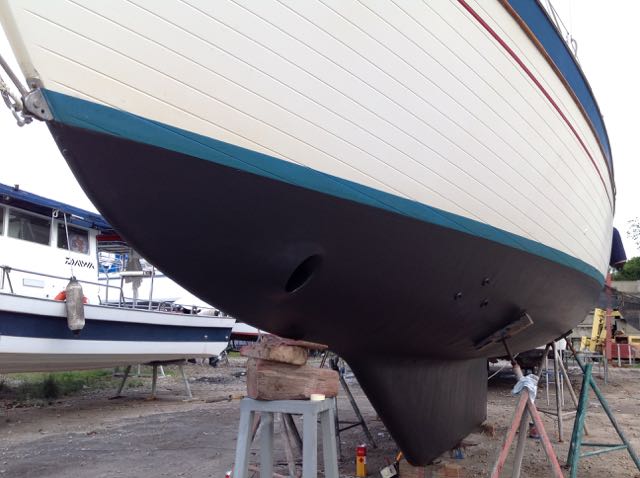 Once the hull / keel was properly cleaned and rubbed down in the damaged areas, it was clear that there was nothing to fill really, the gouges were in the crud mostly. So we applied primer and then another coat of antifoul and she’s ready to go. I made adjustments to the propeller, as it can be changed so that the angle of the blades can be finer or courser to the water. The exact setting (pitch) is critical to get the maximum power transfer from the engine to the prop and provide drive. It was obviously wrong, as the engine could only get to half the revs it should. This is typically caused by too much pitch, or too aggressive a propeller. The last engineer to take the prop off, didn’t put it back on properly. So that’s sorted, I’m hoping for a good improvement, but expect more fine tuning will be needed when the boat comes out next.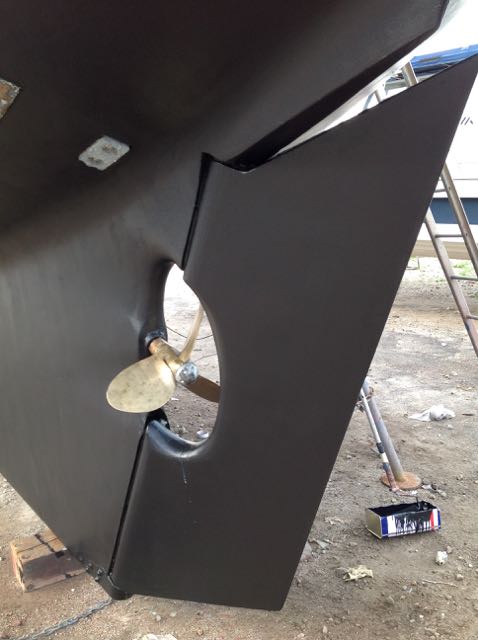
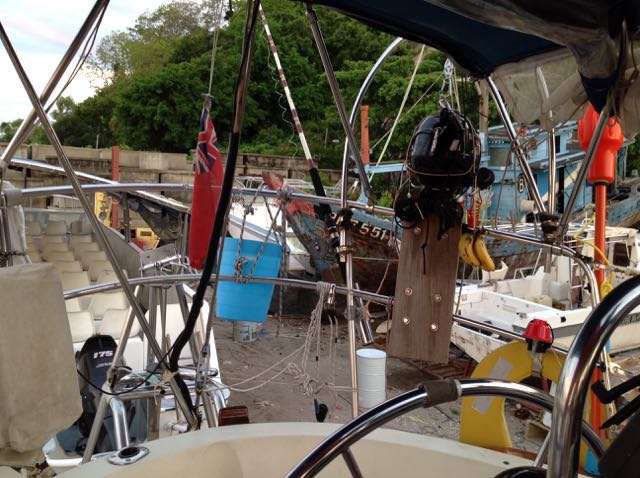
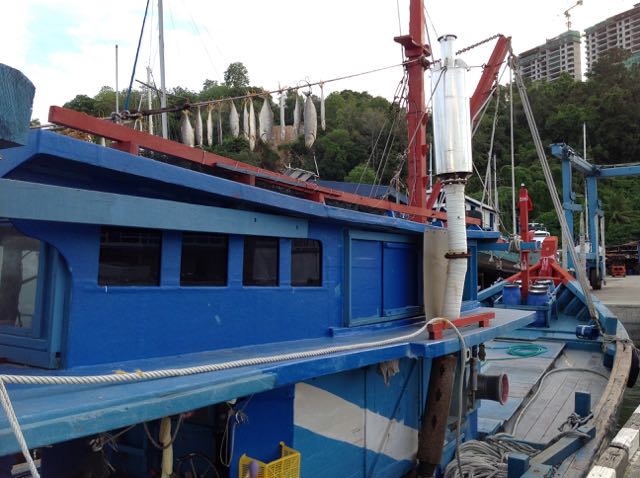
 Can you see the wheel?, is this where they wind it up?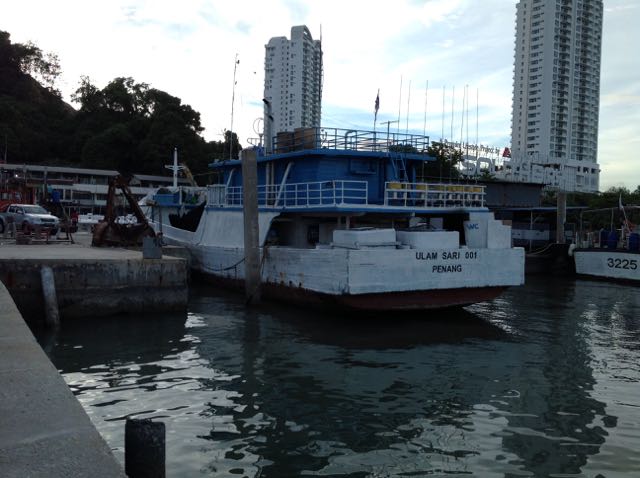
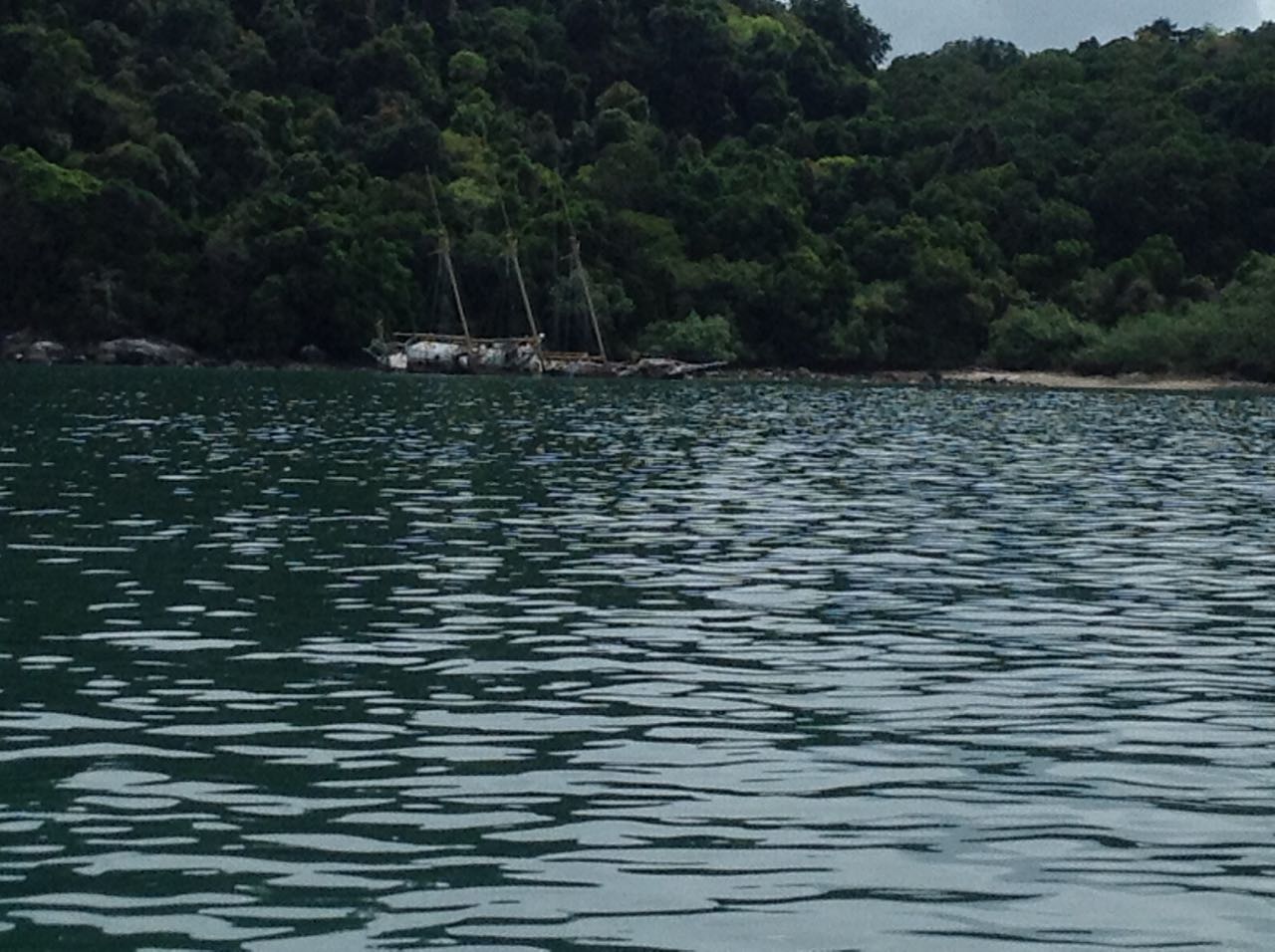 She was from Grimsby and had a rich history as a working boat.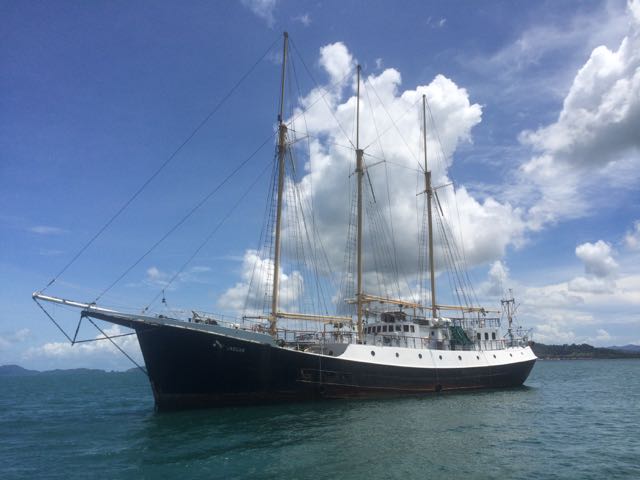
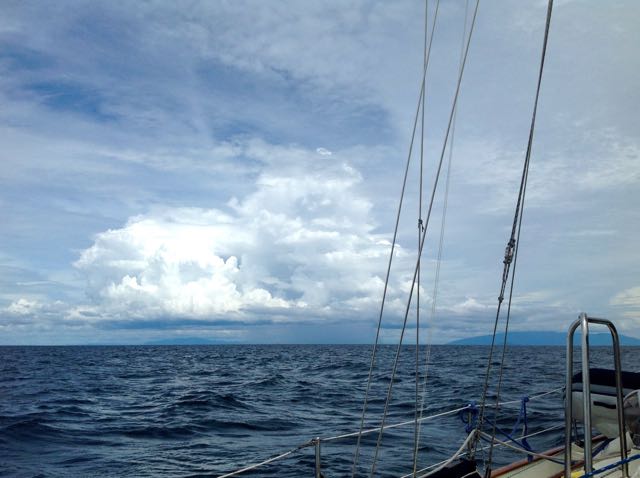 This particular cloud set was heading for me, or so it looked, by this time I was well on my way and the winds were picking up to 15knots, so I rolled in the headsails a bit. I wanted to put a reef in the main, but by now the autohelm was not able to steer the boat. I had let her get unbalanced, with a full main, and not much headsail, she had a lot of Lee helm, or was it wetherhelm, and would veer widely off course. So I was left to hand steer for the last two hours of the passage. I could have started the engine, turned into the wind and sorted it, but I was enjoying the ride, regularly hitting 7+ knots. The wind had started off on the beam, but was now behind, and the waves were causing me to surge forward, almost like surfing, but at 16 odd tonnes, she takes a lot to surf. Not to many obstacles, but I got close to these fish sticks. These are big sticks, the water it 25ft deep here, the idea is that barnacles grow on them, things eat the barnacles, bigger things eat them and even bigger…. Then the really big fishermen come along and catch the big fish.
 Talking of fish, I did catch one, honest, it was massive, well I reckon it must have been, but of course it got away, but the manner it did was amusing. I was trawling a line behind from my fishing rod, the lure was a big squiddy thing, big enough to catch a small whale, anyway, as usual, the reel started running out at speed, just as I was doing some other critical job, probably furling sails, by the time I got to the rod, and put the brake on, a lot of line had gone out. I took the rod out from its new holder on the very back of the boat, (Spoiler Alert) right next to the wind turbine, I could feel the pull from the fish, it was very powerful, I raised the rod high and then a bang, clunk and twang as the line snapped, First thought that the fish had broke it, but no, I had got the line caught in the wind turbine and it had snapped at the end of the rod. Now, a little like my kedging cock up, I looked up to see the line was taught from the turbine, all the way back to the fish, so not all was lost, what was even more impressive was that the turbine was winding in my catch, the fishing line had wrapped around the blades and was now accumulating on the axle as the strong wind kept it turning. I thought this could be very cool, it would haul the fish right up to eye level, and then stop, I could just lift the fish off and dispatch it, if the turbine hadn’t already, I think there might be a market for something similar out there. A quick reality check, and I thought there’s not enough room for all the line on the axle, and like getting something wrapped on the prop, when it does come to a stop, the force of it can do some damage. So I stopped the blades tuning and slowly removed the line. By now the fish had bitten his way through the line and buggered off. While hanging off the back of the boat, high up, one hand on the turbine, one on the solar panels, and the cutters between my teeth, I thought one slip and it’s bad news, the autohelm would have just took the boat on it’s merry way, leaving me to pray for a fishing boat to pass! I must make a rule to clip on when on my own.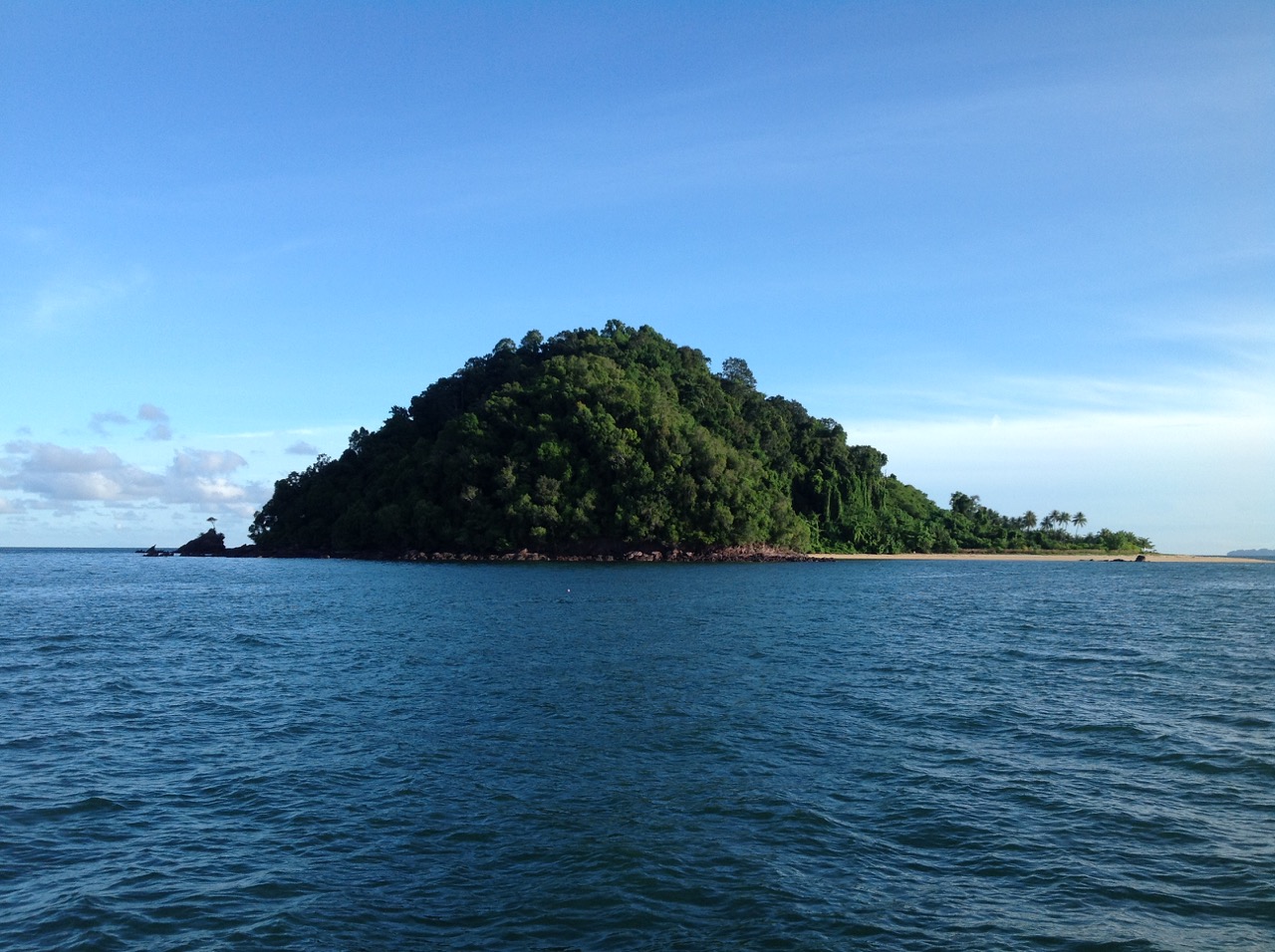
 Since Kathy went home I have been busy doing chores on the boat. I have fitted the new Throttle and gear cables, Changed the oil and filter, cleaned out the raw water filter and changed both the fuel filters. On my last Volvo engine on the baba 30, I only had to look at the fuel system to induce an air leak into the system. These were always annoying, often they would hide while the revs where high, but as soon as I throttled back entering the marina the engine would stop and not want to start, good game. So after changing these filters I bled the system and it has started perfectly, high revs, low revs, it works great. I haven’t tested the new cables away from the dock, but they seem fine now. What could possibly go wrong 😉
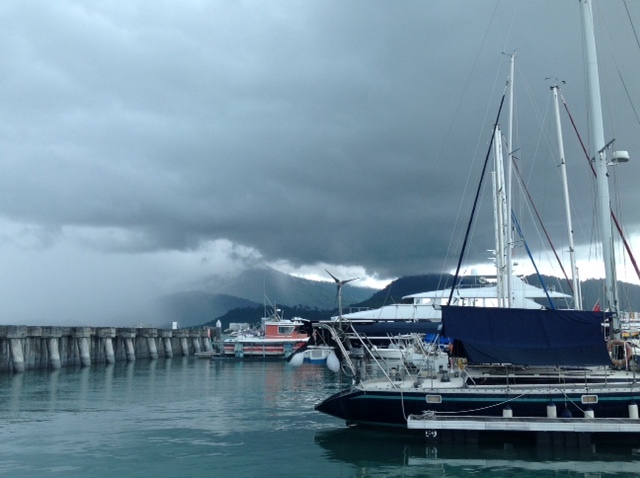 Above is typical of the weather here now. It’s forecast for thunderstorms for the next 7 days. A met office warning to shipping for the Malacca straits for today warned small ships to stay home, the forecast said in areas of multiple thunderstorms, waves could reach 12ft high with 30 knt winds. However that was for today, no warnings for tomorrow. I have a variety of sources for weather information, The national weather services for maritime service, the equivalent of the uk shipping forecast is a main one. I make a lot of use of grib files. These are weather data files you download over the net. They are a very compact form of data, so ideal for loading over HF radios, or expensive satellite links. With a viewer on your PC you can see the data as wind and wave patterns as shown below
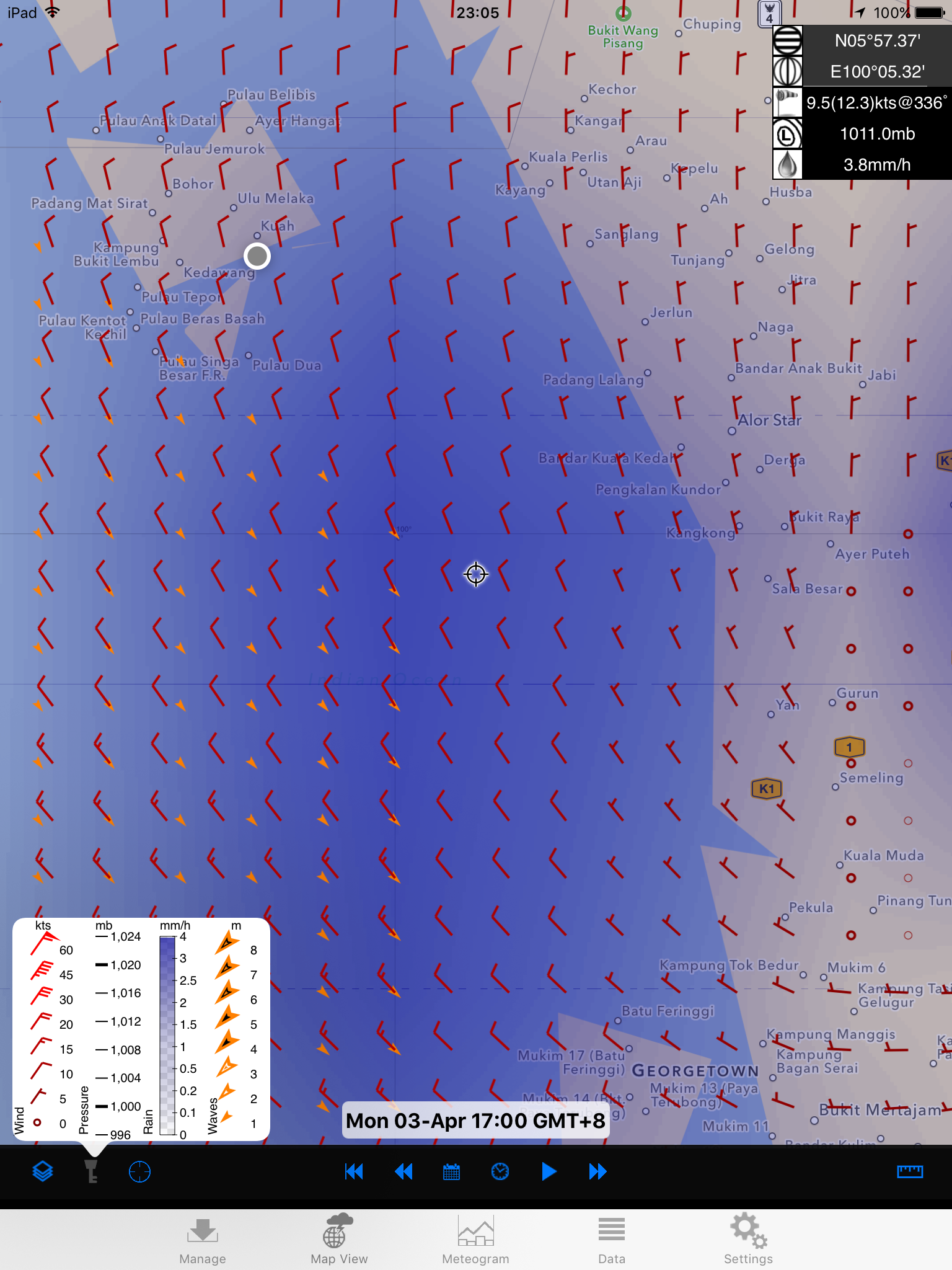 This covers the area I will be in tomorrow. It is animated on our iPad, showing the changes every hour over a 96 hour period. Here is the legend/key expanded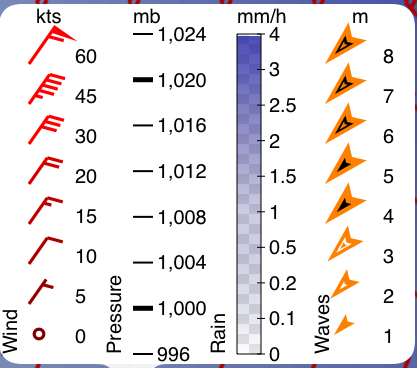
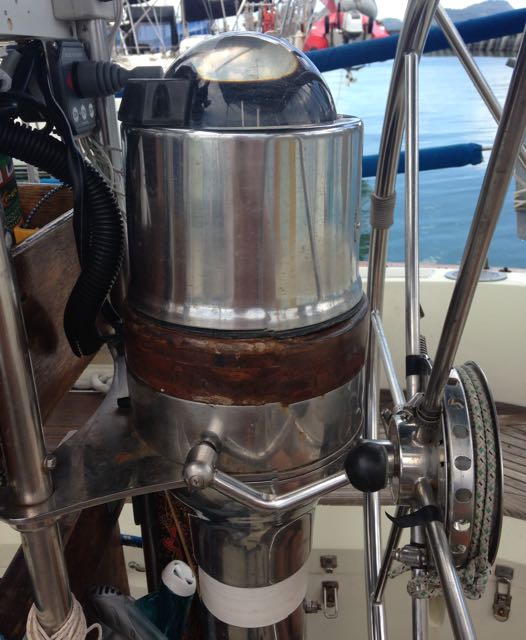
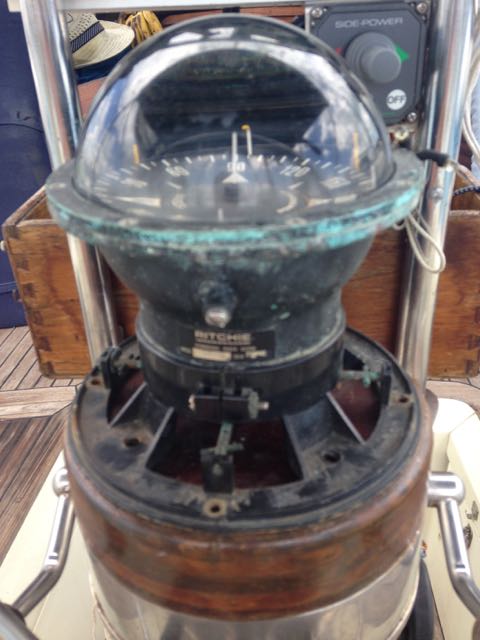
 Finally I managed to upload one of my videos, it’s me and kathy swmming around the boat in Ko Phi Phi. The boat is in about 8 metres of water, so clear.